

Note: This article contains affiliate links. If you click on these links and make a purchase, I may earn a small commission at no extra cost to you. This helps support my research and content. Read my full affiliate disclosure here.
Aloe vera needs a potting medium that drains fast, resists compaction, and supplies modest nutrients without holding excess moisture. Choosing the right soil changes how often you water, how roots breathe, and how the plant tolerates cool or humid conditions. This guide presents seven top soil options shortlisted for growing aloe vera in pots and containers, explaining why each type works in a real home or patio setting. We evaluate mixes on drainage, aeration, nutrient content, and ease of repotting so you can pick the right medium for your environment and care routine.
Top Picks at a Glance
| Best Overall The best all-around choice for most situations | Leaves and Soul Professional Aloe Plant Soil Mix, 2.2 Quart |  |
| Best Quality Built to a higher standard if you want something more solid | Rosy Soil Cactus & Succulent Potting Mix, 4 Quart |  |
| Best Value The sweet spot between price and what you get | Miracle-Gro Indoor Potting Mix for Cactus & Succulent, 8 qt (2-Pack) |  |
| Best Budget The cheapest option that still gets the job done reliably | Doter Aloe Vera Potting Soil Mix, 1 qt |  |
| Highest Rated A top-rated pick with lots of positive feedback | Hoffman Organic Cactus & Succulent Soil Mix (4 qt) |  |
| Most Popular A crowd favorite that many people choose with confidence | Miracle-Gro Succulent Potting Mix, 4 qt. |  |
| Best Seller A high-volume bestseller chosen again and again | Back to the Roots Organic Succulent & Cacti Soil, 6 Quart |  |
Leaves and Soul Professional Aloe Plant Soil Mix, 2.2 Quart

| Brand | Leaves and Soul |
|---|---|
| Volume | 2.2 quarts |
| Unit Count | 81.92 Ounce |
| Made in | USA |
This 2.2 quart Leaves and Soul Aloe Plant Soil Mix is a prepared potting medium aimed at repotting and maintaining indoor aloe and similar succulents. The blend of pine bark, peat moss, and coarse sand produces an open texture that encourages quick drainage and root-zone aeration, which helps reduce the risk of root rot when paired with proper container drainage and watering. It comes in a resealable bag for tidy storage and is designed to be used straight from the package without extra amendments for most common aloe varieties and pups. Practical benefits include improved oxygen flow to roots, support for fertilizer efficiency, and convenient small-batch sizing that suits single plants or small collections. Limitations are that the mix still contains peat, which retains some moisture, so growers in very humid or low-light conditions should monitor drying times rather than assuming rapid drying; larger projects will require the bigger size or multiple bags. The product is made in the USA and is intended for standard indoor potting scenarios rather than specialized horticultural systems.
Best for: Buyers who want a simple, ready-made potting mix that reliably improves drainage and root health for indoor aloe and small succulent collections. Good choice for plant owners who prefer a low-effort solution for repotting single plants and pups.
Less Ideal for: Not the best option for large-scale repotting projects or growers who prefer fully peat-free or commercial-grade custom mixes for professional greenhouse use.
- Formulated for fast drainage and improved aeration suitable for aloe and succulents
- Ready-to-use blend with pine bark, peat, and coarse sand so no immediate amendments are needed
- Resealable packaging keeps unused soil contained between projects
- Small 2.2 qt size is convenient for repotting individual plants or handling pups
- Contains peat which retains some moisture and may require attention in humid or low-light environments
- 2.2 quart size is small for multiple or large repots
Verdict: A convenient, ready-to-use fast-draining soil mix that makes repotting aloe and small succulents quick and low-effort.
Rosy Soil Cactus & Succulent Potting Mix, 4 Quart

| Unit Count | 64 Ounce |
|---|---|
| Item Type Name | Soil |
| Item Highlight | Organic Succulent Potting Soil, Chunky Fast Draining, Peat-Free |
| Ingredients | Biochar, Pumice, Mycorrhizae, Sand, Pine Bark Fines, Compost |
Rosy Soil Cactus & Succulent Potting Mix is a ready-to-use, gritty potting mix designed for drought-tolerant houseplants like aloe vera. You use it straight from the resealable 4 quart bag to repot small-to-medium succulents or to refresh the top layer of established pots. The formula lists biochar, pumice, sand, pine bark fines, compost, mycorrhizae and worm castings, so it combines chunky drainage with living microbes that help roots access nutrients without synthetic feeds. The peat-free blend reduces water retention and compaction, so pots dry more evenly and are less prone to root rot. Practical benefits include easier watering schedules for performance-focused growers and clear planting instructions printed on the bag. Limitations are the small 4 quart volume, which only covers a few plants, and the bag notes safety precautions for dust and skin contact, so use a mask or gloves when handling. For growers who need larger quantities or specialized mixes for seedlings or very large specimens, this is best used as a high-performance repotting or top-dressing option rather than a bulk garden soil.
Best for: Serious indoor succulent growers who prioritize fast drainage and living soil biology for healthy, low-water aloe vera plants and want a ready-made, performance-oriented repotting mix.
Less Ideal for: Beginners needing large volumes for many plants or growers focusing on seed starting and very fine-textured mixes should consider alternative soils tailored to those tasks.
- Chunky, fast-draining texture suited to aloe vera and other succulents
- Includes biochar, pumice and mycorrhizae to support root health and nutrient uptake
- Peat-free formula reduces compaction and overwatering risk
- Resealable bag keeps mix fresh and includes step-by-step planting guidance
- Small 4 quart volume covers only a few plants, requiring multiple bags for larger collections
- Contains dust and may irritate skin or lungs during handling
Verdict: Choose this mix when you want a compact, peat-free, microbially active potting soil that gives aloe vera excellent drainage and root support.
Miracle-Gro Indoor Potting Mix for Cactus & Succulent, 8 qt (2-Pack)

| Item Highlight | Fast-Draining Cactus and Succulent Potting Mix with Plant Food |
|---|---|
| Number of Packs | 2 |
| Included Components | 2 bags |
| Item Type Name | Soil |
| Ingredients | Sphagnum Peat Moss, Sand, Perlite |
This cactus and succulent potting mix is formulated to give desert-type houseplants the fast drainage and light texture they need. It blends sphagnum peat moss, sand, perlite and forest products so water moves quickly through the root zone instead of staying soggy, and the included Miracle-Gro plant food helps feed plants for a period after potting. Typical uses are repotting or topping up containers for cacti, succulents and small indoor citrus where good drainage and modest nutrition matter. Practical benefits include no mixing required, clear guidance on filling and watering, and a two-bag bundle that covers multiple small pots. Important limitations are that the bagged mix contains peat and is designed for indoor container use only, so it is not a full replacement for specialty mixes for epiphytic orchids or heavy-feeding plants, and you may still need to supplement with specific fertilizers later for long-term nutrition. Expect to repot every couple of years to refresh structure and nutrients for aloe and other succulents.
Best for: Best for practical indoor gardeners who want an off-the-shelf, drainable soil that makes repotting aloe and other succulents quick and predictable.
Less Ideal for: Not ideal for growers who require peat-free mixes or specialized media for epiphytic species and larger container plantings.
- Formulated for fast drainage suitable for succulents and cacti
- Includes plant food to give newly potted plants an initial nutrient boost
- Ready-to-use mix requires no blending or amendments
- Two 8 qt. bags provide enough soil to repot several small pots
- Contains peat moss which some buyers avoid for environmental reasons
- Not tailored for plants that need very coarse, bark-based mixes such as epiphytic orchids
Verdict: A convenient, ready-made fast-draining potting mix that simplifies repotting aloe and other succulents while providing an initial nutrient boost.
Doter Aloe Vera Potting Soil Mix, 1 qt
| Brand Name | Doter |
|---|---|
| Item Type Name | Garden soil |
| Manufacturer | Doter |
| Volume | 1 quarts |
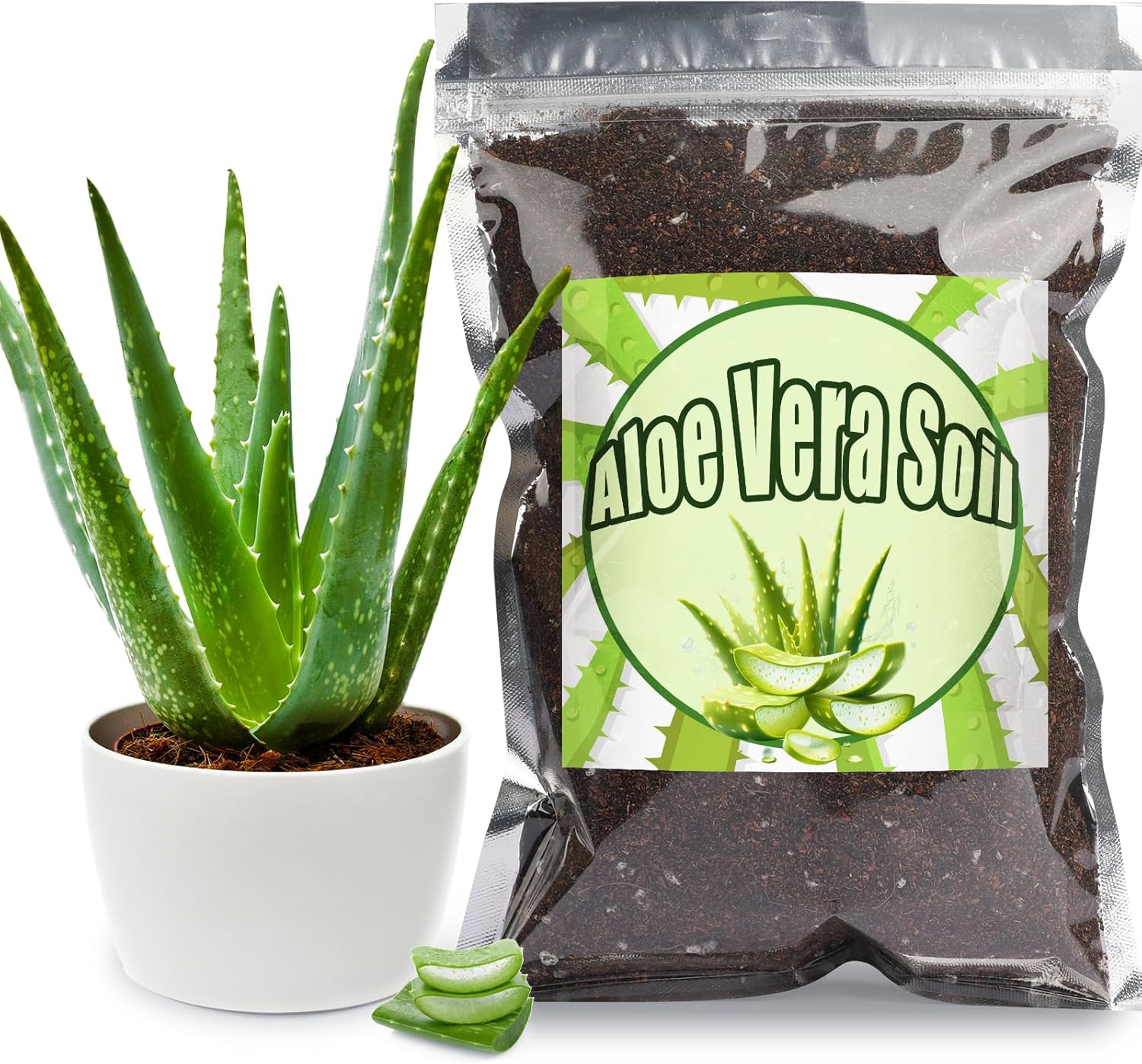
This 1-quart Doter Aloe Vera Potting Soil is a small, ready-to-use mix designed to give aloe plants the fast-draining, aerated medium they need. It is typically used to repot small aloe pups, refresh topsoil in containers, or as a component when mixing larger batches for multiple plants. The formula emphasizes drainage and aeration, so water moves through quickly and roots get oxygen—helpful for preventing root rot in succulents. The listing also highlights added nutrients and a balanced pH, which should support healthy foliage and steady root growth without immediate fertilizer. Practical benefits include convenience for quick repotting and compatibility with indoor or outdoor containers. Limitations are the small 1-quart volume, which means you may need multiple bags for several pots or larger containers, and the product description does not list exact ingredient ratios or organic certifications, so advanced growers who track substrate composition precisely may find it lacking.
Best for: Buyers wanting an inexpensive, ready-made potting mix to quickly repot or top-dress small aloe vera plants and who prioritize convenience over customizing substrate blends.
Less Ideal for: Those managing a large collection, repotting mature large aloes, or growers who require precise, documented substrate compositions should look for bulk or specialized mixes instead.
- Formulated for excellent drainage to reduce risk of waterlogging
- Designed for good aeration to support healthy root respiration
- Includes nutrients and balanced pH to support foliage and root development
- Small 1-quart volume requires multiple bags for several plants or repotting large pots
- No detailed ingredient ratios or certification information provided
Verdict: A convenient, budget-friendly 1-quart potting mix that gives small aloe vera plants improved drainage and aeration for healthier roots.
Hoffman Organic Cactus & Succulent Soil Mix (4 qt)

| Brand Name | Hoffman |
|---|---|
| Unit Count | 128 Ounce |
| Number of Packs | 1 |
| Volume | 4 quarts |
This Hoffman Organic Cactus & Succulent Soil Mix is a pre-mixed, ready-to-use medium designed to give drought-tolerant plants the fast drainage they need. You use it straight from the bag for potting or repotting cacti, succulents, and other thick-leaved succulents like aloe vera without having to measure and blend components. The bagged mix emphasizes drainage and root development, which helps reduce overwatering stress and encourages stronger root systems and better blooms. Practical benefits include convenience, consistent texture between bags, and an easy-to-pour bag that simplifies small-pot work. Important limitations are the small 4 quart volume, which means larger or multiple repots will require several bags, and the product may still compact over time in heavy-use containers so occasional loosening or fresh topdressing is useful. Also follow the safety note to avoid inhaling dust when filling pots.
Best for: For home gardeners who want a dependable, no-mix soil that consistently provides the drainage and root support aloe vera and other succulents need, especially for small pots and routine repotting.
Less Ideal for: Not a good fit for landscapers or gardeners who need bulk soil for many large pots or in-ground beds; they should choose larger-volume or bulk mixes.
- Ready-to-use mix removes need to blend ingredients for succulents and cacti
- Formulation prioritizes drainage to reduce root rot risk in slow-draining containers
- Promotes root development and bloom potential for drought-tolerant plants
- Bag is easy to pour and store for small potting jobs
- Small 4 quart volume is insufficient for large repotting projects
- Can compact over time in frequently watered containers and may need refreshing
Verdict: Buy this if you want a reliable, ready-made soil that gives aloe vera and other succulents the fast drainage and root support needed for healthy potted growth.
Miracle-Gro Succulent Potting Mix, 4 qt.

| Brand Name | Miracle-Gro |
|---|---|
| Unit Count | 128 Ounce |
| Volume | 4 quarts |
| Style Name | Succulent |
This 4-quart Miracle-Gro Succulent Potting Mix is designed for potting indoor succulents such as aloe vera and small cacti. The blend of sphagnum peat moss, processed forest products, a wetting agent, and built-in Miracle-Gro plant food creates a light, fast-draining medium that helps prevent root rot from overwatering while supplying immediate nutrients. It is most often used when repotting or filling small containers—one bag is intended to fill an 8-inch pot—and the packaging notes to use pots with drainage holes and to feed with a cactus and succulent plant food about 30 days after planting. Practical benefits include easy handling, consistent texture for tucking roots in, and the convenience of pre-mixed nutrition. Limitations are the small volume for anyone repotting multiple or larger aloe plants and the peat content, which some gardeners avoid for environmental reasons. Gloves are recommended while handling the mix and you should still monitor watering and light; the mix helps but does not guarantee success if cultural care is poor.
Best for: A buyer who wants a convenient, ready-made soil that simplifies repotting and reduces initial guesswork for indoor aloe and small succulents. Ideal for cautious gardeners who value proven formulations and clear use instructions.
Less Ideal for: Not a good fit for someone repotting many plants or larger aloe vera specimens who needs bulk soil, or for gardeners seeking a peat-free or fully organic custom mix.
- Formulated specifically for succulents and cacti to promote fast drainage and reduce water retention
- Includes Miracle-Gro plant food for immediate nutrient support after potting
- Light, consistent texture makes repotting and root placement simple
- Clear usage guidance for filling pots and feeding schedule
- Small 4 qt. bag provides only one 8-inch pot worth of mix which is limited for larger projects
- Contains sphagnum peat moss which some gardeners prefer to avoid for sustainability reasons
Verdict: A convenient, pre-fertilized fast-draining mix that makes repotting and caring for indoor aloe and other succulents straightforward and low risk.
Back to the Roots Organic Succulent & Cacti Soil, 6 Quart

| Volume | 6 quarts |
|---|---|
| Item Highlight | Fast-draining cactus and succulent soil; peat-free |
| Ingredients | Dolomitic Limestone; Perlite; Horticultural Sand; Aged Bark; Plant Food |
| Brand Name | Back to the Roots |
This 6-quart Back to the Roots Succulent & Cacti mix is a ready-to-use soil made for plants that need fast drainage, such as aloe vera. Its formula blends aged bark, perlite, horticultural sand, dolomitic limestone, and added plant food to create an airy medium that speeds water movement and reduces the risk of root rot. You would use it straight from the bag to repot small to medium succulents, to top-dress containers, or to refresh potting mixes for mature plants. The organic ingredients and included nutrients give plants a clean, chemical-free start, and the mix is made in the USA. Limitations to note are the small 6-quart volume, which means you may need multiple bags for several pots or larger repots, and like most premixed soils you should plan to supplement with liquid feed after a few weeks for longer-term fertility. For someone cautious about overwatering, this mix simplifies care by improving drainage and aeration for aloe and similar species.
Best for: A cautious indoor gardener or beginner who wants a low-risk, ready-made soil that prevents overwatering problems for aloe vera and other succulents.
Less Ideal for: People repotting large specimens or filling many containers at once who need bulk soil or a larger-volume commercial blend.
- Fast-draining blend with perlite and horticultural sand reduces risk of waterlogged roots
- Organic, peat-free formula with aged bark for improved aeration and root development
- Includes plant food to give succulents an initial nutrient boost
- Made in the USA with ingredients listed for safer, cleaner use
- Small 6-quart bag may require multiple purchases for several or large pots
- Nutrients are starter-level so periodic fertilizing is still necessary for long-term growth
Verdict: Choose this organic, fast-draining mix if you want a low-risk, ready-made soil that helps aloe vera avoid root rot and simplifies beginner care.
Choosing the Right Soil for Aloe Vera Plants: Key Factors to Consider
Drainage and Percolation
Aloe vera roots need soil that sheds excess water immediately after watering. Fast percolation prevents prolonged wet pockets that cause root rot. Look for mixes with coarse components such as pumice, coarse sand, or grit that create clear pathways for water to move through, rather than relying on fine particles that hold moisture.
How the soil drains will influence your watering frequency and container choice. Even with drought-tolerant plants, poor drainage forces you to water less often but it also increases risk because trapped moisture can stay near the crown. Ideal soil encourages brief saturation followed by rapid drying of the top and middle layers.
Aeration and Root Space
Good aeration keeps oxygen available to roots, which is essential for healthy root growth and recovery after stress. Soil with varied particle sizes and coarse inclusions prevents compaction and maintains air pockets around roots. This matters especially in smaller pots where roots can quickly fill available volume.
A mix that preserves pore space as it ages reduces the need for frequent repotting. Consider the balance between fines that hold some moisture and coarse elements that maintain structure so roots have both moisture access and oxygen.
Nutrient Balance and Amendments
Aloe vera is not a heavy feeder, but it still needs baseline nutrients to develop healthy leaves and offsets. Soils that provide a modest, balanced nutrient reserve avoid the extremes of starvation or overly lush, soft growth. Look for mixes with a light, slow-release organic component or the option to top-dress with fertilizer during active growth.
Excess nitrogen or a rich, high-organic mix can encourage soft tissue that is more susceptible to pests and rot. A well-balanced medium gives steady support without promoting rapid, water-dependent growth.
Particle Size and Texture
Particle size drives both drainage and aeration. Coarse sand, pumice, perlite, and small gravel increase texture and help water flow. Very fine textures like unamended peat or compacted loam retain too much water for succulents. The ideal texture blends a small proportion of fine material for moisture retention with a dominant coarse fraction for structure.
Consider the feel and performance of the soil when dry and after a thorough watering. The soil should not pack down into a dense mass once moist. Texture also affects how easy it is to divide plants and remove old soil from roots during repotting.
pH and Mineral Content
Aloe vera prefers a neutral to slightly acidic pH but tolerates a range near neutral. Extremely alkaline or acidic soils can lock out nutrients and stress the plant. Checking pH or choosing mixes labeled for succulents helps avoid extremes.
Mineral content matters in regions with hard water or when using mineral-rich irrigation. Well-draining mixes with some inert mineral content reduce buildup of salts and help prevent leaf tip burn and root stress.
Longevity and Ease of Repotting
Soils that hold structure over time reduce how often you must repot. Coarse mixes with durable components resist decomposition, meaning fewer disruptions to the plant. This is useful for gardeners who prefer low-maintenance containers or who winter plants indoors.
Ease of repotting also ties to how cleanly soil falls away from roots. A medium that is too sticky or heavy makes dividing pups and inspecting roots harder. Durable, gritty mixes tend to release from roots readily and expose root health when you need to check it.
Understanding Aloe Vera Root Behavior
Aloe vera has shallow, fibrous roots that prefer to spread rather than dive deep. In containers, roots occupy the top several inches of soil and require air and quick drainage. Overwatering is the usual problem because the root crown sits close to the soil surface and can remain wet if the mix drains slowly.
Knowing this behavior helps you choose containers with ample drainage holes and a mix that shrinks and dries from the top down. Pots that are too large relative to the plant can hold excess moisture in unused soil, so matching pot size to root mass is part of the soil decision.
- Shallow roots need well-draining, airy soil.
- Top-down drying is preferable to uniform moisture.
- Smaller pots reduce soggy unused volumes.
Components That Improve Drainage
Several common amendments reliably improve drainage in a potting mix. Pumice and expanded clay add stable pores and do not break down like organic matter. Coarse builders' sand increases percolation but should be sharp or coarse rather than fine. Perlite is lightweight and increases porosity, though it can float during very heavy watering or irrigation.
Combining two or more amendments is often more effective than a single additive. For example, blending pumice for permanence with a small amount of coarse sand or grit gives both long-term structure and immediate drainage benefits.
- Pumice and crushed lava rock add permanent pore space.
- Coarse sand improves flow if it is sharp, not dusty.
- Perlite boosts aeration but can break down under heavy use.
Mix Recipes to Consider
There are a few common mix approaches you can use depending on the starting material you have. A basic container recipe pairs one part potting soil or coco coir with one part coarse inorganic amendment and one part coarse sand or grit. For an even faster-draining option, use a small amount of compost or worm castings with a larger proportion of pumice and bark.
If you prefer ready-to-use mixes, choose ones labeled for succulents or cacti and check for coarse inclusions and low peat. For repotting, you can also top-dress older pots with a gritty cap to help the surface dry faster and reduce fungal issues.
- Balanced recipe: 1 part base mix, 1 part pumice, 1 part coarse sand.
- Fast-drain recipe: 2 parts pumice, 1 part bark, small fraction of organic matter.
- Top-dress: coarse grit to speed surface drying.
Watering Strategy with Fast-Draining Soil
Fast-draining soil does not mean you should water constantly. Instead, water deeply but infrequently, allowing the top inch or two to dry between waterings. This encourages roots to seek moisture deeper and prevents the crown from sitting in wet material.
Pay attention to seasonal changes. Aloe vera typically needs less water in cool months and more during active growth, but fast-draining mixes will always require quicker drying and therefore a slightly more forgiving margin against overwatering mistakes.
- Water thoroughly, then allow significant drying time.
- Adjust frequency with seasons and indoor humidity.
- Use a moisture meter or finger test for accuracy.
Container and Environment Considerations
Container material affects how soil dries. Terracotta breathes and helps the soil dry faster, while plastic holds moisture longer. Match your soil choice to container type and local humidity. In humid climates, favor even grittier mixes and containers that encourage evaporation.
Light level and temperature also influence soil choice. In low-light interiors, you may need a slightly coarser mix and less frequent watering to prevent soggy conditions. In hot, bright spots, faster-drying mixes reduce the chance of salt buildup and root stress.
- Terracotta pots speed drying; plastic slows it.
- High humidity calls for coarser mixes.
- Light and temperature change watering needs.
How We Chose the Best Soil for Aloe Vera Plants
We focused on soil properties that matter for aloe vera roots and for growers who keep plants in pots or small containers. Criteria emphasized physical structure and water behavior, because poor drainage or compaction is the most common cause of decline. We also evaluated nutrient profile and pH range to ensure mixes provide enough baseline fertility without promoting mushy growth. Particle size and mix stability were considered to judge how the medium resists breakdown over time. Ease of use and availability in small-batch formats were included so gardeners can repot or top-dress without excess waste. Products were excluded if they were heavy, designed for water-loving houseplants, or relied on large amounts of moisture-retentive peat with no coarse amendment. We also filtered out specialty blends meant only for large landscape beds rather than container succulents. The final shortlist reflects physical drainage, aeration, nutrient balance, pH suitability, and long-term structural stability as primary decision dimensions.
FAQ
Can I use regular potting soil for aloe vera?
Regular potting soil often holds too much moisture for aloe vera unless amended. Mixing in coarse sand, pumice, or perlite improves drainage. Without amendment, the potting soil may compact and increase risk of root rot.
How much pumice or perlite should I add to a mix?
A common approach is to use equal parts base mix and coarse amendment, or about one third to half of the final volume as pumice, perlite, or grit. The exact proportion depends on how fast-draining you need the soil to be and the original texture of the base material.
Is sand alone enough to make soil suitable?
Coarse, sharp sand can help but should be used with other amendments. Very fine sand can create a cement-like texture and hold water. Combining coarse sand with pumice or bark gives more reliable aeration and long-term structure.
Should I test soil pH for aloe vera?
Testing pH can be helpful if you suspect extremes in your water or base mix. Aloe vera prefers neutral to slightly acidic conditions. If pH is outside that range, choose a mix with more organic matter or mineral amendments that help buffer pH.
How often do I need to repot aloe vera because of soil breakdown?
With a gritty, mineral-rich mix, repotting is often needed less frequently, perhaps every three to five years. Mixtures high in peat or fine organic matter may compact sooner and require repotting or refreshing every one to three years.
Final Verdict
Choose a soil that prioritizes drainage and aeration first, then address nutrient balance and pH. Expect to blend coarse inorganic materials with a modest organic component for a low-risk, low-maintenance medium. Tradeoffs include slightly more frequent fertilization for very fast-draining mixes versus more repotting when using softer, organic-rich mixes. Focus on particle size, container choice, and watering rhythm when picking soil for aloe vera. Prioritize mixes that preserve pore space and dry from the top down so you can water confidently and keep plants healthy over the long term.
