

Note: This article contains affiliate links. If you click on these links and make a purchase, I may earn a small commission at no extra cost to you. This helps support my research and content. Read my full affiliate disclosure here.
A well-packed moss pole makes a big difference for vining houseplants and tropical climbers. The right sphagnum moss provides steady moisture, a fibrous surface for aerial roots, and a structure that stays intact as plants attach and grow. This guide covers seven shortlisted sphagnum moss options suited specifically for moss pole use. We evaluate how each product handles moisture retention, ease of packing and maintenance, and long-term durability in an indoor plant setup. Read on to find the moss that fits your support style and care routine.
Top Picks at a Glance
| Best Overall The best all-around choice for most situations | Better-Gro Premium Sphagnum Moss for Orchids & Plants, 190 cu in |  |
| Best Quality Built to a higher standard if you want something more solid | besgrow Premium New Zealand Sphagnum Moss (150g, AAA Grade) | 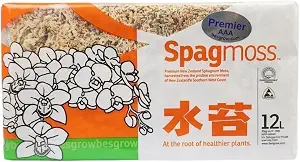 |
| Best Value The sweet spot between price and what you get | Riare Premium Long-Fiber Sphagnum Moss (3 lb, expands to 55 qt) |  |
| Best Budget The cheapest option that still gets the job done reliably | Legigo Sphagnum Moss, Natural Long Fibers (4 qt / ~3 oz) |  |
| Highest Rated A top-rated pick with lots of positive feedback | Better-Gro Long-Fiber Sphagnum Moss (240 g) |  |
| Most Popular A crowd favorite that many people choose with confidence | Legigo Natural Sphagnum Moss, 40QT (Approx. 2.2 lb) |  |
| Best Seller A high-volume bestseller chosen again and again | Sukh Sphagnum Moss for Reptiles, 30 Ounces |  |
Better-Gro Premium Sphagnum Moss for Orchids & Plants, 190 cu in

| Unit Count | 104.61 Ounce |
|---|---|
| Item Type Name | Sphagnum Moss |
| Included Components | Orchid Moss |
| Item Highlight | 100% natural, imported orchid moss |
Better-Gro Premium Sphagnum Moss is a loose, organic sphagnum product intended to retain moisture around roots while still allowing some drainage, making it useful for wet-soil tolerant plants and containers that need consistent humidity. You typically use it as a lining for hanging baskets, a top dressing or mulch for moisture-loving ferns and hostas, a medium for propagating cuttings, or a mounting and potting amendment for orchids. Notable features include its natural, chemical-free composition and a soft, feathered texture that fits wire or wooden baskets and provides a decorative finish. Practically, it reduces transplant shock, helps keep root zones evenly moist, and can extend time between watering for plants that prefer damp conditions. Important limitations are that loose sphagnum compresses over time and will need occasional replenishing, and it can compact in heavy pots so it is best mixed with coarser media for long-term container culture. Also handle with care if you have moss allergies and avoid inhaling dust when unpacking.
Best for: Gardeners who want a reliable, natural moisture-retaining medium for wet-soil tolerant plants, hanging baskets, or propagating cuttings and prefer low-risk, proven products.
Less Ideal for: Those wanting a long-term sole potting mix or a sterile, dust-free planting medium should consider structured mixes or commercial potting soils instead.
- 100% natural sphagnum moss suitable for orchids and moisture-loving plants
- Good water retention while allowing excess to drain, helping maintain humid root zones
- Soft, attractive texture works well as basket lining or decorative top dressing
- Loose material compresses and will need periodic replacement
- Can compact in dense containers so it should be mixed with chunky media for long-term pot culture
Verdict: Buy this if you want a natural, low-risk moisture-retaining moss to keep root zones consistently damp for wet-soil plants and hanging baskets.
besgrow Premium New Zealand Sphagnum Moss (150g, AAA Grade)
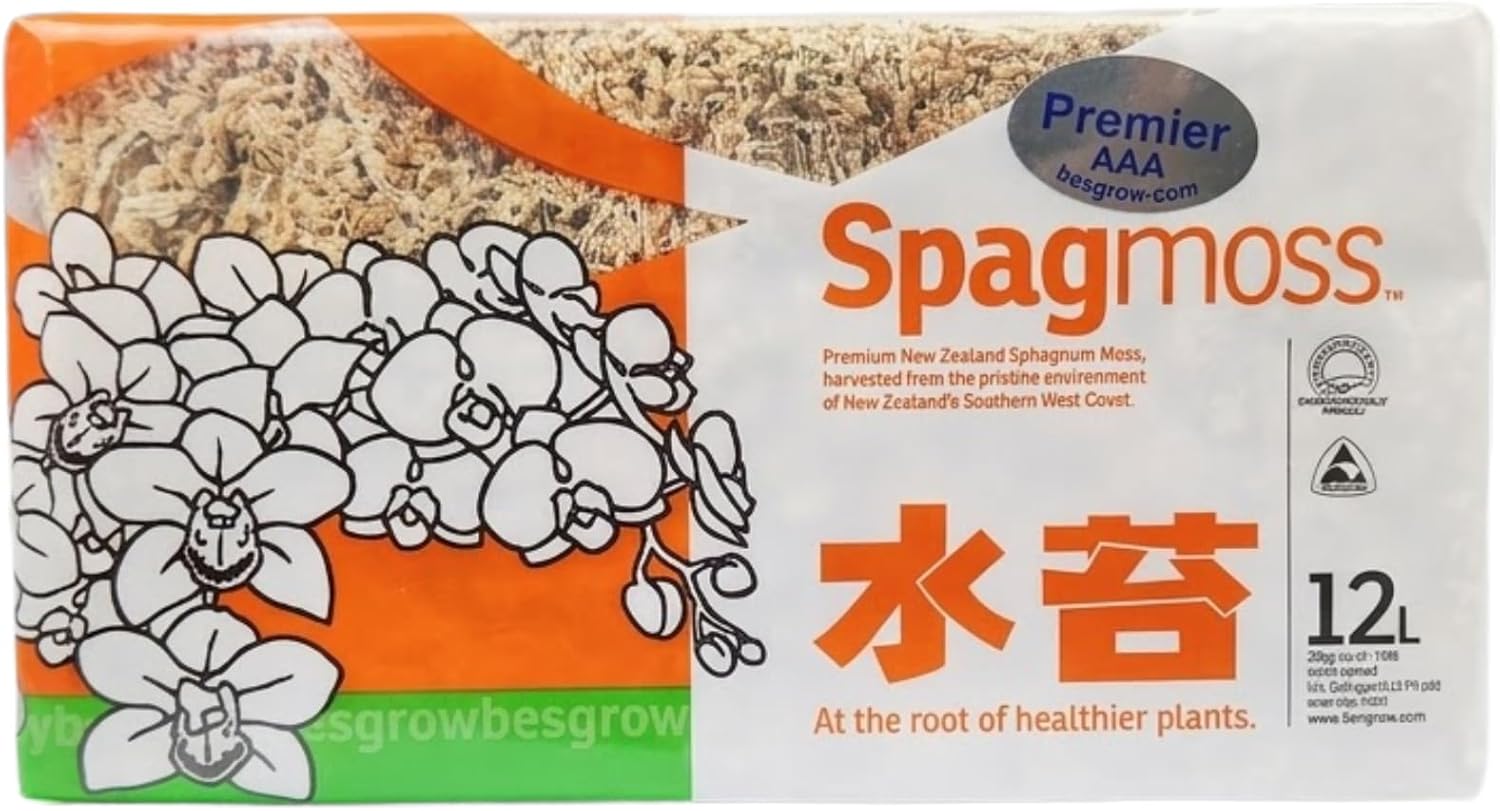
| Brand Name | besgrow |
|---|---|
| Unit Count | 5.3 Ounce |
| Style Name | AAA Premier (6" Strands) |
| Volume | 1 liters |
This besgrow sphagnum moss is a long-strand New Zealand product intended for moisture retention and root support in potted plants and moss poles. It is sold dried and ready to use straight from the pack; growers rehydrate and pack the strands around rootballs or wrap them onto moss poles to create a consistently damp surface that encourages aerial root attachment and healthy root growth. Notable features include long, strong strands, low soluble salts, and a high water-holding capacity that helps substrates stay moist longer and reduces watering frequency. Because it is hand-picked and air-dried with minimal foreign material, it is convenient for hobbyists who want a relatively clean, near-sterile medium without additional processing. Limitations are typical of dried sphagnum: you must properly rehydrate and squeeze excess water to avoid rot, and it will compress over time so occasional replenishing or fluffing is required for permanent installations like tall moss poles.
Best for: Gardeners and plant hobbyists who prioritize reliable moisture retention and strong strand quality for building or refurbishing moss poles and supporting moisture-loving plants.
Less Ideal for: Casual plant owners who want a maintenance-free mounting material or users who prefer inert, pre-mixed commercial potting media for potted plants.
- Long, strong strands suited for wrapping moss poles and encouraging aerial root attachment
- High water-holding capacity to reduce watering frequency
- Low soluble salt content and relatively sterile when used straight from the pack
- Hand-picked and air-dried with minimal foreign material for easier handling
- Sphagnum must be rehydrated and managed to avoid excess moisture and rot
- Natural product compresses with time and may need topping up on long-term moss poles
Verdict: Choose this premium New Zealand sphagnum when you need long, strong strands and excellent water retention for building durable, moisture-friendly moss poles.
Riare Premium Long-Fiber Sphagnum Moss (3 lb, expands to 55 qt)

| Unit Count | 79.36 Ounce |
|---|---|
| Material | 100% Natural Sphagnum Moss |
| Volume | 55 quarts |
This 3 lb compressed block of long-fiber sphagnum moss is a practical, multiuse medium for potting, repotting and creating moss poles. The brick soaks up water quickly and expands into a fluffy, airy mass that retains moisture while allowing good drainage and root aeration. It is sold clean and free of visible debris and is pH neutral, which makes it safe for orchids, carnivorous plants and many epiphytes used on moss poles. Typical use is to rehydrate the brick, squeeze out excess water, then wrap or pack the moss around a pole or inside hanging baskets to maintain humidity and provide a rooting surface. The product’s main benefits are easy storage in compressed form, strong water retention for slower drying, and the long fibers that help the moss cling to poles and roots. Limitations are that it requires pre-soaking and handling can be messy when wet, and users needing a sterile or pre-sterilized substrate should take extra precautions before using it with sensitive plants.
Best for: Gardeners who prioritize efficient, space-saving supplies and want an easy-to-store medium that provides reliable moisture retention for moss poles and epiphytic plants.
Less Ideal for: People who need a sterile, ready-to-use substrate straight from the package or those who prefer a no-mess synthetic pole covering.
- Compressed brick expands to large volume for compact shipping and storage
- Long fibers cling well to moss poles and provide a stable rooting surface
- High water retention with good aeration to reduce frequent watering
- Clean, natural material with no visible debris or artificial coloring
- Must be soaked and manually fluffed before use which can be messy
- Not sold sterile so may require sanitizing for very sensitive plants or setups
Verdict: A compact, long-fiber sphagnum moss brick that expands into a moisture-retentive, cling-friendly medium ideal for building and maintaining moss poles.
Legigo Sphagnum Moss, Natural Long Fibers (4 qt / ~3 oz)

| Brand Name | Legigo |
|---|---|
| Unit Count | 3 Ounce |
| Volume | 4 quarts |
| Material | Natural Sphagnum Moss |
This Legigo sphagnum moss is a lightweight, natural growing medium useful for lining pots, topping succulents, building moss poles, and adding a moisture-retentive layer in terrariums. Sold as a compressed dry bag that expands when wetted, the long fibers provide aeration around roots while holding water so you can reduce watering frequency and avoid constant soggy conditions. It works well for re-potting a few small to medium plants or dressing a moss pole where you need fibrous material that will cling and hold moisture for climbing aroid stems. The moss is described as clean and free of debris, which saves prep time, though the small 3 ounce / 4 quart pack limits how many projects you can cover. Because it can be hard to rewet once completely dried, you will want to keep it slightly damp in storage and soak thoroughly before use. For gardeners on a budget this is a practical, natural option for short-term moss-pole wrapping and small terrarium tasks, but larger projects will require multiple packs or a bigger source.
Best for: Gardeners who want an inexpensive, natural moss for small-scale projects like topping pots, building or refreshing a moss pole, or moistening terrariums and orchids without investing in larger bulk supplies.
Less Ideal for: People planning to cover large moss poles, multiple large planters, or long-term commercial propagation should choose a larger quantity or bulk source instead.
- Natural long fibers provide good aeration while retaining moisture
- Clean, debris-free product reduces prep work
- Versatile uses: pot lining, terrariums, reptile bedding, and moss-pole wrapping
- Small 3 ounce pack is only enough for a few small plants or a short moss pole
- Can be difficult to rehydrate if allowed to dry out completely
Verdict: A low-cost, natural sphagnum moss pack that works well for small moss poles and pot-top dressing when you need good moisture retention without buying bulk.
Better-Gro Long-Fiber Sphagnum Moss (240 g)

| Unit Count | 8.47 Ounce |
|---|---|
| Item Type Name | Moss |
| Item Highlight | 100% natural, 240 cubic inches |
| Brand Name | Better-Gro |
This Better-Gro long-fiber sphagnum moss is a natural, chemical-free moss sold in a compact 240 g package and intended as a moisture-retaining medium for plants and terrariums. Gardeners typically use it to line hanging baskets, wrap moss poles, mount orchids and bromeliads, or add a moist substrate in reptile hides. Its long fibers trap water and fertilizer, so wrapped around a moss pole it will hold and slowly release moisture to climbing plants and aerial-rooting species. The product is sustainably harvested and free of additives, which is helpful when you want predictable, clean material for indoor use. Because the pack is relatively small, you will likely need multiple units for large poles or several pots. The moss arrives dry and benefits from pre-soaking to rehydrate evenly. Expect good water retention and easy handling for mounting tasks, but plan ahead for quantity needs on bigger projects.
Best for: A gardener who prioritizes reliable, natural growing media for moss poles or mounted orchids and values consistent moisture retention and sustainable sourcing.
Less Ideal for: Those needing bulk quantities for large commercial jobs or landscapers who require a single large bale should look for bulk moss options instead.
- Long fibers retain water well, making it effective for moss poles and mounted plants
- 100% natural and chemical-free, safe for plants and terrariums
- Versatile for hanging baskets, seed starting, orchids, and reptile humid hides
- Sustainably harvested, offering an eco-friendlier option than indiscriminate harvesting
- Small 240 g package means multiple packs are needed for full-size moss poles or large projects
Verdict: Choose this long-fiber sphagnum moss when you want a clean, reliably moisture-retentive material for moss poles and mounted plants.
Legigo Natural Sphagnum Moss, 40QT (Approx. 2.2 lb)

| Unit Count | 35.2 Ounce |
|---|---|
| Material | Natural Sphagnum Moss |
| Style Name | Natural, organic |
Legigo's sphagnum moss is a loose, natural material intended to retain moisture around roots while remaining airy enough to reduce rot, which makes it well suited for moss poles and epiphytic plants like orchids. The bag expands after soaking and can be used as a top dressing, pot lining, or directly packed around a moss pole to encourage aerial root attachment and sustained humidity. Notable features from the listing include strong water retention, good aeration, and suitability for terrariums, carnivorous plants, and reptile bedding. In practice this means fewer frequent waterings for plants mounted on a pole and improved rooting for orchids that like a moist but breathable medium. Limitations are that the product is a natural, untreated material so particle size and cleanliness can vary and it may cause minor skin irritation if handled without gloves. Also it does not supply balanced nutrients by itself so you will need to rely on regular feeding or combine it with other media for long-term potted plants.
Best for: Gardeners mounting epiphytic plants or building moss poles who want a breathable, moisture-retentive medium that encourages aerial rooting and reduces watering frequency.
Less Ideal for: Growers who need a sterile, nutrient-rich potting mix out of the bag or those who prefer a uniform commercial substrate with guaranteed particle grading.
- Excellent water retention that keeps mounted roots moist without constant watering
- Loose, fluffy fibers provide good aeration to help prevent root rot
- Versatile uses including moss poles, terrariums, pot lining, and reptile substrate
- Natural, untreated material with no added colorants
- Natural variability means occasional debris and uneven fiber size
- Provides little to no nutrients so requires fertilization when used long term
Verdict: A simple, natural sphagnum moss that makes building and maintaining moss poles easier by keeping roots moist and airy without frequent watering.
Sukh Sphagnum Moss for Reptiles, 30 Ounces

| Size | 30 Ounces |
|---|---|
| Manufacturer | H-Re-SphagnumMoss |
| Model | YL42-Re-SphagnumMoss-900 |
| Date First Available | October 13, 2025 |
This Sukh sphagnum moss is a loose, dried peat product sold in a 30 ounce package that serves primarily to hold and release moisture inside small humid enclosures or planted displays. In practice it is used as top dressing, a humidity-retentive layer in terrarium substrates, an incubation medium for eggs, or as a refill for moss poles and hanging baskets. The listing emphasizes moisture retention and natural texture, which helps maintain a stable microclimate for humidity-loving reptiles and also benefits epiphytic plants when used on moss poles. It is lightweight and easy to break apart and rehydrate for placement. Important limitations are that it is not a complete primary substrate for many reptiles and requires regular cleaning and replacement to avoid odor or mold if kept too wet. Buyers should plan to mix it with other materials where structure or drainage is needed and monitor humidity rather than assume it is maintenance-free.
Best for: Buyers who want a ready-to-use sphagnum moss to boost humidity for tropical reptiles or to refill moss poles and epiphyte displays, and who prefer simple, low-effort materials that can be rehydrated and shaped as needed.
Less Ideal for: People seeking a permanent, structured primary substrate for burrowing species or those who prefer sterile, processed media with guaranteed pathogen-free certification.
- High moisture retention suitable for maintaining humidity in terrariums and on moss poles
- Versatile uses including substrate top dressing, egg incubation medium, and plant moss pole refill
- Easy to rehydrate and shape for placement in small enclosures or on support poles
- Sold in a manageable 30 ounce package that is simple to handle and apply
- Requires regular replacement or cleaning to prevent odor or mold if left overly wet
- Not intended as a sole substrate for animals that need firmer or mixed substrate structure
Verdict: A practical, easy-to-use sphagnum moss for maintaining humidity on moss poles and in humid terrarium or plant displays.
Choosing the Right Sphagnum Moss for Moss Pole: Key Factors to Consider
Moisture Retention and Dry-Down Rate
How long the moss holds water determines how often you need to rewet a pole. Moss that retains moisture for several days helps aerial roots stay hydrated without constant misting. If moss dries too quickly the plant may fail to form secure aerial roots; if it stays wet for too long it can invite rot.
Assess moisture retention by feel: resilient, springy moss that rebounds after squeezing usually holds moisture well while still allowing airflow. Consider your home humidity and watering habits-drier apartments benefit from higher-retention moss, while humid rooms can use a faster-drying option.
Fiber Length and Structural Integrity
Longer, intact sphagnum fibers wrap and interlock around the pole better, producing a stable surface for roots to attach. Fibers that are overly broken or ground down will compact and slip, requiring more frequent repairs.
Look for moss described as long-fiber or intact strands when possible. Structural integrity also influences how well the moss stays in place when the pole is watered; strong fibers resist slumping and keep a textured surface for roots over months of use.
Ease of Packing and Workability
Some sphagnum forms are loose and fluffy, others come in denser bales or slabs. Workability matters because moss poles are easiest to build and maintain when the material is simple to handle and compress around the pole.
Consider whether you build poles from scratch or refill existing ones. Fluffier moss can be teased and tamped into place but may take more effort; denser chunks can be pressed and wired quickly. Choose a format that fits how often you want to do maintenance and your comfort with manual assembly.
Durability and Resistance to Decomposition
Indoor moss poles are frequently wetted and then allowed to dry. Moss that decomposes quickly will lose structure and may produce an odor or mold. Durability extends the time between full replacements and keeps the pole hygienic.
Assess how the moss responds after repeated wet/dry cycles. Durable sphagnum keeps fibers intact and resists compacting into a peat-like mass. This factor is especially important for warmer, wetter indoor environments where biological activity speeds breakdown.
Cleanliness and Purity
Moss that is free of sand, large amounts of peat fines, or foreign debris makes for a cleaner working experience and better airflow around roots. Dirt and grit can hold excess moisture against stems and promote rot, while fine particles can compact and reduce aeration.
Choose options processed to remove heavy debris or packaged in ways that minimize contamination. Clean moss is also easier to wet evenly and to secure with twine or wire without slippage.
Preparing a Moss Pole for Indoor Climbers
Start by selecting a sturdy core such as a cane, PVC, or wooden stake sized to your plant. Soak the sphagnum lightly until pliable but not dripping. Pack the moss in layers, compressing gently so fibers interlock without suffocating the center core. Secure with twine or plant wire at regular intervals to keep the moss from shifting as it settles.
Bullets optional but must be arrayed if present is allowed by schema; include none.
- Soak moss 10 to 20 minutes until pliable.
- Pack from base to top to avoid gaps.
- Wrap twine snugly every 4 to 6 inches for stability.
Maintaining Moisture Without Causing Rot
Monitor moisture by touch rather than a set schedule. The pole should feel evenly damp a few inches below the surface when squeezed. Use a spray bottle or pour water along the pole's top and let it wick down rather than saturating the outer surface repeatedly. Regularly check for musty smells or slimy patches; these signal poor drainage or overwatering and require partial moss replacement or increased airflow.
- Mist lightly once or twice a week in typical indoor conditions.
- Allow the moss to dry slightly between thorough wettings.
- Remove slimy or discolored sections promptly to prevent spread.
Encouraging Aerial Root Attachment
Encourage roots to anchor by holding vines or stems gently against the moss until you see root tips forming. You can train plants with soft ties or clips that press the stem into the moss without cutting off circulation. Consistent slight moisture and the tactile texture of intact fibers are the two main incentives for aerial roots to grow into the pole.
- Tie stems loosely to the pole when they are young.
- Keep humidity elevated around newly trained sections for faster rooting.
Refilling and Refreshing an Existing Pole
Over time poles settle and fibers break down. When you see gaps or sinking sections, remove the outer binding, add fresh moss in those areas, and rewrap. For large repairs you can slide off old moss and replace the outer layer while leaving the core in place. Frequent small touch-ups prevent the need for a full rebuild and keep roots attached and healthy.
- Inspect poles quarterly for sinking or gaps.
- Replace small sections rather than rebuilding when possible.
How We Chose the Best Sphagnum Moss for Moss Pole
We prioritized characteristics that affect how well sphagnum moss performs when wrapped around a moss pole and kept in regular indoor growing conditions. Our evaluation focused on moisture retention because consistently damp but not waterlogged moss encourages aerial root growth. We checked structure and fiber length since longer intact fibers bind around poles better and present a textured surface for roots to grip. Ease of packing and handling mattered for gardeners who build or refill poles frequently. Durability and resistance to rapid decomposition were considered to predict how often the moss will need replacing. We also looked at contamination risk, favoring materials with minimal debris and low presence of sand or peaty fines that can compact and reduce airflow. We excluded loose soil mixes, decorative mosses unsuited to repeated wetting, and heavily processed peat that loses fibrous structure. The included options scored well across the listed criteria and represent practical choices for indoor growers building or maintaining moss poles.
FAQ
How often should I water a moss pole?
It depends on indoor humidity and the moss's retention. Many gardeners wet a pole lightly once or twice a week, but homes with dry air may need more frequent misting. Check by squeezing a small section; it should be damp but not dripping.
Can I reuse old sphagnum when refreshing a pole?
You can reuse intact, clean fibers, but avoid material that is compacted, slimy, or full of fines. Reusing only the healthy, fibrous portions reduces waste while preserving structure.
Will sphagnum moss cause rot on plant stems?
Sphagnum itself is not inherently rotting, but poor airflow and constant saturation can promote rot. Maintain good drainage, avoid prolonged saturation, and monitor stems for softening to reduce risk.
Is there a preferred pole core material to use with sphagnum?
Common cores like coir-wrapped stakes, wooden canes, or PVC work well. The key is a core that provides rigidity and allows roots to reach the moss. Choose a material you can secure twine to and that fits the size of your plant.
How long does sphagnum moss last on a pole?
Lifespan varies with moisture cycles and handling. Well-maintained, high-integrity fibers can last many months to a couple of years before partial replacement is needed. Expect faster breakdown in warm, constantly wet conditions.
Final Verdict
Choose sphagnum based on the balance between moisture retention and fiber strength for your specific indoor conditions. If you have low humidity or want less frequent watering, favor moss that holds water well and resists compaction. If you prefer lower maintenance packing and quick drying, select a lighter, cleaner fiber that still offers good root texture. Prioritize durable, long-fiber sphagnum and clean packaging to reduce debris. Regular small touch-ups keep a pole stable and prolong service life so your climbers can develop secure aerial roots without excess rebuilding.
