

Note: This article contains affiliate links. If you click on these links and make a purchase, I may earn a small commission at no extra cost to you. This helps support my research and content. Read my full affiliate disclosure here.
If your terrarium site is a north-facing room, bathroom with limited window light, or a shaded shelf, choosing plants that thrive with little direct sun makes the difference between a thriving mini-ecosystem and a constant fight against leggy growth. The right low-light terrarium plants will use available ambient light efficiently, tolerate steady humidity, and stay compact enough for glass containers. This guide covers five shortlisted terrarium plants for low light conditions and explains the features that make each suitable. We evaluated candidates for humidity tolerance, compact growth habit, and ease of care to help you pick plants that suit your container and daily routine.
Top Picks at a Glance
| Best Overall The best all-around choice for most situations | Hirt's Gardens Mini Ferns for Terrariums – 3 live plants in 2" pots |  |
| Best Quality Built to a higher standard if you want something more solid | Optiflora Mini Terrarium Plants (6-Pack, 2" Pots) |  |
| Best Value The sweet spot between price and what you get | LUCKYRUNES Live Moss Duo Pack for Terrariums and Reptile Habitats |  |
| Highest Rated A top-rated pick with lots of positive feedback | Plants for Pets Calathea 3-Pack (4" Pots) – Assorted Pet-Safe Houseplants |  |
| Most Popular A crowd favorite that many people choose with confidence | Plants for Pets Pothos 4-Pack (4" Assorted) |  |
Hirt's Gardens Mini Ferns for Terrariums – 3 live plants in 2" pots

| Sunlight Exposure | Partial Sun |
|---|---|
| Unit Count | 1 Count |
| Item Weight | 2.1 pounds |
These mini ferns come as an assortment of three live plants in 2" pots and are aimed at adding real greenery to terrariums, fairy gardens, or small containers. They are shipped as a mixed variety so you get visual variety without selecting individual species, and the small pots make them easy to plant directly into glass jars, bottles, or shallow planters. The listed partial sun preference means they do well in bright, indirect light common in indoor terrarium setups. Practical benefits include low space requirements, ready-to-plant packaging, and the ability to be trimmed to maintain scale inside a miniature scene. Limitations are that the exact varieties are not specified and seasonal variation means plant size and look can differ between orders, so you should expect some variability and be prepared to repot or acclimate plants to your terrarium microclimate. For someone who wants instant living detail in a fairy garden, these are a convenient, space-efficient option.
Best for: Buyers who want an easy, space-efficient way to add real plants to a terrarium or fairy garden and prefer ready-to-plant stock that requires minimal setup.
Less Ideal for: Gardeners seeking specific fern species, precise aesthetic matches, or mature plants for outdoor beds should look for individually labeled or larger specimens.
- Sold as a ready-to-plant set of three 2" potted ferns for immediate use in terrariums or fairy gardens
- Small pots and compact growth habit are well suited to confined containers and miniature scenes
- Plants prefer partial sun which matches typical bright, indirect indoor light for terrariums
- Includes mixed varieties for visual interest without needing to source multiple species
- Varieties and exact appearance vary seasonally and are not specified before purchase
- Small pots mean plants may need repotting or acclimation for long-term growth
Verdict: A convenient, small-scale option for adding live ferns to terrariums and fairy gardens when you want ready-to-plant variety and compact size.
Optiflora Mini Terrarium Plants (6-Pack, 2" Pots)

| Indoor Outdoor Usage | Indoor |
|---|---|
| Other Special Features of the Product | High Humidity Tolerant, Low Maintenance, Pest Resistant |
| Sunlight Exposure | Partial Shade |
| Moisture Needs | Moderate Watering |
| Unit Count | 6 Count |
These Optiflora mini terrarium plants are a set of six different small varieties sold in 2-inch pots and intended for closed or open terrariums. They are greenhouse-grown and presented as easy-care, humidity-loving plants that prefer indirect or shaded light and consistently damp soil. Typical use is placing them inside a closed glass container or a fairy garden where low light and high humidity are maintained; trim back growth to keep them compact or let them establish slightly larger forms. Notable features include clear care guidance to keep the soil damp, compatibility with sandy potting mixes, and pest-resistant, low-maintenance varieties that suit beginners. Because they come as assorted varieties, ordering multiple packs increases diversity in a single terrarium. Limitations are that the plants are tiny and will need careful moisture monitoring in small closed systems to avoid rot, and exact varieties are not specified so you may get different foliage types than pictured.
Best for: Buyers who want a reliable, low-maintenance set of small plants specifically for creating or replenishing closed terrariums and value easy-care, humidity-tolerant stock.
Less Ideal for: Gardeners seeking named specimen plants, large decorative foliage, or instant mature displays should look for larger, identified plants instead.
- Six different mini plants provide immediate variety for a small terrarium
- Grown for high humidity and low light so they suit closed terrarium conditions
- Sold in 2" pots that make planting into a terrarium straightforward
- Labeled low maintenance with pest resistance and simple watering instructions
- Specific plant varieties are not listed so exact foliage types may vary
- Small size means they will need attention to moisture levels to prevent rot
Verdict: A dependable, low-light, high-humidity plant pack that makes assembling a closed terrarium quick and low-effort.
LUCKYRUNES Live Moss Duo Pack for Terrariums and Reptile Habitats

| Indoor Outdoor Usage | Indoor |
|---|---|
| Other Special Features of the Product | Supports humidity, Suitable for terrariums, Grows over time, Naturally grown, Ideal for reptiles |
| Sunlight Exposure | Full Shade |
| Moisture Needs | Regular Watering |
| Number of Pieces | 2 |
This duo pack supplies two different live moss types prepared for terrarium use and small habitat projects. The moss ships dry and dormant for safe transit and revives quickly when misted or lightly soaked, making it useful for closed terrariums, bioactive reptile setups, bonsai accents, and miniature landscapes. Its natural water-holding ability helps stabilize humidity in enclosures for geckos, frogs, and other small reptiles while providing soft, realistic groundcover that grows slowly over time. Care is straightforward: keep the moss shaded, mist regularly, and maintain a humid microclimate for continued growth. Because the pieces are small and packaged flat, they are easy to position and store for short periods. Limitations are that the kit is a starter amount—best for small tanks or as accent patches—and it requires consistent humidity and low light to thrive, so it is not a set-it-and-forget-it decorative product for dry, bright rooms.
Best for: Ideal for hobbyists building closed terrariums or small bioactive reptile habitats who want live, low-maintenance groundcover that revives easily and grows over time.
Less Ideal for: Not a good fit for users who need large-area coverage, want a maintenance-free artificial look, or keep plants in bright, dry rooms where humidity cannot be maintained.
- Includes two distinct live moss varieties for contrasting texture and color
- Ships dry and revives quickly with misting to avoid rot during transit
- Helps retain moisture and stabilize humidity in closed terrariums and reptile enclosures
- Designed for indoor, low-light environments and beginner-friendly care
- Small quantity intended as starter patches rather than full coverage for larger tanks
- Needs regular misting and a shaded, humid environment to stay healthy
Verdict: A compact, easy-to-revive pair of real moss varieties that bring living groundcover and humidity support to small closed terrariums and reptile enclosures.
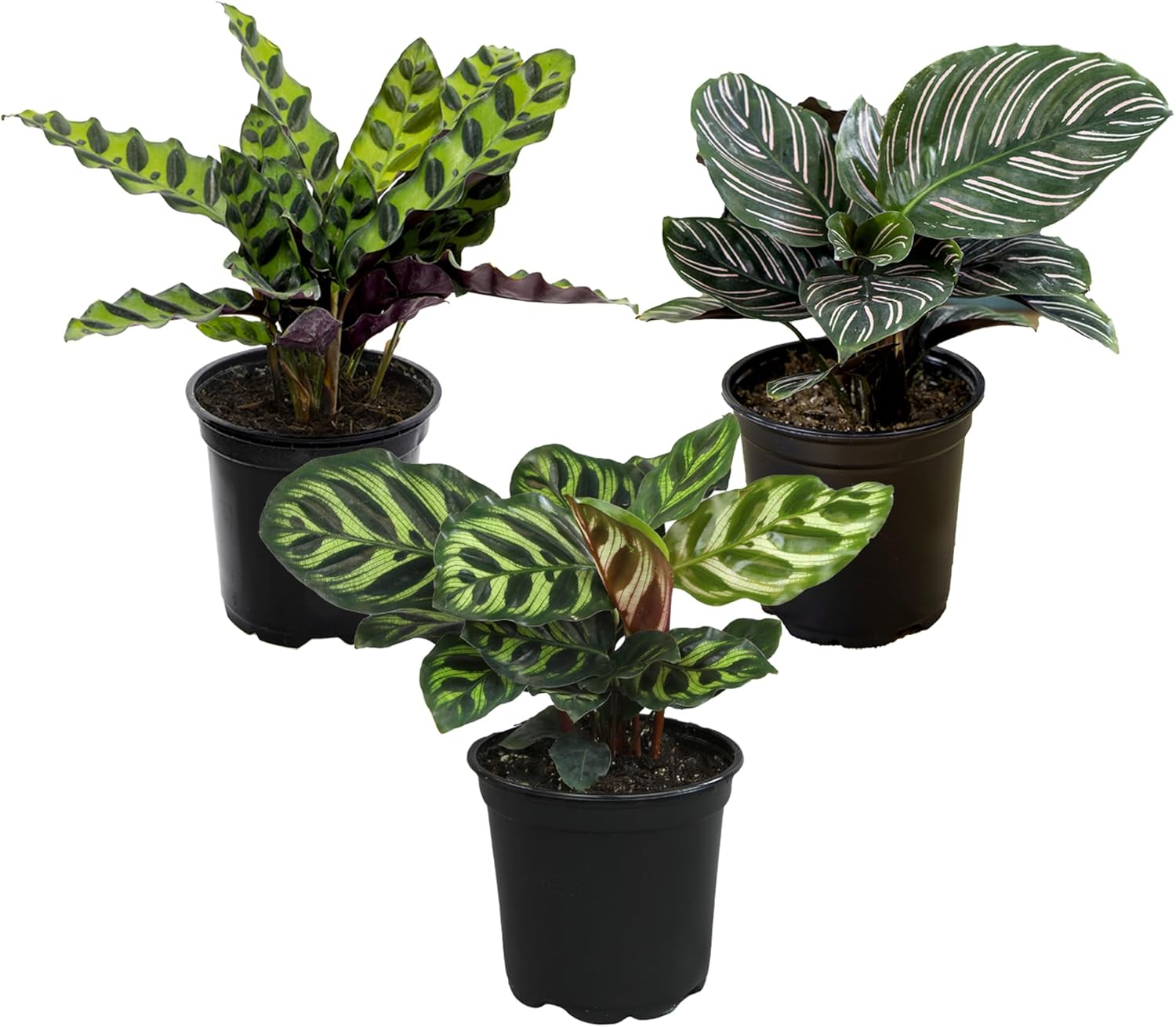
Plants for Pets Calathea 3-Pack (4" Pots) – Assorted Pet-Safe Houseplants
| Indoor Outdoor Usage | Indoor |
|---|---|
| Other Special Features of the Product | Air Purification, Pet Friendly |
| Sunlight Exposure | Partial Sun |
| Moisture Needs | Regular Watering |
| Number of Items | 3 |
This 3‑pack delivers three small, fully rooted Calathea plants in 4-inch grower pots intended for indoor use. The assortment highlights different foliage patterns such as pinstripe, rattlesnake, and orbifolia types, so you get visual variety for shelf, desk, or small terrarium displays. Calatheas prefer medium to bright indirect light but tolerate lower light levels common in indoor rooms, and they respond well to regular watering and occasional feeding during the growing season. Notable features include being listed as pet-friendly and offering air‑purifying benefits, which makes them sensible choices for homes with pets and for improving indoor air quality. Practical limitations are that these tropical plants like steady warmth and humidity, so they need protection from drafts and may require a humidifier, misting, or pebble tray to thrive in drier indoor climates. In a terrarium or low‑light corner they will perform best when humidity is kept consistent and watering is monitored to avoid soggy soil.
Best for: Buyers who prioritize dependable, low‑risk houseplants that are safe around pets and that will tolerate lower indoor light while providing decorative foliage.
Less Ideal for: People seeking ultra-low maintenance plants that tolerate prolonged neglect or very dry, drafty rooms without supplemental humidity.
- Assorted foliage varieties provide visual interest across the three plants
- Pet-safe classification makes them appropriate for households with cats and dogs
- Tolerant of medium to low indirect light common in indoor and terrarium settings
- Supplied fully rooted in 4" grower pots for easy immediate display or potting on
- Require consistent humidity and warmth to avoid leaf browning and stress
- Needs regular watering and monitoring rather than a set‑and‑forget approach
Verdict: A reliable, pet-safe trio of Calathea varieties that bring decorative, low‑light tolerant foliage to indoor and terrarium setups.
Plants for Pets Pothos 4-Pack (4" Assorted)

| Indoor Outdoor Usage | Indoor |
|---|---|
| Other Special Features of the Product | Air Purification |
| Sunlight Exposure | Full Sun |
| Moisture Needs | Regular Watering |
| USDA Hardiness Zone | 3 |
This four-pack delivers beginner-friendly pothos varieties that suit low-light rooms and simple indoor care routines. Each plant comes rooted in a 4" nursery pot and the assortment rotates between familiar types such as Marble Queen, Golden, Neon, and Satin, so you get visual variety without extra effort. Pothos are typically grown in hanging planters, on shelves, or trained up a support; they prefer bright, indirect light but tolerate lower light levels that many apartments and offices have. The listing emphasizes air-purifying benefits and gives clear care guidance: allow the soil to dry between waterings and keep temperatures above about 60 F. Practical strengths are resilience, fast trailing growth for a lush look, and compatibility with common indoor spots like living rooms, kitchens, or bathrooms. Limitations are that you may receive different varieties than pictured and plants arrive in small 4" pots, so plan to repot sooner if you want bigger specimens or longer-term display without frequent watering.
Best for: Buyers who want low-maintenance greenery for indoor spaces and prefer reliable, easy-to-care-for plants that tolerate lower light and occasional neglect.
Less Ideal for: Growers seeking large, mature plants ready for instant statement displays or those who want guaranteed, specific rare varieties.
- Easy to grow and tolerant of low to bright indirect light
- Four different varieties provide visual variety in one purchase
- Ships in small nursery pots that establish quickly and are ready for hanging or shelving displays
- Listed care guidance is straightforward for first-time plant owners
- Arrives in 4" pots so plants may need repotting soon for faster growth or long-term display
- Specific varieties are not guaranteed and assortment can vary
Verdict: A simple, low-maintenance way to add trailing, low-light-friendly pothos to your home with minimal fuss.
Choosing the Right Terrarium Plants for Low Light: Key Factors to Consider
Light Requirements and Placement
Low-light terrarium plants vary in how little light they can tolerate. Some species will grow slowly but remain healthy in north-facing rooms or several feet away from east- or west-facing windows, while others need consistent indirect light to avoid etiolation. Matching plant choice to the actual light level in the room reduces stretching and weak growth.
Consider placement relative to windows, artificial light sources, and seasonal changes. Even low-light species benefit from occasional indirect daylight or a brief period near brighter ambient light. If natural light is minimal, plan for supplemental LED grow lighting designed for enclosed spaces to keep colors and form healthy.
Humidity and Ventilation
Terrariums trap moisture, creating a humid microclimate that suits many low-light species but can also encourage rot and fungal growth if airflow is absent. Choose plants that tolerate steady humidity and resist waterlogged roots. Closed terrariums work well for high-humidity lovers, while open containers need species comfortable with moderate humidity and slightly drier air.
Ventilation strategy matters. Even in closed systems, occasional airing and monitoring condensate levels keep fungal issues in check. Think about how often you can open the container and whether the chosen plants need periodic drying periods between waterings.
Mature Size and Growth Rate
Compact growing plants are essential for long-term terrarium health. Fast-growers can quickly overcrowd small containers, forcing frequent pruning or repotting. Favor species with naturally small leaves, slow to moderate growth rates, and a habit that stays tidy in confined spaces.
Anticipate how large plants will be after one to two years. If you want a low-maintenance display, pick slower growers or plan a regular pruning schedule. Knowing a plant's mature height and spread helps you choose appropriate potting arrangements and companion plants.
Soil and Watering Needs
Different terrarium plants prefer different soil textures and moisture regimes. Many low-light species do best in a loose, well-draining mix with organic matter while still retaining some moisture. Overly rich or dense soils can retain too much water and promote root rot in an enclosed environment.
Match the substrate to plant preferences and container type. Closed terrariums generally need less frequent watering than open ones. Use a light touch when irrigating and watch for signs of overwatering such as yellowing leaves or persistent condensation.
Pest and Disease Resistance
Pests and fungal problems behave differently in terrariums than in open gardens. High humidity can deter some pests but favor fungus gnats, mealybugs, and molds. Selecting plants with known resistance or low susceptibility reduces maintenance headaches.
Inspect new plants carefully before adding them to a terrarium. Quarantine and treat any infestations outside the closed environment to avoid spreading pests into a sealed microhabitat. Regular visual checks help catch issues early when they are easier to manage.
Aesthetic Habit and Leaf Texture
Leaf size, color variation, and overall habit determine how attractive a terrarium looks in dim light. Small, textured leaves and variegation can add visual interest without requiring high light levels. Plants with upright, rosette, or trailing habits offer different compositional roles inside a glass vessel.
Think about contrast and scale when combining species. A few small-leafed groundcover plants can fill space while one upright or trailing specimen provides vertical interest. Choose textures and tones that remain visible under lower light so the display does not look washed out.
How to Set Up a Low-Light Terrarium
Start with a clean container and a layered substrate to establish drainage. A base layer of coarse material keeps roots from sitting in water, while an active charcoal layer helps control odors and microbial growth in closed systems. Finish with a light, airy potting mix tailored to the plants you select.
Arrange taller plants toward the back or center and low-growing species where they receive even diffuse light. Water lightly at planting and monitor condensation for the first week to calibrate future watering. If natural light is very limited, position the terrarium near indirect ambient light or add a low-output LED specifically designed for indoor plants.
- Use a mix that holds some moisture but drains well
- Include charcoal under the soil in closed terrariums
- Place plants by eventual mature size to avoid early crowding
- Limit watering until the microclimate stabilizes
Common Low-Light Terrarium Care Tasks
Routine care for low-light terrariums is minimal but important. Prune leggy growth, remove dead leaves promptly, and clean the glass to maximize available light. Watch humidity indicators like persistent condensate or dry topsoil and adjust watering frequency accordingly.
Inspect plants monthly for pests and mold. Because enclosed spaces amplify problems, address any sign of disease quickly by removing affected material and increasing ventilation until the issue resolves.
- Prune and trim to control size
- Wipe interior glass to reduce algal growth
- Air out closed terrariums briefly if fungus appears
- Check soil moisture by touch rather than schedule
Design Ideas for Dim Rooms
Compose terrariums with contrasting leaf textures and heights that remain visible in low light. Use one taller focal plant with small-leafed fillers to keep the arrangement readable when light is limited. Moss or tiny groundcovers add a finished look and help keep soil from drying unevenly.
Select containers that allow viewing from the most common vantage point. For shelves or desks, wide shallow bowls give a good surface view while deeper jars work well if the terrarium will be seen from several angles.
- Pair upright specimens with low runners for balance
- Use neutral substrate tones to make foliage stand out
- Incorporate decorative stones sparingly to define paths
When to Use Artificial Light
Artificial light is helpful when natural ambient light is negligible or inconsistent. Low-output full-spectrum LEDs designed for indoor plants supply the diffuse illumination low-light species need without overheating the container. Run lights on a timer to mimic day length and avoid continuous illumination that stresses plants.
Aim the light to provide even coverage across the terrarium rather than a single hotspot. Adjust duration seasonally if the room experiences natural variation in brightness.
- Use low-heat LEDs to avoid condensation spikes
- Set timers for about 10 to 12 hours in very dark locations
- Position lights to reduce shadows and prevent leggy growth
Combining Plants for Longevity
Select species with similar humidity and watering needs so one plant's requirements do not compromise the whole arrangement. Balance growth rates by pairing slower growers with small, manageable fillers. Consider replacing faster growers after a season if they overwhelm companions.
Stagger planting so new additions establish without disturbing established roots. Regular maintenance and occasional thinning keep the terrarium stable over multiple seasons.
- Group plants by shared moisture preferences
- Avoid mixing vining species with delicate groundcovers in tiny jars
- Plan for easy access to prune or remove specimens
How We Chose the Best Terrarium Plants for Low Light
We shortlisted plants that reliably thrive in low-light enclosed or open terrariums and focused on traits that matter for real-world container gardening. Evaluation criteria emphasized humidity tolerance, compact growth habit, light efficiency, ease of propagation, and maintenance needs. Humidity tolerance mattered because many terrariums trap moisture; we favored species that resist rot and fungal issues in steady-moist environments. Compact growth habit prevented rapid overcrowding and reduced pruning frequency in small glass vessels. Light efficiency targeted plants with low photosynthetic light requirements that do not become leggy under diffuse indoor illumination. Ease of propagation and availability of starter material influenced selection because hobbyists often expand or replace plants. Maintenance needs looked at pruning frequency, pest susceptibility, and feeding schedule. We excluded species that routinely need bright direct sun, aggressive root systems, or large mature size incompatible with typical terrarium containers. Plants requiring complex seasonal rest periods or specialized soils were also filtered out. The result is a list of options that balance low-light performance with straightforward terrarium care.
FAQ
Can terrarium plants survive with no direct sunlight?
Many low-light terrarium plants do well without direct sun, relying on diffuse ambient light. If natural light is extremely low, occasional supplemental LED lighting helps prevent stretching and maintains leaf color.
How often should I water a closed low-light terrarium?
Closed low-light terrariums typically need very infrequent watering. Check for excessive condensation or soggy soil and only add small amounts when the substrate feels dry to the touch. Overwatering is a common cause of failure in sealed containers.
Will terrarium plants need fertilizer in low light?
Plants in low-light terrariums usually need minimal feeding because growth rates are slow. Apply a diluted, balanced fertilizer sparingly during the active season when you observe new growth, but avoid heavy feeding that can promote excessive, uncontrolled growth.
How do I prevent mold in a humid terrarium?
Prevent mold by ensuring good initial cleanup of plant material, using a thin charcoal layer, avoiding overwatering, and airing the terrarium briefly if condensation or visible fungal growth appears. Removing decaying leaves promptly reduces fungal food sources.
Can I include moss in a low-light terrarium?
Yes, many mosses are well suited to low-light, high-humidity terrariums and provide attractive groundcover. Keep moss slightly moist and avoid direct bright light, which can dry or bleach delicate mosses.
Final Verdict
Choose terrarium plants for low light by prioritizing humidity tolerance, compact habits, and ease of care. Match substrate and watering to plant preferences and design arrangements with size and texture balance in mind. With the right species and basic maintenance, a low-light terrarium can be a long-lasting, low-effort focal point in dim rooms.
