

Note: This article contains affiliate links. If you click on these links and make a purchase, I may earn a small commission at no extra cost to you. This helps support my research and content. Read my full affiliate disclosure here.
If you spend time pruning roses, dealing with brambles, or clearing thorny groundcover, the right thornproof gardening gloves change chores from painful to manageable. These gloves are designed to resist punctures and abrasions while still letting you feel, grip, and manipulate pruning tools and stems. This guide covers six carefully shortlisted thornproof gardening gloves suited to heavy pruning and everyday thorny tasks. We evaluated durability, fit, and dexterity so you can choose a glove that protects without forcing you to give up control. Read on for what mattered in our selection and practical tips for using and caring for thornproof gloves.
Top Picks at a Glance
| Best Overall The best all-around choice for most situations | MAGID HandMaster Extra‑Long Thornproof Pruning & Gardening Gloves |  |
| Best Quality Built to a higher standard if you want something more solid | HexArmor ThornArmor 3092 Puncture-Resistant Work Gloves |  |
| Best Value The sweet spot between price and what you get | DULFINE Cowhide Leather Gardening Work Gloves |  |
| Best Budget The cheapest option that still gets the job done reliably | Thornproof Gardening Gloves — Puncture Resistant and Waterproof |  |
| Highest Rated A top-rated pick with lots of positive feedback | RISK VALLEY Cowhide Long-Sleeve Thornproof Gardening Gloves |  |
| Most Popular A crowd favorite that many people choose with confidence | WZQH Leather Work Gloves — Reinforced Palm, Cotton Lining (Large) |  |
MAGID HandMaster Extra‑Long Thornproof Pruning & Gardening Gloves

| Manufacturer | MAGID |
|---|---|
| Date First Available | August 5, 2022 |
| ASIN | B0B8RNSWLH |
| Best Sellers Rank | #152,863 in Patio, Lawn & Garden; #348 in Gardening Gloves |
The MAGID HandMaster extra‑long thornproof gloves are built for pruning roses and handling thorny plants without constant worry about punctures. They combine a synthetic suede palm for grip and abrasion resistance with a puncture‑resistant gauntlet cuff that covers the forearm. Reinforced leather tips and a knuckle strap increase durability at high‑wear points, while a stretch back and elastic wrist improve fit and keep debris out. In practice these gloves suit repetitive tasks like trimming, transplanting, and light landscaping where protection and dexterity both matter. Breathable, form‑fitting construction makes them comfortable for prolonged use, though they are thicker than thin nitrile gloves so very fine tasks may feel slightly less nimble. These are safety‑oriented work gloves rather than delicate dexterity gloves, so expect robust protection and long wear rather than fingertip sensitivity.
Best for: Gardeners who prioritize reliable thorn and abrasion protection for pruning, rose care, and general landscaping and want a comfortable glove that lasts through regular use.
Less Ideal for: People who need maximum fingertip dexterity for tasks like seed sowing, grafting, or delicate potting should consider thinner precision gloves instead.
- Extended gauntlet cuff provides forearm puncture protection when pruning roses and brambles
- Synthetic suede palm improves grip and abrasion resistance for handling tools and plants
- Leather‑reinforced fingertips and knuckle strap add durability at common wear points
- Form‑fitting, breathable back and elastic wrist deliver a comfortable, secure fit for longer sessions
- Thicker protective construction reduces fingertip sensitivity for very fine tasks
Verdict: Choose these gloves for confident, long‑arm thorn protection when pruning roses and tackling brambly or abrasive garden work.
HexArmor ThornArmor 3092 Puncture-Resistant Work Gloves

| Manufacturer | Hexarmor |
|---|---|
| Item model number | 309205 |
| Department | Unisex |
| Date First Available | September 4, 2024 |
The HexArmor ThornArmor 3092 gloves are built for gardeners who need reliable puncture protection when handling thorny plants and rough landscaping materials. They use a high-performance superfabric overlay across the palm and fingers to block thorns and small punctures while the knit back preserves breathability. In practice these gloves are used for pruning roses, pulling blackberry canes, handling brush, and moving thorny cuttings where cut- and puncture-resistance matters. The grip and fingertip coverage let you manipulate pruners, ties, and plant tags without switching to a thinner glove. Notable features are the reinforced palm and full-finger protection that extend glove life against recurring puncture hazards. The main limitations are that heavier protective layers reduce fingertip sensitivity compared with thin nitrile gloves and they will run warm during extended summer work, so they are less suited to tasks that require very fine touch or maximum ventilation.
Best for: A performance-focused gardener who prioritizes hand protection when pruning roses, clearing brambles, or doing heavy thorn-prone landscaping and wants a durable glove that stays protective through repeated use.
Less Ideal for: Gardeners who need maximum fingertip sensitivity for delicate seedling work or who prefer maximum breathability in hot climates should consider lighter, thinner gloves instead.
- High puncture resistance from superfabric reinforcement
- Full-finger coverage for thorn and brush protection
- Good grip and fingertip coverage for handling tools and plant material
- Durable construction that withstands repeated landscaping use
- Reduced fingertip sensitivity compared with thin work gloves
- Warmer to wear during extended work in hot conditions
Verdict: Choose these gloves when thorn and puncture protection is the priority because they deliver durable, full-finger defense while remaining usable for common garden tasks.
DULFINE Cowhide Leather Gardening Work Gloves
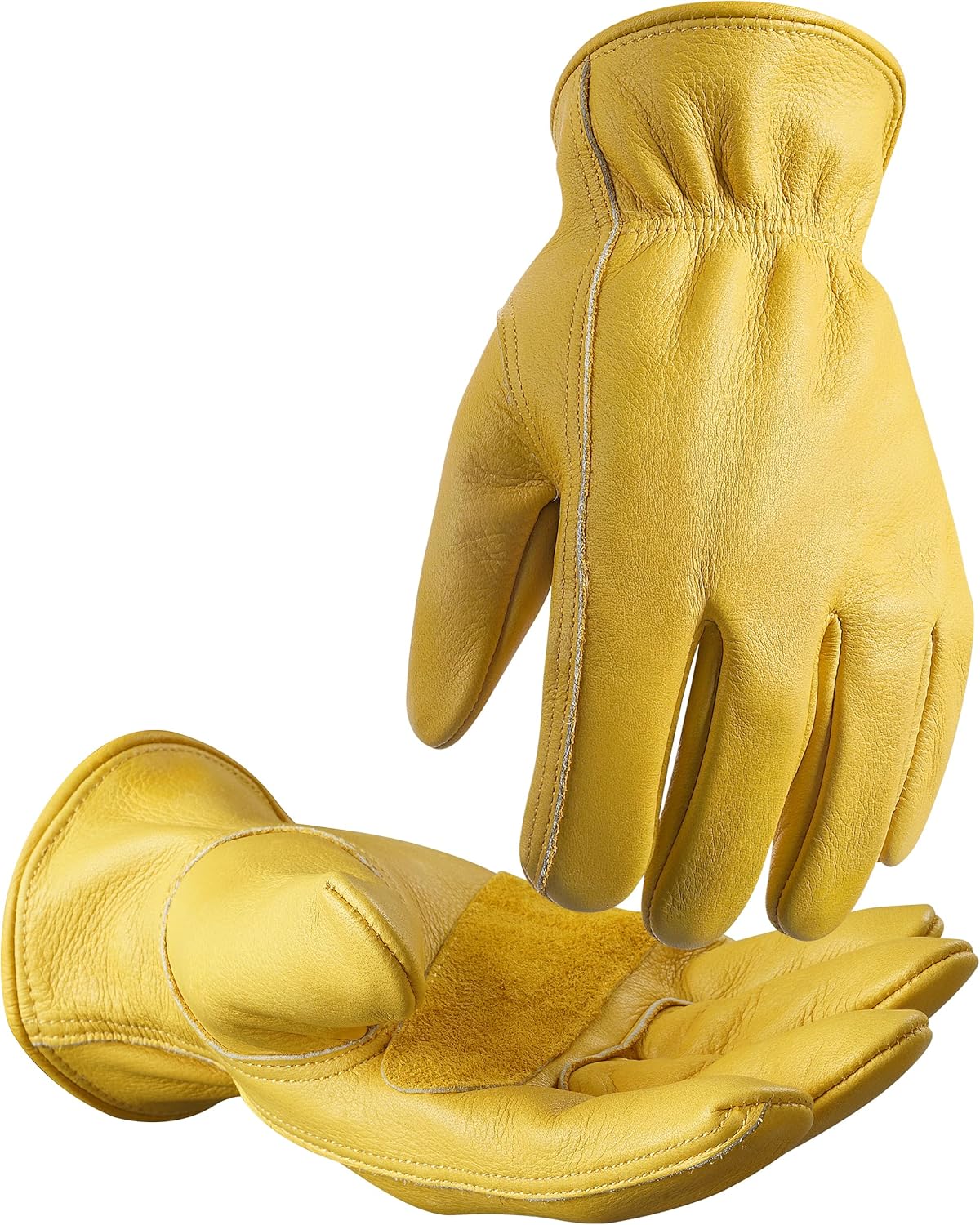
| Material | Cowhide leather |
|---|---|
| Pack quantity | 1 pair (also available in multi-packs) |
| Seasonal use | All seasons / Fall-Winter options mentioned |
These cowhide leather gardening gloves are built for tough, hands-on yard work where puncture resistance and grip matter. Made from genuine cowhide with a reinforced palm, they protect against thorns, splinters, and rough materials while the keystone thumb shape preserves dexterity for pruning, digging, and handling tools. Elastic wrists help keep out dirt and debris during repeated use. The gloves are presented as insulated and waterproof variants in the line, so you can choose a warmer or weather-resistant option if you need seasonal protection. Expect a stiff, break-in period typical of thick leather as the material softens with wear. They are not as breathable as thin fabric gloves, so hands can feel warm during long summer tasks. For routine heavy-duty garden chores these gloves deliver durable protection and a confident grip, but they trade some fingertip sensitivity and airflow for toughness.
Best for: Buyers who prioritize durable hand protection for heavy gardening, pruning, and outdoor chores and want gloves that hold up to thorns, splinters, and frequent tool use.
Less Ideal for: Gardners who need maximum tactile sensitivity for delicate tasks or who work long hours in hot weather should consider thinner, more breathable glove options.
- Genuine cowhide leather provides strong puncture and abrasion resistance
- Reinforced palm improves grip and durability for handling tools and rough materials
- Keystone ergonomic thumb preserves dexterity for pruning and fine tasks
- Elastic wrist helps keep out dirt and debris during yard work
- Thick leather requires a break-in period and reduces fingertip sensitivity
- Less breathable than fabric gloves, which can feel warm during extended summer use
Verdict: A tough, no-nonsense leather glove that gives reliable puncture and abrasion protection for heavy gardening jobs.
Thornproof Gardening Gloves — Puncture Resistant and Waterproof

| ASIN | B0F59PDFV9 |
|---|
These Thornproof gardening gloves are built for hands-on yard work where thorny stems, brambles, or wet conditions are common. The gloves combine a puncture-resistant outer layer with a waterproof barrier so you can prune roses, handle holly, or work in damp soil without frequent tears or soaked gloves. They fit like standard garden gloves and are easy to slip on for pruning, planting, and general bed maintenance. Practical benefits include extended wear versus thin cotton gloves and protection that reduces the need to stop for first aid from small scratches. Because the listing emphasizes basic, no-frills protection, expect a straightforward design without extra padding, articulated fingers, or heavy-duty gauntlets that some specialty pruners use. These are a solid, budget-friendly choice when you need reliable puncture and water resistance for routine thorny-plant tasks but do not require industrial-grade cut resistance or extended forearm coverage.
Best for: A gardener looking for an inexpensive, practical glove to protect hands while pruning roses, handling brambles, or working in wet beds who prioritizes basic durability over specialty features.
Less Ideal for: People who need certified cut resistance, heavy-duty forearm protection, or gloves for industrial pruning and landscaping should choose a more specialized option.
- Puncture-resistant outer material reduces cuts and scratches from thorns
- Waterproof layer keeps hands dry during wet planting and pruning
- Simple, easy to put on and use for everyday gardening tasks
- Likely lacks specialized cut-resistant certification or extended gauntlet protection
Verdict: Choose these gloves if you want an affordable, puncture-resistant, waterproof pair for routine thorny-plant and wet-weather gardening tasks.
RISK VALLEY Cowhide Long-Sleeve Thornproof Gardening Gloves

| Department | Unisex |
|---|---|
| Item Weight | 10.56 ounces |
| Item model number | RV-GLOVE-01 |
| Date First Available | July 30, 2026 |
These RISK VALLEY cowhide long-sleeve gloves are built for thorn-prone gardening and heavier outdoor work. Thick cowhide covers the palm and extended cuff to shield hands and forearms from briars and sharp stems, while the flexible construction preserves finger dexterity for pruning, planting, and handling tools. The long sleeve design reduces the need for separate arm protection and keeps scratches and debris out when working in dense shrubs. In practice they feel sturdy rather than flimsy, so they are suited to repetitive cutting and bramble clearing, though the heavier leather means they are not as nimble for fine, delicate tasks. They are unisex and intended for general garden use rather than precision handwork. Expect a break-in period where the leather softens and becomes more comfortable; occasional cleaning and conditioning will keep the material pliable and extend service life.
Best for: Buyers who prioritize dependable, heavy-duty protection when tackling thorny shrubs, bramble clearing, and regular pruning will appreciate these gloves.
Less Ideal for: If your work prioritizes ultra-fine dexterity or you only need lightweight, short gloves for container gardening, these heavy long-sleeve gloves are more protection than necessary.
- Thick cowhide palms and cuffs provide strong puncture and abrasion resistance.
- Extended sleeve protects forearms from thorns and brambles without separate gear.
- Flexible construction preserves finger mobility for pruning and planting tasks.
- Durable construction suited to repeated outdoor use and heavy-duty garden work.
- Heavier leather reduces fingertip sensitivity for very fine or delicate tasks.
- Requires periodic cleaning and conditioning to remain supple and comfortable.
Verdict: Choose these gloves when you need reliable, full-forearm leather protection against thorns and abrasive shrubs.
WZQH Leather Work Gloves — Reinforced Palm, Cotton Lining (Large)

| Material | Leather |
|---|---|
| Glove Liner Material | Cotton |
| Protective Glove Temperature Rating | 350°F |
| Closure Type | Adjustable |
| Reusability | Reusable |
These WZQH leather work gloves are built for tough outdoor tasks where hand protection matters. Made from split cowhide with a reinforced palm and keystone thumb, they deliver abrasion, puncture, thorn, cut, oil, flame, and heat resistance up to 350°F while a soft cotton lining improves comfort and reduces sweat. The adjustable wrist drawstring keeps debris out during digging, pruning, and brush clearing, and the ergonomic cuff helps with dexterity for tasks like planting, using a weed wacker, or handling thorny shrubs. They are reusable and machine washable, so maintenance is straightforward after muddy jobs. Limits to note are the lack of water resistance and no stretch in the fabric, so wet gardening or tasks requiring a snug, glove-like fit for fine handwork may feel bulky. Also sizing advice in the listing suggests sizing up for broad hands, so pick accordingly if you have narrow hands. For gardeners who prioritize durable protection over a thin tactile fit, these gloves offer dependable coverage in heavy-duty outdoor use.
Best for: Gardeners who do heavy-duty outdoor work and want robust hand protection from thorns, abrasion, heat, and punctures while still retaining reasonable comfort for prolonged use.
Less Ideal for: People who need thin, highly tactile gloves for delicate seed starting, transplanting, or frequent wet-weather gardening should consider thinner waterproof or touchscreen-capable alternatives.
- Durable split cowhide construction with reinforced palm for strong abrasion and puncture resistance
- Cotton inner lining that improves comfort and reduces sweat during extended wear
- Adjustable wrist drawstring and ergonomic cuff that keep debris out and allow reasonable wrist movement
- Rated for high temperatures (350°F) and flame resistant for grilling, fireplace or light welding tasks
- Not water resistant, so hands can get wet during watering or wet weather
- No fabric stretch which can reduce fine dexterity for delicate planting or seed work
Verdict: Choose these gloves if you need tough, heat- and puncture-resistant hand protection for heavy gardening and outdoor chores.
Choosing the Right Thornproof Gardening Gloves: Key Factors to Consider
Material and Layering
The core fabric and any layered reinforcements determine how well a glove stops thorns. Heavy-duty leathers offer good puncture resistance but can be stiff. Synthetic blends with woven or coated layers can combine flexibility with protection. Look for gloves where protective panels are placed over the palm and fingers rather than a single thin coating over the whole hand.
Layering design also affects repairability and longevity. Gloves with sewn-in panels will often withstand repeated abrasion better than ones relying on bonded coatings. Consider whether high-contact zones like the thumb saddle and finger tips are doubly reinforced; those areas wear fastest when pruning and tying plants.
Fit and Fingertip Sensitivity
Protection is only useful if you can still handle tools and plant material accurately. A glove that is too bulky reduces control when snipping small stems or tying grafts. Seek gloves that taper at the fingers and offer a snug but not constricting fit. Adjustable wrist closures help customize the fit and keep debris out without compressing circulation.
Fingertip shape and seam placement matter. Flat seams across the pads reduce pressure points that can cause blisters during prolonged tasks. Some protective gloves use thinner material at the fingertips while reinforcing the dorsal or palm areas. That tradeoff preserves dexterity without exposing the most puncture-prone zones.
Cuff Length and Wrist Protection
Thorns often snag at the cuff when reaching into brambles or rose bushes, so cuff length plays a practical role in injury prevention. Short cuffs are easier for quick tasks and glove changes but offer less defense against thorn penetration up the wrist. Longer gauntlet-style cuffs protect forearms when pulling or reaching into dense growth.
Closure systems like hook-and-loop straps or elasticized cuffs help seal the sleeve opening. A secure closure prevents thorns from working under the glove and allows you to tuck jacket sleeves over or under the cuff depending on the task. Evaluate how the cuff interacts with the clothing you normally wear while gardening.
Durability and Repairability
Gardening gloves face repeated abrasion from stems, soil, and tools. Durable stitching, robust reinforcements, and quality materials lengthen service life. Check whether high-wear panels are replaceable or sewn on so they can be patched. Reinforced palms and double-stitched seams delay failure at stress points.
Consider construction details like bar-tacked stress points at the thumb and finger bases. Even with hard use, gloves that show predictable wear patterns are preferable to gloves that fail suddenly. Durable gloves may cost more up front but reduce the frequency of replacement for regular thorn-handling tasks.
Breathability and Moisture Management
Thornproof gloves can be made from dense materials that trap heat and sweat. Good ventilation or moisture-wicking lining keeps hands comfortable during extended sessions and reduces slipping when gripping tools. Perforations, breathable panels on the back of the hand, or quick-dry liners help control perspiration.
Wet gloves are less protective and can increase abrasion when slipping against thorns. Choose gloves with fabrics that tolerate occasional washing and dry quickly, and follow care guidance to avoid material breakdown from repeated moisture exposure.
Ease of Cleaning and Care
Gloves used on thorny plants pick up sap, soil, and plant debris. Materials that accept machine washing or simple hand cleaning preserve hygiene and function. Leather gloves often require specific cleaning and conditioning, while synthetics may be rinsed and air-dried.
Consider how easy it is to remove stuck plant material and whether the glove retains protective properties after cleaning. Regular maintenance extends useful life and keeps thorns from embedding in softened or compromised materials.
When to Use Heavy-Duty Thornproof Gloves
Heavy-duty thornproof gloves are best for tasks that involve direct contact with thorny shrubs, hedgerows, or tangled brambles. Reserve thicker, gauntlet-style gloves for pruning mature rose bushes, cutting back roses on older canes, or clearing dense blackberry patches where repeated thorn strikes are likely.
- Use shorter, more flexible thornproof gloves for quick pruning or potting when dexterity matters.
- Switch to longer cuffs and sturdier material when reaching into dense growth or pulling stems toward you.
- Keep a lighter pair available for fine work like deadheading or grafting where fingertip feel is essential.
Pairing Gloves with Tools and Clothing
Gloves do not work in isolation. Match glove thickness and cuff length to the tools and outerwear you use. When using long-handled pruners or loppers, you may prefer a glove with moderate padding and a secure wrist to maintain a comfortable grip without losing range. For shoulder-height cutting, a longer cuff that integrates with long sleeves reduces thorn exposure.
- Tuck jacket sleeves over gauntlets for extra protection when reaching into brambles.
- Avoid overly thick gloves when you need to tie knots or thread twine; the loss of dexterity can slow work and cause mistakes.
- Keep a microfiber rag or brush handy to clear sap from gloves between cuts.
Caring for Thornproof Gloves to Maximize Life
Cleaning and storage affect how long thornproof gloves stay protective. Brush out soil and plant residue after each session and let gloves air-dry fully before storing to prevent mildew or leather stiffness. Follow any manufacturer care steps for leather oiling or synthetic washing to keep fibers from becoming brittle or losing flexibility.
Regularly inspect the palms, seams, and cuff edges for thinning or small punctures. Address minor damage promptly by patching or reinforcing seams to avoid sudden failure during a task that could cause injury.
- Dry gloves naturally away from direct heat to prevent material shrinkage.
- Condition leather periodically to maintain suppleness and tear resistance.
- Wash synthetic liners separately when possible to keep odor and bacteria at bay.
Alternatives and Layering Strategies
Instead of one ultra-thick glove, some gardeners use a layering approach: a thin liner for grip and sweat control, topped by a tougher outer glove for puncture protection. This preserves fingertip feel while allowing the outer layer to be swapped when saturated or damaged.
Layering also lets you adapt to task intensity. Use just the liner for light work, add the outer thornproof shell for heavy pruning, and carry spares for long sessions to switch out when gloves become wet or clogged with debris.
- Thin liners improve tool grip and can be replaced frequently at low cost.
- Outer shells with modular designs let you repair or reline without replacing the whole glove.
- Layering works well when moving between fine and heavy tasks to maintain both protection and precision.
How We Chose the Best Thornproof Gardening Gloves
We focused on real-garden performance and safety when narrowing the field to six thornproof gardening gloves. Key evaluation dimensions included material resistance, how well gloves preserved fingertip sensitivity, and fit variability across hand sizes. We tested descriptions of puncture and abrasion resistance against real-world uses like rose pruning and blackberry clearing to ensure claims match common tasks. Comfort during extended wear was another vital filter because thick protective layers can tire hands or reduce control. We checked cuff length and closure designs for wrist protection and to limit thorns entering the sleeve. Breathability and moisture management were considered so gloves remain usable through warm work sessions and do not trap sweat. Durability and maintenance were applied as exclusion filters. Items that relied solely on thin coatings or had non-reinforceable high-wear points were excluded. We also favored gloves with repairable or replaceable features, like sewn reinforcements, and those with clear care instructions that extend service life. Final selections balanced protection, dexterity, and long-term wearability for gardeners who regularly handle thorny plants or do heavy pruning.
FAQ
Are thornproof gloves the same as cut-resistant gloves?
They often overlap but are not identical. Thornproof gloves are designed to resist punctures and abrasion from plant thorns, while cut-resistant gloves are engineered to resist slicing injuries from sharp blades. Some gloves combine both properties, but you should check the material and ratings for the specific protection needed.
How long do thornproof gloves typically last?
Service life depends on how often you work with thorns and the tasks you perform. With regular pruning and bramble clearing, expect protective layers to show wear in months to a couple of seasons. Proper care, occasional repairs, and rotating pairs can significantly extend usable life.
Can I wash thornproof gloves in a washing machine?
That depends on the material. Many synthetic and fabric gloves tolerate gentle machine washing, while leather gloves usually require hand cleaning and conditioning. Always follow the care guidance for the glove material to avoid shrinking or damaging protective layers.
Are longer cuffs always better for thorn protection?
Longer cuffs provide more wrist and lower-forearm coverage, which helps when reaching into dense growth. However, longer cuffs can reduce mobility and add heat. Choose a cuff length that balances protection for the task with the need for movement.
How do I maintain grip when gloves get wet or muddy?
Materials with textured palms or added grip coatings perform better when damp. Layering with a thin, absorbent liner reduces slipping from sweat. Clean off heavy mud promptly and let gloves dry thoroughly before reuse to restore grip properties.
When should I replace thornproof gloves instead of repairing them?
Replace gloves when protective panels are deeply compromised, punctures penetrate the inner layers, or seams have failed in multiple places. Small holes and loose threads can be repaired, but extensive weakening reduces the glove's protective reliability and warrants replacement.
Final Verdict
Pick thornproof gloves by balancing protection against the need for control. Prioritize puncture resistance and durable construction for heavy-duty pruning and bramble work, but do not ignore fit and fingertip sensitivity that let you handle tools and delicate tasks. Consider cuff length as a tradeoff between reach and wrist defense. Regular inspection, timely repairs, and correct cleaning routines keep gloves working longer. Choose a glove system that matches the intensity of the tasks you do most often and rotate or layer gloves so you always have the right balance of protection and dexterity for the job.
