

Note: This article contains affiliate links. If you click on these links and make a purchase, I may earn a small commission at no extra cost to you. This helps support my research and content. Read my full affiliate disclosure here.
A walk in plastic greenhouse gives you more growing space than a cold frame while staying affordable and simple to manage. The right structure protects seedlings, extends the season, and provides a sheltered workspace for potting, training, and overwintering tender plants. In this guide we shortlisted the top walk in plastic greenhouses for typical backyard and patio situations, focusing on installations that balance usable interior space, weather resistance, and straightforward setup. Each pick was judged on practical garden factors you will notice day to day, including frame rigidity, covering durability, ventilation, and how the structure handles wind and snow. Read on for a clear rundown of the evaluation approach and the buying considerations that matter when choosing a walk in plastic greenhouse.
Top Picks at a Glance
| Best Overall The best all-around choice for most situations | EAGLE PEAK 8×6 Pop-Up Walk-In Greenhouse (Clear/White) |  |
| Best Quality Built to a higher standard if you want something more solid | IDEALHOUSE 6×8 ft Walk-In Greenhouse with Polycarbonate Panels and Aluminum Frame |  |
| Best Value The sweet spot between price and what you get | Ohuhu 3-Tier Walk-In Greenhouse with 12 Shelves (PE Cover, Steel Frame) |  |
| Best Budget The cheapest option that still gets the job done reliably | heyfurni Walk-In Greenhouse with 6 Shelves and Zippered PE Cover |  |
| Highest Rated A top-rated pick with lots of positive feedback | Ruelyn 6×6 ft Walk-In Greenhouse with Polycarbonate Panels and Hygrometer |  |
| Most Popular A crowd favorite that many people choose with confidence | Pure Garden Walk-In Greenhouse, 56 x 56 x 76 in |  |
| Best Seller A high-volume bestseller chosen again and again | EAGLE PEAK 8×6 Pop-Up Walk-In Greenhouse |  |
EAGLE PEAK 8×6 Pop-Up Walk-In Greenhouse (Clear/White)

| Size | 8×6 |
|---|---|
| Cover Material | Polyethylene (PE) |
| Frame Material | Alloy Steel |
| Number of Doors | 2 |
| Number Of Vents | 2 |
The EAGLE PEAK 8×6 pop-up greenhouse is a walk-in shelter that speeds seed starting and protects plants through cool weather. Its preassembled alloy-steel frame uses a patented PeakPush center lock so one person can raise the structure quickly without tools, and the heavier steel frame offers greater stability than typical lightweight pop-ups. The polyethylene cover is water-resistant and UV-treated to retain warmth and humidity while filtering sunlight, and two roll-up zippered doors plus mesh windows let you manage ventilation. It includes stakes and guy ropes for added security and can be reinforced with weights or snow clearing in bad weather. Expect straightforward use for starting seedlings, overwintering potted plants, and extending the growing season; shelving accessories can increase usable space. Limitations are typical of pop-up greenhouses: it is not a rigid permanent structure, needs anchoring in high wind or snow, and the PE cover will eventually need replacement with prolonged sun exposure.
Best for: Buyers who want a dependable, easy-to-assemble greenhouse to start seedlings and extend the growing season without hiring help, and who prioritize simple setup and reliable customer support.
Less Ideal for: Gardeners seeking a permanent, heavy-duty polycarbonate or glass greenhouse for year-round structural resistance or those needing large commercial-scale capacity.
- One-person PeakPush center lock enables fast, tool-free setup
- Alloy steel frame is heavier and more stable than many pop-up models
- UV-resistant PE cover retains warmth and humidity for season extension
- Roll-up zippered doors and mesh windows provide adjustable ventilation
- Includes stakes and guy ropes for anchoring in light to moderate wind
- Not designed as a permanent rigid structure and requires reinforcement for strong wind or heavy snow
- PE cover will degrade over time with extended sun exposure
Verdict: If you want a reliable, one-person setup greenhouse to extend your growing season with better-than-average frame stability, this pop-up is an excellent choice.
IDEALHOUSE 6×8 ft Walk-In Greenhouse with Polycarbonate Panels and Aluminum Frame
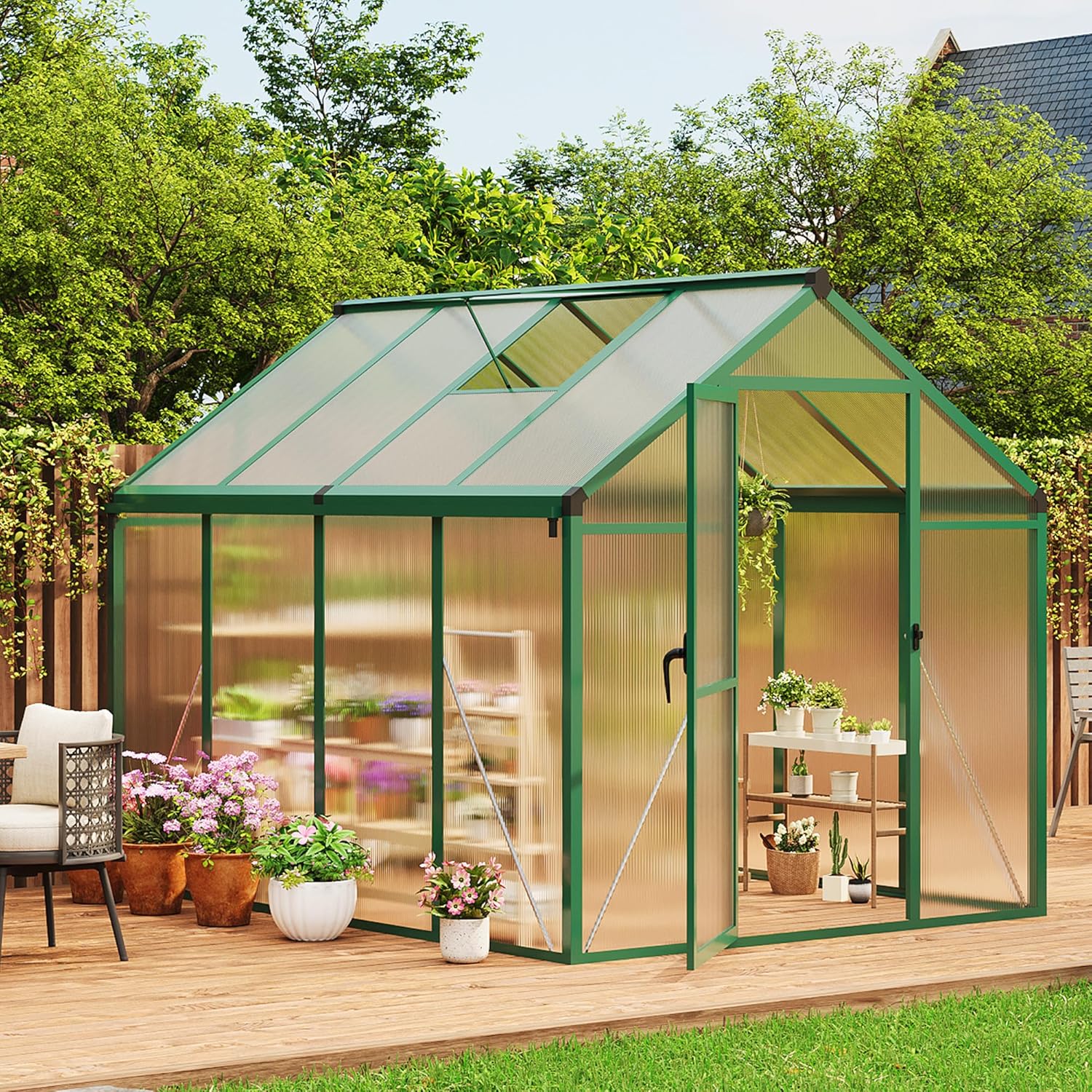
| Size | 6×8 FT |
|---|---|
| Cover Material | Polycarbonate (PC) |
| Frame Material | Aluminum Steel |
| Number Of Vents | 1 |
| Indoor Outdoor Usage | Outdoor |
This IDEALHOUSE 6×8 walk-in greenhouse is designed for gardeners who want a durable, easy-to-assemble sheltered growing space. It uses reinforced 720 g/m² polycarbonate panels that transmit light while blocking most UV and slide into an aluminum-steel frame with a slide-in assembly system that speeds setup. The greenhouse includes a roof vent and adjustable ventilation to help control temperature and airflow, plus a gutter-style water management feature for rainwater collection. In practice the structure provides a roomy footprint for seed-starting, overwintering tender plants, or extending the growing season for vegetables and ornamentals. Expect relatively straightforward assembly if you follow the instructions, but plan to handle heavy components carefully and allow for two shipments. The main limitations are the single roof vent for airflow control and the need to anchor the unit properly in exposed sites; the frame and panels are sturdy for typical garden conditions but may require additional bracing in high-wind locations.
Best for: Serious hobby gardeners who prioritize a robust, season-extension structure and want a relatively fast-build walk-in greenhouse for regular cultivation and overwintering of plants.
Less Ideal for: People needing a lightweight, ultra-portable tunnel-style greenhouse for quick seasonal use or gardeners in very windy coastal sites without plans to add extra anchoring or bracing.
- Reinforced 720 g/m² polycarbonate panels provide strong light transmission while blocking most UV
- Aluminum-steel frame offers solid structural support for outdoor use
- Slide-in panel assembly and clear instructions speed setup compared with conventional builds
- Integrated gutter system enables simple rainwater drainage and collection
- Top roof vent and adjustable ventilation help regulate internal temperature
- Only one roof vent limits fine-grained airflow control for larger heat loads
- Heavy components and sharp edges require careful handling during assembly
Verdict: A sturdily built, performance-focused 6×8 walk-in greenhouse that speeds assembly while providing durable protection for season-extension and overwintering.
Ohuhu 3-Tier Walk-In Greenhouse with 12 Shelves (PE Cover, Steel Frame)

| Size | 3 Tier 12 Shelves |
|---|---|
| Cover Material | Green PE |
| Frame Material | Alloy Steel |
| Number of Vents | 2 |
| Closure Type | Zipper |
This Ohuhu walk-in greenhouse is a straightforward solution for gardeners who want a durable, space-efficient shelter for seedlings and potted plants. It assembles with a push-fit frame and a zippered roll-up door, and the reinforced green PE cover has a UV-resistant grid and double stitching to resist tearing. Two screened windows let you ventilate without letting pests in, while the 12 metal mesh shelves (six per side) make it easy to store trays and heavier pots on multiple levels. The alloy steel frame and stakes add stability for routine outdoor use, and each shelf is rated to support heavier containers so you can maximize vertical space. Expect simple seasonal protection from frost, wind, and light snow rather than a permanent structure; the PE cover and frame are good for extended use but will need occasional retensioning and careful anchoring in strong winds. The greenhouse is practical for growers who prioritize organized, year-round gardening in a modest footprint and prefer a portable setup that can be moved or stored when not needed.
Best for: Gardeners who want an efficient, easy-to-assemble portable greenhouse to extend their season and organize many pots in a small backyard or patio.
Less Ideal for: People seeking a permanent, heavy-duty greenhouse for extreme climates or growers who need maximum light transmission for sun-loving crops.
- Reinforced PE cover with UV-resistant grid and double stitching for durable weather protection
- Alloy steel push-fit frame and included stakes provide solid stability and easy assembly
- Twelve metal mesh shelves (6 per side) maximize vertical storage for pots and trays
- Two screened windows and a zippered roll-up door allow ventilation control while keeping pests out
- Not intended as a permanent greenhouse for extreme weather conditions and may require re-anchoring after high winds
- PE cover admits less light than clear PVC options, so light-loving plants may receive slightly reduced direct sun
Verdict: Choose this greenhouse if you need a practical, easy-to-build walk-in shelter that maximizes vertical planting space and extends the growing season.
heyfurni Walk-In Greenhouse with 6 Shelves and Zippered PE Cover

| Cover Material | Polyethylene (PE) |
|---|---|
| Frame Material | Metal |
| Number of Doors | 1 |
| Closure Type | Zipper |
| Weight Capacity | Maximum weight: 17.6 pounds |
This heyfurni walk-in greenhouse is a straightforward, low-cost option for extending the growing season and protecting seedlings and potted plants outdoors. It assembles from powder-coated metal tubing and a UV-resistant PE cover, and includes six wired shelves (three per side) that hold seed trays, pots and small grow lights. A zippered roll-up door plus two velcro-covered side windows let you manage ventilation and check plants without removing the cover. Ground pegs and ropes are provided to improve stability, and the manufacturer suggests weighting the frame in windy spots. The wired shelves are rated for small loads, so this is best for seedlings, flats and lightweight pots rather than heavy ceramic containers. Because the frame and cover are lightweight, expect easier setup and portability at the expense of long-term durability in very windy or harsh conditions. For someone on a tight budget who needs a simple walk-in space for starting plants or protecting summer crops, it delivers practical features without extras.
Best for: Gardeners on a tight budget who need a simple, portable walk-in space to start seeds, grow transplants, or shelter lightweight pots on a patio, balcony or small backyard.
Less Ideal for: People seeking a heavy-duty, long-term greenhouse for large plants or permanent installation should consider sturdier framed or glazed options.
- UV-resistant polyethylene cover provides basic weather protection and helps extend the growing season
- Six wired shelves give organized space for seedlings, trays and small pots
- Zippered roll-up door and velcro side windows allow easy access and ventilation control
- Lightweight powder-coated metal frame for easier assembly and portability
- Shelves have a low maximum load and are not suited to heavy ceramic pots or large planters
- Light construction and PE cover may be less durable in very windy or severe weather conditions
Verdict: A budget-minded, easy-to-assemble walk-in greenhouse that gives organized, ventilated space for seedlings and lightweight pots.
Ruelyn 6×6 ft Walk-In Greenhouse with Polycarbonate Panels and Hygrometer

| Size | 6×6 FT |
|---|---|
| Cover Material | Polycarbonate (PC) |
| Frame Material | Aluminum |
| Number of Doors | 1 |
| Number Of Vents | 1 |
This Ruelyn 6×6 ft walk-in greenhouse is designed to give backyard growers a dependable sheltered space without taking up much yard area. It uses a corrosion-resistant aluminum frame and 0.16-inch double-wall polycarbonate panels that admit light while blocking UV, and the kit includes a hygrometer for tracking temperature and humidity. Assembly is intended for 1 to 2 people and the product ships with tools, printed instructions, and an assembly video to help you set it up quickly. Practical touches include an adjustable roof vent for airflow control, a lockable door, and three anchoring options to secure the base on soil, concrete, or wooden planks. The structure is rated to resist snow loads up to 20 PSF, so it can handle moderate winter conditions when properly anchored. Limitations are typical for a compact polycarbonate greenhouse: it is not a heavy permanent structure and will need periodic maintenance and secure anchoring in exposed locations, and interior space is limited for larger staging or shelving systems.
Best for: Buyers who prioritize a reliable, low-maintenance seasonal greenhouse for vegetables or flowers and want clear instructions and anchoring options to keep the structure secure year-round.
Less Ideal for: Gardeners who need large-scale production space or a permanent, commercial-grade greenhouse should consider larger steel-frame or polycarbonate systems instead.
- Double-wall polycarbonate panels provide light transmission with UV protection
- Aluminum alloy frame resists corrosion for longer service life outdoors
- Includes hygrometer and adjustable vent for basic climate control
- Multiple anchoring methods (soil, concrete, wood) improve stability
- Designed for quick assembly with tools, printed instructions, and video
- Small interior footprint limits plant staging and large shelving
- Not a permanent heavy-duty structure and requires regular maintenance
Verdict: A compact, well-documented walk-in greenhouse built for dependable year-round backyard growing and secure anchoring.
Pure Garden Walk-In Greenhouse, 56 x 56 x 76 in

| Material | Steel frame; PVC cover |
|---|---|
| Shelves | 8 shelves |
| Includes | Stakes, guy lines, zip ties |
This Pure Garden walk-in greenhouse is a lightweight, easy-to-assemble shelter aimed at hobby gardeners who want extra growing space without a permanent structure. The unit uses a simple steel frame with eight wire shelves that zip-tie to the frame and a clear PVC cover that rolls up for access. It is typically used on a patio, deck, or backyard to start seedlings, harden off transplants, or shelter pots from light frost and pests. The included stakes and guy lines help anchor the structure outdoors, and the multiple shelves make efficient use of the footprint for trays and small planters. Practical benefits are straightforward: fast setup with no tools, compact footprint for small yards, and good visibility through the cover. Important limitations are the lightweight frame and PVC cover, which mean it is best for mild conditions and occasional outdoor use rather than heavy winds or permanent year-round placement. Taller or larger plants will quickly outgrow the shelf spacing, so this works best for seedlings, herbs, and small container crops.
Best for: Gardeners who need an inexpensive, temporary walk-in shelter to start seedlings, overwinter small potted plants, or extend the growing season on a patio or small yard and value easy setup and visible coverage.
Less Ideal for: People seeking a heavy-duty, permanent greenhouse for large plants, year-round outdoor production, or locations exposed to frequent strong winds or snow should consider sturdier alternatives.
- Eight shelves provide organized, vertical growing space for trays and small pots
- Clear PVC cover protects seedlings from light frost and pests while allowing sunlight
- Tool-free assembly with zip ties, stakes, and guy lines for quick setup
- Compact walk-in footprint fits patios, decks, and small yards
- Lightweight steel frame and PVC cover are not suited for strong winds or heavy snow
- Shelf spacing and interior height limit use to seedlings and small containers rather than mature tall plants
Verdict: A simple, low-cost walk-in greenhouse that delivers quick, tool-free sheltered space for seedlings and small containers.
EAGLE PEAK 8×6 Pop-Up Walk-In Greenhouse

| Size | 8×6 |
|---|---|
| Cover Material | Polyethylene (PE) |
| Frame Material | Alloy Steel |
| Number of Doors | 1 |
| Number Of Vents | 2 |
The EAGLE PEAK 8×6 pop-up greenhouse is a walk-in shelter aimed at extending the growing season and protecting plants from frost and light weather. Its preassembled alloy-steel frame uses extra steel reinforcement and a patented PeakPush center lock so one person can set it up quickly without tools. The PE cover is water-resistant and UV-filtering to help retain warmth and humidity, while the roll-up zippered door and mesh vents let you manage airflow and pest access. It includes stakes and guy ropes for added stability and a ground skirt you can weight down for windy conditions. Practical benefits include ample interior space for shelving or multiple pots, straightforward seasonal use for seed starting or fall protection, and replaceable covers or frames if components wear. Important limitations are that pop-up greenhouses are not engineered for heavy snow loads or sustained high winds so you will need to clear snow and add extra anchoring or weights during storms, and the PE cover will age faster than rigid glazing in strong sun over many seasons.
Best for: Gardeners who want an easy-to-assemble, walk-in greenhouse to start seeds, protect pots, and extend the growing season with minimal setup time and hands-on maintenance.
Less Ideal for: People needing a permanent, year-round structure for heavy snow loads or high-wind exposed sites should choose a rigid-glazed or anchored greenhouse instead.
- One-person, tool-free setup with patented center lock for fast assembly.
- Sturdy alloy-steel frame reinforced for better stability than typical pop-ups.
- Water-resistant, UV-filtering PE cover that traps warmth for season extension.
- Zippered roll-up door and mesh vents for adjustable ventilation and pest control.
- Not built to withstand heavy snow or severe winds without additional reinforcement.
- PE cover will wear faster than rigid glazing and may need replacement after prolonged sun exposure.
Verdict: Buy this if you want a roomy, one-person pop-up greenhouse that balances easy setup with a stronger steel frame for reliable seasonal protection.
Choosing the Right Walk in Plastic Greenhouse: Key Factors to Consider
Frame Material and Construction
The frame supports the whole structure and determines how a greenhouse responds to wind, rain, and snow. Look for frames with thicker tubing or reinforced bracing at corners and connections. Welded or bolted joints tend to be more durable than simple slip-fit connectors because they reduce flex and wobble during gusts.
Consider corrosion resistance for metal frames and UV resistance for any plastic components. A sturdier frame typically means less routine tightening and fewer emergency repairs after storms, which is important if you plan to keep plants inside year-round.
Covering Type and UV Resistance
Plastic coverings come as single-layer film, twin-wall polycarbonate, or rigid panels, each offering different levels of insulation and durability. Thin film is light and inexpensive but will degrade faster under UV and is more prone to tears. Twin-wall polycarbonate or thicker panels provide better insulation, reduce condensation, and resist punctures.
Check for UV-stabilized ratings and available replacement panels or films. How the covering attaches to the frame also affects longevity-secure fastening systems reduce flapping that accelerates wear and protects seams from splitting.
Ventilation and Climate Control
Adequate ventilation prevents overheating in sunny weather and controls humidity to reduce disease pressure. Look for designs with roof vents, adjustable side vents, or doors that can be propped open securely. The ability to add passive or active ventilation, such as vents with screened openings or compatibility with small fans, increases versatility across seasons.
Vent placement affects air circulation patterns. High vents allow hot air to escape while lower vents pull in cooler air, helping maintain more even temperatures for seedlings and potted crops.
Size, Footprint, and Interior Layout
The greenhouse footprint should match the plants and workflow you plan to accommodate. A walk-in structure needs enough internal width for shelving, raised beds, or a potting bench while still leaving space to move and work. Consider clear internal height for trellised crops or hanging baskets.
A compact footprint saves garden space, but too-small interiors force frequent rearranging. Also think about door clearance and the path to the greenhouse so you can access it easily with tools and containers.
Anchoring and Wind Management
Secure anchoring is essential for a walk-in greenhouse because it is a larger sail in wind. Ground anchors, concrete footings, or perimeter channels that accept anchor bolts all reduce uplift risk. Plan for local wind patterns and consider additional tie-downs or guying for exposed sites.
Wind management also includes shaping and orienting the greenhouse to minimize crosswinds. Proper anchoring not only prevents structural damage but also keeps interior plant racks and benches from shifting during storms.
Ease of Assembly and Replacement Parts
A walk-in greenhouse should be something you can assemble without specialized tools, or at least with clear instructions and common fasteners. Panel routing, clip systems, and labeled parts reduce setup time. Consider how easy it is to source replacement panels, films, or fasteners if a section is damaged.
Maintenance needs such as cleaning the covering, re-tensioning film, and lubricating door tracks should be straightforward. Models with modular panels or readily available parts simplify long-term ownership and reduce downtime between seasons.
Sizing the Right Walk-In for Your Garden
Match greenhouse size to the plants and activities you expect to do inside. If you grow tall vegetables, allow extra headroom; if you plan to use shelving, prioritize length and width that accommodate standard shelf sizes. Consider how many trays or pots you will house during peak season.
Think about access paths and how you will move soil, compost, and containers. A narrow walkway might reduce usable shelving but can still work for seed starting. A slightly larger footprint gives more flexibility for winter storage and potting benches.
- Measure available outdoor space and check door swing and path clearance.
- Plan interior zones for propagation, staging, and storage.
- Leave room for future add-ons like shelving or benching systems.
Site Selection and Orientation
Choose a site with full or partial sun depending on what you plan to grow. Morning sun is especially helpful for warming seedlings early in the day. Avoid locations that are shaded by large trees, which can drop debris and shade the structure.
Orient the greenhouse to maximize sun exposure for the main growing season and to reduce wind loading on the largest surface. A longer axis running east-west can even out light distribution for plants placed on benches.
- Avoid low-lying frost pockets when possible.
- Consider proximity to water and electrical access for heaters or fans.
- Check local wind directions and shield the structure with hedges or fences if needed.
Anchoring Options and Ground Preparation
Prepare a level foundation before assembly to keep doors aligned and panels sealed. Options range from simple compacted gravel beds to timber or concrete perimeters that provide a solid base for anchoring. A level base reduces stress on door frames and improves water runoff.
Choose an anchoring method suited to your soil type and local weather. Softer soils need deeper anchors or concrete footings, while rocky sites may require bolted perimeter channels. Proper ground prep also reduces the chance of frame distortion over time.
- Level the ground and compact substrate to reduce settling.
- Select anchors rated for local wind loads.
- Plan drainage to avoid water pooling around the base.
Managing Seasonality Inside a Plastic Greenhouse
A plastic greenhouse lets you extend the growing season but requires active management across temperature swings. In spring and fall, ventilation and shade control help avoid overheating on sunny days. In winter, insulating coverings and careful venting prevent sudden temperature drops that can stress plants.
Use thermal mass such as water barrels or stone to moderate night temperatures, and adjust ventilation daily during transitional seasons. Removable insulation or bubble-wrap panels can boost low-temperature resilience without permanent modification.
- Monitor interior temps and humidity daily during extremes.
- Use shade cloths on hot days to prevent sunscald.
- Introduce thermal mass for nighttime heat retention in colder months.
Maintenance Checklist for Longevity
Regular maintenance keeps a plastic greenhouse functional for many seasons. Clean the covering and frame periodically to remove algae and debris that can accelerate material breakdown. Inspect fasteners and clips after storms and re-tension films as needed to avoid flapping.
Have basic spare parts on hand such as extra clips, weatherstripping, and a patch kit for small tears. Replace worn panels or films promptly to maintain insulation and prevent larger failures.
- Schedule seasonal inspections for frame, anchors, and coverings.
- Keep spare clips and fasteners accessible.
- Clean and disinfect interior surfaces between crops to reduce disease carryover.
How We Chose the Best Walk in Plastic Greenhouse
We evaluated models that suit small to medium home gardens and patios, prioritizing attributes that affect real-world performance and longevity. Our selection focused on structural strength, using frame material and joint design as primary filters because rigidity determines wind performance and interior usable space. We also required durable paneling or film rated for UV exposure, since sunlight and seasonal temperature swings drive degradation over time. Ventilation and access were next-tier criteria because temperature control and ease of working inside the greenhouse determine plant outcomes. We examined how each design supports airflow options and door placement. Ease of assembly and available replacement parts were included as practical filters for owners who might set up the structure themselves and maintain it season to season. Finally, footprint efficiency and modularity mattered for gardeners needing specific bed or shelving layouts. Exclusions: we excluded temporary hoop-style covers under minimal framing and shelters not intended for regular human access. We also excluded products without clear material specs or those lacking basic ventilation options. The resulting list favors options that combine robust framing, UV-resistant coverings, predictable ventilation, and straightforward maintenance-attributes that align with the scoring criteria used throughout the guide.
FAQ
How much ventilation does a walk-in plastic greenhouse need?
Ventilation needs depend on sun exposure and plant load. Most gardens benefit from at least one roof or high vent plus door access to create flow. Active ventilation, like a small fan, is useful in very sunny or densely planted setups.
Can a plastic greenhouse survive winter snow?
It depends on frame strength and covering type. Rigid panels and strong, well-braced frames can handle moderate snow if the roof slope sheds snow and you clear heavy accumulations. Lightweight film covers are more vulnerable and may need temporary reinforcement or removal in heavy-snow regions.
What is the best foundation for a walk-in greenhouse?
A level, compacted base with good drainage is the most important factor. Timber perimeter frames, compacted gravel, or concrete strips provide stable options. Choose anchoring methods matched to local soils and wind exposure for maximum stability.
How long do plastic coverings typically last?
Lifespan varies by material and exposure. Thin polyethylene film might last one to three seasons, while UV-stabilized twin-wall panels can last many years. Regular cleaning and avoiding sharp contact will extend service life.
Is it worth adding thermal mass to a small greenhouse?
Often yes. Thermal mass like water barrels or stone moderates nighttime temperature drops and reduces frost risk for marginal crops. It adds weight, so secure placement and anchoring are important, but the benefit to temperature stability is significant.
Final Verdict
Prioritize frame strength, covering quality, and ventilation when choosing a walk in plastic greenhouse. Those three factors determine how well the structure withstands weather, protects plants, and provides workable interior space. Consider site preparation and anchoring early in the decision process because a solid foundation multiplies the benefits of any greenhouse design. Balance insulation needs with ventilation to suit your climate, and plan for maintenance by ensuring replacement parts and straightforward access. With those tradeoffs in mind, you can select a walk-in greenhouse that fits your garden layout and gives reliable season extension and protected growing space.
