

Note: This article contains affiliate links. If you click on these links and make a purchase, I may earn a small commission at no extra cost to you. This helps support my research and content. Read my full affiliate disclosure here.
Young seedlings respond differently than established plants. They need steady access to the right nutrients without the salt stress or concentration spikes that can scorch delicate roots and cotyledons. Choosing a water soluble fertilizer for seedlings means picking a formulation you can dilute precisely, apply by hand or with a spray, and trust to encourage steady root and leaf development. This guide covers seven shortlisted, top-rated water soluble seedling fertilizers tested for early-stage growth. We evaluated each option for nutrient balance, dilution control, ease of use, and seed-starting safety so you can pick the right feed for your tray, pot, or plug setup. Read on to compare the decision factors gardeners care about before the product list.
Top Picks at a Glance
| Best Overall The best all-around choice for most situations | True Organic Liquid Preplant Starter – Organic Seedling Fertilizer, 32 fl oz |  |
| Best Quality Built to a higher standard if you want something more solid | MAXIROOT Organic Seedling & Clone Solution Liquid Fertilizer, 32 oz |  |
| Best Value The sweet spot between price and what you get | Park Seed Park Starts Seedling Fertilizer, 5 oz |  |
| Best Budget The cheapest option that still gets the job done reliably | TPS Nutrients Starter Plant Fertilizer, Liquid Seedling & Transplant Formula, 8 oz |  |
| Highest Rated A top-rated pick with lots of positive feedback | TPS Nutrients Seedling Fertilizer Liquid Plant Food, 8 oz |  |
| Most Popular A crowd favorite that many people choose with confidence | Miracle-Gro Quick Start Planting & Transplant Starting Solution, 48 fl. oz. |  |
| Best Seller A high-volume bestseller chosen again and again | Jack's Classic 20-20-20 All Purpose Water-Soluble Fertilizer (24 oz) | 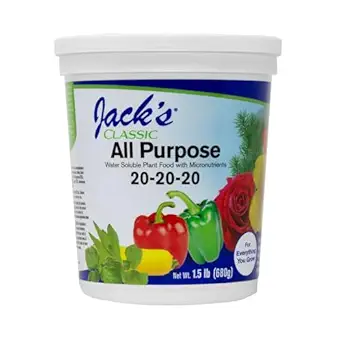 |
True Organic Liquid Preplant Starter – Organic Seedling Fertilizer, 32 fl oz

| Net volume | 32 fl oz |
|---|---|
| Coverage | Covers approximately 40 sq. ft. |
| Application rate | Mix 3 oz per gallon of water |
| Frequency | Apply every two weeks during growing season |
This True Organic Liquid Preplant Starter is a soy protein hydrolysate–based organic concentrate designed to support seedlings and young starts. It mixes into water (manufacturer directions: 3 oz per gallon) and is intended for use every two weeks during the growing season, making it practical for both in-ground and container gardens or indoor seed trays. The liquid format lets you feed delicate roots without disturbing soil, and the product is marketed to improve early establishment by providing readily available nutrients and beneficial organic compounds that also help the soil. The 32 fl oz size is positioned to cover about 40 sq ft, so it is economical for small beds or multiple starter flats. Limitations are that it is a starter feed rather than an all-season fertilizer, so you will need additional nutrient sources as plants mature, and coverage is modest if you have a large planting area. Expect gentle feeding aimed at bolstering early growth rather than correcting major nutrient deficiencies.
Best for: Gardeners who want a gentle, organic liquid feed to improve establishment of seeds and young transplants in small beds, containers, or indoor trays.
Less Ideal for: Large-scale growers or those seeking a single product to feed plants through all growth stages should consider broader NPK fertilizers or larger-volume concentrates.
- Formulated for seedlings and young starts to support early root and shoot development
- Liquid concentrate that mixes easily for foliar or root drench applications
- Organic soy protein hydrolysate base adds organic compounds that can benefit soil biology
- Suitable for both containers and in-ground use, and usable indoors for seed trays
- Designed only as a preplant/seedling starter so not intended as a full-season or sole fertilizer
- Coverage is limited for larger gardens given the stated sq ft per bottle
Verdict: A gentle organic liquid starter that makes it easy to feed and strengthen seedlings and young transplants for better establishment.
MAXIROOT Organic Seedling & Clone Solution Liquid Fertilizer, 32 oz

| Item Form | Liquid |
|---|---|
| Specific Uses For Product | Organic |
| Application Method | watering |
| Target Species | seedlings, vegetables |
| Mixing Ratio | 16:1 |
MAXIROOT Organic Seedling Solution is a ready-to-mix liquid fertilizer designed for young plants, cuttings and seedlings. It blends Ascophyllum nodosum seaweed with organic nitrogen to supply gentle, plant-available nutrients; the manufacturer recommends diluting at 16:1 (about 2 oz per gallon) and applying with watering or as a foliar feed. In practice this makes it easy to use during seed starting and for regular weekly feedings to encourage stronger root establishment, sturdier stems and greener early growth. Its organic formulation and CDFA listing make it a sensible choice for gardeners who prefer natural inputs rather than synthetic NPK concentrates. Expect even mixing and straightforward application from the liquid concentrate, but note it is aimed at early growth stages rather than heavy feeding for mature plants, and it does not list an exact NPK breakdown on the packaging details provided. For growers focused on getting vigorous seedlings ready for transplant, it offers a user-friendly way to improve early root vigor without harsh salts or concentrated chemical inputs.
Best for: Serious home growers and small-scale producers who prioritize early-stage performance and want an organic, easy-to-apply solution to build strong root systems before transplanting.
Less Ideal for: Large-scale producers seeking a full-spectrum fertilizer program for mature crops or gardeners who need precise NPK values for tailored nutrient regimens.
- Organic seaweed and fish-based ingredients suitable for seedlings and cuttings
- Liquid concentrate mixes easily for foliar or watering applications
- Formulation targets early root development and transition to vegetative growth
- CDFA organic input material listing and made in the USA
- No explicit NPK ratio printed in the provided details which limits precise nutrient planning
- Formulated for seedlings and clones so not intended as a primary feed for mature or heavy-feeding plants
Verdict: A simple, organic liquid concentrate that reliably strengthens roots and early seedling performance for growers focused on transplant-ready results.
Park Seed Park Starts Seedling Fertilizer, 5 oz

| Item Form | Granules |
|---|---|
| Specific Uses For Product | Root Development |
| Coverage | Medium |
| Target Species | seedlings |
| Mixing Ratio | 1 teaspoon per gallon (example format) |
Park Seed Park Starts is a small refill packet of water‑soluble granules designed specifically for seedlings and early root development. You mix a small amount into water or add it to the base of a propagation dome or seed flats so young roots can take up nutrients as soon as they emerge. The product dissolves instantly, is colored blue for easy identification, and is presented as a concentrated seedling formula that Park Seed says has been used for many years. Practical benefits include targeted nutrition to encourage quick, vigorous growth and an easy mixing ratio for routine watering during the propagation stage. Because it is formulated for seedlings, it is not intended as a long‑term feed for established plants and should be used sparingly to avoid overfertilizing delicate roots. The package is small and aimed at repeat buyers who start multiple batches of seedlings, so gardeners who need larger, ongoing supplies may want a bigger size or a general-purpose soluble fertilizer to cover later growth stages.
Best for: Ideal for gardeners who start many seedlings and want a simple, proven starter nutrient to give young plants a vigorous root and early growth boost.
Less Ideal for: Not the best choice for gardeners who need a single, all‑season fertilizer or who primarily feed mature plants rather than seedlings.
- Water‑soluble granules dissolve instantly for even nutrient delivery
- Formulated specifically to support root development in seedlings
- Easy to use with a simple mixing ratio for domes, seed flats, or watering cans
- Concentrated refill size for gardeners who start multiple seed batches
- Small 5 oz unit may require frequent repurchasing for high‑volume seeders
- Not formulated for long‑term feeding of established plants
Verdict: A focused, easy‑to‑use water‑soluble starter fertilizer that gives seedlings a quick root and growth boost.
TPS Nutrients Starter Plant Fertilizer, Liquid Seedling & Transplant Formula, 8 oz

| Item Form | Liquid |
|---|---|
| Application Method | Liquid |
| Coverage | Full |
| Target Species | young seeds, seedlings, and transplants |
| Mixing Ratio | 1:32 |
This 8 oz TPS Nutrients starter fertilizer is a liquid, water-soluble formula made for seeds, seedlings, and transplants to encourage quicker root establishment and steady early growth. It mixes 1:32, so a small amount stretches to cover many trays or small pots, and the liquid format makes dosing and foliar or root application straightforward. The product emphasizes gentle, balanced nutrition aimed at reducing transplant shock while supporting early-stage vigor. Practical benefits include easy measurement, fast uptake by young plants, and suitability for both indoor seedstarting and outdoor transplanting. Limitations are the small container size for larger projects and the lack of detailed N-P-K numbers on the label, which means you must trust the manufacturer for the nutrient balance rather than tailoring exact ratios. For gardeners working on a tight budget, the concentrate helps extend use, but heavy users may prefer larger sizes or a product with explicit nutrient analysis.
Best for: Budget-minded gardeners starting seeds or moving seedlings to the garden who want a simple, easy-to-mix liquid starter to improve early root growth without complicated dosing.
Less Ideal for: Growers who need precise N-P-K labeling, large-scale vegetable producers, or those who prefer granular or slow-release starter options.
- Concentrated 1:32 mixing ratio stretches an 8 oz bottle for many seedling applications
- Liquid formula allows quick uptake and easy application to trays, pots, or transplants
- Designed specifically for young seeds, seedlings, and transplants to support root development
- No explicit N-P-K values provided on the product details
- 8 oz volume may be insufficient for larger gardens or frequent use
Verdict: A compact, easy-to-mix liquid starter that gives seedlings and transplants gentle, quick-absorbing nutrition while stretching a small bottle for many applications.
TPS Nutrients Seedling Fertilizer Liquid Plant Food, 8 oz

| Item Form | Liquid |
|---|---|
| Specific Uses For Product | Vegetables, Herbs, Flowers, Houseplants |
| Coverage | Medium |
| Liquid Volume | 8 fluid ounces |
TPS Nutrients Seedling Fertilizer is a concentrated liquid plant food designed for the delicate first weeks of growth. It supplies a mild nutrient boost that encourages root development and steadier shoot growth, making it useful when starting seeds in trays or pots and when transplanting young plants. The product is intended for weekly use and is labeled safe for both indoor and outdoor seedlings including vegetables, herbs, flowers, and houseplants. Its liquid form makes dosing and mixing with water straightforward for small-scale seed-starting setups, and the 8 ounce bottle is easy to store. Practical benefits include reduced transplant shock and a formula that is gentle enough for tender sprouts. Important limitations are the small unit size if you start large numbers of seedlings and the lack of detailed N-P-K analysis on the listing, which means users seeking precise nutrient ratios will need to look elsewhere or contact the manufacturer.
Best for: Buyers who start seeds or raise small batches of transplants and want a mild, easy-to-use fertilizer to reduce transplant shock and support early root growth.
Less Ideal for: Growers who start seeds at large scale or who need exact N-P-K formulations for strict nutrient management should consider larger-volume or fully specified alternatives.
- Gentle liquid formula suited to fragile seedlings and transplants
- Promotes root establishment and early shoot development
- Labeled for indoor and outdoor use across vegetables, herbs, flowers and houseplants
- Easy to measure and mix for weekly feedings
- Small 8 fl oz bottle may not be cost-effective for large seed-starting operations
- Product listing does not show specific N-P-K numbers for precise nutrient control
Verdict: A gentle, easy-to-use liquid feed that helps seedlings establish strong roots and recover from transplanting.
Miracle-Gro Quick Start Planting & Transplant Starting Solution, 48 fl. oz.

| Item Form | Liquid |
|---|---|
| Specific Uses For Product | Agriculture,Starting |
| Application Method | Mix with water and pour around new plantings |
| Target Species | For all flowers, vegetables, trees, shrubs, transplants and seedlings |
| Mixing Ratio | Fill cap to 1st line and mix with 1 gallon of water |
Miracle-Gro Quick Start is a liquid concentrate designed for use when planting or moving seedlings and transplants. You measure the concentrate with the bottle cap, mix with a gallon of water, and pour the diluted solution around the root zone to settle soil and feed young roots. The 4-12-4 NPK formula emphasizes phosphorus to encourage root development and faster blooms versus unfed plants. Typical use is at planting and again seven days later, after which you can switch to a regular feeding schedule. Practical benefits include an easy, measured application, compatibility with flowers, vegetables, trees, shrubs and seedlings, and clear instructions for gardeners who want a simple transplant routine. Limitations to note are that this is a starter solution only, so it is not intended as a long-term sole fertilizer, and frequent large-scale applications without following label guidance could overfeed delicate seedlings. Also it is a liquid concentrate, so you need a watering can and care when diluting to avoid spills or accidental over-concentration.
Best for: Gardeners who want a simple, reliable way to reduce transplant shock and give seedlings a nutrient-rich start when planting in beds or containers.
Less Ideal for: People seeking an all-in-one, long-term fertilizer solution for ongoing feedings or those who prefer granular or organic-only products.
- Focused 4-12-4 NPK formula to encourage root development at transplanting
- Liquid concentrate with a measured cap makes dosing straightforward
- Suitable for a wide range of plants including vegetables, flowers, shrubs and trees
- Simple application that settles soil and feeds roots right after planting
- Designed as a short-term starter solution rather than a complete feeding program
- Requires correct dilution and handling to avoid overfeeding seedlings
Verdict: Use this easy-to-dose liquid starter to give seedlings and transplants a nutrient boost that helps roots establish quickly.
Jack's Classic 20-20-20 All Purpose Water-Soluble Fertilizer (24 oz)

| Item Form | Powder |
|---|---|
| Specific Uses For Product | Plant Growth |
| Coverage | All |
| Mixing Ratio | 0.22 |
Jack's Classic 20-20-20 is a professional‑grade, water‑soluble powder fertilizer intended for general feeding of indoor and outdoor plants. You dissolve the measured spoonfuls in water and apply as a root drench or foliar spray every 7 to 14 days, or use weaker mixes for seedlings and cuttings. The even 20-20-20 NPK formula promotes quick green‑up and leaf expansion, while included micronutrients support overall plant health. Because it is a powder concentrate, a small tub makes multiple gallons of feed, which is convenient for regular maintenance across beds, containers, and ornamentals. The product ships with a measuring spoon and clear directions, so it is easy to dose consistently. Limitations to note are that it is a generalist formula rather than crop‑specific booster, so plants with specialized needs may do better with targeted blends, and it requires careful handling and dilution to avoid overfeeding. Protective handling is recommended since the powder can irritate skin and eyes.
Best for: Gardeners who want a reliable, easy-to-use all‑around fertilizer for regular maintenance of outdoor beds, containers, and ornamentals and who value predictable, balanced nutrition.
Less Ideal for: Growers seeking a specialized bloom booster or a fertilizer tailored to a single crop should choose a targeted formula instead.
- Balanced 20-20-20 NPK supports fast green-up and leaf growth across many plant types
- Water‑soluble powder stretches farther than comparable liquid feeds so one tub makes multiple gallons
- Usable as both foliar spray and root feed for flexible application
- Includes measuring spoon and clear mixing directions for consistent dosing
- Added micronutrients reduce need for separate supplements
- General all-purpose formula is not optimized for bloom or fruit boosting
- Requires accurate measuring and dilution to avoid fertilizer burn
Verdict: A straightforward, professional‑grade balanced fertilizer that delivers reliable, easy-to-dose nutrition for maintaining healthy outdoor plants.
Choosing the Right Water Soluble Fertilizer for Seedlings: Key Factors to Consider
N-P-K Ratio for Early Growth
Seedlings need a different balance of macronutrients than mature plants. A feed slightly higher in nitrogen encourages leaf and stem growth but should not overwhelm tiny roots. A balanced but mild N-P-K ratio helps seedlings build foliage while supporting early root development.
Concentrated high-N formulas can cause rapid foliage that outpaces root ability or burn fragile tissue if not diluted properly. Look for soluble fertilizers with clearly stated low-dose recommendations for seedlings so you can encourage steady, healthy growth without shock.
Dilution Control and Mixing Instructions
Precise dilution is the single most important safety control when feeding seedlings. Small differences in concentration can mean the difference between nourishment and salt damage. Products with specific seedling or propagation dilution rates make it easy to mix safe solutions for trays and plugs.
Also consider packaging that lists teaspoons or milliliters per liter, whether it includes a measuring scoop, and whether the instructions cover both foliar spray and root drench methods. Clear instructions reduce guesswork and help you avoid under- or overfeeding during the first critical weeks.
Solubility and Solution Clarity
Water soluble fertilizers should dissolve completely and leave a clear solution suitable for fine watering devices and sprays. Poorly soluble mixes can clog spray nozzles and lead to uneven nutrient delivery across trays. Sediment in the solution also makes it hard to judge concentration and can trap salts against roots.
Choose products that state full solubility and produce a uniform liquid at recommended dilutions. For hobby seed-starting, mixes that dissolve fully in both warm and cool water offer more reliable performance.
Micronutrient Presence
Seedlings benefit from trace nutrients such as iron, manganese, zinc, and boron even at early stages because these elements support chlorophyll formation and enzyme systems. A complete micronutrient profile helps prevent subtle deficiencies that show up as stunted growth or pale leaves.
Fertilizers that include chelated iron or a labeled micronutrient mix give a safety margin in soilless mixes and fresh potting blends where micronutrient availability can be limited.
Application Versatility for Trays and Small Pots
Seed-starting setups vary from small cell trays to single pots and flats. A good water soluble seedling fertilizer should be usable for both gentle root drenches and light foliar sprays. That flexibility lets you correct early nutrient shortfalls quickly or feed without disturbing roots.
Look for products whose dilution ranges and instructions explicitly cover foliar and substrate applications. Compatibility with common watering tools and sprayers also improves practicality for routine feeding.
Salt Content and Burn Risk
High soluble salt levels can rapidly dehydrate or burn tender seedling tissues. Even a properly balanced N-P-K can cause problems if total soluble salts are high. Products that specify safe seedling dilutions and provide guidance on frequency help minimize this risk.
Consider also flushing practices and whether a fertilizer allows for reduced-frequency, lower-concentration feeds rather than repeated strong dosings. Lower salt feeds provide an error margin when gardeners miscalculate concentration.
When to Start Feeding Seedlings
Most seedlings need at least some nutrients soon after their first true leaves appear. If you started seeds in a sterile soilless mix or a lightweight seed-start mix, there may be little available nitrogen or trace elements in the first two weeks.
Begin with a very dilute solution at the first sign of true leaves. A light weekly feed is usually enough for the first month, then gradually increase concentration or frequency as roots thicken and the plants are ready to transplant.
- Start light: use lower-than-label seedling dilutions.
- Watch the first true leaves for vigor before increasing feed strength.
- If using a potting mix with starter nutrients, delay feeding until those nutrients are depleted.
How to Apply Water Soluble Feed Safely
Measure carefully and mix in a clean container. Use the smallest practical batch to avoid confusion about concentration. If using a spray bottle, label it with the dilution ratio and date.
Apply as a gentle bottom soak or a light foliar mist. Bottom watering lets roots take up nutrients without wetting delicate foliage, while foliar feeding can be effective for correcting mild deficiencies quickly. Avoid heavy leaf saturation that encourages damping off or fungal issues.
- Use room-temperature water to avoid shocking roots.
- Avoid direct midday application in hot conditions to reduce burn risk.
- Rinse trays occasionally to prevent salt buildup in the medium.
Managing Common Seedling Nutrient Problems
Yellowing of new leaves often indicates nitrogen shortage or micronutrient deficiency. Pale veins or interveinal chlorosis point more specifically to iron or manganese problems. Before increasing concentration, confirm that light, temperature, and water are correct because environmental stress can mimic nutrient issues.
If you suspect overfertilization, flush the medium with plain water at a lower volume to leach excess salts and hold off feeding for a week. Recovering seedlings often respond better to a milder regimen than to repeated strong feeds.
- Identify deficiency signs before changing fertilizer strength.
- Flush and restart with reduced concentration if burn is suspected.
- Adjust frequency rather than concentration if salt builds up.
Best Tools for Mixing and Applying Soluble Feeds
Simple measuring tools and a small graduated jug are invaluable for repeatable dilutions. Using a calibrated spray bottle or a small pump sprayer with adjustable nozzle helps apply even foliar mist or substrate drench without disturbing seedlings.
For bottom watering, shallow trays beneath flats make it easy to deliver a uniform, gentle feed. Keep a log of dilutions and application dates so you can correlate feeding with seedling response and avoid accidental overfeed.
- Keep a marked measuring spoon or mini scoop dedicated to fertilizer use.
- Label each container with concentration and date.
- Use equipment that is easy to rinse to avoid cross-contamination.
Transitioning Seedlings to Stronger Feeds
As seedlings develop more robust roots and larger leaf areas, they can handle higher nutrient concentrations. Increase feed strength gradually over several applications rather than making a single large jump. This reduces transplant shock and promotes balanced root-to-shoot growth.
Time the transition to coincide with potting up or developing a stronger root ball. After transplant, the substrate often has more buffering capacity and can tolerate fuller-strength mixes.
- Raise concentration incrementally across 2 to 4 feedings.
- Monitor for rapid leaf growth that outpaces root development.
- Hold off heavier feeding until plants show consistent vigor after potting up.
How We Chose the Best Water Soluble Fertilizer for Seedlings
We focused on practical, seed-starting needs rather than broad garden feeds. Our selection process prioritized formulations and features that matter for fragile seedlings: nutrient ratios suited to early growth, predictable solubility and dilution, low risk of salt burn, and application flexibility for foliar or media drench use. We looked for fertilizers with clear mixing instructions and consistent micronutrient presence because trace elements affect early development even at low doses. Evaluation criteria included N-P-K balance for seedling stages, clarity and ease of dilution instructions, solubility and absence of sediment, micronutrient profile, and applicator flexibility for trays and small pots. We excluded any product aimed strictly at mature plants, slow-release granular blends, or feeds with ambiguous concentration guidance that make safe dilution difficult. The result is a set of options that emphasize predictable early-stage feeding and straightforward, safe use in seed trays, cell packs, and potting mixes.
FAQ
How often should I feed seedlings with a water soluble fertilizer?
Usually once a week at a very dilute rate is sufficient for the first few weeks after true leaves appear. Frequency depends on your mix and seed-starting medium; soilless media may need more regular light feeds while mixes with starter nutrients require less frequent feeding.
Can I use the same fertilizer for foliar sprays and root drench?
Often yes, provided the product gives clear dilutions for both methods. Foliar feeds should be more dilute than root drenches because leaf surfaces absorb nutrients quickly. Always follow seedling dilution guidance when using either application style.
What dilution is safe to avoid burning seedlings?
A common approach is to use one-quarter to one-half the label rate specified for established plants when treating seedlings. Exact dilutions vary by formulation, so follow any seedling-specific guidance on the label and err on the side of weaker solutions.
Do seedlings need micronutrients or just N-P-K?
Seedlings benefit from trace elements in addition to macronutrients because micronutrients support chlorophyll production and enzyme function. In sterile or fresh potting mixes, a fertilizer that includes chelated iron and other micros reduces the risk of subtle deficiencies.
What should I do if seedlings show signs of fertilizer burn?
Stop feeding immediately and flush the medium with plain water to leach excess salts. Allow the soil to dry slightly before resuming with a much more dilute solution and monitor recovery over the next week.
Is it better to bottom-water or foliar-feed seedlings?
Both methods have advantages. Bottom watering reduces wet foliage and fungal risk while delivering nutrients to roots. Foliar feeding is faster for correcting deficiencies. Use bottom watering for routine feeds and occasional foliar sprays for quick corrections.
Final Verdict
For seedlings, prioritize predictable, low-concentration nutrition that supports root building and steady leaf development. Emphasize clear dilution instructions, full solubility, and a balanced micronutrient complement so you can feed confidently without risking salt burn. Focus on gradual increases in strength as roots mature and choose feeds that are explicitly usable for trays and foliar applications. That approach minimizes risk and helps you produce sturdy transplants ready for potting up or moving outdoors.
