

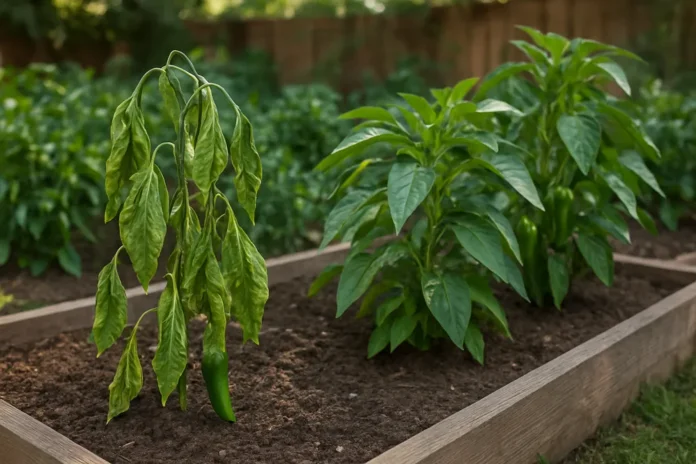
Pepper leaves usually droop because they are stressed by watering problems, high heat, root damage, transplant shock, or disease. In many cases the leaves lose firmness because the plant is struggling to move enough water from the roots to the foliage.
Seeing pepper leaves drooping can be alarming, especially when the plant looked fine a day or two earlier. The good news is that drooping does not always mean your plant is dying. Peppers are quick to show stress, and their leaves often sag before you see any yellowing, spotting, or fruit problems.
In my garden, drooping peppers are most often tied to watering swings, hot afternoons, or roots that are not happy. The trick is to look at when the leaves droop, how fast they recover, and whether the soil, stems, and newer growth look normal. Once you match the symptom pattern to the cause, it becomes much easier to help your pepper plant bounce back.
What Drooping Usually Means in Pepper Plants
Drooping happens when the leaves lose internal pressure, also called turgor. A healthy pepper keeps enough water moving from the roots through the stems and into the leaves to hold them upright. When that flow is interrupted, the foliage softens and hangs down.
That interruption can happen for several reasons. The soil may be too dry, too wet, or drying unevenly. The plant may be losing moisture faster than the roots can replace it during hot weather. Roots may be damaged, cramped, or diseased. Even a recently transplanted pepper can droop simply because it has not reestablished a strong root system yet.
- Leaves droop only in the hottest part of the day but perk back up by evening: heat stress is likely
- Leaves stay drooped morning and night and the soil feels dry: underwatering is a common cause
- Leaves stay limp even though the soil is wet: overwatering or root trouble is more likely
- A newly planted pepper droops after being moved: transplant shock is often the culprit
- Drooping comes with yellowing, stem damage, or dark roots: disease or root rot becomes more likely
When I diagnose a droopy pepper, I pay more attention to timing than to the droop itself. A plant that wilts at 3 p.m. and stands tall again after sunset is telling a very different story than one that looks limp at breakfast.
Watering Problems Are the Most Common Cause
Underwatering and Dry Root Zones
Peppers need steady moisture, especially once they start growing fast and setting fruit. If the root ball dries too much, the plant cannot keep enough water moving to the leaves, so they droop. In containers this can happen very quickly, sometimes within a single hot day.
Dryness is especially common when water only wets the soil surface. The top inch may look dark while the root zone below stays dry. In raised beds and pots, water can also run down the sides and miss the center of the root ball if the mix has become too dry.
Overwatering and Suffocated Roots
Too much water can cause the same droopy look. Pepper roots need oxygen as much as they need moisture. In constantly soggy soil, air spaces fill with water, roots struggle to breathe, and the plant wilts even though the soil feels wet. This often confuses gardeners because drooping looks like thirst, but adding more water makes the problem worse.
Overwatered peppers may also show slow growth, pale leaves, or a heavy, muddy smell in the soil. In pots, standing water in saucers or poor drainage holes can create this problem fast.
- If the soil is dry 2 inches down and the pot feels light, the plant likely needs water
- If the soil is wet, cool, and dense for days, roots may be waterlogged
- If drooping follows a cycle of bone-dry soil and then heavy soaking, inconsistent watering is stressing the plant
- Container peppers usually need more frequent watering than in-ground plants, especially in summer
I like to water peppers deeply and then let the top layer begin to dry before watering again. Small daily splashes often create shallow roots and uneven moisture, which leads to more drooping, not less.
Heat and Sun Can Make Peppers Look Worse than They Are
Peppers love warmth, but they still have limits. In very hot weather, especially when temperatures climb into the 90s and above, leaves may droop in the afternoon because the plant is losing water through transpiration faster than the roots can replace it. This kind of wilting can happen even when the soil is reasonably moist.
This is often called temporary wilt. The leaves look tired during the hottest, brightest hours but recover once temperatures drop and the sun eases. If the plant perks back up by evening, that is a strong sign the root system is functioning but struggling to keep pace with weather conditions.
Young transplants, peppers growing in black nursery pots, and plants near reflective walls or patios are especially prone to heat-related drooping. Mulch, morning sun, and some late afternoon shade can make a big difference during heat waves.
- Afternoon droop with evening recovery often points to heat stress
- Leaves may feel thin and soft, but stems stay firm
- Flowers may drop during extreme heat even if the plant survives
- Container soil can heat up enough to stress roots, not just leaves
Root Stress After Transplanting or Container Crowding
Transplant Shock
Pepper plants can be dramatic after transplanting. Even if you handle them carefully, moving them from a cell pack or nursery pot into a garden bed disrupts the roots. For a few days, sometimes a week or more, the leaves may droop while the plant adjusts and starts pushing roots into the surrounding soil.
Transplant shock is more likely when peppers go from sheltered indoor conditions to full sun and wind too quickly. Cold nights right after planting can also slow root activity and make the foliage sag.
Rootbound Peppers
A pepper that has spent too long in a small pot may have circling, congested roots. Once the roots fill the container, water drains through quickly or sits in a tight root mass without soaking evenly. Either way, the plant may droop because the root system cannot take up water efficiently.
Rootbound peppers often dry out faster than expected, even right after watering. Growth may stall, lower leaves may yellow, and fruit size can stay small until the plant gets more root room.
I have seen plenty of peppers that looked thirsty every afternoon even though I watered them well. When I slid them out of the pot, the roots were packed into a dense spiral. At that point, the issue was not just water. It was lack of usable root space.
Diseases and Pests That Can Cause Drooping
If watering and weather do not explain the wilt, it is time to look for biological problems. Several diseases interfere with the plant's ability to move water, and some pests weaken leaves and stems enough to create a droopy appearance.
Root Rot and Soilborne Diseases
Root rot is one of the most common serious causes of drooping in peppers. It usually develops in soggy soil with poor drainage. The roots turn brown, soft, or mushy instead of white and firm. As roots fail, the leaves droop even though the plant may be sitting in wet soil.
Other soilborne problems, including wilt diseases, can clog or damage the vascular system inside the plant. This may cause one-sided wilting, yellowing, stem discoloration, or a gradual collapse that does not improve after watering.
Sap-sucking Pests
Aphids, spider mites, and whiteflies can all contribute to limp foliage, especially on smaller or already stressed peppers. These pests feed on plant juices, which can leave leaves curled, weak, and droopy. Heavy infestations may also cause stippling, sticky residue, or fine webbing.
- Brown, soft roots suggest root rot
- Wilt that affects one branch more than the rest can point to vascular disease
- Sticky leaves or visible insects suggest sap-sucking pests
- Drooping plus blackened stem tissue near the soil line may mean stem or crown rot
When disease is involved, recovery is less predictable than it is with simple watering stress. A pepper can often rebound from a dry spell, but a plant with advanced root rot or wilt disease may continue declining even after conditions improve.
How to Tell Which Cause Is Affecting Your Pepper
A drooping plant tells you something is wrong, but the surrounding clues tell you what kind of stress it is dealing with. Start with the soil, then move to the weather, roots, and overall plant condition.
- Check the time of day. Afternoon-only droop often points to heat, while all-day droop suggests a deeper problem.
- Feel the soil 2 to 3 inches down. Dry soil points toward thirst, while wet soil points toward overwatering or root issues.
- Look at the newest growth. If new leaves are staying fairly healthy, the problem may be temporary stress rather than advanced disease.
- Inspect the stems and leaf undersides. Pests, discoloration, or lesions change the diagnosis.
- If the plant is in a pot, check whether roots are crowded or circling when you gently slide it out.
Also pay attention to how fast the plant changes. A pepper that revives quickly after a deep watering is very different from one that remains limp for several days. Fast recovery usually means the roots still work. Slow or no recovery suggests root injury, chronic overwatering, or disease.
What to Do to Help Drooping Pepper Plants Recover
If the Soil Is Too Dry
Water thoroughly so moisture reaches the full root zone. In containers, water until it drains out the bottom, then let excess water escape fully. In beds, water slowly enough that it sinks in rather than running off. Add mulch around the plant to reduce future moisture swings.
If the Soil Is Too Wet
Pause watering and let the root zone start to dry. Improve drainage if possible by emptying saucers, opening clogged drainage holes, or loosening compacted soil around in-ground plants. If a container mix is staying soggy for too long, repotting into a better-draining mix may be necessary.
If Heat Is the Main Issue
Keep the soil evenly moist and protect the plant during extreme afternoon heat. Shade cloth, light temporary cover, or moving containers to a spot with afternoon shade can reduce wilt. Avoid fertilizing during a heat spike, since that can add stress.
If Transplant Shock Is the Problem
Give the plant a little time. Keep moisture consistent, protect it from intense wind and harsh afternoon sun for several days, and avoid overhandling the roots again. Most healthy peppers settle in once the roots start expanding.
If Roots or Disease Are Involved
Trim back severe overwatering, improve drainage, and inspect roots if you can. Remove badly rotted roots when repotting container plants. If the plant shows strong signs of wilt disease or stem rot, it may be better to remove it rather than risk ongoing decline and spread in the garden.
- Water based on soil moisture, not on a fixed calendar alone
- Use mulch to keep root moisture more even
- Choose containers with good drainage and enough volume for mature peppers
- Harden off transplants before moving them into full sun
- Avoid leaving peppers in waterlogged soil after heavy rain
When Drooping Is Normal and when to Worry
Some drooping is temporary and not a true emergency. A pepper that wilts in late afternoon during very hot weather but recovers by sunset is often behaving normally under stress. Newly transplanted peppers can also look limp for a short time and still recover well.
You should worry more when drooping is constant, getting worse, or paired with yellowing, dark stems, mushy roots, leaf drop, or stunted growth. Those signs suggest the plant is not just reacting to weather. It is struggling with a root, drainage, or disease issue that will not fix itself.
If you are ever unsure, watch the newest growth over the next several days. Peppers recover from stress by producing healthy new leaves and stronger posture. If new growth remains wilted or distorted, keep digging into the cause.
FAQ
Should I Water My Pepper Plant Every Day if the Leaves Are Drooping?
Not automatically. Daily watering can help in very hot container conditions, but if the soil is already wet, more water can worsen the problem. Check the soil before watering rather than responding to drooping alone.
Can Pepper Leaves Droop From Too Much Sun?
Yes. During intense afternoon heat, pepper leaves can droop even in moist soil because the plant is losing water faster than it can replace it. If the plant recovers in the evening, sun and heat stress are likely involved.
Why Are My Pepper Leaves Drooping After Transplanting?
That is often transplant shock. The roots were disturbed, and the plant may be adjusting to stronger light, wind, and temperature swings. As long as the stems stay healthy and new growth improves, the plant usually recovers.
How Do I Know if My Pepper Plant Is Overwatered or Underwatered?
Feel the soil a few inches down. Dry soil and a light pot usually point to underwatering, while wet, heavy soil that stays soggy suggests overwatering. A plant in wet soil that still droops often has stressed roots.
Will Droopy Pepper Leaves Perk Back Up?
Often, yes. Peppers commonly recover from short-term thirst, heat stress, and mild transplant shock once conditions improve. Recovery is less likely when drooping is caused by root rot, stem rot, or advanced wilt disease.
Can Pests Make Pepper Leaves Droop?
Yes, especially aphids, spider mites, and whiteflies. Heavy sap-sucking infestations weaken the plant and can leave leaves limp, curled, or distorted. Check leaf undersides for insects, stippling, sticky residue, or webbing.
Do Drooping Leaves Mean My Pepper Plant Is Dying?
Not necessarily. Drooping is a stress signal, not a death sentence. Many peppers recover fully once watering, heat exposure, or root conditions are corrected.
Need the right fix fast? Read our pepper plant care and treatment guides to choose the best watering tools, mulch, containers, and disease controls for healthier plants and better harvests.
