

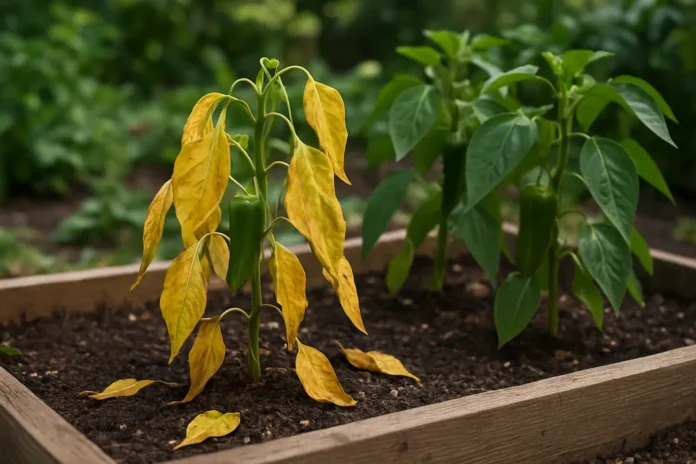
Pepper plants usually lose leaves because of stress from watering problems, temperature swings, pests, disease, or transplant shock. Sometimes they also drop older leaves as they adjust or mature.
A pepper plant losing leaves can look dramatic fast. One day it seems healthy, and a few days later you notice bare stems, yellowing leaves on the soil, or a once-full plant starting to thin out from the bottom up.
In my garden, leaf drop on peppers is usually tied to stress rather than one mysterious cause. The trick is figuring out whether that stress is coming from watering, weather, roots, pests, or disease, because the pattern of leaf loss often tells you a lot.
The good news is that many peppers can recover well if you catch the problem early. Pepper plant leaf drop is often reversible when you correct the underlying issue and give the plant a little time to push healthy new growth.
What Normal Leaf Drop Looks Like on Peppers
Not every fallen pepper leaf means trouble. As plants mature, it is normal for a few older lower leaves to yellow and drop, especially if they are shaded by dense upper growth. A pepper that is flowering heavily or setting fruit may also shed a small number of older leaves while redirecting energy.
Normal leaf drop is usually gradual and limited. The rest of the plant still looks firm, green, and active, with healthy stems, new leaves, blossoms, or fruit. If your pepper is dropping lots of leaves at once, losing leaves from the middle or top, or showing spots, curling, wilting, or stem damage, you are likely dealing with a stress issue rather than routine aging.
When I am deciding whether leaf loss is serious, I look hardest at the newest growth. If the growing tips still look clean and vigorous, the plant often has a good chance of bouncing back even if the lower leaves look rough.
Water Stress Is the Most Common Cause
Underwatering
Peppers do not like drying out too far between waterings, especially in containers or during hot weather. When roots stay dry long enough, leaves may wilt, curl, turn dull, and eventually drop. You may first notice leaf loss after a very hot day, after missing a watering, or when the potting mix has pulled away from the sides of the container.
Overwatering
Too much water can cause leaf drop just as easily. Saturated soil pushes oxygen out of the root zone, and pepper roots need air as much as moisture. Overwatered plants often look limp even though the soil is wet. Leaves may yellow before dropping, and stems can become soft if the problem continues.
- Underwatered peppers often have dry soil, crisping leaf edges, and fast wilting in heat.
- Overwatered peppers often have wet soil, yellowing leaves, and a general droopy look that does not improve overnight.
- Containers without strong drainage are especially prone to root stress and leaf loss.
- Garden beds with heavy clay can hold too much water after rain, even if the surface looks dry later.
I prefer to water peppers deeply and then let the top inch or so of soil dry slightly before watering again. Frequent shallow watering tends to create weak surface roots and more stress swings.
Temperature Swings Can Trigger Sudden Leaf Loss
Peppers are warm-season plants and react quickly to cold snaps, chilly nights, and sudden weather changes. If nighttime temperatures dip too low, leaves may yellow, droop, or fall off. Even when cold does not kill the plant outright, it can shock it enough to stop growth and shed foliage.
Extreme heat can also cause trouble, especially when high temperatures combine with dry wind or inconsistent watering. A pepper under heat stress may wilt during the day, abort blossoms, and drop leaves if it cannot keep up with moisture demand. This is common in black nursery pots, raised beds against reflective walls, or patios that trap heat.
- Cold stress often shows up after nights below about 55 degrees Fahrenheit.
- Heat stress is more likely when daytime temperatures stay in the 90s and soil dries quickly.
- Indoor peppers moved suddenly outdoors can drop leaves from sun and wind exposure, even in otherwise warm weather.
- Plants near air conditioners, drafty doors, or cold windows may also react with leaf loss.
Transplant Shock and Root Disturbance
If your pepper started losing leaves soon after planting, repotting, or moving outdoors, transplant shock is a strong possibility. Peppers can be a little touchy when their roots are disturbed. A plant that looked fine in its nursery pot may shed leaves after being planted into colder soil, handled roughly, or exposed to stronger sun and wind too quickly.
Root-bound plants can also struggle after transplanting if the root ball stays tight and does not start growing into surrounding soil. On the other end of the spectrum, damaged roots from rough handling, poor drainage, or digging around the plant can reduce water uptake and lead to leaf drop.
- Leaf loss starts within days or a couple of weeks after transplanting.
- The plant may stall without obvious pest or disease symptoms.
- Wilting happens even when soil moisture seems reasonable.
- New growth may remain small until the root system recovers.
Pests That Make Pepper Leaves Fall Off
Several common garden pests can weaken a pepper enough to cause leaf drop. Sap-sucking insects are especially common because they drain plant moisture and can distort or yellow foliage before leaves fall. In dry weather, pest damage can escalate quickly.
Aphids
Aphids cluster on tender stems and leaf undersides. Heavy infestations can cause curled leaves, sticky honeydew, stunted growth, and eventual leaf drop. Ant activity is often a clue, since ants protect aphids in exchange for honeydew.
Spider Mites
Spider mites are tiny and easy to miss, but peppers can decline fast when they are present. Look for fine webbing, speckled leaves, bronzing, and gradual leaf drop. They are especially common in hot, dry conditions and on stressed container plants.
Whiteflies and Thrips
Whiteflies flutter up when disturbed and feed on the undersides of leaves. Thrips are slender insects that scrape plant tissue, leaving silvery scarring or distorted growth. Both can contribute to leaf yellowing and shedding, and thrips can also spread viruses.
- Check leaf undersides, stem joints, and tender new growth.
- Look for sticky residue, webbing, stippling, or tiny moving insects.
- Inspect nearby plants too, since pests often spread from one container or bed to another.
- Mild infestations are easier to reverse than advanced ones.
If leaf drop is happening but the soil and weather seem fine, I flip leaves over before I do anything else. More than once, what looked like a watering problem turned out to be spider mites hiding in plain sight.
Diseases That Cause Peppers to Shed Leaves
Fungal, bacterial, and viral diseases can all lead to leaf loss in peppers. Disease-related leaf drop usually comes with other clues like spots, mottling, dark lesions, stem collapse, or a general decline that does not improve after watering.
Leaf Spot and Blight Problems
Bacterial leaf spot and several fungal leaf spot diseases can create small dark lesions that expand over time. Affected leaves often yellow around the spots, then dry out and fall. These problems spread faster in warm, wet conditions and where plants stay crowded with poor airflow.
Root Rot and Stem Rot
When roots or lower stems rot, the plant cannot move water properly. You may see sudden wilting, yellowing, and leaf drop even though the soil is moist. The stem near the soil line may look dark, shrunken, or soft in severe cases.
Viral Infections
Viruses can cause mottled leaves, puckering, distorted growth, reduced vigor, and leaf drop. Unlike simple watering stress, viral problems often create odd color patterns and twisted new growth. Infected plants usually do not recover to full health.
- Spots with yellow halos often point toward leaf disease rather than simple nutrient issues.
- Soft stems, blackened roots, or a sour smell suggest rot.
- Patchy mosaic patterns and distorted new leaves raise concern for viruses.
- Wet foliage, overhead watering, and splashing soil can worsen many disease problems.
Nutrient Problems and Poor Soil Conditions
Pepper plants need steady nutrition, but leaf drop is usually caused by severe deficiency, nutrient imbalance, or poor root conditions rather than mild hunger alone. Nitrogen deficiency can cause older leaves to yellow and fall, especially in containers where nutrients wash out faster. Magnesium deficiency may show as interveinal yellowing on older leaves before they decline.
Nutrient uptake can also be blocked by compacted soil, damaged roots, incorrect pH, or constantly soggy conditions. That means you can feed a pepper and still see leaf loss if the roots are too stressed to absorb what is there. Overfertilizing can create its own stress too, especially with strong liquid feeds or excess salts in containers.
- Older leaves yellowing evenly may suggest nitrogen deficiency.
- Yellowing between leaf veins on older leaves can point to magnesium issues.
- Burned leaf edges after feeding may indicate fertilizer stress.
- Crusted white deposits on potting mix can signal salt buildup.
How to Tell Which Cause Is Most Likely
The fastest way to diagnose pepper leaf loss is to match the symptom pattern to the plant's recent conditions. Think about what changed in the last week or two. Most peppers do not start dropping leaves for no reason.
- Check soil moisture a few inches down, not just the surface.
- Look at where the leaf drop started, lower leaves, upper growth, or all over.
- Inspect both sides of several leaves for pests, webbing, eggs, or sticky residue.
- Examine stems near the soil line for dark, soft, or sunken areas.
- Think back to recent weather, transplanting, fertilizing, or spraying.
- Notice whether new growth looks healthy, stalled, distorted, or spotted.
A plant that lost a few lower leaves after cool nights is a very different case from a plant dropping spotted leaves all over after a week of rain. The details matter more than the leaf drop alone.
What to Do to Help Your Pepper Recover
Once you identify the likely cause, focus on reducing stress and avoiding overcorrection. Peppers usually recover best when conditions become steady again. You do not need to do five treatments at once.
- Correct watering so the root zone stays evenly moist but never waterlogged.
- Improve drainage in containers or beds if excess moisture is part of the problem.
- Protect plants from cold nights with row cover, cloches, or by moving pots temporarily.
- Give newly transplanted peppers a short hardening-off period before full sun and wind exposure.
- Rinse off light pest infestations and use an appropriate garden treatment if pressure continues.
- Remove badly diseased leaves and avoid wetting foliage when watering.
- Feed lightly with a balanced fertilizer only if deficiency is likely and roots are otherwise healthy.
- Be patient and judge recovery by the quality of new leaves, not by damaged old ones.
If you are unsure of the cause, resist the urge to fertilize immediately. A stressed pepper with root trouble often gets worse from extra feeding, while stable watering and better conditions help no matter what the original trigger was.
When Leaf Drop Means the Plant May Not Recover
Some peppers rebound well after stress, but others continue declining because the root system, stem, or disease pressure is too severe. A plant is less likely to recover if the main stem is mushy at the base, the roots are black and decayed, the newest growth is badly distorted, or leaf drop is paired with widespread spotting and collapse.
If a pepper has a confirmed viral disease, severe rot, or advanced stem damage, removal is often the best choice to protect other plants nearby. I know it is frustrating, but replacing one failing pepper can be better than babying a plant that will never return to full production.
How to Prevent Pepper Leaf Drop in the Future
Prevention comes down to consistent growing conditions. Peppers are productive plants, but they like warmth, even moisture, decent airflow, and healthy roots. Most serious leaf drop starts when one of those basics stays off long enough.
- Plant peppers only after soil and nights have warmed reliably.
- Use containers with drainage holes and a quality potting mix, not heavy garden soil.
- Water deeply and consistently instead of on a rigid calendar.
- Mulch garden peppers to moderate soil moisture and temperature.
- Space plants well to improve airflow and reduce leaf disease pressure.
- Inspect regularly for aphids, mites, and whiteflies before infestations explode.
- Avoid splashing soil onto leaves and clean up fallen diseased foliage.
- Feed modestly and steadily rather than in heavy bursts.
FAQ
Can a Pepper Plant Grow Leaves Back After Dropping Them?
Yes, if the main stem and roots are still healthy, a pepper plant can usually produce new leaves after stress is corrected. Recovery is judged by fresh new growth, not by whether damaged old leaves return.
Why Is My Pepper Plant Dropping Only the Bottom Leaves?
Bottom leaf drop is often caused by normal aging, shade, mild nitrogen deficiency, or early watering stress. If the upper growth still looks healthy, the problem is usually less serious than leaf loss from the top of the plant.
Should I Remove Yellow Leaves From a Pepper Plant?
You can remove fully yellow, dead, or diseased leaves, especially if they come off easily. Leave healthy green leaves in place because the plant still needs them for energy while it recovers.
Do Peppers Lose Leaves After Transplanting?
Yes, peppers commonly drop some leaves after transplanting, especially if roots were disturbed or the plant moved into cooler, brighter, or windier conditions too quickly. Most recover once they settle in.
Can Too Much Fertilizer Make Pepper Leaves Fall Off?
Yes, excess fertilizer can burn roots, create salt buildup, and stress the plant enough to cause yellowing and leaf drop. This is especially common in containers and with concentrated liquid feeds.
What Pests Cause Pepper Plants to Drop Leaves?
Aphids, spider mites, whiteflies, and thrips are the most common culprits. They weaken peppers by feeding on leaf tissue and sap, and heavy infestations can lead to yellowing, curling, and leaf loss.
How Often Should I Water a Pepper Plant That Is Losing Leaves?
There is no single schedule that fits every plant. Water when the soil below the surface begins to dry slightly, then water deeply enough to moisten the full root zone without leaving the plant sitting in soggy soil.
Want the right fix faster? Read our guide to the best pepper plant fertilizers, pest treatments, and disease controls so you can choose the product that matches the problem.
