

Note: This article contains affiliate links. If you click on these links and make a purchase, I may earn a small commission at no extra cost to you. This helps support my research and content. Read my full affiliate disclosure here.
A worn or poorly designed trimmer head turns routine yardwork into a repeated frustration. The right Weed Eater string trimmer head changes how efficiently you maintain borders, tackle overgrowth, and finish edges, and it can cut the time you spend reloading line. This guide covers seven shortlisted options that work well in typical home yards and small properties. We evaluated each head for how easy it is to reload, how consistently it feeds and cuts line, and how durable it behaves under regular garden use. Read on to find a head that fits your tool and the type of trimming you do.
Top Picks at a Glance
| Best Overall The best all-around choice for most situations | Husqvarna T35 Professional Tap Advance Straight Shaft Trimmer Head (537388101) |  |
| Best Quality Built to a higher standard if you want something more solid | Husqvarna T25 Tap Advance Replacement String Trimmer Head |  |
| Best Value The sweet spot between price and what you get | WEED WARRIOR Autowinder II Universal Bump Feed Trimmer Head |  |
| Best Budget The cheapest option that still gets the job done reliably | Envanptaz String Trimmer Head SRM-225 (for Echo Speed Feed 400) |  |
| Highest Rated A top-rated pick with lots of positive feedback | EGO Power+ POWERLOAD 15-inch Replacement Trimmer Head (AH1522) |  |
| Most Popular A crowd favorite that many people choose with confidence | WEED WARRIOR PivoTrim Universal Pivoting 3-Line Trimmer Head |  |
| Best Seller A high-volume bestseller chosen again and again | VIABRICO Replacement Speed Feed 400 String Trimmer Head (3-Pack) |  |
Husqvarna T35 Professional Tap Advance Straight Shaft Trimmer Head (537388101)

| Power Source | manual |
|---|---|
| Cutting width | 71.3 centimeters |
| Compatible line diameters | .065" to .105" |
| Prewound line length | 28 feet (.095" line) |
The Husqvarna T35 Professional Tap Advance is a straightforward replacement trimmer head designed for straight-shaft gas trimmers. It installs in place of the OEM head and is typically used for routine edging, trimming around obstacles, and cutting back heavy grass and weeds. Notable features include a prewound spool with 28 feet of .095" Titanium Force line, a split-spool design that reduces tangling and line welding, and an easy-to-reload cap that removes without turning the trimmer upside down. The head accepts .065" to .105" line gauges, so you can tailor cutting aggressiveness and line life to the job. In practice the tap-advance feed keeps downtime low, the split spool makes reloading and field service less fiddly, and the open eyelet eases manual feeding when needed. Limitations are that it is intended for straight-shaft trimmers only and the included line gauge may be heavier than required for very fine ornamental work, so choose a thinner line if you need a finer cut.
Best for: Gardeners who want a robust, low-maintenance replacement head for heavy trimming and routine yard cleanup on straight-shaft trimmers and who value quick reloads and reliable line feed.
Less Ideal for: People who own curved-shaft trimmers or who need a very fine cutting finish for ornamental beds should look at heads designed specifically for those tools or lighter line options.
- Prewound spool with 28 feet of .095" line reduces initial setup time
- Split-spool design minimizes tangles and line welding
- Tap-advance feed and open eyelet make line feeding and on-the-job reloading easy
- Fits a wide range of line diameters (.065" to .105") for flexible cutting performance
- Built for straight-shaft trimmers only, not compatible with curved-shaft models
- Included .095" line may be overkill for delicate trimming around ornamentals
Verdict: Choose the Husqvarna T35 if you need a durable, easy-to-reload trimmer head that reduces tangles and keeps you trimming longer between reloads.
Husqvarna T25 Tap Advance Replacement String Trimmer Head

| Power Source | manual |
|---|---|
| Cutting width | 2 centimeters |
| Style Name | T25 |
| Pre-wound line size | .080 or .095 inch |
The Husqvarna T25 Tap Advance replacement head is a straightforward upgrade for homeowners who want faster line changes and fewer reload hassles. It installs like a standard trimmer head and ships pre-wound with TitaniumForce line, so you can get back to edging and trimming without spending time spooling. The split-spool design and open eyelets reduce tangling and line welding, and arrows on the spool show winding direction to avoid mistakes. Two key slots lock line ends in place which speeds reassembly and keeps the line from unraveling when you replace the cap. It works with Husqvarna 100 and 200 series straight and curved shaft trimmers and accepts .065 to .095 inch line, giving flexibility for light to medium lawn work. The head favors convenience over heavy-duty brush cutting, so expect good performance on grass, weeds, and light overgrowth but not for dense brambles or thick saplings. For a homeowner focused on quick maintenance and fewer interruptions, this head delivers reliable everyday trimming with minimal fuss.
Best for: Homeowners and DIYers who value fast, low-friction maintenance for everyday lawn trimming and want a replacement head that simplifies reloading and reduces downtime.
Less Ideal for: Landscapers or users who need a head built for heavy brush, thick woody stems, or commercial continuous use should consider more heavy-duty or brush-capable heads.
- Tap-advance design with pre-wound line reduces time spent reloading
- Split spool and open eyelets minimize tangling and line welding
- Arrows and key slots simplify correct winding and secure the line
- Compatible with a range of Husqvarna 100–200 series trimmers and accepts .065 to .095 inch line
- Designed for light to medium trimming rather than heavy brush cutting
- Compatibility limited to specific Husqvarna series, so may not fit all trimmers
Verdict: Choose the Husqvarna T25 head if you want a hassle-free, pre-wound replacement that speeds reloading and cuts down on tangles for routine lawn trimming.
WEED WARRIOR Autowinder II Universal Bump Feed Trimmer Head

| Power Source | gasoline-powered |
|---|---|
| Cutting width | 16 inches |
| Speed | 7000 rpm |
| Size | 2 Line |
| Recommended Uses For Product | trimming and edging grass with gas-powered curved or straight shaft trimmers |
The WEED WARRIOR Autowinder II is a universal bump-feed replacement head that replaces worn or broken trimmer heads on many gas-powered curved and straight-shaft string trimmers. It uses an autowinder mechanism so you crank the bump knob to wind fresh line into the spool and it accepts line diameters between 0.080" and 0.105" for flexible cutting performance. In practice the head speeds reloads because you do not need to open the housing to change line, and the bump-feed delivers quick line advance during use to reduce downtime. The head is marketed as a heavy-duty unit for regular edging, trimming, and weed cutting around lawns and landscape features. It is a universal fit intended to work with a wide range of brands, which helps if you replace multiple trimmers or want one spare head. Limitations to note are that it is designed for gas trimmers primarily, and full compatibility with every cordless model is selective so confirm fit with your trimmer; you will also still need to follow safety steps when changing line.
Best for: Buyers who want a low-fuss, replaceable trimmer head that reduces line-change hassle and works across several common trimmer brands for routine lawn maintenance.
Less Ideal for: People who only use lightweight battery trimmers not listed among supported models or who need an OEM-specific head guaranteed to match one exact model.
- Autowinder design lets you reload line without disassembling the head, saving time.
- Bump-feed advances line quickly during use to minimize interruptions.
- Accepts common line sizes (0.080"–0.105") for flexible cutting performance.
- Universal fit covers most gas trimmers and many popular cordless models, reducing compatibility worries.
- Primarily intended for gas trimmers so compatibility with some cordless models is limited.
- Does not include multiple spools or extra line in the package.
Verdict: Choose this Autowinder II head if you want a quick, tool-free line reload and a reliable bump-feed that works with most gas trimmers.
Envanptaz String Trimmer Head SRM-225 (for Echo Speed Feed 400)
| Manufacturer | Envanptaz |
|---|---|
| Item model number | STH-001 |
| Compatibility | Echo straight-shaft SRM models and listed compatible models |
| Maximum rotate speed | 10,000 RPM |
| Package quantity | 1 |
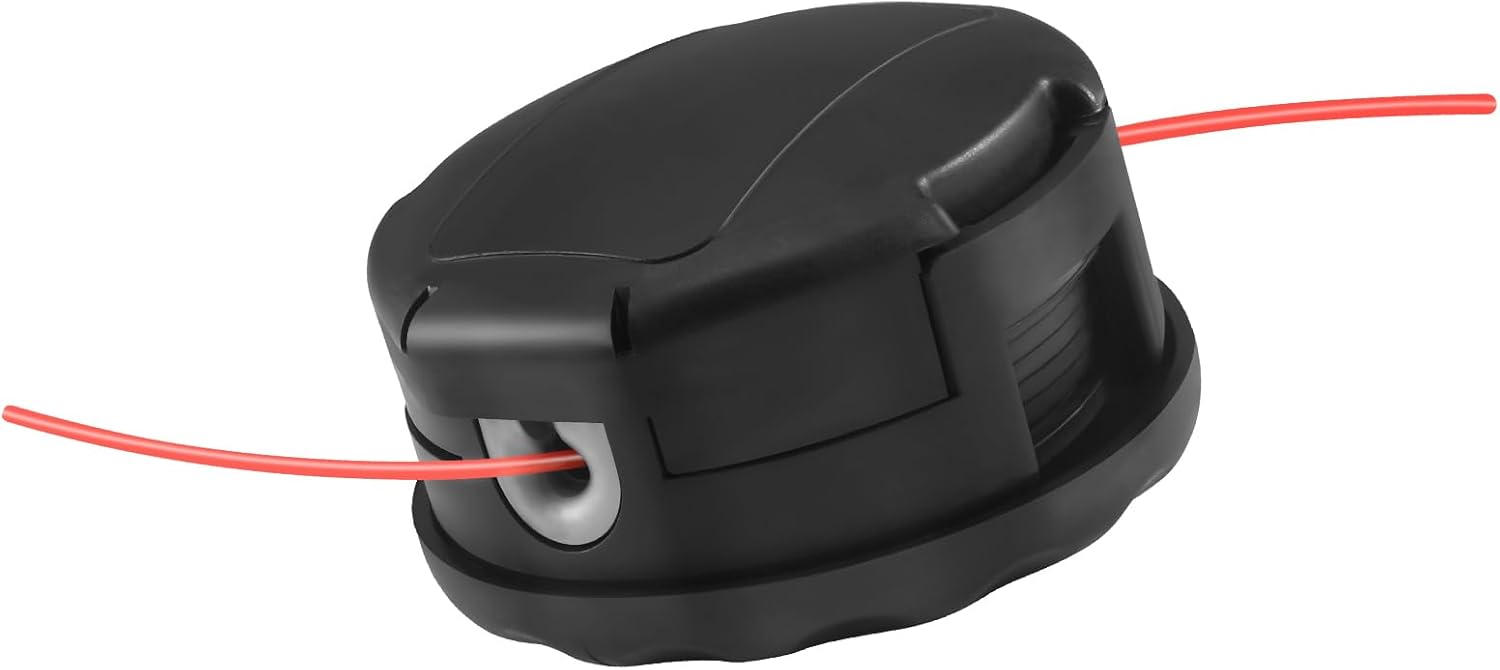
This Envanptaz trimmer head is a budget-friendly replacement for worn or damaged Speed Feed 400-style heads on Echo straight-shaft models and a range of compatible brands. It installs in place of original SRM-225/Speed Feed heads and is intended for cutting grass and light weed clumps at typical trimming RPMs up to the advertised 10,000 RPM. The head is molded from impact-resistant plastic, so it is lightweight and resists cracking during normal use. It is sold as a single head and does not include adapters, so you must already have a compatible straight-shaft trimmer or the correct adapter. In practice this head gives acceptable line feed and cutting performance for routine yard work and is a low-cost way to restore functionality to an older trimmer. Limitations are typical for economy aftermarket heads: material and longevity may not match OEM over heavy commercial use and the product is not compatible with curved-shaft models, so confirm shaft type before buying.
Best for: Buyers who need an inexpensive, functional replacement head for a straight-shaft Echo-compatible trimmer and prioritize cost savings over OEM-brand longevity.
Less Ideal for: Users with curved-shaft trimmers or professionals who need a heavy-duty OEM head for extensive commercial use should consider other options.
- Fits many Echo straight-shaft SRM models and several Shindaiwa, Husqvarna and Stihl-compatible part numbers
- Speed Feed 400-style design for simple bump or feed line replacement
- Impact-resistant plastic construction keeps weight low and resists cracks in routine use
- Advertised to operate up to 10,000 RPM, suitable for typical homeowner trimming tasks
- Sold as a single head and does not include adapters which may be needed for some trimmers
- Aftermarket plastic construction may wear faster than OEM under heavy or professional use
Verdict: A low-cost Speed Feed-style replacement that restores function to Echo straight-shaft trimmers without the premium of an OEM head.
EGO Power+ POWERLOAD 15-inch Replacement Trimmer Head (AH1522)

| Power Source | Battery Powered |
|---|---|
| Cutting width | 15 inches |
| Number of Batteries | 1 Nonstandard Battery batteries required. |
| Item Type Name | for EGO 15-Inch 56-Volt Lithium-Ion Cordless POWERLOAD™ String Trimmer ST1511T/ST1510T |
This replacement POWERLOAD trimmer head is built for EGO 15-inch 56V cordless POWERLOAD trimmers and removes much of the annoyance around line changes. It comes pre-wound with about 16 feet of professional-grade .095 in line and uses EGO’s POWERLOAD button to rewind line into the head quickly without manual spooling. In use it provides a 15-inch cutting swath and supports bump-feed line advancement for continuous trimming. The head is a genuine EGO part so it fits the ST1510T/ST1511T models without modification and matches the tool’s performance expectations. Practical benefits include much faster reloads after wear or breakage, consistent line feed, and the convenience of a ready-to-install prewound spool. Limitations are that it is specific to EGO POWERLOAD-compatible trimmers and uses a proprietary prewound system rather than standard reusable spools, so it is not a universal replacement or economical for users who prefer custom spooling methods.
Best for: Buyers who prioritize reliability and want a fuss-free, manufacturer-matched replacement that restores professional cutting performance with minimal downtime.
Less Ideal for: Users who own non-EGO trimmers or who prefer reusable spools and the lowest long-term consumable cost should consider different heads or universal options.
- Prewound spool with about 16 feet of professional .095 in line for fast installation
- POWERLOAD button allows quick, tool-free line reloading
- Designed and sold as a genuine EGO replacement to ensure fit and performance with compatible EGO trimmers
- 15-inch cutting width provides broad coverage for lawn edging and larger areas
- Only compatible with EGO POWERLOAD 15-inch trimmers so it is not a universal head
- Uses proprietary prewound system rather than a refillable, user-spooled design
Verdict: Choose this genuine EGO POWERLOAD replacement head when you want a reliable, quick-to-reload trimmer head that restores factory performance on compatible 15-inch EGO trimmers.
WEED WARRIOR PivoTrim Universal Pivoting 3-Line Trimmer Head

| Power Source | accessory |
|---|---|
| Cutting width | 0.1 inches |
| Size | 3 Line |
| Recommended Uses For Product | Brush Cutting, Edging, Trimming |
The WEED WARRIOR PivoTrim is a drop-in replacement trimmer head built to minimize line breakage when you hit fences, tree trunks, or concrete. It uses six pivoting strips of pre-cut trimmer line that flex back on impact instead of snapping, and the head accepts both .080" and .095" diameter line for broad compatibility. The unit is molded from glass-filled nylon for abrasion resistance during heavy-duty brush cutting, edging, and trimming, and the pre-cut strips make reloads quick and simple. In practice this head is useful for homeowners and pros who regularly trim near obstacles because it reduces downtime for line changes and tends to last longer than standard fixed-line heads. Limitations are that it is a replacement head rather than a full trimmer, so fit depends on your trimmer model and you will still need to keep replacement strips on hand for extended jobs. Some users may prefer bump-feed or automatic spool heads for very large yards where rapid continuous feed is required.
Best for: Buyers who value durability and reduced line breakage when trimming around obstacles and who prefer a simpler, quick-to-reload replacement head for routine yard maintenance.
Less Ideal for: Users who need an automatic or bump-feed head for very large lawns where continuous long runs without reloading are the priority.
- Pivoting line design reduces breakage when trimming against fences, trees, or concrete
- Accepts both .080" and .095" diameter line for wider trimmer compatibility
- Includes premium pre-cut trimmer line for fast reloads and less downtime
- Glass-filled nylon construction offers increased abrasion resistance for heavy use
- Requires compatibility check with your trimmer mounting system since it is a replacement head
- Not a continuous automatic-feed system so you must reload pre-cut strips for long jobs
Verdict: Choose this head if you want a durable, pivoting-line replacement that cuts downtime by resisting breakage when trimming near hard obstacles.
VIABRICO Replacement Speed Feed 400 String Trimmer Head (3-Pack)

| Bolt size | M10 x 1.25 mm |
|---|---|
| Max rotation speed | 10,000 RPM |
| Compatible line sizes | 0.080", 0.095", 0.105", 0.130" |
| Shaft compatibility | Straight shaft (10 mm female hole) |
This 3-pack VIABRICO trimmer head replaces worn Speed Feed 400-style bump heads on straight-shaft Echo and Shindaiwa trimmers. Each head is metal-reinforced with impact-resistant plastic for durability and is designed for easy line loading without disassembly by feeding the line through aligned holes and twisting the cover. It accepts common line diameters (0.080" to 0.130") and stores a generous length of line so you spend less time rethreading during routine edging and light brush clearing. The heads are compatible with a long list of PAS and SRM models but require a straight shaft and a 10 mm female hole, so check fit before buying. Practical benefits include quick field swaps, higher line capacity versus many OEM heads, and a sturdy construction that resists cracking. Important limitations are that adapters are not included and it will not fit curved-shaft trimmers, so users with those tools must look elsewhere.
Best for: Practical homeowners and yard-care pros who want a durable, easy-to-service replacement head that minimizes downtime and reduces how often you reload line during frequent trimming tasks.
Less Ideal for: Owners of curved-shaft trimmers or users who need an adapter-free universal fit across many shaft types should consider a different head designed for those machines.
- Metal-reinforced and impact-resistant plastic construction for improved durability
- Easy no-disassembly line loading for faster on-the-job maintenance
- Large line storage compatible with 0.080"–0.130" lines reduces rethread frequency
- Sold as a 3-pack so you can keep spares on hand for quick replacements
- Does not include adapters and fits only straight-shaft trimmers with a 10 mm female hole
Verdict: If you need a rugged, easy-to-load replacement head for straight-shaft Echo or Shindaiwa trimmers that keeps you trimming longer between reloads, this 3-pack is a practical choice.
Choosing the Right Weed Eater String Trimmer Head: Key Factors to Consider
Reload Ease
A trimmer head that is simple to reload saves time and reduces frustration after the inevitable line breaks. Look for designs that allow single-handed winding or quick spool swaps rather than threading long lengths of line through small ports. Clear instructions and visible line guides help when you are working in bright sun or low light. Ease of reloading also matters because frequent rethreading increases the chance of feeding errors that lead to tangles or jams.
Some heads use bump-feed mechanisms that let you add line without stopping, while others require a spool remove and rewind. Consider how often you trim and whether you are comfortable performing quick reloads on the fly. If you share tools, choose a head with a straightforward, repeatable method so multiple users can reload it consistently.
Line Feed Reliability
Reliable line feed determines whether you maintain a steady cutting diameter or spend time watching for sudden gaps. Evaluate how consistently a head advances line under different loads, including when encountering thicker weeds or when trimming near dirt that can slow rotation. Bump-feed and automatic-feed systems each have tradeoffs: bump-feed gives you manual control but can be jerky, while automatic feed can be smoother but may be sensitive to line type or head balance.
Good feed reliability reduces downtime and keeps your trimming rhythm steady. Also consider whether the mechanism is prone to jamming with wet grass or if it relies on fragile springs that can weaken over time. A dependable feed system preserves both efficiency and finish quality.
Cut Consistency
Cut consistency affects how neatly edges and overgrowth look after you finish. A head that maintains line at a uniform length delivers even cutting and simpler follow-up work. Check whether the head throws off a predictable amount of line with each feed and whether it resists premature line shedding when hitting hard objects. Balance and centrifugal design play a role here; imbalanced heads cause uneven wear and a ragged cut.
Consider the types of vegetation you trim most often. Fine lawn grass benefits from thin, fast-spinning line, while denser weeds and brush may require heavier line and a head that can handle the extra load without plucking the line free.
Compatibility and Fit
Compatibility matters because trimmer heads attach to shafts and gearboxes with a range of thread types, shaft sizes, and adapter requirements. Confirm whether the head fits direct-drive spindles or requires an adapter, and whether it suits both straight and curved shaft trimmers if you own multiple tools. Ease of installation is part of this factor: heads that require special removal tools or complex spacers add time to maintenance.
Also consider the line diameters accepted. Some heads are designed for single thin line, others accept dual-lines or heavier cord. A head that accepts common line sizes gives you flexibility to switch line types depending on the job.
Material Durability
Durability dictates how long the head stays serviceable under normal yard conditions. Heads are exposed to impacts, grit, moisture, and UV, so look for solid housings, corrosion-resistant hardware, and reinforced spools. Polymer components can be lightweight and impact-resistant, but poorly formulated plastics crack under cold or after repeated knocks. Metal components add strength but can corrode if not properly coated.
Consider how easy it is to replace wear parts like bump knobs, springs, or spools. A durable head minimizes visits to the bench and keeps your trimmer working reliably through seasons of cutting.
Balance and Vibration
Vibration affects user comfort and long-term gearbox health. A well-balanced head runs smoothly, transmits less vibration through the shaft, and allows better control when edging. Excess vibration can indicate poor assembly tolerances or an out-of-balance spool, and it accelerates wear in bearings and drive components.
Assess whether the head design centers the spool mass and whether manufacturers note balancing processes. Lower vibration means cleaner edges, less fatigue for the operator, and reduced mechanical stress on the trimmer itself.
Matching Head Type to Job
Different head designs suit different cutting tasks. Single-line heads that accept thin monofilament are excellent for light lawn maintenance and fine edging because they spin fast and cut cleanly. Dual-line heads increase cutting width and handle thicker weeds more efficiently, while heavy-duty heads designed for thicker cord or blade-style inserts tackle dense brush but sacrifice finesse on edges.
Think about how often you edge versus how often you clear tall or woody growth. If your yard is mostly lawn with occasional border cleanup, a smooth-running single or dual-line head is usually best. For property cleanup or seasonal brush clearing, a head rated for heavier line will reduce load and save time.
- Single-line: precise edging, thinner line
- Dual-line: wider cut, good for mixed vegetation
- Heavy-duty or blade-style: best for thick weeds and brush
Tools and Routine Maintenance
Routine maintenance keeps a trimmer head working reliably. Clean out grass buildup, inspect springs and bump knobs for wear, and replace spools or fasteners if they show signs of damage. A few basic tools such as a wrench for the drive nut and a small pick for clearing winding slots are usually sufficient.
Schedule a quick head inspection after heavy jobs that include stones or coarse debris. Replacing a worn bump knob or a cracked housing early prevents more expensive damage to the gearbox.
- Wipe and clear debris after each use
- Check for cracks or loose hardware monthly
- Keep spare spools and basic tools handy for quick reloads
Line Choices and Cutting Results
Line diameter and profile influence cutting performance. Round line runs smoothly and is quieter, while twisted or star-shaped profiles increase cutting aggression at the cost of faster wear. Thicker line holds up better against tough weeds but demands more power and can slow engine speed.
Match line type to the head and engine capacity. If you frequently hit gravel or hard edges, using slightly stiffer or abrasion-resistant line extends spool life. Remember that some heads work best with specific line diameters, so check fit before assuming a heavy cord will work.
- Round line: smooth, quiet, good for lawn grass
- Shaped line: more aggressive cutting for thicker growth
- Heavier diameter: better for weeds, needs more power
Installing and Aligning a Replacement Head
Proper installation reduces wobble and feed problems. Clean the mounting area, inspect the drive shaft for burrs, and follow torque guidelines where specified. Ensure the spool seats squarely and any retaining washer or nut is secured to the recommended tightness without over-torquing delicate plastic parts.
After installation, run the trimmer at low throttle and visually check balance before full-power operation. If the head vibrates noticeably, stop and re-check seating and fasteners. Correct alignment preserves bearings and gives better trimming results.
- Clean mounting surfaces before fitting
- Hand-start threads to avoid cross-threading
- Verify balance at low speed before full use
When to Replace Parts Versus the Whole Head
Minor wear such as a tired spool or a torn bump knob can often be fixed with replacement parts, which is cheaper and faster than swapping the entire head. Keep a small stock of common wear items if you trim frequently. However, cracked housings, stripped mounting threads, or a permanently deformed spool usually indicate the head should be replaced.
Assess cost and downtime. If repeated repairs are needed or the head repeatedly causes excessive vibration, replacing it prevents secondary damage to the trimmer. Choose replacement parts that match the original fit and materials to maintain performance.
- Replace spools and bump knobs as first step
- Replace the head for cracked housing or stripped threads
- Track repair frequency to decide when replacement is more economical
How We Chose the Best Weed Eater String Trimmer Head
We focused on real-world gardener priorities that affect how a trimmer head performs day to day. Key evaluation dimensions included reload simplicity, line-feed reliability under load, compatibility with common Weed Eater trimmer models and shaft types, and durability of materials and fasteners when exposed to grass, grit, and moisture. Cutting consistency was judged by how evenly the head advanced line and how well it handled both thin lawn grass and heavier weeds. We also considered vibration and balance because excessive wobble shortens bearing life and makes edging harder to control. Products were excluded if they required specialist tools for routine maintenance, lacked clear compatibility information, or depended on proprietary consumables that are hard to source. We prioritized heads that gardeners can service at home and that accept common line diameters. The scoring criteria below reflect these priorities and guided the selection of seven heads that balance ease of use, dependable feeding, and long-term durability.
FAQ
How do I know which thread or shaft type my trimmer uses?
Check the operator manual or inspect the drive nut and spindle area for markings. Many homeowners find the drive nut thread and shaft type stamped on the gearbox housing. If uncertain, remove the existing head carefully and note the thread pitch and whether the shaft is threaded or tapered.
Can I use thicker line in a head designed for thinner cord?
Usually you should not exceed the recommended line diameter because thicker line increases load and can cause overheating or stalling. Using thicker cord may also prevent proper seating of the spool and lead to feed issues. Stick to the head's specified range for best results.
Is it worth choosing an automatic-feed head over a bump-feed model?
Automatic-feed heads reduce interruptions by advancing line without tapping, but they can be more sensitive to line type and balance. Bump-feed designs give you more manual control and are often simpler to service. The better choice depends on how much continuous trimming you do and whether you prefer convenience or serviceability.
How often should I replace the spool or line?
Replace line whenever it becomes brittle, frays excessively, or regularly unravels during use. For frequent trimmers, changing spool or line every season is common. Inspect spools after heavy work and swap them if the winding is uneven or the feed mechanism shows signs of jamming.
What causes a head to wobble and how can I fix it?
Wobble can come from uneven line winding, a warped spool, loose mounting hardware, or damaged drive threads. Stop using the trimmer and check for even winding, tighten fasteners to spec, and inspect the spool and shaft for damage. Replace damaged components rather than running with persistent vibration.
Are metal components better than plastic for trimmer heads?
Metal parts offer greater impact resistance but can corrode if not treated, while quality polymers resist rust and can absorb shocks. The best choice depends on your use: frequent heavy knocks favor metal-reinforced designs, while lighter, maintenance-minded users may prefer corrosion-resistant plastic components.
Final Verdict
Pick a trimmer head that matches the work you actually do. Prioritize reload ease and reliable line feed if you value fast, low-interruption jobs, or choose a heavier-duty head and thicker line if you face persistent brush and tough weeds. Check compatibility, watch for balance and vibration, and favor designs with replaceable wear parts to extend service life. Ultimately, the right head reduces downtime and improves cutting results. Use the decision criteria above to weigh tradeoffs and select a head that keeps your garden looking tidy with minimal fuss.
