

Note: This article contains affiliate links. If you click on these links and make a purchase, I may earn a small commission at no extra cost to you. This helps support my research and content. Read my full affiliate disclosure here.
Finding the right weed killer for a St. Augustine lawn matters because this warm-season turf tolerates fewer herbicides than many other grasses. The wrong product can scorch or thin your sod, while the right one removes broadleaf weeds and lets the grass recover quickly. This guide covers five top options chosen for effectiveness on common weeds that invade St. Augustine, balanced with measures of turf safety and ease of use. We explain the practical tradeoffs, the evaluation criteria used, and what to expect from these shortlisted products before you apply them.
Top Picks at a Glance
| Best Overall The best all-around choice for most situations | Spectracide Large Plot Weed Stop for Lawns Concentrate, 1 Gal |  |
| Best Quality Built to a higher standard if you want something more solid | Celsius WG Granular Herbicide 2-Pack |  |
| Best Value The sweet spot between price and what you get | Ortho WeedClear Ready-to-Spray Weed Killer for Lawns, 32 fl. oz. |  |
| Highest Rated A top-rated pick with lots of positive feedback | Celsius WG Post-Emergent Herbicide (Backed by Bayer) | 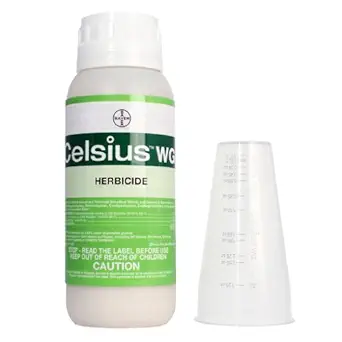 |
| Most Popular A crowd favorite that many people choose with confidence | Southern Ag Atrazine St. Augustine Weed Killer, 32 oz |  |
Spectracide Large Plot Weed Stop for Lawns Concentrate, 1 Gal

| Item Form | Liquid |
|---|---|
| Coverage | 32000 square feet |
| Unit Count | 128 Fluid Ounces |
Spectracide Large Plot Weed Stop is a concentrate designed for treating large lawns and targets over 200 listed broadleaf weeds, including dandelion, chickweed and clover. You mix the product with water and apply it with a pressure or hose‑end sprayer; the label recommends applications when daytime temperatures are between 60 and 85 degrees F and to mow before treating for best results. Notable features include root‑killing active ingredients, rainproofing within hours, and coverage claims that let a single gallon treat tens of thousands of square feet depending on grass type. In practice this makes it convenient for homeowners with extensive St. Augustine yards who want a single treatment to reduce recurring weeds and see visible results quickly. Important limitations are following the label closely to avoid turf injury in hot weather and the need for repeat spot treatments for very tough weeds. Also you must observe safety precautions to keep people, pets and water features protected until the spray dries.
Best for: Homeowners with medium to large St. Augustine lawns who want a practical, large‑coverage chemical solution to reduce broadleaf weeds and prefer mixing in a sprayer rather than spot treatments.
Less Ideal for: Small-plot gardeners who prefer non-chemical or spot-only methods and people who cannot follow temperature and safety restrictions for chemical applications.
- Concentrate formula treats large areas from one gallon, reducing trips to refill
- Kills weeds down to the root for longer control of broadleaf species
- Rainproof in a few hours so light rain soon after application is less likely to wash it away
- Works on common turf grasses including St. Augustine when used as directed
- Must avoid application when air temperatures exceed 85 degrees F to prevent turf damage
- Tough or established weeds may require repeat spot treatments
Verdict: A concentrated, large‑area weed killer that lets St. Augustine lawn owners quickly treat broadleaf weeds down to the root with minimal reapplications when used according to label directions.
Celsius WG Granular Herbicide 2-Pack

| Item Form | Granule |
|---|---|
| Covers | Up to 4,000 sq ft |
| Weeds Killed | 120+ |
| Suitable Turf | Warm-season grasses (St. Augustine, Bermuda, Centipede, Zoysia) |
Celsius WG is a granular herbicide packaged as two single-season treatments designed for warm-season turf. You apply packet one in early spring and packet two later in the season to cover weed emergence through dormancy across up to 4,000 sq ft. Its triple-mode-of-action chemistry (dicamba, thiencarbazone-methyl, iodosulfuron) targets over 120 common weeds and is intended to reduce resistance by attacking weeds in different ways. Practical benefits include clear timing (spring and fall packets), a printed weed ID card to help you target applications, and label guidance that preserves St. Augustine, Bermudagrass, centipede, and zoysia when used correctly. Results are visible within 1 to 4 weeks and treated areas are safe for pets and family once dry. Important limitations are that it is not labeled for cool-season grasses so it must not be used on tall fescue, Kentucky bluegrass, perennial ryegrass, or creeping bentgrass, and effective results depend on correct timing and applying to actively growing weeds above about 60°F.
Best for: Homeowners with warm-season lawns who prioritize reliable, performance-focused seasonal control of common lawn weeds and want a packaged spring-plus-fall program.
Less Ideal for: Gardens or lawns dominated by cool-season turf or users seeking an all-purpose, year-round herbicide for mixed-grass lawns.
- Two pre-measured packets provide a full-season spring and fall treatment cycle
- Triple-mode-of-action formula reduces likelihood of resistant weeds
- Labeled safe for major warm-season grasses like St. Augustine and Bermuda when used as directed
- Covers up to 4,000 sq ft per packet set and includes laminated weed ID cards
- Not labeled for cool-season lawns so unusable on fescue or bluegrass
- Performance depends on applying at the right temperature and active weed growth
Verdict: A two-packet, performance-focused granular herbicide that delivers season-long control for warm-season lawns when applied on schedule.
Ortho WeedClear Ready-to-Spray Weed Killer for Lawns, 32 fl. oz.

| Item Form | Liquid |
|---|---|
| Coverage | 16000 square_feet |
| Unit Count | 32 Fluid Ounces |
| Item Highlight | Kills Dandelion & Clover, Treats up to 16,000 sq. ft. |
| Active Ingredients | Herbicide |
Ortho WeedClear Ready-to-Spray is a hose-attachment herbicide designed for homeowners who want fast, broadleaf weed control across a lawn. You attach the bottle to a garden hose, flip the on switch and spray — the product contains three active ingredients formulated to target more than 250 common lawn weeds, including dandelions, clover and chickweed, with visible decline in hours and rainproof protection about an hour after drying. Its ready-to-use spray makes spot treatments and full-lawn passes simple without mixing or separate sprayers, and the manufacturer lists coverage up to 16,000 sq ft (southern lawns) from the 32 fl. oz. bottle. Limitations to expect are that it is formulated for broadleaf weeds rather than grassy weeds, and proper results depend on applying when weeds are actively growing; delicate follow-up is needed on a St. Augustine lawn to avoid stress during hot seasons. Read and follow label directions for re-entry, timing and safety around pets and garden beds.
Best for: Homeowners who want a straightforward, low-effort way to remove broadleaf weeds across a St. Augustine lawn and prefer a hose‑end, no‑mix solution for routine spot or area treatments.
Less Ideal for: Gardeners needing control of grassy weeds or those who prefer organic or non-chemical weed management approaches should consider different products or methods.
- Ready-to-use hose‑end applicator for fast, no-mix application
- Targets over 250 common broadleaf lawn weeds down to the root
- Visible results in hours and becomes rainproof about one hour after drying
- Large listed coverage per bottle for treating extensive lawns
- Formulated for broadleaf weeds and will not control grassy weeds like crabgrass on its own
- Effectiveness depends on application timing when weeds are actively growing
Verdict: A convenient ready-to-spray hose‑end weed killer that delivers fast, broadleaf weed control across large St. Augustine lawns with minimal setup.
Celsius WG Post-Emergent Herbicide (Backed by Bayer)

| Item Form | Spray |
|---|---|
| Coverage | Non-selective broad spectrum coverage |
| Active Ingredients | Herbicide |
| Unit Count | 1 Count |
Celsius WG is a water-dispersible granule post-emergent herbicide intended for spot or broadcast application to control more than 150 broadleaf and grassy weeds in turf. It is typically mixed according to label rates and applied with a sprayer, and the product description notes it has no high-temperature limitations and is safe on St. Augustine and centipede lawns when used as directed. The formulation benefits users who need reliable weed control across many species and a wider application window during warm weather. The listing also recommends using a specific surfactant to increase effectiveness, but warns against surfactants when air temperatures exceed 90 degrees F. Important limitations include the need to follow safety precautions for outdoor application and the dependency on proper mixing and surfactant use for best results. Buyers should consult the label for rates and timing to avoid turf injury and ensure legal, effective use.
Best for: Homeowners with St. Augustine or centipede lawns who prioritize dependable, wide-spectrum post-emergent weed control and need a product that can be applied safely in warm conditions.
Less Ideal for: Gardeners seeking an organic or non-chemical weed solution or those who cannot follow precise mixing and safety instructions for chemical herbicides.
- Controls more than 150 broadleaf and grassy weeds for wide-spectrum coverage
- Labeled safe for St. Augustine and centipede grass when applied per directions
- No high-temperature limitation for application, allowing use in warmer conditions
- Water-dispersible granule formulation mixes for spray application
- Requires following label directions and specific surfactant guidance to avoid reduced efficacy or turf damage
Verdict: Choose Celsius WG when you need a reliable, post-emergent herbicide that controls a wide range of weeds and is labeled safe for St. Augustine turf in warm conditions.
Southern Ag Atrazine St. Augustine Weed Killer, 32 oz

| Unit Count | 32 Fluid Ounces |
|---|---|
| Item Form | Spray |
| Coverage | 3,720 square_feet |
| Item Type Name | Specialty Herbicide |
This Southern Ag Atrazine formula is a liquid specialty herbicide designed specifically for St. Augustine and centipede grasses. It is typically mixed with water and sprayed over the lawn to suppress crabgrass, control many broadleaf weeds, and address emerged weeds and weeds from seed. The product covers a large area for a quart container, with label directions giving a dosing rate that lets one quart treat roughly 3,720 square feet when mixed and applied correctly. Notable features include its targeted use on St. Augustine and centipede turf and a clear application rate for predictable coverage. Practical benefits are straightforward: effective post-emergent control of many common weeds in the specified grass types and economical coverage for moderate-size yards. Important limitations are that it is meant for only certain turf species, should not be used with hose-end sprayers, and requires careful application to avoid overlap and damage to non-target plants. Follow label precautions and safety directions when handling and applying.
Best for: Homeowners with St. Augustine or centipede lawns who prioritize proven, turf-specific weed control and want a concentrated product that covers a moderate-sized yard.
Less Ideal for: Gardeners with other grass types, vegetable beds, ornamental landscapes, or those who prefer non-chemical or broad-spectrum lawn treatments should consider alternatives.
- Formulated specifically for St. Augustine and centipede grasses for targeted weed control
- Concentrated liquid covers about 3,720 sq ft per quart when mixed per label
- Controls a range of broadleaf weeds and provides suppression of crabgrass
- Clear label dosing and directions for predictable application
- Not suitable for lawns other than St. Augustine and centipede grasses
- Not recommended for use with hose-end sprayers, requiring handheld or pump sprayer
- Contains atrazine which requires careful handling and adherence to safety instructions
Verdict: Choose this product if you need a concentrated, turf-specific herbicide to control weeds in St. Augustine or centipede lawns with predictable coverage.
Choosing the Right Weed Killer for St. Augustine Lawn: Key Factors to Consider
Type of Weeds Present
Knowing which weeds are growing in your St. Augustine lawn determines which active ingredient will work. Broadleaf weeds such as clover, dollarweed, and plantain respond to certain selective herbicides, while grassy weeds like crabgrass or dallisgrass may need different modes of action. Some products target a wide spectrum of broadleaf species but do little against grassy invasives.
Matching the herbicide chemistry to the species reduces repeat applications and lowers the risk of non-target damage from using overly strong or off-label materials.
Turf Safety and Timing
St. Augustine is sensitive at certain times of year and during stress. Applying herbicides during extreme heat, drought, or while the grass is actively recovering from disease or cultivation raises the chance of scorch or thinning. Many formulations list temperature or growth-stage limits to minimize harm to the sod.
Plan treatments for periods when the lawn is actively growing but not stressed. Read label directions for mowing and irrigation timing before and after application to protect turf health.
Active Ingredient and Mode of Action
The active ingredient determines both the spectrum of weeds controlled and the safety margin for turf. Selective herbicides used on St. Augustine typically affect broadleaf physiology while leaving grasses relatively unharmed when applied correctly. Knowing the mode of action also helps rotate products over seasons to limit resistance buildup in persistent weed populations.
Choose products with labeled efficacy for St. Augustine and consider alternating modes of action if you need repeated applications across growing seasons.
Application Method and Coverage
Application format matters for accuracy and results. Ready-to-use sprayers are convenient for small, spot treatments but may lack the precision or economy needed for larger yards. Hose-end and concentrate sprayers offer coverage options for bigger areas but need careful mixing and calibration to avoid over- or under-dosing.
Consider equipment you already own and choose a product whose application method matches yard size and the degree of infestation to minimize waste and maximize uniform control.
Residual Control and Re-treatment Interval
Some weed killers have short-lived contact action and require follow-up applications to control germinating seedlings. Others offer residual activity that suppresses new weeds for a period but may impose longer waiting periods before overseeding or replanting. Residual properties also affect compatibility with landscape beds and nearby desirable plants.
Weigh whether you need long-term suppression or quick knockdown when selecting a product, and follow label re-treatment windows to avoid buildup or unintended turf impact.
Safety, Restrictions, and Environmental Considerations
Label directions on protective equipment, application rates, watering, and re-entry intervals protect both you and the lawn. Some products require stricter PPE or limit use near water features and pollinator-attractive plants. Wind, temperature, and proximity to desirable plantings affect where and when you can safely apply a herbicide.
Factor in household members, pets, and nearby plantings when planning treatments and choose products with clear, manageable restrictions that fit your site conditions.
When To Treat St. Augustine Lawn
Timing treatments for a St. Augustine lawn influences both efficacy and safety. Target cool-season broadleaf weeds in fall and spring when they are actively growing, and avoid heavy applications during midsummer heat stress. Post-emergent herbicides work best when weeds are small and actively photosynthesizing.
If you plan spot treatments, do them when wind is low and the turf is dry to improve spray placement. For larger infestations, schedule applications when you can follow label instructions for irrigation and mowing windows to reduce turf injury.
- Apply during moderate temperature and active growth periods
- Treat small weeds early for better control
- Avoid treatment immediately before or after heavy watering
Spot Treatment Vs Whole-Lawn Applications
Spot treating isolated patches of weeds limits chemical exposure to the turf and surrounding plants and is often enough for small lawns. Use a targeted sprayer or foam applicator to concentrate product on weed foliage.
Whole-lawn applications are more efficient for widespread infestations but require precise calibration and attention to labeled rates. Over-application increases the risk of turf damage, so measure your lawn area and mix carefully when treating the entire yard.
- Spot treatment for isolated weeds reduces turf risk
- Whole-lawn applications require accurate area measurement
- Use the lowest effective labeled rate for large areas
Care Steps After Herbicide Application
Post-application care affects recovery and long-term turf health. Follow label guidance on when to mow and irrigate after treatment. Mowing too soon can reduce contact time and lower efficacy, while heavy irrigation may wash away contact herbicides before they act.
Monitor treated areas for turf stress and new weed emergence. If weed pressure persists, verify timing and rates before any repeat application to avoid cumulative damage.
- Follow label windows for mowing and irrigation
- Inspect treated areas weekly for signs of burn or regrowth
- Delay re-seeding or repair until labeled intervals have passed
Integrating Cultural Controls With Chemical Management
Chemical control works best when combined with cultural practices that favor St. Augustine. Proper mowing height, balanced fertilization, and regular irrigation reduce bare patches and shade that invite weeds. Thicker, vigorous turf outcompetes many common weeds.
Addressing soil compaction, pH imbalances, or drainage problems reduces recurring weed outbreaks and lowers the need for repeated herbicide applications.
- Maintain recommended mowing height for dense turf
- Correct soil issues to strengthen grass vigor
- Use targeted herbicide spot treatments as needed, not as the only tactic
Handling Sensitive Areas and Nearby Plants
Take care when treating near flower beds, vegetable gardens, or newly planted turf, because herbicide drift or accidental overspray can harm desirable plants. Create buffer zones and use shields or low-drift nozzles for targeted sprays.
Consider non-chemical options in very sensitive spots or use physical removal until it is safe to apply labeled products that are compatible with adjacent plantings.
- Establish buffer zones around sensitive plantings
- Use application shields or foam markers for precision
- Avoid spraying on windy days
How We Chose the Best Weed Killer for St. Augustine Lawn
We focused on products that control the broadleaf weeds and invasive grasses most common in St. Augustine turf without causing undue damage to the grass itself. Selection emphasized documented herbicide modes of action that are appropriate for warm-season, stoloniferous turf and products with clear application instructions that reduce user error. We prioritized formulations and delivery methods that allow accurate spot treatment and even coverage for larger areas. Safety for the lawn was a primary filter, including products with lower risk of turf burn when used according to label timing and rates. We also considered labeled residual activity, re-entry and watering restrictions that affect practical use, and compatibility with typical St. Augustine care cycles such as mowing and irrigation. Excluded from the list were general-purpose herbicides clearly labeled as unsafe for St. Augustine, products lacking clear lawn-specific labeling, and experimental or unregulated formulations. The final picks balance weed control efficacy, turf safety, and real-world usability in home lawn maintenance.
FAQ
Can I use a general weed killer on St. Augustine grass?
Not always. Many general weed killers are formulated for other turf types and can damage St. Augustine. Check the product label for explicit approval for St. Augustine and follow timing and rate instructions to reduce risk.
How long after applying herbicide can I mow my St. Augustine lawn?
Mowing windows vary by product. Often you should wait 24 to 48 hours, but always follow the label. Mowing too soon can reduce herbicide contact time and lower effectiveness.
Will weed killer stop new weeds from sprouting?
Some products provide residual control that suppresses new seedlings for a period, while contact herbicides only kill existing weeds. Choose a product based on whether you need short-term knockdown or longer residual suppression.
Is it safe to treat a newly sodded or plugged St. Augustine lawn?
New sod or plugs are more vulnerable to chemical stress. Many labels recommend delaying herbicide applications until the turf is well established. Check the product label for recommended establishment intervals before treating.
How do I avoid herbicide drift onto nearby plants?
Apply on calm days, use low-drift nozzles, and employ shields or foam markers for spot treatments. Keep a buffer between treated areas and sensitive plants and avoid spraying when temperatures are high and inversion conditions are possible.
Final Verdict
Prioritize products that balance strong weed control with demonstrated safety for St. Augustine turf and choose the application method that fits your yard size and skill level. Timing, proper mixing, and following label restrictions matter as much as the active ingredient. If you are dealing with isolated patches, favor targeted spot treatments; for widespread infestation, select a product with clear whole-lawn instructions and manageable residual activity. With the right tradeoffs-efficacy versus turf safety-you can reduce weeds while keeping your St. Augustine lawn dense and healthy.
