

Note: This article contains affiliate links. If you click on these links and make a purchase, I may earn a small commission at no extra cost to you. This helps support my research and content. Read my full affiliate disclosure here.
If your window receives intense sun most of the day, choosing plants that thrive in bright, hot conditions matters more than sheer beauty. Full-sun window boxes must balance heat tolerance, root-volume limits, and watering frequency while still offering season-long color or foliage interest. This guide shortlists the top options suited specifically for full sun exposures and compact container environments. We evaluated candidates based on sun and heat tolerance, water needs, growth habit in shallow soil, and ornamental impact so you can find durable, low-fuss combinations. Read on to see the top picks and the practical criteria we used to shortlist them.
Top Picks at a Glance
| Best Overall The best all-around choice for most situations | Tropical Plants of Florida Dipladenia Bush with Yellow Flowers (6" Grower Planter) |  |
| Best Value The sweet spot between price and what you get | ELLA'S HOMES Lantana Live Plants (2-Pack) |  |
| Best Budget The cheapest option that still gets the job done reliably | BuggyBeds Double Dwarf Petunia Seeds (300+), Mixed Colors |  |
| Most Popular A crowd favorite that many people choose with confidence | KVITER Mix Moss Rose (Portulaca grandiflora) Heirloom Flower Seeds — Double Moss Rose Mix |  |
| Best Seller A high-volume bestseller chosen again and again | HOME GROWN Thumbelina Zinnia (3,000 Seeds) |  |
Tropical Plants of Florida Dipladenia Bush with Yellow Flowers (6" Grower Planter)

| Indoor Outdoor Usage | Indoor, Outdoor |
|---|---|
| Expected Blooming Period | Spring to Fall |
| Sunlight Exposure | Full Sun |
| Soil Type | Sandy Soil |
This live Dipladenia arrives in a 6-inch grower planter and is intended for bright, sunny locations where it will bloom from spring through fall. It is typically used as a container or patio plant that tolerates direct sun and sandy soils, producing recurring yellow flowers that add long-season color. The product’s straightforward presentation in a grower pot makes it easy to place in a sunny spot or transplant into a larger container or garden bed in spring. Practical benefits include consistent flowering in full sun exposure and low soil-type fussiness when planted in well-draining, sandy mixtures. Limitations are that size and mature habit are not specified in detail on the listing and the plant may need regular watering and fertilizing in hot, direct-sun sites to maintain blooms. For performance-driven buyers looking for reliable sun-loving color, this Dipladenia offers a simple, ready-to-use option that performs best when given consistent light and routine care.
Best for: Gardeners seeking a performance-oriented, sun-loving flowering shrub for containers or sunny patios who prioritize consistent seasonal blooms and easy placement.
Less Ideal for: People wanting a large, established specimen or those who need detailed mature dimensions for precise landscape placement.
- Designed for full sun exposure and long bloom period from spring to fall
- Arrives in a 6" grower planter ready for placement or easy transplanting
- Tolerates sandy, well-draining soils common in warm, sunny sites
- Listing lacks detailed size and mature habit information for landscape planning
- May require frequent watering and feeding in hot, direct-sun locations
Verdict: A compact, sun-loving flowering shrub that delivers reliable yellow blooms for containers and sunny patios throughout the growing season.
ELLA'S HOMES Lantana Live Plants (2-Pack)

| Unit Count | 2 Count |
|---|---|
| Plant Type | Perennial Flower Plant |
| Sun Exposure | Full sun |
| Size at Shipment | 5-12 Inches Tall |
This 2-pack of Lantana live plants arrives ready to transplant into pots or garden beds and is aimed at straightforward, low-maintenance summer color. Each plant is described as well-rooted and 5 to 12 inches tall, with random blooming colors that provide mixed orange, yellow, red, and purple clusters. In practice these lantanas perform best in full sun and are valued for long bloom periods and drought tolerance once established, making them a reliable option for sunny patios and containers. The plants are perennial where climate allows but go dormant in winter, so they are best used as outdoor seasonal or multi-year accents depending on your zone. Limitations are the random color selection and modest initial size, so buyers who need specific color schemes or instant large specimens may want larger or labeled starts. For gardeners seeking fuss-free, sun-loving container plants, these lantanas are an easy way to add sustained bloom without heavy care requirements.
Best for: Buyers who want dependable, low-effort full-sun container plants that provide long-lasting color on patios and in sunny beds.
Less Ideal for: Gardeners who need specific flower colors on demand or immediate large displays should consider larger nursery specimens or labeled varieties.
- Ready-to-transplant, well-rooted plants for quick establishment
- Long-blooming, colorful flower clusters that thrive in full sun
- Low maintenance and drought-tolerant once established
- Sold as a two-pack for easy pairing in pots or beds
- Color is random so exact flower shades are not guaranteed
- Plants are small on arrival and may take a season to reach full size
Verdict: A simple, dependable two-pack of sun-loving lantanas that delivers long-lasting color with minimal care.
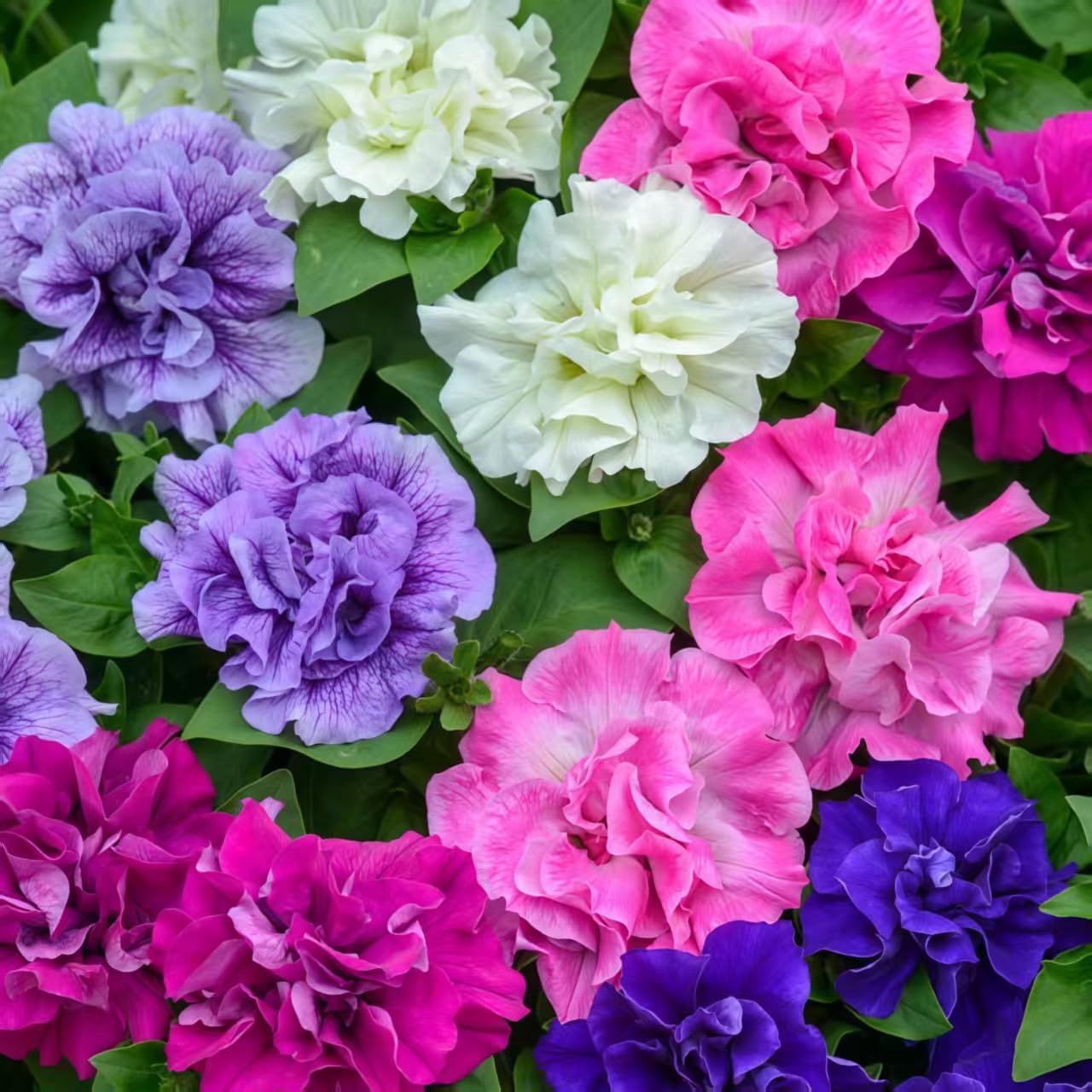
BuggyBeds Double Dwarf Petunia Seeds (300+), Mixed Colors
| Indoor Outdoor Usage | Indoor, Outdoor |
|---|---|
| Expected Blooming Period | Summer |
| Sunlight Exposure | Full Sun |
| Moisture Needs | Moderate Watering |
These BuggyBeds double dwarf petunia seeds produce a profusion of compact, colorful blooms well suited to hanging baskets, window boxes, and small container gardens in full sun. They are typically sown indoors or directly in containers, then transplanted or thinned so each plant has room to spill and fill a basket. The mix includes reds, pinks, purples, and whites and is described as heat and sun tolerant, which helps maintain steady flowering through spring and summer with moderate watering and routine feeding. The plants have a compact habit that keeps baskets full without overwhelming small spaces, and their flowers attract pollinators so they add both color and garden life. Limitations are that germination and color distribution can vary seed to seed and that these are a seasonal annual choice that needs replanting each year; performance also depends on good drainage and regular deadheading or trimming for the longest bloom period.
Best for: Gardeners who want an easy, colorful hanging-basket solution for full-sun locations and prefer starting many plants from seed to fill multiple containers affordably.
Less Ideal for: People seeking instant, uniform mature plants or a no-maintenance perennial solution should consider nursery-grown transplants or perennial alternatives instead.
- Large seed count (300+), enough to populate multiple hangers or containers
- Compact double-dwarf habit ideal for filling hanging baskets and small planters
- Heat and full-sun tolerance supports reliable summer flowering in sunny spots
- Attracts pollinators such as bees and butterflies
- Seed-grown variability means colors and bloom timing are not uniform
- As annuals, plants must be replanted each year to maintain displays
Verdict: A high-count packet of compact, sun- and heat-tolerant petunia seeds that fills hanging baskets with continuous summer color when started and cared for properly.
KVITER Mix Moss Rose (Portulaca grandiflora) Heirloom Flower Seeds — Double Moss Rose Mix

| Indoor Outdoor Usage | Outdoor |
|---|---|
| Other Special Features of the Product | Drought Tolerant, Growing Guide Included, High Germination Rate, Made in the USA |
| Expected Blooming Period | Late Spring to Fall |
| Sunlight Exposure | Full Sun |
| USDA Hardiness Zone | 2-12 |
KVITER Mix Moss Rose seeds provide a straightforward way to establish a low, flowering ground cover that blooms from late spring through fall. The packet contains heirloom, non-GMO seeds of Portulaca grandiflora selected for double, ruffled blooms in pinks, reds, yellows and oranges; the included growing guide and high germination rate make direct sowing into warm, well-drained soil simple. These plants thrive in full sun and minimal water, so they are ideal for hot, dry spots, rocky borders, edging and shallow containers where you want continuous pink and mixed-color flowers without much care. Expect compact succulent foliage that spreads to form a colorful mat and attracts pollinators. Limitations are that moss rose prefers sandy or loamy, very well-drained soils and will not do well in shade or waterlogged conditions, and the low height means it is decorative rather than structural. Seed mix variability means color distribution is not uniform, so the result is a blended, natural look rather than a single solid block of pink.
Best for: Gardeners who want an easy, low-maintenance flowering ground cover for sunny, dry areas and who prioritize continuous seasonal color with minimal watering.
Less Ideal for: People seeking tall or structural plants, dense single-color lawns of pink flowers, or gardeners with shady, poorly drained sites should look elsewhere.
- Heirloom non-GMO seeds with high stated germination for reliable sprouting
- Drought tolerant and thrives in full sun, suited to hot, dry sites
- Large unit count suitable for covering substantial ground or many containers
- Includes step-by-step growing guide to simplify direct sowing for beginners
- Performs poorly in shade or wet soils so site selection is important
- Seed mix produces a varied color blend rather than uniform pink-only coverage
Verdict: A simple, low-water choice to create a long-blooming, low pink-and-mix ground cover in hot sunny spots.
HOME GROWN Thumbelina Zinnia (3,000 Seeds)

| Indoor Outdoor Usage | Indoor, Outdoor |
|---|---|
| Expected Blooming Period | Summer to Fall |
| Sunlight Exposure | Full Sun |
| USDA Hardiness Zone | 2-11 |
| Material Features | GMO Free, Heirloom |
These Thumbelina zinnia seeds are a beginner-friendly way to fill window boxes and small containers with continuous, colorful blooms from summer through the first frost. Direct-sow after the last frost or start indoors; seeds germinate fast (4–10 days) at warm soil temperatures and the pack is selected for high germination so you get dense stands without excessive re-sowing. Plants stay compact and bushy, producing many 1–2 inch semi-double and double flowers in mixed colors that attract bees and butterflies while resisting deer. They perform best in full sun and average well-drained soil and become fairly drought tolerant once established, which reduces watering for sunny window boxes. Because these are open-pollinated, non-GMO heirloom seeds you can save seed from season favorites for next year. Note that they are annuals and need deadheading to maximize bloom duration, and like most zinnias they can develop mildew if foliage stays wet in humid conditions.
Best for: Gardeners who want a low-risk, high-yield flower for sunny window boxes and containers and value reliable germination and easy seasonal color that can be saved seed-to-seed.
Less Ideal for: Those looking for permanent plants or low-maintenance plantings that never require renewal across seasons should choose perennials instead.
- Huge seed count — enough to densely fill multiple window boxes or containers
- Heirloom, open-pollinated non-GMO seeds that allow you to save seed for future plantings
- Fast and reliable germination (4–10 days) with a reported high germination rate
- Compact Thumbelina habit produces continuous small blooms ideal for small spaces and edging
- Attracts pollinators and is deer resistant, supporting wildlife-friendly plantings
- Annuals that must be replanted each year
- Susceptible to foliar mildew if foliage remains wet in humid climates
Verdict: If you need dependable, compact annual color for window boxes that germinates quickly and lets you save seed, this Thumbelina zinnia pack delivers.
Choosing the Right Window Box Plants for Full Sun: Key Factors to Consider
Sun and Heat Tolerance
Plants in full-sun window boxes must withstand intense light and high daytime temperatures without wilting or leaf scorch. Choose species with physiological adaptations such as smaller or thicker leaves, reflective foliage, or pubescence that reduce water loss. These traits let plants keep producing flowers and foliage through prolonged heat waves.
Avoid options that rely on cool-night recovery or that show leaf burn quickly when exposed. Assess sun-tolerance ratings and look for varieties described as heat-hardy to reduce the risk of midday collapse in shallow containers.
Water Needs and Drought Resistance
Shallow window boxes hold limited soil and dry out fast, so plants that can tolerate intermittent drying between thorough waterings make maintenance easier. Drought-resistant plants either store water in tissues, reduce transpiration, or drop older leaves during extreme conditions. Consider how often you can realistically water and choose plants whose irrigation cadence matches your routine.
Even drought-tolerant species need consistent moisture during establishment and peak bloom, so plan for more frequent water checks in the hottest months. Mulching the soil surface with fine bark or gravel can slow evaporation in narrow containers.
Root Volume and Container Depth
Many window boxes are only a few inches deep, limiting root spread and nutrient reserves. Plants with naturally compact root systems or those that adapt well to root confinement perform best. Bulky-rooted or deep-taproot species will become root-bound, show stress, or decline quickly in shallow trays.
When selecting plants, check recommended container depth and favor those that explicitly list suitability for window boxes or small troughs. Grouping similarly rooted plants together prevents one aggressive rooter from dominating the limited soil volume.
Growth Habit and Space Management
Consider how a plant grows in a confined horizontal space. Upright 'thriller' plants add vertical interest, bushy 'filler' plants create body, and trailing 'spiller' plants soften edges. In full sun, vigorous trailers can quickly overwhelm neighbors, while tight clumpers may stay neat longer. Balance these habits to maintain airflow and reduce shading of lower leaves.
Also account for mature spread. A plant rated as compact in the ground may still expand dramatically in a sunny, warm window box. Choose combinations that will remain proportionate to the container dimensions.
Bloom Duration and Seasonal Interest
Long bloom spans or repeat-flowering cycles keep sunny boxes attractive without constant replanting. Some species bloom intensely for a short window, while others produce continuous or successive flushes of flowers. For extended color, pair long-blooming varieties with foliage plants that provide structure when blooms fade.
Factor in how much deadheading or pinching is needed to prolong flowering. Plants that self-clean or require minimal grooming work better for busy gardeners or those with limited container access.
Maintenance and Hardiness Concerns
Full-sun window boxes face heat stress, faster drying, and sometimes higher pest pressure. Choose plants known for resistance to common container problems like powdery mildew, aphids, or root rot from infrequent deep watering. Low-maintenance options reduce time spent monitoring moisture and treating pests.
Plan for seasonal fertilizer needs since small soil volumes deplete nutrients quickly. Slow-release or regular liquid feeding keeps blooms productive without complex routines.
Designing a Sunny Window-Box Palette
Build an effective sunny arrangement by combining a single upright element, a couple of mid-height fillers, and at least one trailing plant to spill over the box edge. Contrast leaf textures and flower shapes so the display reads well from below and at a distance.
Stick to a limited color scheme for small boxes to avoid visual clutter. For cooler palettes, pair silvery or gray foliage with purple blooms. For warm palettes, mix orange, red, and yellow flowers with dark green leaves. Keep in mind that very bright colors can fade faster in intense sun, so include plants noted for color retention.
- Use compact thrillers for height without overshadowing other plants
- Select fillers that tolerate root confinement and repeat bloom
- Choose spillers that stay controlled and resist leaf burn on the edges
Soil Mix and Watering Strategy for Full Sun
A fast-draining, moisture-retentive potting mix helps balance drying in shallow boxes. Mixes with a good proportion of peat or coconut coir plus perlite or coarse sand give structure while holding enough moisture for daily heat. Avoid dense garden soil that compacts and suffocates roots.
Water deeply but less frequently to encourage roots to explore the whole container. In very hot spells you may need daily checks and waterings in the afternoon. Use finger tests or a moisture meter to avoid overwatering, which is still a common cause of container plant decline even in sunny locations.
- Top-dress with a thin layer of mulch to reduce evaporation
- Consider self-watering inserts for very narrow boxes to extend time between waterings
Seasonal Care and Feeding
Because nutrient stores in window-box soil deplete quickly, schedule regular feeding. A balanced liquid feed every two to three weeks during the growing season keeps flowers lush. For lower-maintenance setups, use a slow-release granular fertilizer at planting followed by light liquid feeds.
Replace spent plants or refresh the soil annually to prevent salt build-up and compaction. In regions with cold winters, choose whether to treat boxes as annual displays or swap to winter-hardy plants and adjust watering accordingly.
- Deadhead lightly when blooms become ragged to encourage more flowers
- Trim back over-enthusiastic trailers mid-season to preserve box balance
Common Problems in Sunny Window Boxes and Fixes
Wilting midday followed by recovery at night indicates high evaporative demand rather than immediate failure. Increase watering frequency or add a temporary shade screen during heat waves. Persistent wilting with soft stems suggests root issues, not heat alone.
Leaf scorch appears as dry, bleached patches and often means the plant is not suited to your microclimate or needs more frequent hydration. Address pests like spider mites and aphids early; their damage is more pronounced in stressed, sun-exposed plants.
- Watch for rapid soil drying and adjust irrigation before plants show severe stress
- Use insecticidal soap or strong water sprays for early pest control
How We Chose the Best Window Box Plants for Full Sun
We focused on plants that reliably perform in window boxes exposed to six or more hours of direct sun and elevated daytime temperatures. Our selection prioritized species and cultivars known for sun tolerance, drought resistance, compact growth habit, and continuous or repeat flowering in warm conditions. We considered root system size relative to common window-box depths and the species ability to thrive in moderate to low soil volumes. Practical maintenance factors guided inclusion: watering frequency in small containers, susceptibility to sun scorch, and how well the plant holds color and foliage through summer heat. We also looked at how plants combine visually-balance between spillers, fillers, and thrillers-to ensure attractive results in narrow boxes. Exclusions included plants that require consistently moist, shaded, or cool conditions, species with aggressive root systems unsuitable for shallow containers, and varieties that need regular deadheading or complex care to perform in full sun. The final list reflects plants that offer strong ornamental payoff with manageable care in a sunny window-box setting.
FAQ
How many hours of sun qualifies as full sun for window boxes?
Full sun generally means at least six hours of direct sunlight per day. For window boxes, strong midday and afternoon sun intensifies heat stress, so consider both total hours and peak sun intensity when choosing plants.
Can I use the same watering routine year-round for full-sun boxes?
Watering needs vary with temperature and plant growth stage. Summer often requires more frequent checks and waterings, while cooler seasons reduce demand. Adjust frequency rather than sticking to a fixed schedule.
Are drought-tolerant plants suitable for small window boxes?
Many drought-tolerant species adapt well to shallow containers because they handle intermittent drying. However, even drought-tolerant plants need regular water during establishment and peak bloom, so monitor moisture especially in the first few weeks.
How can I prevent soil from drying out too fast in a sunny window box?
Use a well-structured potting mix with organic matter, apply a thin mulch layer, and consider self-watering inserts or water-retentive additives. Positioning boxes where they get some morning shade can also reduce midday evaporation.
When should I refresh or replace plants in a full-sun window box?
Refresh annual-heavy displays mid-season if blooming declines or plants become root-bound. For perennial or semi-hardy displays, replace faded annuals in early spring or after extreme heat events when performance drops.
Final Verdict
For full-sun window boxes prioritize plants that combine heat tolerance with compact root habits and extended bloom cycles. Balance thrillers, fillers, and spillers so each element can thrive in shallow soil without overwhelming neighbors. Accept tradeoffs between very showy but high-water bloomers and lower-maintenance, drought-resistant plants. Focus on sun tolerance, root-volume suitability, and realistic watering routines to pick options that deliver dependable color and structure all summer.
