

Note: This article contains affiliate links. If you click on these links and make a purchase, I may earn a small commission at no extra cost to you. This helps support my research and content. Read my full affiliate disclosure here.
If you regularly split kindling, trim small fallen branches, or prep firewood for a camp stove, a compact chopping axe changes how quickly and safely you work. The right small wood chopping axe gives you control in tight spaces, reduces arm fatigue during repetitive swings, and holds an edge through damp wood and bark. This guide shortlists six top small wood chopping axes suited to backyard use, camps, and light-duty woodcutting. We evaluated balance, edge retention, handle durability, and how each tool behaves in a real garden or yard setting. Read on to find the small axe style and features that match your typical tasks and strength.
Top Picks at a Glance
| Best Overall The best all-around choice for most situations | Estwing 14" Camper's Axe with Shock Reduction Grip and Stake Puller |  |
| Best Quality Built to a higher standard if you want something more solid | Estwing Sportsman's Axe, 14" Leather Grip Hatchet (E24A) |  |
| Best Value The sweet spot between price and what you get | KSEIBI 274150 Camping Hatchet Axe (Forged Steel, Fiberglass Handle) | 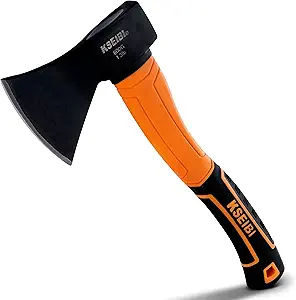 |
| Best Budget The cheapest option that still gets the job done reliably | EMHTiii 10" Camping Hatchet with Paracord Handle and Built-in Hex Wrenches |  |
| Highest Rated A top-rated pick with lots of positive feedback | Fiskars X14 14" Universal Hatchet |  |
| Most Popular A crowd favorite that many people choose with confidence | Fiskars X7 14" Hatchet |  |
Estwing 14" Camper's Axe with Shock Reduction Grip and Stake Puller

| Blade Length | 3.25 inches |
|---|---|
| Handle Material | Alloy Steel, Shock Reduction Grip |
| Blade Material | Alloy Steel |
| Head Type | Hatchet |
The Estwing 14" Camper's Axe is a compact, full-forged hatchet built for campsite and light backyard wood chores. Its one-piece alloy steel construction and 3.25" cutting edge give it the rigidity and edge retention you expect from forged tools, while the molded Shock Reduction Grip noticeably reduces vibration for longer chopping sessions. The stake-puller notch and included heavy-duty nylon sheath make it practical for camping and trail use, and the blaze orange finish helps it stay visible. For small woodcutting tasks — kindling, trimming limbs, and splitting small rounds — the axe balances power with maneuverability and is easy to carry on a belt or pack. Limitations are inherent to its size: it is not meant for felling large trees or sustained splitting of big rounds, and users wanting a longer handle for leverage should look at larger axes. The durable sheath protects the edge in transport but does not replace safe storage or a dedicated chopping block.
Best for: Buyers who want a reliable, all-purpose small axe for camping, firewood prep, and general outdoor chores and who value durability and reduced vibration during use.
Less Ideal for: People who need an axe for felling trees, splitting large rounds, or tasks that require a longer-handled tool and greater leverage.
- Forged one-piece steel head and handle for long-term durability
- Patented Shock Reduction Grip reduces impact vibration for more comfortable use
- Stake puller notch adds campsite utility
- Comes with a heavy-duty nylon sheath and belt loop for safe carrying and storage
- Small head and short handle limit effectiveness on large logs or tree felling
- Sheath protects the blade but offers limited protection for long-term storage
Verdict: A compact, forged one-piece camper's axe that delivers durable, low-vibration performance for small wood chopping and campsite tasks.
Estwing Sportsman's Axe, 14" Leather Grip Hatchet (E24A)

| Blade Material | Alloy Steel |
|---|---|
| Handle Material | Leather |
| Head Type | Hatchet |
| Blade Length | 3.25 inches |
The Estwing Sportsman’s Axe is a compact, one-piece forged hatchet built for hard outdoor use. Its single-piece alloy steel construction and hand-polished head give it excellent balance and durability for chopping limbs, splitting small logs and kindling, and general campsite tasks. The sanded and lacquered leather handle provides a comfortable, non-slip grip during extended use, and the included ballistic nylon sheath with belt loop keeps the blade protected and easy to carry. The 3.25-inch cutting edge is sharp out of the box and suited to controlled cuts rather than heavy felling, so it works best for camp chores and light to medium splitting. Because the head and handle are forged in one piece there are no welded joints to fail, but that solid construction also means less shock absorption compared with some modern composite-handled axes. Overall it is a straightforward, high-quality tool for outdoorsmen who prioritize durability and a classic feel, though users needing a longer reach or heavy timber felling will want a larger axe.
Best for: Buyers who want a durable, no-nonsense camp hatchet that will hold up to frequent outdoor use and value classic forged construction and a leather grip.
Less Ideal for: People who regularly need to fell large trees or want maximum vibration reduction should choose a larger felling axe or a tool with a shock-absorbing handle.
- Forged in one piece from alloy steel for excellent durability and balance
- Genuine leather handle that is sanded and lacquered for a comfortable, secure grip
- Includes ballistic nylon sheath with belt loop for safe transport and storage
- Compact 14-inch length makes it easy to carry for camping and backpacking
- Smaller 3.25-inch blade and compact size limit effectiveness on large trees or heavy felling
- One-piece steel handle transmits more shock to the user than shock-absorbing composite handles
Verdict: A rugged, one-piece forged hatchet that delivers reliable chopping performance and a comfortable leather grip for campers and outdoorsmen.
KSEIBI 274150 Camping Hatchet Axe (Forged Steel, Fiberglass Handle)

| Blade Material | Forged Steel |
|---|---|
| Handle Material | Fiberglass |
| Head Weight | 600 g |
| Blade Length | 4.13 inches |
The KSEIBI 274150 is a small camping hatchet built for routine campsite tasks: splitting kindling, chopping small to medium logs, and other general outdoor work. It pairs a 600 g forged steel head with an anti-corrosion coating and a fiberglass handle that includes rubberized inserts for grip and shock absorption. The weight and balance make it easy to swing quickly, which helps cut deeper with each strike and reduces fatigue during repeated use. It ships moderately sharp and will benefit from a tune-up if you need maximum cutting performance. A molded hole in the handle offers simple hanging or lanyard attachment and the package includes a carrying sheath for safe storage. Limitations are its size and head weight, which are optimized for portability and kindling rather than splitting very large or frozen rounds; heavy-duty log splitting will require a larger splitting axe or a maul. The hatchet’s throwing suitability and ergonomic grip make it a versatile camp tool for campers who value a durable, lightweight axe for everyday campsite chores.
Best for: Buyers who want a compact, reliable camp axe for splitting kindling, campsite chores, and occasional survival tasks and who prioritize portability and low fatigue during repeated use.
Less Ideal for: Anyone who plans to split large, heavy, or frozen logs regularly should choose a heavier splitting axe or maul instead.
- Forged steel 600 g head with anticorrosive coating for durable cutting performance
- Fiberglass handle with rubber inserts that reduces shock and improves grip
- Well-balanced design that increases swing speed and efficiency for kindling and small logs
- Includes carrying sheath and a hanging hole for easy storage and transport
- Moderately sharp out of the box for general use but may need additional sharpening for optimal performance
- Head weight and compact length are not suited for splitting large or very dense logs
Verdict: A lightweight, well-balanced camping hatchet that delivers durable, efficient performance for splitting kindling and everyday camp tasks.
EMHTiii 10" Camping Hatchet with Paracord Handle and Built-in Hex Wrenches

| Blade Material | Stainless Steel |
|---|---|
| Handle Material | Stainless Steel |
| Blade Length | 3.14 inches |
| Item Type Name | Camping Hatchet |
This small hatchet is aimed at basic camp and garden tasks rather than heavy felling. The one-piece full-tang stainless steel construction gives the head and short handle solid durability and keeps maintenance simple. Its 3.14-inch blade and 10-inch overall length make it easy to control for splitting kindling, cutting small branches, and general campsite chores, and the wrapped paracord handle can be removed for emergency use. The head includes three hexagonal wrench cutouts (3/8", 1/2" and 5/8") for light repairs, which adds useful multi-tool functionality for backpacking and RV trips. Because the tool is compact and relatively light, it fits easily in a daypack or gear bag, but it will not replace a full-size felling axe for large logs or heavy-duty chopping. Buyers should expect modest blade edge life compared with higher-end tool steels and may want to sharpen more often after repeated use. For the price and features, it is a practical, no-frills option for budget-focused outdoor users who need a dependable small hatchet for everyday camp tasks.
Best for: Buyers who want an inexpensive, portable hatchet for campsite chores, kindling and light garden work and who prioritize compactness and multifunction features over heavy chopping power.
Less Ideal for: People who need a primary splitting or felling axe for large logs or extended heavy-duty woodcutting should choose a larger, heavier axe designed for that purpose.
- Full-tang stainless steel construction for straightforward durability and low maintenance
- Compact 10-inch size is easy to carry and control for kindling and small chopping jobs
- Wrapped paracord handle provides emergency cordage when needed
- Integrated 3/8", 1/2" and 5/8" hex wrench cutouts add lightweight multitool capability
- Small blade and shorter handle limit power for heavy felling or large logs
- Stainless 3Cr13Mov steel is adequate but may require more frequent sharpening than premium tool steels
Verdict: A compact, budget-friendly full-tang hatchet that delivers portable, multipurpose camp and light wood-cutting performance with handy built-in wrench and paracord features.
Fiskars X14 14" Universal Hatchet

| Handle Material | Alloy Steel |
|---|---|
| Blade Material | Forged Steel |
| Included Components | Sheath |
| Head Type | Hatchet |
The Fiskars X14 is a balanced 14-inch universal hatchet intended for chopping kindling, limbing small branches, and light felling tasks where single-handed control matters. It pairs a double-hardened forged steel blade with a low-friction coating to cut through fresh, resinous wood cleanly and resist surface corrosion. The FiberComp handle is lightweight but engineered to absorb shock and protect the head from overstrike damage, while the ergonomically curved grip and SoftGrip texture help keep your wrist comfortable during repeated swings. An insert-molded head reduces the risk of handle separation and loosening over time, and the included sheath keeps the blade protected in storage or transport. The tool is not meant for heavy log splitting or prolonged two-handed chopping; users who overwork it on large firewood may find the blade or handle strained. For regular garden clearing, campsite tasks, and producing kindling, the X14 offers a reliable, low-maintenance option built for dependable everyday use.
Best for: A buyer who prioritizes a dependable, low-maintenance tool for routine garden work, campsite tasks, and making kindling will appreciate this hatchet's durability and consistent performance.
Less Ideal for: People who need an axe for splitting large logs, prolonged two-handed chopping, or heavy-duty forestry work should choose a dedicated splitting axe or a longer-handled felling axe instead.
- Balanced, single-handed design for controlled swings and accurate chopping
- Double-hardened forged steel blade with low-friction coating for cleaner cuts and rust resistance
- FiberComp handle that absorbs shock and reduces overstrike damage
- Insert-molded head construction to minimize loosening and handle separation
- Included sheath for safe storage and transport
- Not intended for heavy log splitting or sustained two-handed chopping
- Handle material listed as alloy steel in some specs which may confuse buyers expecting composite
Verdict: A dependable, well-balanced hatchet built for clean cuts and long-term reliability in routine garden and campsite tasks.
Fiskars X7 14" Hatchet

| Blade Material | Forged Steel |
|---|---|
| Head Type | Hatchet |
| Included Components | Fiskars X7 Hatchet (14") |
| Manufacturer Warranty Description | Lifetime Manufacturer Limited |
The Fiskars X7 14" Hatchet is a lightweight, purpose-built tool for campfire prep and light wood chopping. Its forged-steel head uses a proprietary grind and low-friction coating to hold an edge longer and reduce blade sticking when splitting small to medium kindling. The hatchet’s weight distribution increases swing speed and perceived power, so one-handed or short two-handed chops feel efficient compared with a basic hatchet. The FiberComp insert-molded handle provides shock absorption and a non-slip grip that reduces fatigue during repeated use, and the included sheath makes it safe to carry. Practical limitations are its size and head weight, which make it unsuitable for heavy-duty felling or large log splitting. The wooden handle listed in some specs may need occasional care compared with full synthetic handles, but the build and edge geometry make this a dependable choice for campers and yard work where a compact, durable hatchet is preferred.
Best for: Buyers who prioritize a reliable, easy-to-use hatchet for camping, firewood prep, and light yard tasks and who look for proven performance rather than experimental features.
Less Ideal for: People needing a heavy-duty splitting axe or a tool for cutting large trees should choose a larger splitting axe or maul instead.
- Proprietary ground forged-steel blade that stays sharp longer and reduces sticking
- Balanced weight distribution for increased swing speed and chopping power
- Shock-absorbing FiberComp handle with non-slip grip reduces user fatigue
- Compact size with included sheath makes it easy to carry for camping and hikes
- Not designed for heavy felling or splitting large logs due to lighter head weight
- Some listings reference a wooden handle which may require more maintenance than full synthetic handles
Verdict: A compact, well-engineered hatchet that delivers durable sharpness and efficient chopping power for campers and outdoor enthusiasts.
Choosing the Right Small Wood Chopping Axe: Key Factors to Consider
Balance and Swing Control
Balance determines how easily you place a controlled chop. A well-balanced small axe feels like an extension of your arm, letting you aim for tight splits without overworking the shoulder. Poorly balanced heads force you to compensate, which causes faster fatigue and reduces accuracy.
Balance interacts with head weight and handle length. For small wood tasks, a slightly head-heavy tool can boost chopping power while a moderate handle length preserves control in confined spaces. Test the balance point by simulating a short swing to ensure it returns to line quickly.
Edge Retention and Steel Hardness
Edge retention affects how often you need to sharpen during a session. Harder steels typically hold a keen edge longer but can be more brittle if not heat-treated properly. Softer steels are easier to sharpen in the field but require more frequent maintenance.
Consider how often you will use the axe and whether you can resharpen on-site. For occasional backyard use, a balance between hardness and toughness is ideal. For more regular chopping, prioritize steels and heat treatments known to keep a working edge through sap and small knots.
Head Geometry and Bevel Profile
The shape of the head and bevel angle decides whether the axe slices, chips, or splits. A narrower bit with a sharper bevel cuts deeply and is good for precise chopping and kindling shaping. A slightly wider, more wedge-shaped head spreads wood fibers apart and helps with splitting small logs.
Look at the bevel profile relative to your main tasks. If you will mostly make kindling and small precise cuts, a slimmer profile works best. If you plan to split small rounds for stove use, a blunter wedge is more forgiving and reduces bind.
Handle Material and Attachment
Handle choice affects comfort, shock absorption, and serviceability. Traditional hickory or ash handles absorb vibration and can be replaced in the field. Modern composite or fiberglass handles resist weather and cracking but may transmit more vibration or be harder to repair.
Also inspect how the head is fixed. A wedged wooden eye allows simple replacement, while flared or permanently bonded heads can limit long-term maintenance. For outdoor use where moisture and knocks are common, choose a handle style that matches your willingness to maintain or replace it.
Weight, Length, and Maneuverability
Small wood chopping axes trade swing momentum for control, so weight and length must match the user and task. A lighter head and shorter handle reduce pendulum force but increase precision, which is great for small logs and near-vegetation work. Heavier heads increase splitting power but demand more user strength and space for a full swing.
Pick a tool that fits your body and the working area. If you often chop in a garden bed or on a crowded campsite, prioritize maneuverability. If you mostly split stove-size rounds, accept slightly more weight for better splitting performance.
Edge Maintenance and Sharpening Ease
How easy an axe is to sharpen affects long-term usability. A profile that accepts standard files and stones makes quick touch-ups possible between swings. Scandi or single-bevel edges can be reprofiled rapidly, while complex multi-bevel finishes require more skill and time.
Consider whether you will sharpen on a bench stone, sharpening jig, or with a file in the field. Tools with simple, maintainable bevels keep you working longer without returning to a workshop.
Best Small Axe Styles for Backyard Tasks
Small chopping axes come in a few consistent styles that suit different backyard chores. A compact felling-style head with a medium bevel angle is versatile for trimming branches and chopping small rounds, while a true small splitting head has a thicker profile to open fibers and resist binding.
Match the style to the task. For shaping kindling or pruning larger branches, choose a thinner-bit chopping profile. For producing stove-ready rounds from small logs, pick a wedge-style head that prioritizes splitting.
- Chopping profile: thinner bit, better for precise cuts and trimming.
- Splitting profile: wider wedge, reduces binding on small rounds.
- Hybrid heads: balanced by compromise for mixed tasks.
Safe Techniques for Using a Small Wood Chopping Axe
Safety starts with stance, swing arc, and a secure chopping surface. Use a stable chopping block at a comfortable height that prevents your hands from aligning with the bit. Keep bystanders at a safe distance and watch for ricochet when cutting branches under tension.
When swinging in tight spaces, shorten your arc to maintain control. If a cut binds, stop and use controlled prying rather than forcing the head free. Regularly check the head attachment and handle for looseness to avoid accidents.
- Feet shoulder-width apart, leading leg slightly forward.
- Short arcs for close work, full arcs only with clear surroundings.
- Check handle and head before each session.
Sharpening and Reprofiling on the Trail
A small axe will need periodic touch-ups in the field to stay effective. Carry a flat file and a small coarse stone for quick edge maintenance. Use the file to remove nicks and reestablish the bevel, then refine with a stone for a cleaner bite.
When reprofiling, keep the bevel consistent along the edge to avoid weak points. For significant reshaping, move to a bench stone or a jig back at home where you can control angles precisely.
- File for nicks and coarse reshaping.
- Stone for edge refinement and polishing.
- Reprofile at home for major angle changes.
Storage and Rust Prevention
Protect the head from moisture and corrosion by wiping it dry after use and applying a thin film of oil before long-term storage. A leather or synthetic sheath protects the edge and prevents accidental contact during transport.
Store axes with handles off the ground in a dry, ventilated area. Wooden handles can be treated occasionally with boiled linseed oil or similar products to prevent drying and splitting.
- Wipe and oil heads after use in wet conditions.
- Use a sheath for transport and storage.
- Treat wooden handles seasonally to maintain resilience.
Matching Axe Size to User Strength and Task
A smaller axe is not universally better simply because it is lighter. The right choice depends on user strength, reach, and the typical material being cut. Smaller users or those working near delicate plants benefit from reduced swing weight and shorter handles.
If you require greater chopping power for slightly larger rounds, select the heaviest head and longest handle you can safely control. Practice with different sizes if possible to determine which combination yields clean, efficient cuts without overexertion.
- Shorter handles for precision and tight spaces.
- Longer handles for extra swing momentum when needed.
- Consider a training period to adapt to a new tool.
How We Chose the Best Small Wood Chopping Axe
We focused on features that matter for repeated small-log and kindling work. Key evaluation criteria included balance and handling, which affects swing control and user fatigue; edge retention and steel hardness, since a sharper, harder edge keeps cutting clean through knots and bark; head geometry and bevel profile for efficient splitting versus chopping; handle material and attachment method for shock absorption and long-term durability; and overall weight and length to suit tight spaces and shorter swings. We excluded heavy felling axes and specialist splitting mauls because they are neither safe nor efficient for small wood tasks. We also filtered out tools with nonstandard or unrepairable handles and any head-to-handle connections that limit field maintenance. Each shortlisted axe was judged for how it behaves on small logs and damp kindling, how easy it is to sharpen or reprofile, and how comfortable it is during extended use.
FAQ
What length and weight are ideal for a small wood chopping axe?
Ideal length typically ranges from about 14 to 20 inches with head weights designed for short swings. Lighter axes reduce fatigue and improve control, while slightly heavier heads increase bite. Choose based on your height, arm strength, and the space you work in.
How often should I sharpen a small chopping axe?
Frequency depends on use and wood species. For occasional backyard tasks, a quick touch-up before each session may suffice. For regular chopping of knotty or resinous wood, you may need to file and stone the edge more often until the edge holding steel is restored.
Can I replace a wooden handle myself?
Often yes. Many traditional axes use a wedged wooden handle that can be removed and replaced with basic tools. Composite handles are usually not user-replaceable, so check the head attachment style before planning long-term maintenance.
Is a sheath necessary for a small chopping axe?
A sheath is a good safety and preservation accessory. It protects the edge during transport and reduces corrosion risk. For storage, a sheath prevents accidental contact and keeps the tool safer around children and pets.
Should I choose a harder steel for better edge life?
Harder steels can hold an edge longer but may be less forgiving if they chip. For small wood tasks, a balance between hardness and toughness is preferable so you get reliable edge life without brittle failure.
Final Verdict
For backyard and light-duty woodcutting, prioritize balance, handle comfort, and an edge profile suited to your tasks. A small wood chopping axe that fits your strength and the space you work in will make repetitive chopping faster and safer. Remember the tradeoffs: thinner bits cut cleaner but can bind on rounds, while wedge-shaped heads split more reliably but demand more force. Choose the combination of weight, geometry, and handle material that matches how you plan to use the tool, and maintain the edge and attachment to keep it safe and effective.
