

Note: This article contains affiliate links. If you click on these links and make a purchase, I may earn a small commission at no extra cost to you. This helps support my research and content. Read my full affiliate disclosure here.
A well-chosen Maul Axe makes short work of rounds and large logs in a backyard or rural woodpile. The right tool reduces fatigue, lowers the number of strikes needed, and improves safety when you are splitting firewood for heating, cooking, or weekend projects. This guide covers the top shortlisted Maul Axes built for heavy-duty splitting tasks and varied user strengths. We evaluated each option against real-world concerns gardeners and homeowners face, including head geometry, handle durability, balance, and maintainability. Read on to see the evaluation focus before the product list.
Top Picks at a Glance
| Best Overall The best all-around choice for most situations | Fiskars Pro IsoCore 6 lb Splitting Maul, 36" |  |
| Best Quality Built to a higher standard if you want something more solid | 1844 Helko Werk Saxon Splitter Heavy Log Splitting Axe |  |
| Best Budget The cheapest option that still gets the job done reliably | Edward Tools 17" Wood Splitting Maul, 3 lb Head |  |
| Highest Rated A top-rated pick with lots of positive feedback | DWFKHT 35.3" Splitting Maul with 1065 High-Carbon Steel Head and Hickory Handle |  |
| Most Popular A crowd favorite that many people choose with confidence | Fiskars Pro IsoCore 8 lb Splitting Maul, 36" |  |
Fiskars Pro IsoCore 6 lb Splitting Maul, 36"
| Head Weight | 6 pounds |
|---|---|
| Handle Material | Wood |
| Blade Material | Forged Heat-treated Steel |
| Blade Edge | Chisel |
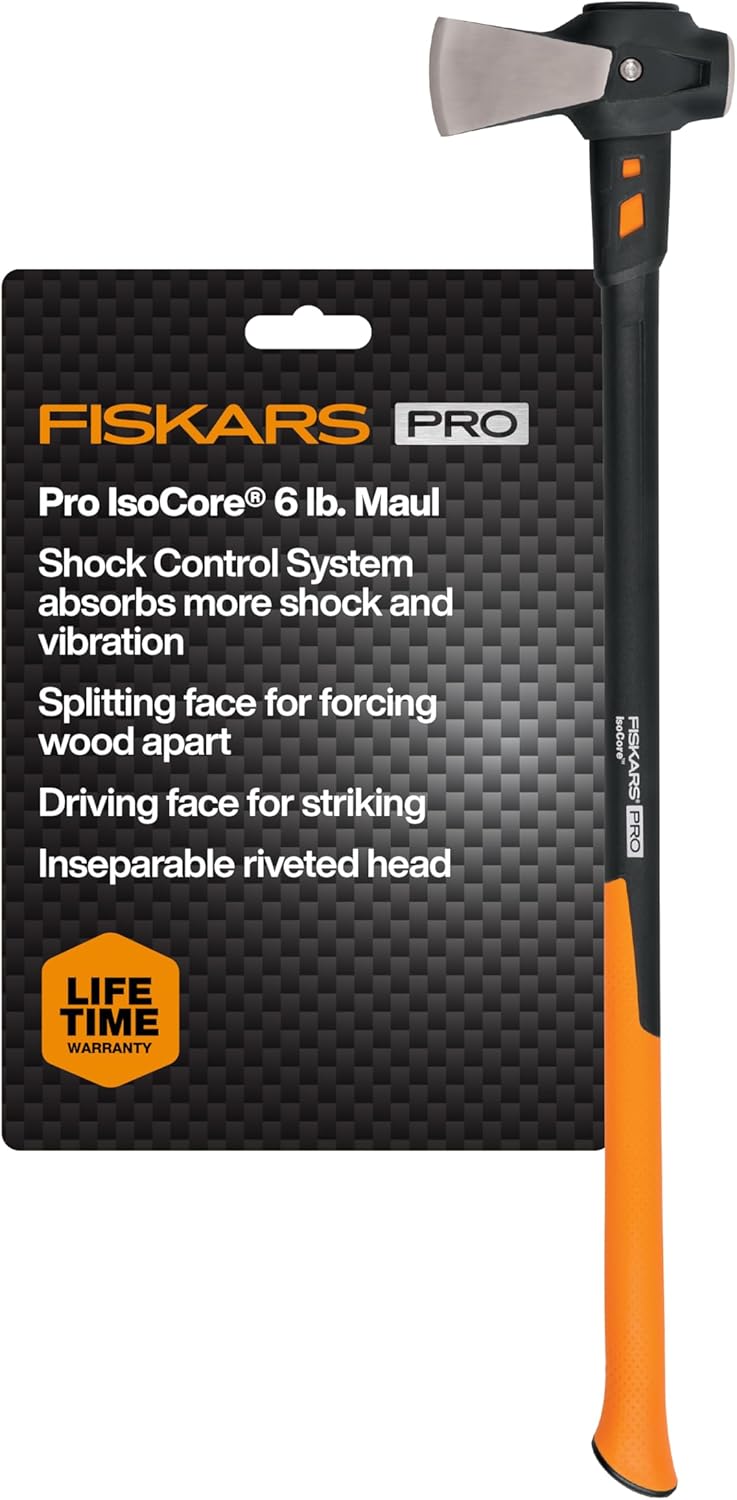
The Fiskars Pro IsoCore 6 lb Splitting Maul is built to make splitting firewood easier and less fatiguing. Its forged, heat-treated steel head with a chisel-style blade cuts into logs efficiently while the integrated driving face accepts wedges or strikes from other tools for added versatility. The IsoCore dual-layer handle absorbs much of the strike shock and vibration, which helps reduce hand and arm fatigue during longer sessions. A sculpted SoftGrip and flared base improve control and reduce slipping so swings stay accurate even on tougher hardwood. The head is riveted and reinforced against overstrike, so the connection feels secure and durable in regular use. Downsides to expect are the relatively heavy overall feel compared with lightweight hatchets and the long handle length, which may be unwieldy for shorter users or confined spaces. For typical yard work and processing medium to large rounds into firewood, this maul balances power, comfort, and durability.
Best for: Buyers who want a capable, durable maul for regular firewood processing and yard work and who prioritize comfort during long splitting sessions.
Less Ideal for: People who need a compact tool for small logs, indoor storage, or frequent one-handed use should consider smaller axes or hatchets instead.
- Forged heat-treated steel head with chisel edge for efficient splitting of medium to large logs
- IsoCore shock-absorbing handle reduces vibration and strain during extended use
- Integrated driving face allows use with wedges for added versatility
- Riveted inseparable head and steel-reinforced sleeve provide durable overstrike protection
- Long 36" handle and overall heft may be awkward for shorter users or tight work areas
- Wood handle requires occasional care compared with synthetic one-piece handles
Verdict: A powerful, comfortable splitting maul that reduces strike shock while delivering reliable, heavy-duty performance for regular firewood processing.
1844 Helko Werk Saxon Splitter Heavy Log Splitting Axe

| Head Type | Splitting Maul |
|---|---|
| Blade Material | High Carbon Steel |
| Handle Material | Wood |
| Blade Edge | Convex |
The Helko Werk Saxon Splitter is a purpose-built heavy splitting axe for breaking large rounds and stubborn logs. Its hand-forged C50 high carbon steel head is hardened to about 53–56 HRC and shaped as a splitting maul-style head with a convex edge to resist pinching and reduce sticking. The long 31-inch American hickory handle and 6.25 lb head produce the momentum of a maul while keeping enough balance for controlled swings and directional splits. Included leather sheath and a small bottle of protective Axe Guard oil make storage and maintenance easier. Practical benefits include excellent edge retention from the tempered steel, a durable handcrafted head that tolerates hard use, and a handle selected for grain orientation that feels comfortable under repeated swings. Important limitations are the weight and length which make it physically demanding for extended light-duty use, and the specialized heavy profile means it is overkill for small kindling or precision chopping tasks.
Best for: Buyers who prioritize raw splitting performance and durability for processing large logs and seasonal firewood will appreciate this axe; it suits users who prefer a handcrafted, high-quality tool built for heavy-duty work.
Less Ideal for: Casual campers, backpackers, or gardeners who need a lightweight multipurpose axe should choose a smaller, lighter tool instead.
- Hand-forged C50 high carbon steel head with 53–56 HRC for strong edge holding and durability
- Splitting maul head geometry and convex edge reduce pinching and make through-splits more reliable
- 31-inch grade A American hickory handle finished with boiled linseed oil for comfortable grip and shock resistance
- Includes full-grain leather sheath and Axe Guard protective oil for blade protection and simple maintenance
- Heavy total weight and long handle make it tiring for prolonged or one-handed tasks
- Not suited for fine chopping or light camp use where a smaller axe would be more practical
Verdict: If you want a premium, performance-focused splitting axe that brings maul-level power with axe-like balance, the Helko Werk Saxon Splitter is the top choice.
Edward Tools 17" Wood Splitting Maul, 3 lb Head

| Head Weight | 3 pounds |
|---|---|
| Blade Material | Forged Steel |
| Handle Material | Fiberglass, Rubber, Steel, Wood |
The Edward Tools 17" splitting maul combines a weighted 3 lb forged-steel head with a shock-resistant fiberglass handle to make splitting firewood faster and less tiring than using a camp axe. It is typically used to split rounds and make kindling at the campsite or home woodpile by swinging the heavy head to drive the sharp blade through the grain. Notable features include a sharp fine-grain steel blade, a rubberized grip on the ergonomic handle to reduce vibration, and a protective rubber sheath for safe storage and transport. In practice the maul delivers strong splitting power for its size, and the fiberglass handle keeps overall weight manageable while resisting shock and weather. Important limitations are that its 17" length and 3 lb head make it better suited to small to medium logs rather than felling large trees or splitting very large rounds, and the mixed-material handle means care is needed to avoid striking metal or stone which could damage it. For buyers who want a capable, no-frills maul for routine firewood chores, this is a practical choice.
Best for: Practical buyers who want an affordable, compact maul for regular firewood splitting and campsite use and who prioritize ease of handling and portability over heavy-duty felling power.
Less Ideal for: People who need a professional-grade splitting tool for large commercial logs or extended heavy forestry work should look at longer, heavier mauls or dedicated splitting tools.
- Forged steel 3 lb head gives strong splitting force for kindling and small logs
- Ergonomic fiberglass handle with rubberized grip reduces vibration and improves control
- Includes rubber sheath for safer storage and transport
- Compact 17-inch length balances power and portability for campsite or small woodpiles
- Shorter handle and 3 lb head limit efficiency on very large rounds
- Mixed handle materials require avoiding hard impacts on metal or rock to prevent damage
Verdict: A budget-friendly, compact splitting maul that delivers solid power and comfortable handling for routine firewood and campsite splitting.
DWFKHT 35.3" Splitting Maul with 1065 High-Carbon Steel Head and Hickory Handle

| Head Material | 1065 High-Carbon Steel |
|---|---|
| Handle Material | Hickory Wood |
| Head Weight | 6.6 pounds |
| Overall Length | 35.3 inch |
This DWFKHT splitting maul is built for dependable, heavy-duty firewood preparation. The forged 1065 high-carbon steel head and wedge-shaped maul profile drive deep into large logs, making it effective on tough hardwoods; combined with the 35.3-inch hickory handle it delivers strong leverage and swing power for fewer strikes. The hickory handle provides natural shock absorption and an ergonomic shape for better control during repeated use, while the included leather sheath protects the blade in storage and transport. Practical strengths are durability of the heat-treated steel head and the long handle that reduces user effort on big rounds. Limitations to note are the overall weight and length that demand proper technique and space to swing safely, and the wooden handle will need occasional care to prevent weathering. For buyers prioritizing long-term reliability this maul focuses on materials and construction rather than lightness or multi-tool versatility.
Best for: Buyers who want a durable, workhorse splitting tool for regular firewood preparation and outdoor tasks and who prioritize long-term reliability over lightweight portability.
Less Ideal for: People who need a compact or lightweight option for occasional small jobs or who lack space or confidence for full swings should consider shorter, lighter alternatives.
- Forged 1065 high-carbon steel head for strength and edge retention
- Wedge-shaped 6.6 lb head delivers strong splitting force on large logs
- Genuine hickory handle offers good shock absorption and leverage
- Includes leather sheath for safe storage and transport
- Longer, heavier design requires room to swing and basic splitting technique
- Wood handle needs periodic maintenance to protect against weathering
Verdict: A robust, reliability-first splitting maul built to handle large logs season after season.
Fiskars Pro IsoCore 8 lb Splitting Maul, 36"

| Head Weight | 6.4 pounds |
|---|---|
| Blade Length | 7.84 inches |
| Handle Material | Steel,Wood |
| Blade Material | Forged Steel |
| Recommended Uses For Product | Splitting Wood |
The Fiskars Pro IsoCore 8 lb Splitting Maul is built for splitting firewood and heavy yard work where one-strike splits and reduced vibration matter. Its 8 lb head with forged steel blade and wide maul profile drives through medium to extra-large logs while the 36-inch handle gives extra leverage for taller users. The IsoCore shock control system and textured, flared grip noticeably reduce strike shock and improve control, which helps cut fatigue during longer sessions. The head geometry and sharp edge make penetration and removal from wood easier than with blunt splitting tools, and the nearly inseparable riveted head promises long-term reliability. Limitations are that the longer steel/wood hybrid handle and heavier head make the tool less maneuverable for small logs, tight spaces, or users who prefer a lightweight hatchet, and safe use requires proper protective gear and technique. For someone who splits a lot of firewood and values ergonomics and durability, this maul is a practical, high-performance option.
Best for: Buyers who split medium to large firewood regularly and prioritize tools with proven user-friendly features and durability, especially those who want reduced vibration during long sessions.
Less Ideal for: Casual users who only split small kindling, people needing a compact portable axe for camping, or those who prefer a very lightweight hatchet for fine work.
- IsoCore shock-absorbing handle reduces vibration and hand strain during repeated swings
- Forged steel head and advanced blade geometry improve penetration and one-strike splits
- 36-inch handle provides leverage for taller users and heavier logs
- Riveted, durable construction designed for regular outdoor use
- Longer, heavier design is less suited to small logs, tight work areas, or users preferring a lightweight tool
- Requires proper protective gear and safe technique to avoid injury
Verdict: Choose this maul if you need a durable, ergonomic splitting tool that reduces shock and makes heavy firewood splitting faster and less fatiguing.
Choosing the Right Maul Axe: Key Factors to Consider
Head Mass and Wedge Angle
Head mass affects the energy delivered on impact and the ability of the maul to split dense, knotty wood. Heavier heads carry more momentum but can be tiring to swing repeatedly, especially for smaller users. Wedge angle influences whether the head penetrates easily or acts more like a pry to force wood apart. A narrower wedge penetrates with less initial force but may jam in very fibrous wood, while a wider wedge helps separate fibers but requires more striking energy.
Consider the types of logs you split most often. For large, straight rounds a heavier head and wider wedge are an advantage. For mixed or knotty wood, a balance between penetration and wedging action reduces the number of strikes required.
Handle Material and Construction
Handle material determines shock absorption, weather resistance, and how the tool feels during repeated use. Fiberglass and composite handles resist moisture and do not rot, but they transfer more vibration and may feel harsher to some users. Hardwood handles absorb shock and offer a traditional feel, but they require maintenance to prevent splitting and swelling when exposed to the elements. Some modern handles combine a fiberglass core with a rubber overmold to balance durability and comfort.
Construction details such as one-piece forged connections or reinforced tangs influence long-term reliability. Look for handles with protective finishes or warranties that indicate confidence in the material choice.
Head-to-Handle Connection Security
A secure fit between the head and handle is critical for safety during repeated heavy impacts. Traditional wooden handles rely on wedges and tight fitting to keep the head in place, but they can loosen with seasonal moisture changes. Mechanical retention systems or bolts offer more consistent security over time. Some modern mauls use molded heads over composite handles to eliminate wedge loosening entirely.
Assess how easily a handle can be replaced if the connection fails. Tools that allow straightforward handle replacement extend the usable life of the maul and are more practical for long-term ownership.
Balance and Ergonomics
Balance affects accuracy and fatigue. A maul that places too much weight forward forces the user to work harder to control each swing. Conversely, a handle-heavy setup can reduce impact force. Handle length also plays a role: longer handles increase leverage and swing speed but require more space to use safely. Grip shape and texture influence control, especially in wet or sweaty conditions. Ergonomic considerations also include hand clearance and the ability to choke up for smaller splits.
Think about your physical strength and typical working environment when prioritizing balance and ergonomics.
Maintenance and Sharpening
Maul heads are robust, but they still require periodic attention to stay effective. The head material and heat treatment determine how well an edge holds up and how easily it can be reshaped. A blunted or mushroomed striking face should be dressed to maintain safe contact geometry. Consider whether the head design allows for straightforward grinding and whether replacement components are available.
Routine maintenance habits, such as oiling wooden handles or storing the maul under cover, extend service life. Products that simplify maintenance reduce long-term ownership hassles.
Choosing the Right Maul Weight for Your Strength
Maul weight directly affects how many swings you need and how quickly you tire. Homeowners splitting small to medium logs often do well with moderate head weights that balance power and swingability. Stronger users or those handling large rounds will prefer heavier heads that deliver higher momentum per strike.
If you are new to splitting, try starting with a midweight maul to learn swing mechanics. Technique, stance, and follow-through are as important as raw weight for efficient splitting. Using a chopping block to raise the log reduces the risk of striking the ground and helps the maul bite the wood cleanly.
- Lighter mauls are easier to control and less tiring for long sessions
- Heavier mauls deliver more splitting force but require better technique
- Practice safe stance and swing to get the most from any weight choice
Handle Replacement and Repair Tips
Even the best-handled mauls eventually need attention. For wooden handles, inspect for cracks, loose wedges, or signs of rot and replace before failure. A tight-fitting new handle restores original balance and swing feel. For composite or fiberglass handles, check for hairline fractures or delamination and retire the handle if structural integrity is compromised.
When replacing a handle, preserve the original head fitment details and use the correct wedge and finish to prevent future loosening. Keep spare wedges and basic tools in the workshop so a quick repair is possible after a season of heavy use.
- Check handle condition before each use
- Replace compromised handles promptly to avoid accidents
- Follow manufacturer or standard fittings for secure reattachment
Using a Maul Safely Around a Garden or Yard
Safety is paramount when swinging a heavy tool near structures, landscaping, or people. Clear a generous work zone free of tripping hazards and bystanders. Wear eye protection and sturdy boots; consider hearing protection for repetitive, heavy swings.
Position the log on a stable chopping block rather than the bare ground to reduce bounce and protect the maul head. Be mindful of hidden knots and metal objects in logs that can cause unpredictable ricochets. Store the maul in a secure, dry place away from children and pets.
- Maintain a wide safety perimeter while swinging
- Use a chopping block to stabilize logs and protect the tool
- Wear protective gear and inspect logs for foreign objects
When to Consider a Splitting Wedge or Maul Combination
Some logs are exceptionally large or twisted, where a single maul strike may not be sufficient. In those cases, a manual splitting wedge driven by a sledge or heavier maul can help open stubborn rounds more reliably. Using a combination approach extends the capability of a standard maul without resorting to powered splitters.
Plan work sequences so the maul is used for the bulk of splits and wedges are reserved for the toughest sections. This preserves the maul head and reduces repeated banging that can damage handles over time.
- Use wedges for oversized or highly knotty logs
- Alternate tools to reduce wear on any single implement
- Select wedges matched to the log size and wood species
Storage and Seasonal Care
Proper storage prevents handle degradation and head corrosion. Keep wooden-handled mauls out of prolonged wet exposure and treat handles periodically with oil to prevent drying and cracking. For metal heads, remove sap and dirt after use and apply a light protective coating to inhibit rust.
Store the tool off the ground in a dry shed or garage and avoid leaving it leaning on masonry or soil, which can draw moisture into the handle end. Regular inspections at season start and end help catch small problems before they become unsafe failures.
- Oil wooden handles seasonally to maintain flexibility
- Wipe and lightly coat heads to prevent rust
- Store tools indoors away from moisture and freezing cycles
How We Chose the Best Maul Axe
We prioritized attributes that matter when using a Maul Axe around the yard and woodpile. First, head geometry and mass were examined because wedge angle and weight determine how easily a head penetrates wood and forces fibers apart. Second, handle material and construction were assessed to judge shock absorption, longevity, and resistance to outdoor moisture. Third, connection security between head and handle was inspected to reduce the risk of head loosening during repeated strikes. Fourth, overall balance and swing feel were considered since a well-balanced tool reduces user fatigue and improves accuracy. Fifth, maintainability was a factor, including how easily the head can be reshaped or sharpened and whether replacement handles are straightforward to fit. We excluded lightweight hatchets and tools intended mainly for chopping or carving, focusing only on striking, heavy-splitting mauls designed for splitting logs. Tools with unclear construction details or insufficiently durable handle materials were not considered. The final shortlist reflects a mix of head designs and handle types suited to different user strengths and splitting tasks.
FAQ
What length maul handle is best for backyard use?
Handle length depends on user height and the space available. A mid-length handle gives good leverage without requiring excessive clearance. Taller users often prefer a longer handle for better swing arc, while shorter users may find a shorter handle easier to control.
How can I tell when a wooden handle needs replacement?
Replace a wooden handle if you see visible cracks, deep splinters, looseness at the head, or signs of rot. Any movement of the head on the handle or a hairline fracture near the throat warrants immediate replacement to avoid failure during use.
Is a fiberglass or wood handle better for a maul?
Fiberglass handles resist moisture and are low maintenance, but some users find they transmit more shock. Wood handles absorb vibration and are easy to reshape and replace, though they require seasonal care. The best choice depends on your comfort preference and willingness to perform maintenance.
Can I sharpen a maul head like an axe?
Maul heads are primarily designed for splitting and often have a blunter wedge than chopping axes. Light shaping to remove nicks and maintain a consistent wedge is fine, but avoid creating a thin, chopping-style edge. Use a grinder or file carefully and maintain heat treatment integrity.
How should I store a maul to prevent handle damage?
Store the maul indoors in a dry space and keep it off the ground to avoid moisture uptake. Hang it or place it on a rack with the head supported. For wooden handles, apply oil periodically to prevent drying and cracking.
Final Verdict
Prioritize head geometry and handle construction when choosing a Maul Axe, balancing raw weight with control and comfort. Consider how often you split, the typical log sizes, and whether you are prepared to maintain a wooden handle or prefer lower-maintenance composites. Safety and a secure head-to-handle connection should guide your choice more than a single specification. Choose a maul that suits your strength and typical wood types, keep it maintained, and pair it with safe working practices to get reliable splitting performance season after season.
