

Note: This article contains affiliate links. If you click on these links and make a purchase, I may earn a small commission at no extra cost to you. This helps support my research and content. Read my full affiliate disclosure here.
When you need effective, low-toxicity control for soft-bodied pests and overwintering eggs, the right horticultural oil makes a big difference in garden health. Horticultural oil works by coating insects and eggs so they cannot breathe, and when chosen and applied correctly it controls pests with minimal impact on beneficial insects and plant tissues. This guide covers the seven top horticultural oils shortlisted for practical home and small-scale use and explains the tradeoffs gardeners should weigh. We evaluate coverage, contact persistence, and plant safety to help you pick an oil that suits your plants, timing, and climate. Read on for application tips and decision points before the product list.
Top Picks at a Glance
| Best Overall The best all-around choice for most situations | Bonide Captain Jack's NeemMax Concentrated Cold Pressed Neem Oil, 16 oz |  |
| Best Quality Built to a higher standard if you want something more solid | BASF Ultra-Pure Horticultural Oil (1 gal) — Insecticide, Miticide, Fungicide |  |
| Best Value The sweet spot between price and what you get | Bonide All Seasons Horticultural & Dormant Spray Oil, 32 oz |  |
| Best Budget The cheapest option that still gets the job done reliably | Bonide All Seasons Horticultural & Dormant Spray Oil, 16 oz Concentrate |  |
| Highest Rated A top-rated pick with lots of positive feedback | Monterey 70% Neem Oil Concentrate, 8 oz |  |
| Most Popular A crowd favorite that many people choose with confidence | Bonide Captain Jack's Ready-to-Use Neem Oil Spray, 32 oz |  |
| Best Seller A high-volume bestseller chosen again and again | Bonide All Seasons Horticultural & Dormant Spray Oil, 32 oz |  |
Bonide Captain Jack's NeemMax Concentrated Cold Pressed Neem Oil, 16 oz

| Item Form | Concentrate |
|---|---|
| Target Species | Multi-Purpose |
| Liquid Volume | 16 fluid ounces |
| Active Ingredients | Cold Pressed Neem |
Bonide Captain Jack's NeemMax is a concentrated neem oil designed for gardeners who want a single, plant-based product to tackle insects, fungal diseases, mites, and nematodes. Supplied as a concentrate, it is mixed into water and applied as a foliar spray for pests and diseases or as a soil drench to reduce nematode pressure. The formula includes a built-in surfactant so it disperses evenly and does not require adding dish soap. In practice NeemMax treats eggs through adults, helps prevent powdery mildew and botrytis, and can be used across ornamentals, vegetables, herbs and houseplants. Practical benefits include organic-compatible active ingredient, multi-target control, and flexibility of spray or drench applications. Limitations are that it must be mixed correctly and applied according to label directions, repeat treatments are typically needed for heavy infestations, and it is less selective than some insecticidal soaps so care around beneficial insects is advisable.
Best for: Gardeners who prioritize a practical, all-purpose organic treatment and want one concentrated product to manage multiple pest and disease problems across ornamentals and edibles.
Less Ideal for: Those seeking a single-application, fast-acting synthetic pesticide or growers who need products that spare beneficial insects in integrated pest management programs.
- Concentrated cold-pressed neem provides broad-spectrum botanical control of insects, fungi, mites, and nematodes.
- Built-in surfactant improves dispersal so it mixes and sprays evenly without adding soap.
- Can be applied as spray or soil drench for above- and below-ground pest control.
- Suitable for use on a wide range of plants including vegetables, ornamentals, and houseplants.
- Requires correct mixing and regular reapplication for effective control in heavy infestations.
- Non-selective action can impact beneficial insects if applied indiscriminately.
Verdict: Buy this if you want a single concentrated, cold-pressed neem product that handles insects, fungi, mites, and nematodes for organic gardening.
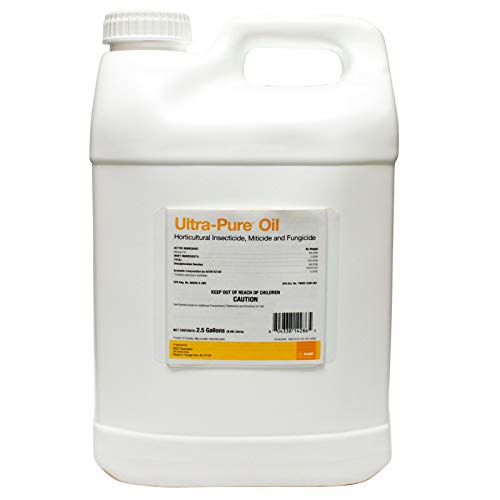
BASF Ultra-Pure Horticultural Oil (1 gal) — Insecticide, Miticide, Fungicide
| Item Form | Oil |
|---|---|
| Target Species | Insects |
| Special Features | Fast-Acting, Long-Lasting, Odorless |
| Liquid Volume | 1 gallons |
| Specification Met | EPA, OMRI |
BASF Ultra-Pure Horticultural Oil is a refined mineral oil formulated as an all-purpose spray to control insects, mites, and certain fungal problems on ornamentals, fruits, and vegetables. It is typically mixed with water and applied as a foliar spray year-round within the label temperature range to suffocate pests and form a protective barrier against eggs and spores. Notable features are its high purity (reducing plant injury risk), OMRI listing for organic systems, and broad activity across life stages of common pests such as aphids, spider mites, and fungus gnats. Practical benefits include low odor, no known resistance, and no post-harvest restrictions, which makes it suitable for production and home use where residue concerns matter. Important limitations are that correct dilution and timing are essential to avoid phytotoxicity on sensitive plants and it works by contact so it must coat pests to be effective, meaning thorough coverage is required and it will not systemically protect new growth.
Best for: Gardeners and growers who prioritize reliable, production-grade pest control with an organic-compatible product and are willing to follow label mixing and spray techniques for complete coverage.
Less Ideal for: People who want a systemic or long-lasting residual pesticide or those unwilling to apply sprays carefully to achieve full coverage and timing.
- High-purity mineral oil formulation reduces likelihood of plant phytotoxicity when used as directed
- OMRI listed, making it compatible with many organic production systems
- Broad-spectrum, physical mode of action effective against insects, mites, and some fungal stages
- Low odor and no post-harvest restrictions, useful where residue and smell are concerns
- Requires thorough coverage and correct dilution because control is contact-based
- Can cause damage to sensitive plants or under high temperatures if label directions are not followed
Verdict: Choose this ultra-pure OMRI-listed oil when you need a production-grade, contact-based spray that safely controls insects and mites with minimal odor and residue.
Bonide All Seasons Horticultural & Dormant Spray Oil, 32 oz

| Unit Count | 32 Fluid Ounces |
|---|---|
| Item Form | Spray |
| Target Species | Disease |
| Active Ingredients | Mineral Oil |
Bonide All Seasons is a versatile mineral oil spray formulated for both dormant and growing-season use to smother overwintering insect eggs and reduce common plant diseases. It is typically applied with a garden sprayer to fruit trees, ornamentals, roses, shrubs and many vegetables at dormant, delayed-dormant, or active growth stages depending on the pest or disease target. The product’s active ingredient is refined mineral oil, which provides nonresidual control and is approved for organic gardening. Practical benefits include broad-spectrum control of scale, aphids, mites, whitefly and certain moth larvae plus suppression of powdery mildew and rust, and it can be used as a foliage protectant on a wide range of crops. Limitations are that effectiveness depends on good spray coverage and correct timing, repeated applications may be required for active infestations, and oil sprays can cause phytotoxicity on sensitive plants or when used at high temperatures, so follow label directions closely.
Best for: Gardeners who prioritize practical, low-residue pest and disease control across seasons and want a single, organic-approved product to simplify routine orchard, ornamental, and vegetable care.
Less Ideal for: People who need an instant knockdown contact insecticide for heavy infestations or who prefer ready-to-use pump sprayers rather than mixing and applying with a separate sprayer.
- Mineral oil active ingredient approved for organic gardening and leaves no toxic residue
- Usable year-round as dormant, delayed-dormant, or growing-season spray for flexible timing
- Broad-spectrum control of common pests such as scale, aphids, mites, whitefly and certain moths
- Also helps suppress foliar diseases like powdery mildew and rust when applied preventively
- Requires thorough spray coverage and proper timing for good results
- Can cause phytotoxicity on sensitive plants or if applied in hot conditions
Verdict: A practical, organic-approved mineral oil spray that gives season-long pest and disease protection for gardeners who want one reliable product for dormant and growing-season use.
Bonide All Seasons Horticultural & Dormant Spray Oil, 16 oz Concentrate

| Unit Count | 16 Ounce |
|---|---|
| Item Form | Spray |
| Target Species | Insects & Disease |
| Liquid Volume | 16 fluid ounces |
Bonide All Seasons is a concentrated refined mineral oil designed for year-round use as a horticultural and dormant spray to smother insects and help prevent common fungal diseases. Mixed with water per label directions and applied to cover the entire plant surface, it targets overwintering eggs, aphids, mealybugs, spider mites and similar pests and can help with powdery mildew and leaf spots on fruits, ornamentals, roses and vegetables. The product is self-emulsifying, which makes it easier to mix into spray tanks, and its organic-friendly active ingredient makes it acceptable for many organic gardening programs. As a concentrate you get more coverage per bottle than ready-to-spray cans, which is economical for larger yards or multiple trees. Limitations are typical for oils: avoid spraying in hot, sunny conditions or on sensitive varieties, and follow label timing for dormant versus growing-season applications to prevent plant injury. Proper mixing and full coverage, including undersides of leaves, are required for best results.
Best for: Gardeners who need an economical, broad-spectrum organic-friendly spray to protect fruit trees, ornamentals and vegetables and who are comfortable mixing concentrates and following label timing.
Less Ideal for: People who prefer ready-to-use products or who want a pesticide that can be applied in any weather or to heat-sensitive varieties without risk.
- Concentrated formula yields more spray per bottle for better value
- Refined mineral oil approved for organic gardening
- Effective against a broad range of insects including overwintering eggs and mites
- Self-emulsifying for easier mixing into water and spray tanks
- Can cause plant injury if applied in hot weather or on sensitive plants
Verdict: A cost-effective concentrated horticultural oil that gives organic-minded gardeners broad seasonal pest and disease control when mixed and applied correctly.
Monterey 70% Neem Oil Concentrate, 8 oz

| Active ingredient concentration | 70% clarified neem oil |
|---|---|
| Container size | 8 oz |
| Organic certification | OMRI Listed |
Monterey 70% Neem Oil is a concentrated plant protection oil designed to control a broad mix of fungal diseases and soft-bodied pests. Mix according to label directions and apply as a spray to roses, ornamentals, vegetables, shrubs, trees, and fruit or nut crops to target powdery mildew, black spot, rusts, botrytis and common pests like aphids, whiteflies and spider mites. The high 70% neem concentration means a smaller volume of product is needed per treatment compared with lower strength oils, and the OMRI listing makes it suitable for organic gardening programs. Because it functions as a fungicide, insecticide and miticide, it simplifies seasonal spray plans by covering multiple problems with one product. Important limitations are that it must be diluted and applied correctly to avoid plant injury, timing matters for effectiveness against eggs and larvae, and repeated sprays may be necessary for heavy infestations. Users should also follow safety and sun‑exposure guidance to reduce risk to sensitive plants.
Best for: Gardeners who prioritize reliable, organic-compatible protection and want a single concentrate that handles both common fungal diseases and soft-bodied pests across ornamental and edible plantings.
Less Ideal for: Casual users who prefer ready-to-use sprays or those unwilling to follow dilution and application schedules should consider simpler pre-mixed alternatives.
- High 70% clarified neem oil concentration reduces quantity needed per application
- Acts as fungicide, insecticide, and miticide so one product covers multiple problems
- OMRI listed for use in organic gardening programs
- Suitable for a wide range of outdoor ornamentals, vegetables, trees and fruit crops
- Requires correct dilution and application timing to avoid plant phytotoxicity or reduced effectiveness
- Not a single-application cure for severe infestations; multiple treatments may be required
Verdict: Choose this concentrated, OMRI-listed 70% neem oil when you want a dependable, multi-purpose horticultural oil that covers fungal diseases and soft-bodied pests in organic gardens.
Bonide Captain Jack's Ready-to-Use Neem Oil Spray, 32 oz

| Item Form | Liquid |
|---|---|
| Target Species | Insects |
| Liquid Volume | 32 fluid ounces |
| Active Ingredients | Clarified Hydrophobic Extract of Neem Oil |
This ready-to-use neem oil spray is a multipurpose garden treatment that kills insects at all life stages while also serving as a miticide and preventative fungicide. Packaged in a 32-ounce trigger bottle, it is applied by shaking and thoroughly spraying plant surfaces, including leaf undersides, at the first sign of pests or disease and reapplying every 7 to 14 days as needed. The active ingredient is a clarified hydrophobic extract of neem oil, which is approved for organic gardening and labeled safe to use on vegetables up to the day of harvest. Practical benefits include broad pest coverage (aphids, whiteflies, spider mites and others), disease suppression such as powdery mildew, and convenience from a ready-to-use sprayer. Important limitations are that results are slower than synthetic contact insecticides and application timing matters to avoid leaf burn in full sun; repeated applications may be needed for heavy infestations. Follow label safety directions and keep the product away from children and pets.
Best for: Gardeners who want a single, organic-approved product to manage common vegetable garden pests and fungal problems and who prefer products with strong user feedback.
Less Ideal for: Growers needing rapid knockdown of severe infestations or commercial producers who require fast-acting, high-throughput treatments.
- Kills multiple pest stages including eggs, larvae and adults for more complete control.
- Also acts as a fungicide and miticide so one product covers pests and common fungal issues.
- Ready-to-use trigger bottle requires no mixing and is easy to apply to leaves and undersides.
- Approved for organic gardening and can be used on vegetables up to day of harvest.
- Slower-acting than many synthetic contact insecticides, so it may take several applications to see control.
- Must avoid spraying in peak sunlight to reduce risk of leaf burn.
Verdict: A convenient, organic-approved all-in-one neem spray that controls common vegetable garden pests and fungal issues with minimal fuss.
Bonide All Seasons Horticultural & Dormant Spray Oil, 32 oz

| Unit Count | 32 Ounce |
|---|---|
| Item Form | Spray |
| Target Species | Insects |
| Liquid Volume | 32 fluid ounces |
Bonide All Seasons is a ready-to-mix horticultural and dormant spray oil that works by smothering insects and their overwintering eggs and can also help prevent some common fungal issues when used as directed. Typical use is mixing the concentrate with water and spraying the entire plant surface, including undersides of leaves, during growing season applications or as a dormant spray when plants have no leaves. Notable features include a refined mineral oil active ingredient approved for organic gardening, broad target coverage (aphids, scale, mites, whitefly, mealybugs and more), and self-emulsifying formulation for easier mixing. Practical benefits are season‑long flexibility, suitability for fruit trees, ornamentals, roses and vegetables, and a relatively gentle mode of action compared with synthetic insecticides. Important limitations are temperature restrictions for safe application, the need to follow label rates carefully to avoid plant injury, and that it controls pests by contact so thorough coverage is required for effectiveness.
Best for: Gardeners who prioritize safe, proven, low‑toxicity control and want a single product for both growing‑season and dormant applications on fruit trees, ornamentals and edible gardens.
Less Ideal for: Growers needing fast systemic action or long residual control should consider alternative insecticides or integrated pest management approaches.
- Approved refined mineral oil formulation suitable for organic gardening
- Works as both growing‑season and dormant spray for year‑round use
- Self-emulsifying concentrate mixes with water for convenient application
- Broad spectrum control of common sap‑feeding insects and overwintering eggs
- Suitable for fruit trees, shrubs, ornamentals, roses and many vegetables
- Requires thorough coverage and correct mixing to be effective
- Not effective as a systemic treatment or long‑term residual control
- Cannot be applied outside the labeled temperature range due to risk of plant damage
Verdict: A dependable, organic‑approved spray oil for gardeners who want a low‑toxicity, season‑round option to smother common garden pests.
Choosing the Right Horticultural Oil: Key Factors to Consider
Coverage and Spray Pattern
Horticultural oils work by contact. That makes spray coverage the single most important factor. A fine, even spray that wets both upper and lower leaf surfaces and reaches crevices under bark or inside dense foliage is needed to smother pests and eggs. Uneven coverage leaves refuge spots where pests survive and repopulate.
Consider nozzle type, spray pressure, and droplet size. For broadleaf shrubs and fruit trees a coarser spray can penetrate heavier canopy, while delicate ornamentals benefit from a gentler mist. Also think about the operator technique: slow, overlapping passes and spraying until foliage glistens without dripping improves results.
Plant Safety and Phytotoxic Risk
Different plant species and growth stages tolerate oils differently. New growth, thin-leafed plants, recently transplanted specimens, and heat-stressed plants are more likely to show leaf burn or discoloration after application. The time of year matters; dormant-season applications generally carry lower phytotoxic risk than sprays on actively growing, heat-stressed foliage.
Match the product concentration and formulation to the plants you plan to treat. Test a small area first when using a new oil or treating sensitive species. Follow label directions for temperature limits and reapplication intervals to reduce risk of damage.
Timing and Target Pest Biology
Horticultural oil is most effective against soft-bodied insects, scale, mites, and insect eggs when applied at the right life stage and timing. Dormant or delayed-dormant sprays target overwintering scale and eggs, while applications during active pest emergence should coincide with vulnerable crawler stages.
Understanding the pest life cycle in your climate helps you schedule sprays for maximum effect. Repeat treatments may be needed to catch late hatchings. Also consider beneficial insect activity; apply when pollinators are inactive and avoid broad nonselective timing that harms beneficial predators.
Residual Activity and Weather Considerations
Most horticultural oils act on contact and offer limited residual protection. This means rain shortly after application can wash them off and necessitate reapplication. Some formulations have slightly longer persistence due to spreading agents, but none provide prolonged systemic control.
Plan applications around weather forecasts to allow adequate drying time. High humidity and cooler temperatures slow evaporation and can increase phytotoxic risk for sensitive plants, while hot conditions can exacerbate leaf injury. Choose a product whose label guidance matches your local climate patterns.
Ease of Mixing and Application Equipment
Practical mixing instructions and compatibility with common spray equipment make treatments less error-prone. Products that mix cleanly with water, do not separate quickly, and work with handheld or backpack sprayers are easier for home gardeners to use effectively.
Look for clear dilution rates for different targets and nozzle recommendations. If you plan to treat large trees, ensure the product works with high-volume spraying or consider renting appropriate gear. Safety in handling, storage instructions, and straightforward cleanup are also important for regular use.
Environmental and Nontarget Impact
Horticultural oils are often chosen for their low toxicity compared with many insecticides, but they can still affect non-target organisms when misapplied. Oils can smother beneficial predators and pollinators on contact, so minimizing broad-spectrum exposure protects garden ecology.
Apply during times when pollinators are inactive, and avoid spraying bloom if possible. Consider integrated strategies that combine oils with mechanical controls and biologicals to reduce non-target impacts while maintaining pest suppression.
When to Use Dormant Versus Summer Oils
Dormant oils are intended for colder months when trees and shrubs have no leaves or before leaf-out. They are useful to control overwintering scale and egg masses with lower risk of leaf burn because they are applied when foliage is absent or minimal. Summer or summer-rate oils are lighter or used at lower concentrations and are formulated to be safer on actively growing plants.
Choose dormant applications for heavy scale pressure in late winter or very early spring. Use summer-rate applications for active infestations, but always observe temperature limits and test on a small area if treating sensitive species.
- Dormant use: better for overwintering pests and eggs
- Summer use: targets active crawlers and soft-bodied insects
- Always follow label temperature and growth stage guidance
Application Techniques That Improve Effectiveness
Technique matters as much as product choice. Spray in calm conditions to avoid drift and aim for thorough wetting of all plant surfaces. Overlap passes and spray until foliage is evenly coated but not dripping.
Clean equipment before and after use to avoid clogging and cross-contamination. For tall trees, use a high-volume spray or work from multiple angles to reach undersides and branch crotches where scale and eggs hide.
- Use appropriate nozzle for desired droplet size
- Maintain steady walking speed and overlapping spray pattern
- Test on a small area if using a new product or treating sensitive plants
Safety and Handling for Gardeners
Even though horticultural oils are low in acute toxicity, they require safe handling. Wear gloves and eye protection when mixing and spraying, and avoid inhaling spray mist. Store concentrates in labeled containers away from children and pets.
Follow all label instructions for personal protective equipment and disposal. Rinse sprayers in an isolated area where runoff will not contact desirable plants or drain to sensitive areas.
- Wear gloves, eye protection, and a mask if recommended
- Mix outdoors or in well-ventilated areas
- Prevent runoff into water bodies or ornamental ponds
Managing Expectations and Combining Tactics
Horticultural oil is a tool within an integrated pest management approach. It suppresses populations by contact but usually does not provide long-term eradication on its own. Repeated applications timed to the pest life cycle often deliver the best results.
Combine oils with pruning to remove heavily infested branches, encouraging natural predators by avoiding disruptive insecticides, and using traps or barriers where appropriate. This reduces reliance on repeated sprays and supports long-term garden resilience.
- Expect the need for repeat sprays for multi-generation pests
- Use cultural controls and sanitation alongside sprays
- Monitor pest levels before and after applications
Special Considerations for Fruit Trees and Ornamentals
Fruit trees and many ornamentals react differently to oils. Fruit trees often tolerate properly timed dormant sprays well, but spring sprays during bud swell or in hot weather can cause damage. Ornamentals with fine foliage or textured leaves may be more sensitive and require lower rates or alternative treatments.
When treating fruit trees, avoid applications during tight bud or bloom and observe withdrawal times if any fruit-contact guidance is provided on the label. For container-grown ornamentals, watch for reduced drainage and ensure soil is not waterlogged before spraying.
- Avoid spraying during bloom and extreme heat
- Test sensitive ornamentals before full application
- Adjust dilution for container plants and small specimens
How We Chose the Best Horticultural Oil
We focused on products suited to home gardens, small orchards, patio containers, and greenhouse use that offer effective pest suppression while minimizing plant injury. Selection criteria emphasized spray coverage and spreading ability, because even distribution determines how completely soft-bodied pests and eggs are smothered. We prioritized plant safety across a wide range of species and growth stages, including sensitivity to heat and new growth. Residual activity and rainfastness were assessed to estimate how often applications might be needed under typical backyard conditions. Ease of mixing and application was considered so gardeners could get consistent results with common spray gear. Exclusions included industrial formulations intended solely for commercial applicators and products with active ingredients or concentrations not recommended for labeled home- or garden-scale use. The final shortlist favors formulations and concentrations that balance efficacy with low phytotoxic risk and straightforward spray performance.
FAQ
How soon after application will I see pest reduction?
You can often see visible pest decline within a few days as coated insects fail and drop off. Complete control may require follow-up treatments timed to hatch cycles, especially for scale and mites.
Can I spray horticultural oil when plants are in bloom?
Avoid spraying during open bloom to protect pollinators. If you must treat, target nonflowering periods such as early morning or late evening when pollinators are less active and minimize direct spray on blossoms.
Is horticultural oil safe for edible plants and fruit trees?
Many horticultural oils are labeled for use on edible plants and fruit trees when applied according to directions. Observe label guidance about preharvest intervals, temperature restrictions, and dilution rates to reduce phytotoxic risk and avoid residue issues.
What temperature range is safe for applying oil sprays?
Labels commonly recommend applying oils at moderate temperatures and avoiding hot conditions that increase phytotoxicity. Exact limits vary, but gardeners should generally avoid applications during heat waves and when temperatures exceed label-specified thresholds.
Can I tank-mix horticultural oil with other garden sprays?
Tank-mixing is possible with some products but depends on the oil formulation and the other product. Check compatibility recommendations and perform a jar test or small-area trial first. Avoid mixing with materials that increase leaf uptake or add phytotoxic risk.
How often should I reapply oil during an active infestation?
Reapplication intervals depend on the pest, weather, and product residual. Because most oils act on contact, repeat treatments at intervals matching the pest life cycle, often every 7 to 14 days during active emergence, are common.
Final Verdict
Choose a horticultural oil that matches your plants, climate, and the target pest life stage. Prioritize thorough coverage and formulations rated for the species you grow, and schedule applications to avoid heat, bloom, and high humidity. Remember that oils are contact controls that work best as part of an integrated approach combining timing, monitoring, and cultural controls. With appropriate selection and careful application, horticultural oils can provide effective, low-toxicity pest suppression for home and small-scale gardens.
