

Note: This article contains affiliate links. If you click on these links and make a purchase, I may earn a small commission at no extra cost to you. This helps support my research and content. Read my full affiliate disclosure here.
Picking the right fertilizer for a peace lily makes a visible difference in leaf color, plant vigor, and flowering frequency. Peace lilies have specific needs compared with other houseplants: they prefer steady, moderate feeding and a formulation that encourages blooms without burning delicate roots. This guide reviews six top fertilizer options chosen for indoor peace lily care and explains how each was assessed for nutrient balance, application method, and gardener friendliness. Read on to understand what matters most when feeding peace lilies and how to match a product to your watering routine and light conditions.
Top Picks at a Glance
| Best Overall The best all-around choice for most situations | TPS NUTRIENTS Peace Lily Liquid Fertilizer, 8 oz |  |
| Best Quality Built to a higher standard if you want something more solid | Gardenera 3-1-2 Liquid Fertilizer Concentrate for Peace Lily, 8 fl oz |  |
| Best Value The sweet spot between price and what you get | HiThrive Peace Lily Liquid Fertilizer, 16 oz |  |
| Best Budget The cheapest option that still gets the job done reliably | TPS Nutrients Peace Lily Fertilizer Spray (16 fl oz) |  |
| Highest Rated A top-rated pick with lots of positive feedback | Creations by Nathalie Peace Lily Plant Food Spray, 8 fl oz |  |
| Most Popular A crowd favorite that many people choose with confidence | Miracle-Gro Indoor Plant Food, Liquid, 8 oz. — 2 Pack |  |
TPS NUTRIENTS Peace Lily Liquid Fertilizer, 8 oz

| Item Form | Liquid |
|---|---|
| Application Method | Liquid |
| Coverage | Peace lilies |
| Target Species | Peace Lily |
| Mixing Ratio | 3:1:2 |
This 8 oz liquid formula from TPS NUTRIENTS is designed for potted peace lilies and supplies balanced, gentle nutrition to encourage blooms and deep green leaves. You mix the concentrate using the provided 3:1:2 ratio and apply it as a liquid feed, which makes it easy to add during routine watering. The product highlights improved flower production, prevention of brown leaf tips, and support for healthy root development, so it is useful for maintaining both flowering and foliage quality. Because it is labeled for peace lily coverage and described as gentle, it is appropriate for indoor plants with sensitive roots where overfeeding is a concern. The small 8 oz bottle is convenient for hobbyists or those with a few plants, but households with larger collections will need to repurchase more often. There are no detailed N-P-K numbers listed on the packaging data available, so users wanting exact nutrient ratios will need to seek that information elsewhere before comparing to other fertilizers.
Best for: Buyers who want a ready-to-use, peace-lily-specific liquid feed to maintain healthy blooms and foliage on a few indoor plants without risking overfertilization.
Less Ideal for: Collectors with many plants or large containers who need larger-volume or economy fertilizers and users who require a precise N-P-K label for tailored nutrient management.
- Formulated specifically for peace lilies to promote blooms and lush foliage
- Liquid concentrate with a simple 3:1:2 mixing ratio for easy dosing during watering
- Marketed as gentle on roots, reducing risk of burning sensitive indoor plants
- Supports root development to improve water and nutrient uptake
- Small 8 oz size may require frequent repurchase for multiple or larger plants
- No explicit N-P-K breakdown provided in the available product details
Verdict: A gentle, peace-lily-specific liquid fertilizer that makes maintaining blooms and deep green foliage simple for indoor plant owners with a few pots.
Gardenera 3-1-2 Liquid Fertilizer Concentrate for Peace Lily, 8 fl oz

| Item Form | Liquid |
|---|---|
| Target Species | Peace Lily |
| Liquid Volume | 8 fluid ounces |
| Mixing Ratio | 1 teaspoon per gallon of water |
This Gardenera 3-1-2 concentrate is a targeted liquid fertilizer for peace lilies that you dilute and apply at the roots with your regular watering. The mild nitrogen-led NPK supports steady green growth while providing phosphorus and potassium to encourage blooms and stronger overall vigor. It is easy to use: one teaspoon per gallon of water mixes quickly and the bottle size covers many feedings for a shelf of potted plants. Because it is a concentrate intended for root-zone feeding, it integrates with normal watering routines and avoids foliar mess. Practical benefits include measured dosing that reduces risk of overfeeding and a plant-specific label that helps you pick the right formula for peace lilies. Limitations are that it is a small 8 fl oz bottle meaning more frequent repurchase for larger collections and it is not presented as fully organic in the technical details despite descriptive claims, so buyers seeking certified organic inputs should verify certification. For growers wanting a ready-to-mix, bloom-supporting feed for peace lilies, this product simplifies routine feeding.
Best for: Buyers who prioritize reliable, performance-focused feeding routines for peace lilies and want a measured concentrate that supports steady growth and more frequent blooms.
Less Ideal for: People managing very large collections who need bulk fertilizer or growers who require certified organic products without question.
- Balanced 3-1-2 NPK tailored to foliage and bloom support for peace lilies
- Concentrated formula (1 teaspoon per gallon) stretches an 8 fl oz bottle across many feedings
- Root-zone application integrates with normal watering to deliver nutrients where roots absorb them
- Clear, plant-specific labeling reduces guesswork when feeding different indoor plants
- 8 fl oz size can be small for owners with many plants
- No explicit certified organic label shown in product specs
Verdict: A convenient, measured concentrate that delivers a foliage-friendly 3-1-2 feed to boost peace lily growth and flowering while fitting into regular watering routines.
HiThrive Peace Lily Liquid Fertilizer, 16 oz

| Item Form | Liquid |
|---|---|
| Target Species | Peace Lily |
| Liquid Volume | 16 fluid ounces |
| Mixing Ratio | 1:10 |
HiThrive Peace Lily Liquid Fertilizer is a concentrated 16 oz plant food designed specifically for peace lilies and indoor foliage. The 6-2-4 NPK formula plus six micronutrients supplies nitrogen for greener leaves, phosphorus for root development, and potassium for overall vigor, and the label recommends mixing at one teaspoon per gallon for routine feeding or doubling for deficiency correction. Because the bottle makes up to 96 gallons it is convenient for someone who feeds multiple pots or wants a long-lasting supply. Use it diluted and apply with regular watering or bottom-watering so nutrients reach the root zone; the liquid form lets you measure doses easily and avoid uneven granule distribution. Practical benefits include predictable feeding rates, suitability across common Spathiphyllum varieties, and a mixable concentrate that reduces storage space versus multiple small bottles. Important limitations are that it is formulated specifically for peace lilies so it is not a balanced choice for heavily flowering or fertilization-needy mixed-houseplant collections, and users must follow dilution instructions to avoid overfeeding sensitive plants.
Best for: Buyers who want a cost-effective, single-purpose fertilizer to keep peace lilies healthy and prefer a measured, repeatable feeding routine for multiple pots or long-term use.
Less Ideal for: Plant owners who need an all-purpose fertilizer for many different species or who prefer slow-release granules instead of a liquid concentrate.
- Targeted 6-2-4 NPK formula with added micronutrients for foliage, roots, and blooms
- Concentrated 16 oz bottle mixes into 96 gallons, offering long-term supply
- Liquid form provides easy, consistent dosing and works with top or bottom watering
- Label includes standard and deficiency feed rates for straightforward use
- Formulated specifically for peace lilies so may not suit all indoor plant types
- Requires careful dilution to avoid overfeeding sensitive houseplants
Verdict: A concentrated, easy-to-dose liquid fertilizer tailored to keep peace lilies lush and flowering while stretching a single 16 oz bottle across many feedings.
TPS Nutrients Peace Lily Fertilizer Spray (16 fl oz)

| Item Form | Liquid |
|---|---|
| Specific Uses For Product | Indoor Houseplants |
| Application Method | Spray |
| Target Species | Peace Lilies |
| Unit Count | 16 Fluid Ounces |
This 16-ounce TPS Nutrients Peace Lily Fertilizer Spray is a liquid foliar feed designed for quick, convenient application to potted peace lilies. You mist leaves, including undersides, to deliver nutrients directly to foliage and flowers; the label recommends 2–3 applications per week during active growth and once weekly in cooler months. Key ingredients include seaweed extract and soluble nitrates and phosphates, which support leaf color and flowering when used as directed. The spray format makes it easy to reach small plants, office displays, and groupings without mixing concentrates or measuring. Practical benefits are fast coverage, simple routine dosing, and a formula targeted to peace lilies so you do not overfeed with a general houseplant mix. Limitations are that coverage is described as low so larger collections will require more product, and foliar feeding does not replace occasional root feeding or repotting for long-term vigor. Handle with care to avoid skin or eye contact and follow safety directions.
Best for: Buyers who want a low-effort, targeted feeding routine for one or a few potted peace lilies and prefer a spray-on option that fits a simple weekly care schedule.
Less Ideal for: Not a good choice for gardeners managing large collections or outdoor plantings that need higher coverage or concentrated soil feeds.
- Ready-to-use spray for easy foliar feeding without mixing
- Formulated specifically for peace lilies to support leaves and blooms
- Contains seaweed extract plus soluble nutrients for quick uptake
- Clear directions for seasonal application so dosing is straightforward
- Low stated coverage means a single bottle is small for multiple or larger plants
- Foliar spray supplements but does not replace soil fertilization for root nutrition
Verdict: A convenient, peace-lily–specific spray that makes regular foliar feeding fast and simple for small indoor collections.
Creations by Nathalie Peace Lily Plant Food Spray, 8 fl oz

| Item Form | Spray |
|---|---|
| Specific Uses For Product | Indoor |
| Application Method | spray |
| Target Species | Houseplants |
This spray-format plant food is designed to make feeding peace lilies straightforward and consistent. The ready-to-use liquid comes in an 8 fl oz spray bottle so you do not need to measure or dilute anything; just shake and mist the soil or leaves daily or every other day per directions. Its application method is ideal for busy or cautious plant owners who want to maintain steady nutrient delivery without mixing concentrations. The product highlights indoor use and targets houseplants specifically, so it is suited to potted peace lilies and other decorative indoor foliage. Practical benefits include convenience, reduced risk of over- or under-dosing compared with concentrated fertilizers, and compact storage. Limitations are that it is formulated for routine maintenance rather than heavy feeding or correcting severe nutrient deficiencies, and daily misting may be more frequent than some liquid fertilizers require. It also does not replace attention to light and watering needs, which remain crucial for healthy peace lilies.
Best for: Buyers who prioritize simple, reliable maintenance for houseplants and want a no-fuss feeding routine that reduces dosing errors.
Less Ideal for: Gardeners needing a high-concentration fertilizer for rapid correction of deficiencies or for fertilizing large numbers of plants should look at concentrated or granular options.
- Ready-to-use spray requires no measuring or mixing
- Designed specifically for indoor houseplants and peace lilies
- Compact 8 fl oz bottle is easy to store and apply
- Spray application reduces the chance of overdosing compared with concentrates
- Not intended for correcting severe nutrient deficiencies or heavy feeding
- Frequent application schedule may be inconvenient for some users
Verdict: Choose this spray if you want a reliable, ready-to-use way to feed peace lilies without mixing or measuring.
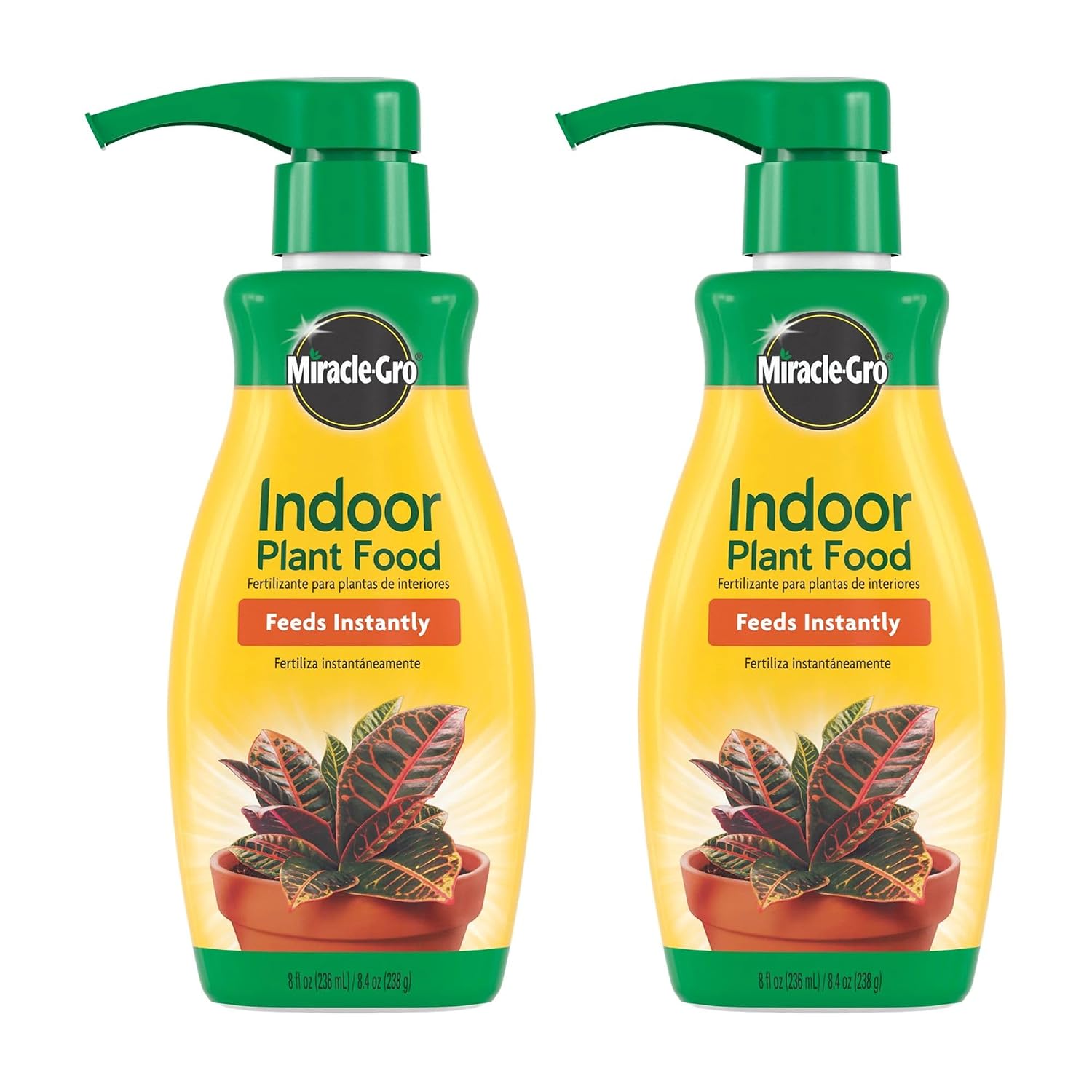
Miracle-Gro Indoor Plant Food, Liquid, 8 oz. — 2 Pack
| Item Form | Liquid |
|---|---|
| Application Method | Apply directly to the soil or mix with water |
| Specific Uses For Product | Plant Food |
| Target Species | Peace Lily,Snake Plant,Croton,Succulents,Herbs |
| Number of Packs | 2 |
Miracle-Gro Indoor Plant Food is a ready-to-use liquid fertilizer designed to feed indoor container plants including peace lilies, snake plants, succulents, herbs and small edible plants. It is applied either directly to the soil with the built-in pump or diluted in water, and the manufacturer recommends weekly applications for steady, visible growth. The product’s main strength is convenience: the pump dosing and small bottle size make it easy to measure for small pots and frequent feedings, and the formula delivers nutrients immediately to the root zone. For someone growing a peace lily this helps promote greener foliage and more consistent growth when used as directed. Important limitations are that it is a general-purpose indoor feed rather than a peace-lily–specific formula and weekly application requires regular attention to avoid overfeeding sensitive plants. Also safety precautions like keeping it away from children and pets are noted on the label.
Best for: Indoor gardeners who want a straightforward, easy-to-dose fertilizer to maintain healthy foliage on common houseplants like peace lilies and prefer a product with many positive user experiences.
Less Ideal for: People seeking a species-specific fertiliser regimen for flowering optimization or those who prefer low-frequency slow-release feeding methods.
- Ready-to-use liquid with pump makes dosing quick and simple for small pots
- Formulated for a wide range of indoor plants including peace lilies and herbs
- Comes as a two-bottle pack so you have a backup supply for a full season
- Can be applied directly to soil or mixed with water for flexible use
- General-purpose formula rather than tailored specifically for peace lilies
- Requires weekly application which may be easy to overdo with forgetful users
Verdict: A convenient, easy-to-dose liquid fertilizer that reliably supports healthy peace lily foliage with simple weekly applications.
Choosing the Right Fertilizer for Peace Lily Plant: Key Factors to Consider
Nutrient Ratio and What Peace Lilies Need
Peace lilies do best with a balanced fertilizer that supports both leaf growth and flower production. A moderate nitrogen level encourages lush green leaves without promoting excessive, leggy growth that can reduce blooming. Phosphorus supports bud formation and flower development, so a formula with a slightly higher middle number or balanced N-P-K will often yield better bloom sets.
Gardeners should watch the label for N-P-K and any secondary nutrients. Iron and magnesium support deep green foliage; a deficiency can show as yellowing between veins. Avoid high-nitrogen houseplant mixes intended to bulk up foliage only, because they may suppress flowering on peace lilies.
Fertilizer Form and Frequency
Peace lilies respond well to regular, low-dose feeding rather than heavy infrequent doses. Liquid concentrates and water-soluble fertilizers let you feed at small, controlled strengths on a monthly or biweekly schedule. Controlled-release granules can be convenient, but they release nutrients over time and can be harder to tailor to a plant's seasonal needs.
Consider your maintenance habits. If you water frequently and prefer one-step care, a slow-release option may reduce hands-on routine. If you like to monitor and adjust feeding based on active growth or bloom periods, a liquid or water-soluble formula offers more control.
Risk of Root Burn and Salt Buildup
Potted peace lilies are vulnerable to salt buildup because their root zone is confined. High-concentration feeds or salts in some granular fertilizers can accumulate in the potting mix and scorch roots or leaf margins. Choose products with clear dilution guidance and lower salt indexes for indoor container use.
Regular flushing of the potting mix every few months helps remove accumulated salts. If you notice brown leaf tips or crust on the soil surface, reduce feed strength or frequency and leach the pot with plain water to reset the root environment.
Compatibility With Potting Mix and Watering Habits
Different potting mixes and watering routines influence how fertilizer behaves. Fast-draining mixes may require more frequent, lighter feeds because nutrients wash away with each watering. Dense mixes hold nutrients longer but increase the chance of buildup if overfed.
Match fertilizer type to your mix and how often you water. For frequent watering schedules, prefer lower-concentration liquid feeds. For orchids or mixes with added bark where water drains quickly, a more frequent but diluted approach keeps nutrient availability consistent without overload.
Secondary Nutrients and Micronutrients
Beyond N-P-K, peace lilies benefit from micronutrients such as iron, manganese, and magnesium. These elements support chlorophyll production and overall leaf tone. A basic houseplant fertilizer that lists micronutrients can prevent common indoor deficiencies that cause pale leaves or slow recovery after stress.
If your water is very hard or your potting mix is older, micronutrient supplementation becomes more important. Some liquid formulas include a fuller micronutrient profile, which is helpful for growers who do not routinely repot or amend soil.
Ease of Measuring and Dosing
Precision matters when feeding small pots. Products that include easy-to-use measuring caps, clear dilution tables for different pot sizes, or premeasured sticks reduce dosing errors. Overdosing is a common cause of plant decline in indoor containers, so packaging and instructions that minimize guesswork are valuable.
Look for labels that provide concentration recommendations for seedlings, mature plants, and established containers. If instructions assume large outdoor beds, the product is less suitable for single indoor houseplants.
When to Feed Your Peace Lily
Feed peace lilies more actively during their active growth and bloom period, typically spring through early fall. Reduce or stop regular feeding during winter when growth slows and the plant needs less supplemental nutrition.
Observe the plant for signs of need. Pale leaves, reduced flowering, or slow growth can indicate the plant needs a balanced feed. Also factor in repotting: fresh potting mix usually supplies nutrients for a few months, so delay routine feeding right after repotting until the plant resumes normal growth.
- Active season: spring to early fall for monthly or biweekly feeding
- Hold back in winter to prevent salt buildup and stress
- Delay feeding for several weeks after repotting into fresh mix
How Water Quality Affects Fertilizer Choices
Tap water chemistry changes how fertilizers act in the pot. Hard water raises calcium and magnesium levels and can increase salt buildup when combined with regular feeding. Soft or acidic water may leach nutrients faster, requiring slightly more frequent feeding.
If you have hard water, keep feed strength lower and flush the potting mix occasionally. If you use filtered or rainwater, you may be able to follow standard dilution rates more closely without worrying about quick buildup.
- Hard water: reduce concentration and leach pots periodically
- Soft or filtered water: standard dilution is usually safe
- Rainwater: may dilute nutrients faster, monitor plant response
Signs Your Peace Lily Is Under- or Over-Fed
Underfed peace lilies often develop slow growth, smaller leaves, and reduced or absent blooms. Leaves may dull or yellow gradually as the plant misses essential nutrients. Correcting this usually involves a balanced, mild feeding and ensuring the root zone is healthy.
Overfeeding shows up as brown leaf tips, wilting despite moist soil, and white crust on the soil surface. Severe overfeeding can damage roots and cause rapid decline. If you suspect overfeeding, stop fertilizing and leach the pot thoroughly with plain water until runoff is clear.
- Underfed indicators: slow growth, paler leaves, fewer flowers
- Overfed indicators: brown leaf tips, crusted soil surface, wilting
- Immediate response to overfeeding: flush potting mix and pause feeding
Practical Feeding Schedules for Different Setups
For growers using a well-draining indoor potting mix and standard household watering, a diluted liquid feed once a month during the growing season is a conservative, low-risk approach. If you water frequently, reduce concentration and increase frequency to avoid nutrient spikes.
If you prefer low-maintenance care, a single application of a slow-release granule at the start of the growing season can supply nutrients for several months. Monitor the plant and supplement with a light liquid feed if growth or blooming slows before the next release cycle finishes.
- Traditional schedule: diluted liquid feed every 3 to 4 weeks in growing season
- Frequent watering: dilute more and feed lightly every 2 weeks
- Low-maintenance: one controlled-release application spring through summer
Mixing Fertilizers and Organic Amendments
Combining mineral fertilizers with organic feedings can balance quick nutrient availability with longer-term soil health. Liquid seaweed or fish emulsion added occasionally can boost micronutrients and microbial activity, but use them at lower strengths to avoid compounding salts.
If you use compost tea or diluted organic extracts, reduce the main fertilizer strength accordingly. Overlapping concentrated mineral and organic feeds increases the risk of nutrient overload in small pots.
- Use organic additives at low strength and infrequently
- Reduce mineral fertilizer strength when applying organic feeds
- Avoid simultaneous high-dose mineral and organic applications
How We Chose the Best Fertilizer for Peace Lily Plant
We shortlisted fertilizers that match the growing habits and sensitivities of peace lilies and eliminated products intended for heavy-feeding outdoor vegetables or slow-release turf formulas that are hard to dose for a single houseplant. Selection focused on practical application for indoor growers: nutrient ratio suitability for foliage and blooming, form and dosing clarity, potential for root burn, and how the product integrates with typical container soil and watering schedules. We prioritized formulas with clear N-P-K ratios appropriate for foliage and bloom balance, liquid and controlled-release formats that are easy to dose, and product literature that explains dilution and frequency for indoor use. Exclusions included fertilizers designed exclusively for succulents, bulbs, or lawns, and concentrated high-salt mixes that pose a higher risk of fertilizer burn in small pots. Editorial judgment emphasized real-world handling: ease of measuring, frequency of application, and whether the formula is forgiving for occasional over- or under-watering.
FAQ
How often should I fertilize a peace lily indoors?
Usually feed once every 3 to 4 weeks during active growth using a diluted liquid fertilizer. If you water frequently, use a weaker solution more often rather than full-strength doses.
Can too much fertilizer stop my peace lily from blooming?
Yes. Excessive nitrogen or overfeeding can encourage leaf growth at the expense of flowers. Use a balanced formula and follow a modest schedule to encourage blooms.
Is slow-release fertilizer safe for potted peace lilies?
Slow-release options can be safe and convenient, but they are less flexible. They work well for low-maintenance growers but watch for salt buildup and avoid adding extra feeds that could stack nutrient levels.
Should I change feeding after repotting a peace lily?
Yes. Fresh potting mix often contains nutrients, so wait several weeks before resuming a regular fertilizer schedule to avoid overloading the new soil.
What should I do if my peace lily shows brown leaf tips after fertilizing?
Brown tips often indicate salt buildup or overfeeding. Stop fertilizing, flush the pot thoroughly with plain water to leach salts, reduce feed strength, and reassess frequency.
Do peace lilies need different fertilizer in low light?
In lower light, peace lilies grow more slowly and need less fertilizer. Reduce feeding frequency and strength during periods of limited light to match the plant's lower nutrient demand.
Final Verdict
Focus on a balanced, moderate-feeding strategy that supports both healthy foliage and reliable blooming when choosing a fertilizer for peace lilies. Prioritize formulas with appropriate N-P-K proportions, low salt potential, and clear dilution instructions so you can dose precisely for small pots. Match the product form to your routine: liquids for control, slow-release for low maintenance, and organics for supplemental micronutrients. By aligning fertilizer type and schedule with your watering habits and potting mix, you can maintain vigorous, green leaves and enjoy consistent flowering.
