

Note: This article contains affiliate links. If you click on these links and make a purchase, I may earn a small commission at no extra cost to you. This helps support my research and content. Read my full affiliate disclosure here.
Choosing the right plastic weed barrier matters because it changes how often you hand-weed, how water and nutrients move into the soil, and how long beds remain productive. In many yards and raised beds a well-selected barrier cuts routine work and protects planting zones from invasive grasses while still letting young plants establish. This guide covers seven top plastic weed barriers shortlisted for common garden situations from raised beds to perimeter beds and container edges. We evaluated each option for durability, water management, and installation practicality so you can pick the best fit for your garden layout and maintenance style.
Top Picks at a Glance
| Best Overall The best all-around choice for most situations | Rocky Mountain Goods 4 mil Black Plastic Sheeting (6 ft x 100 ft) |  |
| Best Quality Built to a higher standard if you want something more solid | Farm Plastic Supply 10 Mil Black Crawl Space Vapor Barrier (10' x 100') |  |
| Best Value The sweet spot between price and what you get | Tapix Black Plastic Sheeting, 3 ft x 50 ft, 4 mil (2-Pack) |  |
| Best Budget The cheapest option that still gets the job done reliably | Frost King 3' x 50' Polyethylene Sheeting, 4 mil |  |
| Highest Rated A top-rated pick with lots of positive feedback | Turboforce 10 Mil Black Plastic Sheeting, 10' x 100' |  |
| Most Popular A crowd favorite that many people choose with confidence | Tapix 6 mil Black Plastic Sheeting, 10 ft x 25 ft |  |
| Best Seller A high-volume bestseller chosen again and again | LAVEVE Heavy Duty Weed Barrier Landscape Fabric, 4 ft x 100 ft (two 4×50 ft rolls) |  |
Rocky Mountain Goods 4 mil Black Plastic Sheeting (6 ft x 100 ft)

| Thickness | 4 mil |
|---|---|
| Intended use | Gardening, landscaping, weed barrier |
| Length | 100 ft |
| Width | 6 ft |
| Manufacturer | Rocky Mountain Goods |
This 4 mil black plastic sheeting is a straightforward, heavy-duty roll for keeping weeds down and protecting soil during landscaping or construction tasks. It is typically laid over cleared ground and secured at the edges with staples, soil, or landscape pins to block light and prevent weed growth. Notable features are the 4 mil thickness, which gives the sheet durability against tearing and weather, and the long 6 by 100 foot roll that covers large areas without multiple seams. Practically, it works well under gravel, mulch, or around raised beds where a light-blocking barrier is needed, and the thickness holds up to foot traffic and occasional tool contact. Limitations are that it is solid black plastic so it does not allow water or air through, which can impede soil moisture movement and root aeration if left directly under plants long term, and it will eventually degrade in UV unless covered. Expect to anchor it securely and plan for removal or covering if you need breathable, permanent weed control.
Best for: Buyers who want a simple, durable light-blocking barrier for clearing and protecting large garden or landscape areas and prefer a product that covers lots of ground with minimal seams.
Less Ideal for: Gardeners seeking a long-term, breathable weed control solution for planted beds or those who need a permeable fabric for irrigation and root health should look at woven landscape fabrics instead.
- 4 mil thickness offers good puncture and tear resistance for landscaping use
- Large 6 ft x 100 ft roll reduces seams and speeds installation over big areas
- Solid black material effectively blocks light to suppress weed growth
- Durable enough for temporary construction and under-mulch applications
- Solid polyethylene is not permeable so it can restrict water and air exchange to soil
- Will degrade over time if exposed to sunlight unless covered
Verdict: A simple, heavy-duty 4 mil black plastic roll that quickly covers large areas to block light and reduce weeds.
Farm Plastic Supply 10 Mil Black Crawl Space Vapor Barrier (10' x 100')
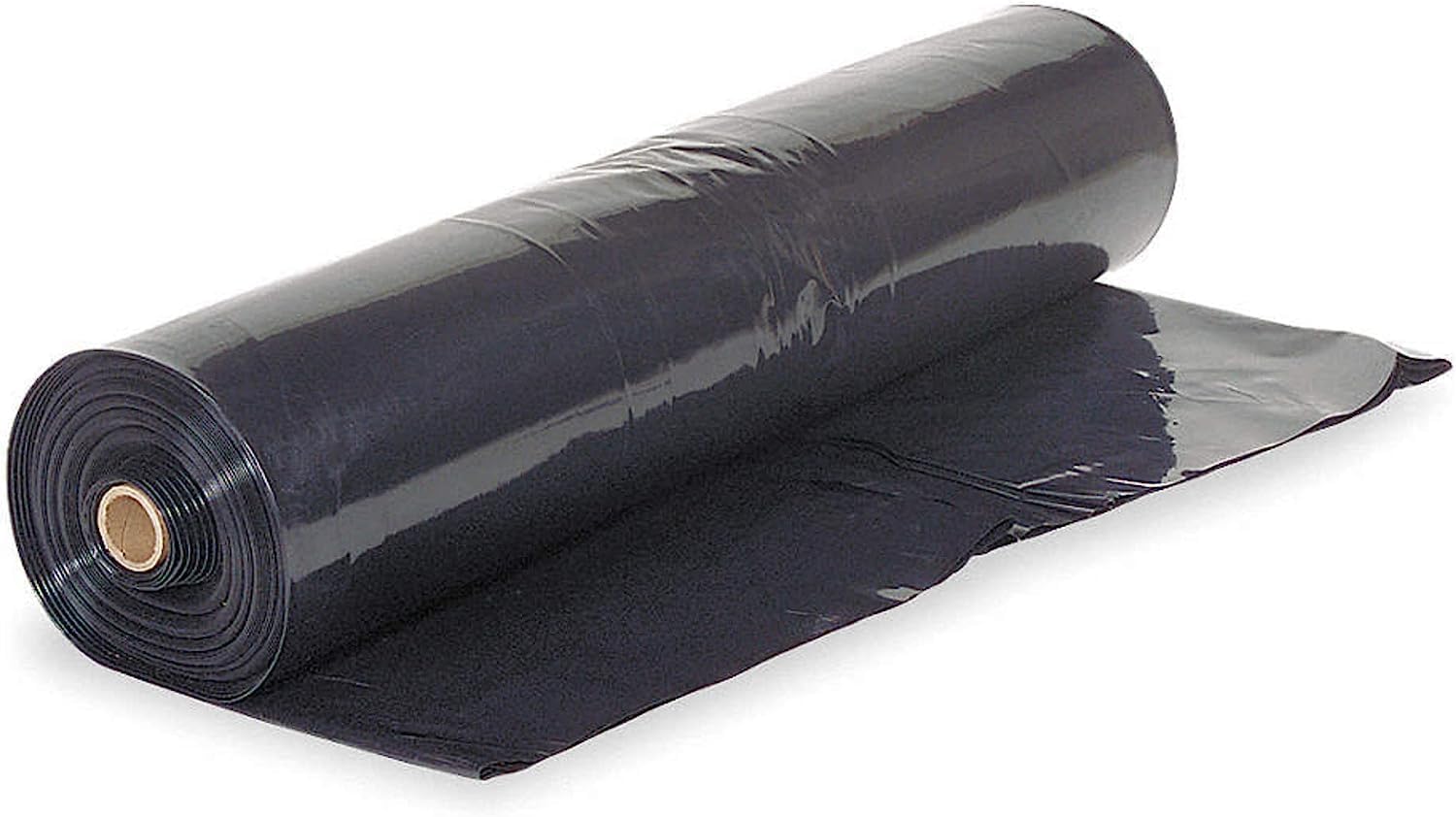
| Material | Low Density Polyethylene (LDPE) |
|---|---|
| Thickness | 10 Mil |
| Included Components | 10 Mil Black Crawl Space Vapor Barrier |
This Farm Plastic Supply vapor barrier is a true 10 mil low-density polyethylene sheet intended for heavy-duty moisture control and temporary surface protection. In use it is unrolled and laid across crawl spaces, basements, or other ground surfaces to block soil moisture and reduce humidity; the 10 mil thickness gives it noticeably higher tear resistance than thinner contractors' sheeting. Notable features include premium new LDPE construction, an odor-free formulation, and a smooth, easy-to-clean surface that makes it reusable for multiple projects. For performance-focused buyers the primary benefits are durability and reliability: the material resists punctures during installation and holds up under occasional foot traffic or placement over insulation. Important limitations are that the product is a simple sheet with no integrated seams, grommets, or adhesive flanges, so long runs and overlaps require careful sealing to create a true vapor-tight system, and handling the heavy roll by yourself can be awkward. Overall it is a straightforward, contractor-grade barrier that prioritizes robustness and moisture control over convenience features.
Best for: Buyers who prioritize durability and long-lasting moisture protection for crawl spaces, basements, or heavy-duty ground coverings and who plan to install and seal the sheet for professional-level performance.
Less Ideal for: Casual users wanting a lightweight, easy-to-handle weed barrier for small garden beds or those who prefer pre-cut, self-sealing landscape fabrics.
- True 10 mil LDPE construction for higher tear and puncture resistance
- Odor-free, new-material manufacture suitable for repeated use
- Smooth surface is easy to clean and works across crawlspaces and basements
- Sold as a long 10' x 100' roll that covers large areas without many seams
- No built-in sealing features so overlaps must be taped or mechanically fastened
- Heavy roll can be difficult to maneuver alone during installation
Verdict: Choose this 10 mil LDPE vapor barrier when you need a robust, contractor-grade sheet that resists tearing and provides reliable moisture protection over large areas.
Tapix Black Plastic Sheeting, 3 ft x 50 ft, 4 mil (2-Pack)
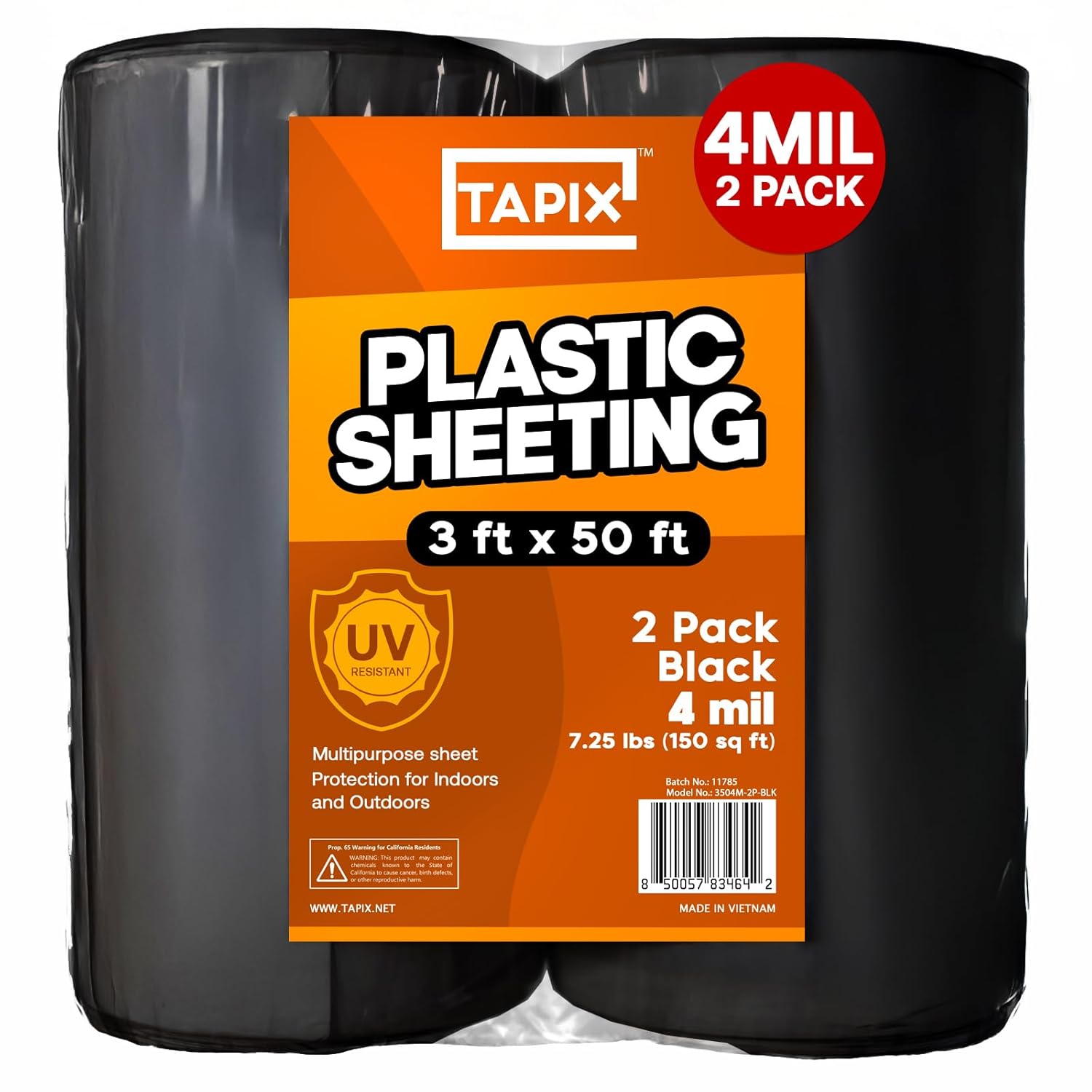
| Number of Packs | 2 |
|---|---|
| Unit Count | 100 Feet |
| Item Thickness | 0.04 inches |
| Material | Plastic |
| Grade Rating | Commercial |
Tapix Black Plastic Sheeting is a basic, multipurpose landscape and protection film sold as two 3 by 50 foot rolls of 4 mil polyethylene. In gardens it is used as a weed barrier and root blocker by laying the film over beds to block light and warm soil; it also doubles as a moisture barrier for underlayment or for covering lumber and equipment on a job site. The sheets are UV-treated for outdoor exposure and the commercial-grade material is thin enough to cut and shape easily yet sturdy enough for temporary outdoor use. Practical benefits include large coverage from the two-roll pack, simple installation with staples or landscape pins, and flexible use around the yard or during painting and renovation work. Limitations are that solid plastic prevents water and air exchange so it is not a long-term solution for planted beds and 4 mil thickness is not as tear-resistant as heavier contractor-grade options, so heavier foot traffic or sharp edges can shorten its useful life.
Best for: Buyers who want a cost-effective, no-frills weed and moisture barrier for seasonal beds, short-term projects, or general covering tasks and who prioritize coverage and ease of use over permanence.
Less Ideal for: Gardeners planning permanent planting or mulched beds and those who need a heavy-duty, tear-resistant membrane for high-traffic or long-term construction use should consider other options.
- Two 3 ft x 50 ft rolls provide wide coverage suitable for multiple beds or projects
- UV-treated plastic designed to withstand sun exposure for extended outdoor use
- Lightweight 4 mil film is easy to cut, shape, and secure with staples or pins
- Multi-purpose for weed control, moisture barrier, and temporary protective covering
- Solid plastic blocks water and air, so it is unsuitable for long-term use under growing plants
- 4 mil thickness is more prone to tearing than heavier contractor-grade sheeting
Verdict: A practical, inexpensive two-roll solution for blocking weeds and protecting surfaces during short-term garden and job-site projects.
Frost King 3' x 50' Polyethylene Sheeting, 4 mil

| Material Type | Polyethylene (PE) |
|---|---|
| Item Thickness | 4 mils |
| Size | 3' x 50' |
| Water Resistance Level | Water Resistant |
| Recommended Uses For Product | Boat Cover, Emergency Preparedness |
This Frost King polyethylene sheeting is a simple, low-cost plastic barrier most buyers will use to cover soil, protect materials, or create temporary enclosures. At 4 mil thickness and 3 by 50 feet, it lays flat as a basic weed barrier or ground cover beneath gravel and decorative rock, and it also works as a moisture barrier under projects or for emergency protection on equipment and furniture. The material is water resistant and made of polyethylene, so it resists tearing for routine tasks but will degrade under prolonged sun exposure since it does not provide UV protection. Its thin profile keeps cost and bulk down, making it easy to cut, fold, and anchor with landscape staples, but it is not heavy-duty enough for long-term outdoor burial or high-traffic pathways. For short-term garden projects, seasonal use, or inexpensive weed suppression under mulch, this sheet is practical and easy to handle; for permanent weed barriers or exposed sun-facing installs choose a UV-stabilized, heavier fabric instead.
Best for: Buyers who need an inexpensive, easy-to-handle plastic sheet for short-term garden weed suppression, mulch underlayment, or seasonal protection and prefer a budget-first choice.
Less Ideal for: Gardeners seeking a durable, long-term weed barrier for exposed beds or high-traffic paths should consider heavier, UV-stabilized landscape fabrics instead.
- Large coverage area suitable for small landscape projects or temporary protection
- 4 mil thickness offers basic tear resistance for routine garden and household uses
- Water resistant material functions as a moisture barrier under projects or decorative rock
- Lightweight and easy to cut and secure with landscape staples
- No ultraviolet protection so it will degrade if left exposed to sun for long periods
- Thin 4 mil construction is not designed for permanent buried weed barrier or heavy foot traffic
Verdict: A very affordable, lightweight polyethylene sheet that works well for short-term weed suppression and temporary garden protection.
Turboforce 10 Mil Black Plastic Sheeting, 10' x 100'

| Manufacturer | Turboforce |
|---|---|
| Size | 10' x 100' |
| Thickness | 10 Mil |
| UV Resistant | Yes |
This Turboforce 10 mil black plastic sheeting is built for demanding protection tasks where durability and moisture control matter. Sold as a single 10 ft by 100 ft roll, the thick polyethylene resists tearing and punctures so it can be used as a long-term weed barrier, greenhouse cover, crawl-space vapor barrier, or construction drop cloth. The film is UV resistant and waterproof, which helps prevent degradation when used outdoors and keeps moisture out when installed over soil or building materials. In practice it lays flat and can be secured with landscape staples or weighted edges to block light and suppress weeds over large areas. Because it is heavy duty, handling and cutting the roll takes two people for large sheets and it is less flexible than thinner films for wrapping odd shapes. For reliability-focused projects where a sturdy, long-lasting barrier is needed, this roll provides consistent coverage across 1,000 square feet without frequent replacement.
Best for: Buyers who prioritize a long-lasting, low-maintenance barrier for weed suppression, greenhouse covers, or moisture control and who want a product that performs reliably over time.
Less Ideal for: Gardeners needing a lightweight, highly flexible sheet for small ornamental beds or detailed shaping should consider thinner, more pliable options.
- 10 mil thickness offers strong tear and puncture resistance for long-term outdoor use
- UV-resistant formulation reduces degrading from sun exposure
- Large 10' x 100' roll covers 1,000 sq ft for wide-area projects
- Waterproof and suitable as a vapor barrier for crawl spaces and material protection
- Heavy roll can be awkward to unroll and position by a single person
- Thicker film is less conformable around irregular shapes compared with thinner sheeting
Verdict: Choose this 10 mil Turboforce black sheeting when you need a dependable, UV-resistant barrier that holds up for large-scale weed suppression and moisture control.
Tapix 6 mil Black Plastic Sheeting, 10 ft x 25 ft
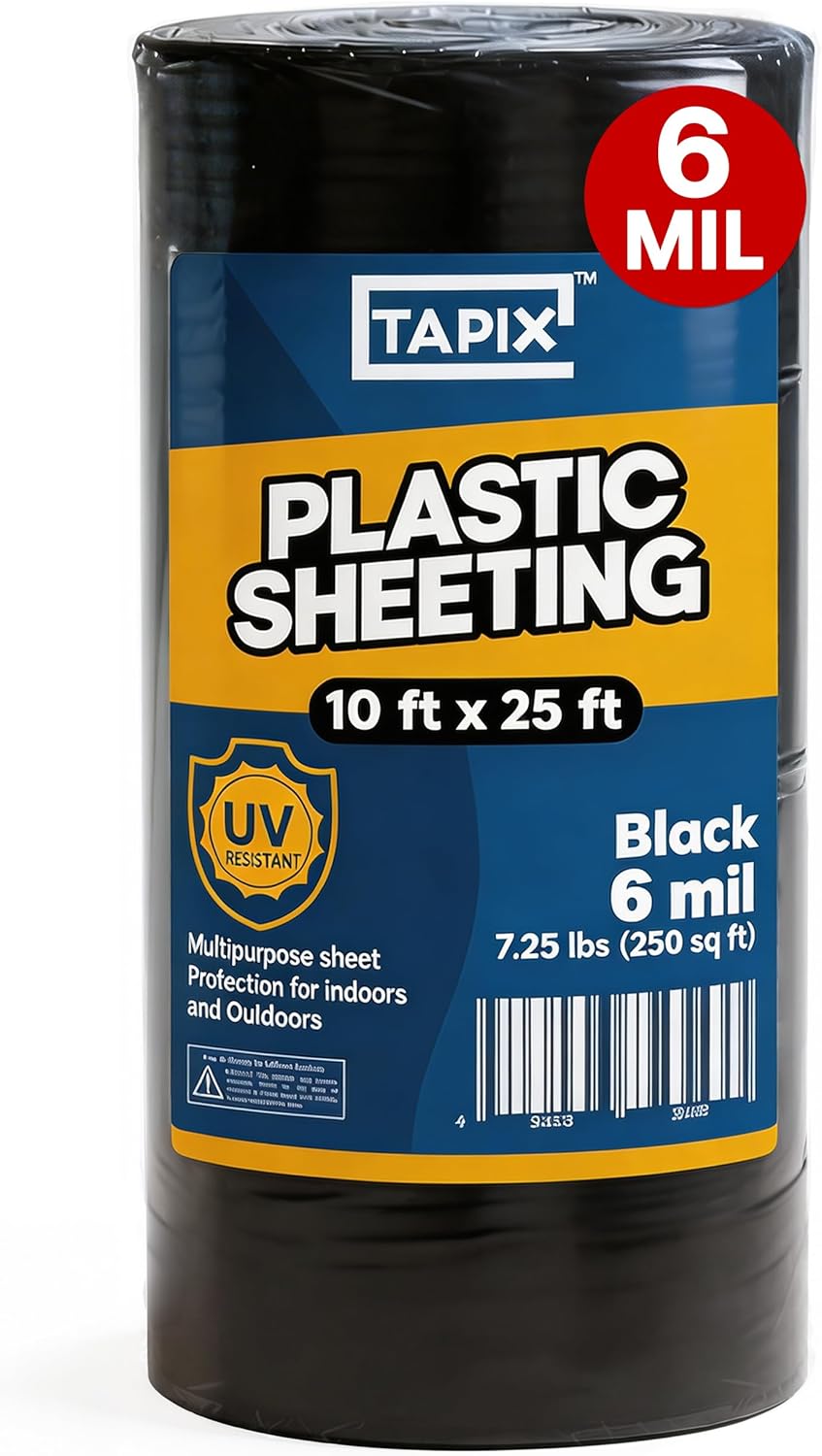
| Material | Plastic |
|---|---|
| Thickness | 6 mils |
| Size | 10 x 25 feet |
| UV Resistant | Yes |
This Tapix 6 mil black plastic sheeting is a heavy-duty polyethylene roll intended as a protective barrier for garden beds, greenhouses, and construction tasks. At 10 by 25 feet it provides about 250 square feet of coverage and is easy to cut to size for lining raised beds, covering soil to suppress weeds, or wrapping materials for short-term weather protection. The 6 mil thickness and tear-resistant construction make it more durable than thin painter plastic, and the manufacturer notes UV protection for longer outdoor use. Practical benefits include strong puncture resistance for foot traffic and tools, rain- and moisture-blocking performance when used as a vapor barrier, and straightforward installation with stakes, staples, or landscape fabric pins. Important limitations are that black opaque sheeting will block water and air unless perforated, so it is better for weed suppression or covers than for applications needing soil breathability; also long-term burial can become brittle over multiple seasons despite UV resistance. For gardeners wanting a temporary to seasonal weed barrier or heavy protective cover, this provides a robust, easy-to-handle option.
Best for: Buyers who prioritize durability and proven user satisfaction and need a robust, short- to medium-term plastic barrier for weed suppression, bed lining, or weather protection.
Less Ideal for: Gardeners seeking a permanent, breathable landscape fabric or a clear greenhouse film for light transmission should consider other specialized products.
- 6 mil thickness offers strong tear and puncture resistance for heavy-duty outdoor tasks
- Large 10' x 25' roll gives about 250 sq ft of coverage per roll
- UV-protected polyethylene improves outdoor durability compared with non-UV film
- Versatile for gardening, greenhouse lining, weed suppression, and construction protection
- Opaque black film prevents water and air exchange unless intentionally perforated
- Not designed as a permanent buried landscape fabric and can degrade after extended outdoor exposure
Verdict: A tough, UV-protected 6 mil black sheeting that delivers reliable, large-area weed suppression and protective coverage for seasonal garden and construction needs.
LAVEVE Heavy Duty Weed Barrier Landscape Fabric, 4 ft x 100 ft (two 4×50 ft rolls)

| Material | Polypropylene |
|---|---|
| Permeability | Breathable, allows water and air flow |
| UV resistance | Resistant to sun exposure |
| Package | Two rolls totaling 4 ft x 100 ft |
This LAVEVE landscape fabric is a heavy-duty woven polypropylene ground cover intended to suppress weeds while letting moisture and air reach the soil. It ships as two 4 ft x 50 ft rolls (total 4 ft x 100 ft) with printed guide lines that make cutting and alignment straightforward. In practice it is laid over prepared beds, cut for plantings, and secured with U-shaped pegs; the fabric’s permeability helps reduce erosion and allows irrigation to penetrate. The material is UV-resistant and built for typical garden uses such as flower beds, vegetable plots, gravel paths, and sidewalks. Because it is a woven polypropylene, it is sturdier than thin nonwoven mats and stands up to foot traffic when covered with mulch or gravel. Limitations to expect are that surface-seeded weeds or seeds blown onto mulch can still germinate on top, and long-term burial or heavy soil compaction can reduce effectiveness; occasional maintenance and proper installation around plants are required to keep beds weed-free.
Best for: Gardeners who want a durable, breathable ground cover to reduce routine weeding and tidy beds across medium-length runs of pathway or planting area, and who value a product with solid usage feedback.
Less Ideal for: People seeking a permanent, maintenance-free solution or those who prefer chemical weed control methods; also not the best choice for beds where frequent deep digging or planting changes are required.
- Woven polypropylene construction provides durable, tear-resistant coverage
- Permeable design allows water and air to reach soil, reducing erosion
- Printed guide lines make measuring and cutting easier during installation
- Suitable for multiple applications including beds, paths, and under gravel
- Comes as two rolls totaling 4 ft x 100 ft for extended coverage
- Does not prevent weeds that germinate in mulch or on top of the fabric
- Requires proper securing and occasional maintenance to stay effective
Verdict: A sturdy, breathable woven fabric that gives reliable, easy-to-install weed suppression for medium garden beds and paths backed by strong user approval.
Choosing the Right Plastic Weed Barrier: Key Factors to Consider
Material and UV Stability
The base material determines how long a plastic weed barrier lasts in direct sunlight. Some plastics are treated with UV stabilizers that slow breakdown, while untreated film can become brittle and crack in one or two seasons. Consider the expected exposure in your beds and whether you will cover the barrier with mulch. A more UV-stable material reduces the need for frequent replacement and protects root zones longer.
Material also affects flexibility during installation. Stiffer sheets resist tearing when you drive staples or pins, but they can be harder to wrap around irregular bed edges. Softer films are easier to fit but may be more vulnerable to rodent or foot traffic damage.
Permeability and Drainage
How the barrier manages water is critical for plant health. Non-permeable plastic will shed water and can cause puddling or channel surface runoff away from plant roots. Perforated or woven plastics let water pass through and encourage rain and irrigation to reach the soil. When choosing, think about your soil type and drainage: clay soils paired with non-permeable sheets increase the risk of surface compaction and root stress, while sandy soils tolerate lower permeability better.
Permeability also affects fertilizer and microbial exchange. A breathable barrier preserves more natural soil processes than a fully sealed film, which can alter temperature and moisture cycles beneath the sheet.
Installation Ease and Bed Access
Consider how the barrier will be put in place and how you will access planting holes later. Materials that cut cleanly and accept staples or landscape pins simplify installation. Look for options that hold fast at the edges without bunching when you apply mulch. Also think about future bed maintenance: if you plan seasonal replanting or frequent soil amendments, choose a barrier that is straightforward to lift and reseal or that can be slit precisely around plants without raveling.
Good installation planning reduces gaps where weeds can colonize and prevents the need for repeated adjustments that damage the barrier.
Tear Resistance and Longevity
Tear resistance determines how well the barrier stands up to foot traffic, tools, and animal activity. Thin film is easier to puncture during planting or when edging beds with a tool. Stronger, thicker plastics or reinforced weaves resist accidental cuts and lengthen service life. Consider the level of garden activity: high-traffic vegetable beds require tougher material than an ornamental bed that sees little foot traffic.
Longevity also ties into cost over time. A longer-lasting barrier reduces replacement frequency and the labor of reinstalling, which is an important practical tradeoff for many gardeners.
Impact on Soil Temperature and Microclimate
Plastic barriers influence soil warmth and moisture. Dark, non-permeable sheets can raise soil temperature under direct sun, which may be desirable for warming early spring beds but harmful in hot climates or for heat-sensitive plants. Light-colored or reflective surfaces moderate warming. Permeable barriers tend to keep microclimates closer to natural soil conditions by allowing evaporation and air exchange.
Think seasonally: a barrier that warms soil in spring may speed crop maturity, but the same material may overheat roots in midsummer unless shaded or mulched.
Workability and Environmental Considerations
How the material behaves in the landscape affects long-term garden management. Some plastics fragment or degrade into small pieces after several seasons, complicating soil amendments and composting. Others can be removed intact for disposal or reuse. Consider whether you want a reusable solution or a temporary one intended to be replaced each season.
Also consider how the barrier interacts with mulch and soil life. If you plan to heavily layer organic mulch, the barrier may be less visible but still impacts soil aeration and earthworm activity. Balancing practicality and environmental impact is part of a thoughtful garden strategy.
When Plastic Barriers Make Sense
Plastic weed barriers are practical when you need fast, strong suppression of persistent grasses or when you want to reduce hand-weeding in high-traffic beds. They are especially useful in perennial borders, gravel paths, and under decorative stone where planting is minimal.
Use plastic barriers when you will cover them with a stable top layer like gravel or thick mulch. In beds where you plan frequent digging or seasonal crop rotation, consider materials that are easily removed or cut without damaging the bed edges.
- Good for long-term suppression of aggressive grasses
- Work well under hardscapes and gravel paths
- Best when covered with mulch or stone
How to Prep Soil Before Laying a Plastic Barrier
Clear the bed of large roots and perennial weed crowns before installation. Removing existing weed roots reduces the chance of regrowth through thin spots or seams.
Level the surface and improve drainage if needed. On compacted or poorly draining sites, consider adding coarse sand or organic matter to encourage percolation. Mark planting points and plan cuts so you do not create unnecessary holes.
- Remove perennial weed crowns and large roots
- Level and slightly grade beds for runoff
- Plan planting holes and seam overlaps ahead of cutting
Cutting and Securing Techniques
Use a sharp utility knife or heavy-duty shears to make clean cuts that resist tearing. Cut cross-shaped slits for individual plants or longer strips for row planting. Avoid jagged edges that can enlarge under stress.
Secure edges with landscape staples or galvanized pins at regular intervals. Overlap sheets by several inches to limit gaps and press overlaps flat before covering with mulch. In windy sites, add extra pins along seams and bed edges.
- Make clean, deliberate cuts around plants
- Staple edges every 12 to 18 inches in exposed areas
- Overlap sheets by at least 4 to 6 inches
Managing Drainage and Irrigation
If a barrier is non-permeable, create regularly spaced drainage holes or use row trenches to channel excess water away. Ensure irrigation systems deliver water directly into planting holes or use drip irrigation beneath the barrier where feasible.
Permeable plastics are generally easier to pair with overhead watering, but check for areas where silt might clog pores over time. Plan routine checks after heavy storms to confirm the barrier is not pooling water.
- Use drip lines or subsurface emitters where possible
- Punch drainage holes in non-permeable sheets if needed
- Inspect after heavy rain for pooling or blocked flow
Seasonal Care and Replacement
Inspect barriers each season for tears, lifted edges, or plant escapes. Small tears can be patched with landscape tape or an overlapping piece of the same plastic. Replace sections that have lost UV stability or become brittle.
When removing an old barrier, lift carefully to avoid scattering fragments into the soil. Consider rotating barrier placement and refreshing soil with organic matter after removal to restore soil life.
- Patch small tears promptly to maintain suppression
- Replace brittle sections rather than repeatedly patching
- Refresh soil biology after long-term coverage
How We Chose the Best Plastic Weed Barrier
We focused on practical, measurable qualities that affect real-world garden performance. Selection emphasized fabric and film durability under sunlight and foot traffic, because tears and UV breakdown determine how long a barrier protects beds. Water flow and drainage ability was a second key filter; barriers that trap surface water can harm plants, so we prioritized options with predictable permeability or the ability to be perforated without losing integrity. Ease of installation and compatibility with common planting tasks was another criterion, including whether the material cuts and secures cleanly around plants and beds. We also evaluated weed suppression effectiveness against common perennial grasses and annual weeds, along with how the material affects soil temperature and microbial activity. Products were excluded if they lacked clear information about material composition, had obvious short-term UV ratings, or were primarily single-season landscape films. We did not include heavy-duty non-breathable sheets intended only for construction uses, nor biodegradable products designed to disintegrate within a single season. The result is a shortlist aligned with durability, water management, installation practicality, and weed-blocking performance.
FAQ
Will a plastic weed barrier stop all weeds?
Plastic barriers suppress most surface and shallow-rooted weeds, but they cannot prevent all growth. Weeds can still germinate in mulch on top of the barrier, and deep-rooted perennials may work around seams or penetrate thin spots. Regular inspection and edge control remain necessary.
Can I use a plastic barrier in vegetable beds?
You can use plastic barriers in vegetable beds, but they are most practical for permanent or semi-permanent rows. Frequent crop rotations and heavy soil amendments are harder to manage with an impermeable sheet. Perforated or easily removable options work better if you plan seasonal digging.
How often should I replace a plastic barrier?
Replacement frequency depends on material and exposure. UV-stabilized plastics can last several seasons, while untreated film may fail in one to two years. Inspect annually for brittleness and tears and plan replacement when structural integrity declines.
Will a plastic barrier affect earthworms and soil health?
Non-breathable barriers reduce surface exchange and can limit earthworm activity under the sheet. Permeable options allow more air and moisture movement, which supports soil life. If soil biology is a priority, choose a breathable material or plan periodic removal and soil refreshes.
How do I handle planting holes without letting weeds in?
Cut precise X-shaped slits or small circular openings just large enough for the plant crown, then press the surrounding film tight to the stem. Use clean cuts and secure edges with soil or mulch to reduce gaps where weed seed can land and grow.
Final Verdict
For gardeners choosing a plastic weed barrier, prioritize the balance between durability and water management. Choose UV-stable materials when you want multi-season protection and pick breathable or perforated options where drainage and soil health matter most. Consider how often you will access beds for planting and soil work, and select a product that fits your installation and maintenance routine. The right barrier reduces routine weeding and protects planting zones, but it also introduces tradeoffs for soil life and future bed access. Match the material to your site conditions and seasonal plans to get dependable weed control with minimal upkeep.
