

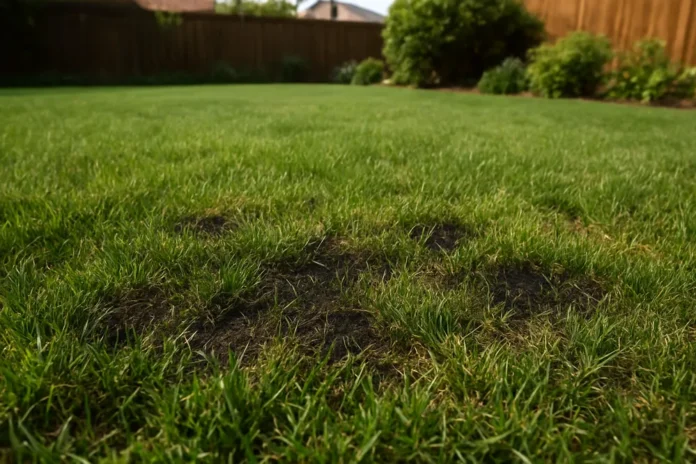
Black spots on a lawn are most often caused by fungal disease, slime mold, pest waste, or wet organic matter sitting on the grass. In some cases, the spots are on the grass blades, and in others they are on the soil surface or thatch.
Seeing black spots across your lawn can be unsettling, especially when the grass looked healthy just days earlier. The dark discoloration may show up as tiny specks on blades, sooty patches near the soil, or irregular black areas mixed with thinning turf.
In many cases, black spots are linked to excess moisture, poor airflow, fungal activity, or harmless surface growths like slime mold. They can also come from insect droppings, mower issues, decaying debris, or pet and environmental damage. The key is figuring out whether the black material is growing on the grass, staining it, or simply sitting on top of it.
Once you match the pattern to the cause, the fix is usually straightforward. Some lawn black spots need better watering habits and improved drainage, while others only need a light rinse, raking, or a change in mowing and fertilizing practices.
What Black Spots on Grass Usually Mean
Black spots on a lawn are not one single problem. The dark marks can come from living organisms, physical buildup, or damage that turns tissue dark as it dies. That is why the exact appearance matters so much.
- Tiny black dots on grass blades often suggest fungal fruiting bodies or insect waste.
- Sooty or dusty black patches on the surface may be slime mold or decaying organic matter.
- Blackened, slimy turf in wet areas can point to rot, algae, or severe moisture stress.
- Circular or irregular spots with yellowing around them are more likely to involve disease or chemical injury.
Before treating anything, look closely at where the black color sits. If it wipes off with your fingers or a hose, the problem is often superficial. If the grass tissue itself is black, collapsing, or rotting, the lawn is dealing with active damage.
Common Causes of Black Spots in Lawns
Slime Mold on Grass
Slime mold is one of the most common reasons homeowners notice black, gray, purple, orange, or smoky patches on turf. It often appears after humid weather, heavy rain, or prolonged dew. The growth sits on the surface of the grass rather than infecting it directly, so it looks alarming but is usually not a serious lawn killer.
Black slime mold may resemble soot or ash coating the blades. It can often be brushed off by hand, washed away with a hose, or removed with a light rake once the lawn dries.
Fungal Lawn Diseases
Some fungal diseases create dark spotting, black pinhead structures, or dying tissue that turns brown-black. Lawns that stay wet overnight, receive too much nitrogen, or have compacted soil are especially vulnerable. Diseases are more likely when black spotting is paired with thinning grass, tan lesions, yellow halos, or spreading dead patches.
Depending on the grass type and season, black spotting may show up alongside symptoms of leaf spot, melting out, dollar spot progression, or other turf diseases. In these cases, the black material is part of a larger decline, not just cosmetic debris.
Sooty Buildup From Honeydew and Insects
Sap-sucking insects such as aphids, scale, or other pests nearby can leave behind sticky honeydew that supports a black sooty mold. This is more common around ornamental plants, trees, or shaded lawn edges where insect pressure is higher. The mold itself is feeding on the sugary residue, not directly on the grass.
If your lawn borders shrubs or overhanging trees, check leaves and stems above the dark area. A lawn problem may actually start in the landscape canopy.
Wet Leaves, Mulch, and Decaying Debris
Leaves, grass clippings, and mulch that stay damp against turf can create blackened patches underneath. The grass may look matted, slimy, or stained when you lift the material. This is especially common in fall, after storms, or where drainage is poor.
Sometimes the black color comes from decomposition itself rather than disease. If the turf underneath is still green and firm, cleanup and drying may be all it needs.
Algae and Overly Soggy Soil
In compacted, constantly wet areas, algae can form a dark green to black film on the soil surface. It may look greasy, slimy, or crusty depending on how wet the site is. Algae does not behave exactly like a fungus, but it still signals poor drainage, excessive irrigation, and lack of air movement.
Pet Waste, Fertilizer Burns, and Chemical Injury
Chemical damage can darken grass before it turns straw-colored or dies back. Concentrated pet urine, spilled fertilizer, herbicide drift, and cleaning products can all create irregular dark patches. These areas often appear suddenly and may not have the fuzzy or powdery texture associated with fungal growth.
How to Tell Which Cause You Are Dealing With
A quick visual check can usually narrow the problem down. You do not need a lab test for every black patch, but you do need to pay attention to texture, location, and recent weather.
- If the black material wipes off easily, it is often slime mold, soot, or surface debris.
- If the grass blades are spotted, collapsing, or thinning, a fungal disease is more likely.
- If the area is wet, low, and compacted, suspect algae, rot, or prolonged moisture stress.
- If the dark patch appeared after fertilizing, spraying, or pet activity, think chemical injury.
- If the spots are most noticeable beneath trees or shrubs, check for insect honeydew and shade-related disease pressure.
You should also note whether the area is spreading. Superficial surface growths may appear quickly and then disappear just as fast when conditions change. Disease-related black spots tend to expand or recur unless the underlying issue is corrected.
Conditions That Make Black Spots Worse
Most lawn black spot problems become more common when grass stays damp for too long. Moisture alone is not always the cause, but it is often the trigger that lets fungi, algae, or surface growths take hold.
- Frequent shallow watering that keeps the surface wet
- Watering late in the day so grass stays damp overnight
- Poor drainage or low spots that collect runoff
- Heavy thatch that traps moisture against the crown of the plant
- Dense shade and weak airflow
- Compacted soil that limits drainage and root health
- Too much nitrogen fertilizer, especially during hot or humid weather
- Thick layers of fallen leaves or clippings left on the turf
Lawns under stress are always more vulnerable. Grass that is overwatered, overfed, scalped, or growing in shade has a harder time resisting disease and recovering from surface buildup.
What to Do About Black Spots on Your Lawn
Remove Surface Material First
Start with the least aggressive fix. Gently rake, brush, or hose off the black material to see whether it is sitting on top of the grass. This is often enough for slime mold, soot, or decomposing residue.
Adjust Watering
Water deeply and less often instead of giving the lawn light daily drinks. Morning watering is best because it lets grass dry during the day. Avoid evening irrigation that leaves blades wet overnight.
Improve Airflow and Light
Trim nearby shrubs, prune low tree branches where appropriate, and avoid letting ornamental beds crowd the lawn edge. Better air circulation helps grass dry faster and reduces fungal pressure.
Clean Up Thatch and Debris
Remove leaves, excess clippings, and soggy organic matter promptly. If thatch is thick enough to hold constant moisture, dethatching may be worth considering during the proper season for your grass type.
Relieve Compaction and Drainage Issues
Core aeration can help compacted lawns drain better and support healthier roots. If a specific area stays muddy after every rain, that spot may need grading, soil amendment, or a drainage solution rather than repeated disease treatment.
Use Fungicides Carefully
If the black spotting is clearly tied to an active turf disease and the damage is spreading, a labeled lawn fungicide may help. However, fungicides work best when matched to the disease and paired with corrected watering and mowing habits. They are usually unnecessary for slime mold and will not fix drainage problems or chemical burns.
Address Pest or Chemical Sources
If honeydew, insect activity, or chemical spills are involved, focus on removing the source. That may mean controlling pests on nearby plants, watering in a fertilizer spill immediately, or keeping pets away from a heavily affected area while the grass recovers.
When Black Spots Are Harmless and when They Are Serious
Not every black patch is a lawn emergency. Harmless surface growths and debris can look dramatic, but they often clear with drying weather and light cleanup. The challenge is recognizing when the grass itself is being damaged.
- Usually not serious: slime mold, soot on the surface, wet leaf stains, temporary black residue after storms
- More serious: spreading dead spots, blackened crowns, slimy rotting grass, recurring disease symptoms, turf that pulls up easily from the soil
If the lawn is thinning fast, smells rotten, or stays wet for days, do not assume it is just cosmetic. Serious blackening often means the site conditions are poor enough to keep causing new damage until they are fixed.
How to Prevent Black Spots From Coming Back
Prevention comes down to creating a lawn environment that dries reasonably fast and grows steadily without stress. Healthy grass is far less likely to develop visible black spotting or suffer lasting damage from it.
- Water early in the morning instead of at night
- Mow at the recommended height for your grass type and never scalp the lawn
- Keep mower blades sharp so grass heals quickly
- Avoid excessive fertilizer, especially quick-release nitrogen during humid stretches
- Aerate compacted soil and improve drainage in low areas
- Rake leaves and heavy clippings promptly
- Reduce shade where practical
- Monitor trees, shrubs, and ornamentals for sap-sucking pests that may contribute to sooty buildup
If the same black spots return in the same place every year, the location itself is giving you a clue. Repeat problems usually trace back to shade, poor airflow, drainage, or a chronic maintenance habit rather than bad luck.
When to Get a Closer Diagnosis
You may want expert help if the black spots keep returning despite better watering and cleanup, if large sections of turf are dying, or if you cannot tell whether the problem is disease, algae, or chemical damage. Local extension offices, turf professionals, and lawn care specialists can often identify the issue based on photos and a sample.
A closer diagnosis is especially useful when you are considering fungicides. Treating the wrong problem wastes time and money, and some lawn issues that look like fungus are really drainage, compaction, or residue problems.
FAQ
Is Black Mold on Grass Dangerous to My Lawn?
Sometimes, but not always. Slime mold and sooty surface growths usually look worse than they are, while active fungal disease or rotting turf can cause real thinning and decline.
Can I Mow the Lawn if It Has Black Spots?
Yes, if the lawn is dry enough and the grass is not slimy or severely diseased. Avoid mowing wet turf, and clean the mower deck afterward so you do not spread debris or pathogens.
Will Black Spots on Grass Go Away on Their Own?
Surface issues like slime mold often fade or brush off as weather dries out. Problems caused by poor drainage, disease, or chemical injury usually keep returning unless the underlying cause is corrected.
Should I Apply Fungicide for Black Spots in My Lawn?
Only if you are reasonably sure a turf fungus is involved and the damage is active. Fungicides do not help with slime mold, algae, sooty residue, or most non-disease causes.
Can Dog Urine Cause Black Spots in Grass?
It can contribute to darkened patches, especially when the area is saturated repeatedly. More often, urine causes browning later, but early tissue stress may appear darker than surrounding grass.
Are Black Spots More Common in Shaded Lawns?
Yes. Shade slows drying, reduces airflow, and weakens turf vigor, which makes fungal growth, slime mold, and wet debris buildup more likely.
What Is the Difference Between Black Spots and Brown Patches in a Lawn?
Black spots usually point to surface growth, decay, or early tissue collapse, while brown patches more often indicate fully dried or dead grass. Some lawn diseases can start with dark spotting and later turn brown.
Need the right fix fast? Explore our lawn disease and treatment guides to compare symptoms, choose proven products, and get your grass back to a clean, healthy green.
