

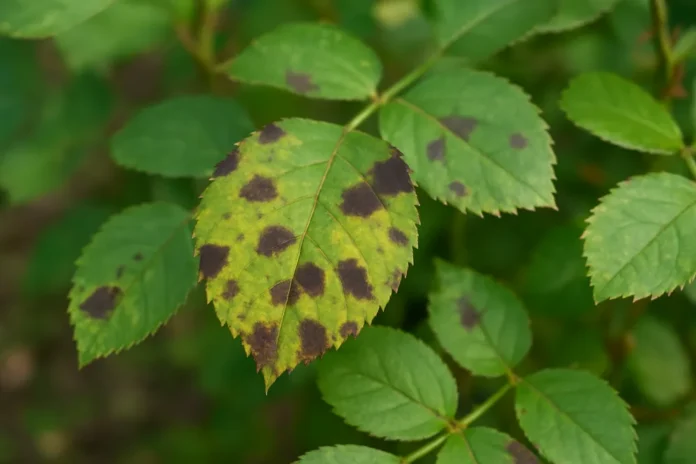
Rose leaves usually develop brown spots because of fungal diseases such as black spot, but watering stress, leaf scorch, pests, and nutrient problems can also cause spotting. The exact cause depends on the spot color, shape, and how quickly the damage spreads.
Seeing rose leaves covered with brown spots can be frustrating, especially when the plant looked healthy just a week or two earlier. Spots may start as tiny specks, expand into blotches, or show up with yellowing around the edges, and each pattern can point to a different problem.
In many home gardens, the most common cause is a fungal disease, especially black spot on rose foliage. But brown spotting can also come from overhead watering, heat stress, insect feeding, chemical burn, or roots that are staying too wet or too dry. The good news is that the pattern on the leaves usually gives useful clues, and roses often recover well once the main issue is corrected.
This guide walks through the most likely reasons rose leaves develop brown spots, how to tell one cause from another, and which fixes make the biggest difference for healthier plants.
What Brown Spots on Rose Leaves Usually Mean
Brown spotting is a symptom, not a single diagnosis. On roses, spots often form when leaf tissue is damaged by fungi, bacteria, environmental stress, or feeding insects. The look of the damage matters. Round dark spots with yellow halos often suggest disease, while crisp tan patches on exposed leaves may point to sun scorch or drought stress.
Timing also helps narrow it down. If spotting appears during warm, humid weather or after frequent overhead watering, disease becomes more likely. If it starts after a heat wave, fertilizer application, or spray treatment, environmental injury may be the better explanation.
- Spots that start small and spread from leaf to leaf usually suggest a disease issue.
- Spots concentrated on the outer, sunniest side of the plant often suggest scorch or chemical injury.
- Spots paired with yellow leaves and leaf drop commonly happen with black spot.
- Spots plus curling, stippling, or visible insects can point to pest damage.
Black Spot Is the Most Common Cause
How Black Spot Looks
Black spot is the classic rose disease, caused by a fungus that thrives in moisture and limited air circulation. It usually begins as dark brown to black circular spots on upper leaf surfaces. The edges may look feathery rather than sharply clean, and the leaf around the spot often turns yellow before dropping.
Why It Spreads so Fast
The fungus spreads through splashing water, wet leaves, and infected debris left around the base of the plant. Once a rose starts losing leaves, it becomes weaker and may bloom less. Repeated defoliation also makes the plant more vulnerable to heat and winter injury.
Clues That Point to Black Spot
- Dark round spots with uneven or fringed edges
- Yellowing around infected spots
- Lower leaves affected first, then upward spread
- Premature leaf drop
- Outbreaks after rainy, humid, or overhead-watered conditions
If your rose has these symptoms, black spot is the leading suspect. It is especially common in spring and early summer when new growth stays damp for long periods.
Other Diseases That Can Cause Brown Spotting
Cercospora Leaf Spot
Cercospora leaf spot can look similar to black spot, but the lesions are often smaller and more uniform. They may begin as purple or dark spots and turn tan or gray in the center as they age. In heavy infections, leaves yellow and drop much like they do with black spot.
Anthracnose
Anthracnose can create irregular brown, reddish, or dark spots that sometimes follow veins or merge into larger blotches. This disease tends to be favored by wet weather and can be confused with several other fungal leaf problems.
Downy Mildew and Related Leaf Lesions
Although downy mildew often starts as purplish or dark blotches rather than neat brown spots, it can dry into brown dead tissue. Leaves may also curl or drop, and newer growth may be distorted during severe infections.
Bacterial Leaf Spot
Bacterial spotting on roses is less common than fungal disease, but it can happen. Spots may look water-soaked at first, then turn dark brown or black. They are sometimes more angular because bacteria often spread within the spaces between leaf veins.
Most gardeners do not need a lab diagnosis to improve the plant. Good sanitation, dry foliage, better spacing, and disease-labeled treatments can help across several common leaf spot problems.
Watering Problems and Root Stress
Overwatering and Soggy Soil
Roses like consistent moisture, but they do not like constantly saturated soil. When roots stay wet, oxygen levels drop and roots struggle to function. The foliage may respond with brown spotting, yellowing, limp growth, or general decline. Wet soil also makes fungal disease more likely, so overwatering can trigger brown spots directly and indirectly.
Underwatering and Drought Stress
If the plant dries out repeatedly, leaves can develop dry brown patches or spotty scorch, especially along margins and between veins. Older leaves often show stress first. Drought-stressed roses may also shed leaves to conserve moisture.
Overhead Watering
Even if the soil moisture is fine, watering from above can leave leaves wet long enough for fungal spores to germinate. This is one of the simplest ways a healthy rose can develop brown leaf spots during warm weather.
- Water deeply rather than lightly and often.
- Let the top layer of soil begin to dry between waterings, depending on weather and soil type.
- Aim water at the root zone, not the foliage.
- Water early in the day so any splashed leaves dry quickly.
Heat, Sun, and Environmental Stress
Brown spots are not always a disease. Roses under intense afternoon sun, reflected heat from walls or pavement, or hot dry wind can develop scorched tissue that looks spotty at first and later expands into larger dry patches. This is more common on newly planted roses, container roses, and plants that were recently pruned or moved.
Environmental spotting tends to stay on the most exposed leaves and usually does not spread evenly from leaf to leaf the way a fungus does. The tissue may look crisp, papery, or bleached before turning brown. In very hot climates, dark-colored pots can also heat the root zone enough to stress the foliage.
Common Environmental Triggers
- Sudden heat waves
- Dry wind
- Reflected heat from stone, brick, or siding
- Transplant stress
- Cold snaps followed by sun exposure on tender new leaves
Pests That Can Leave Brown Marks or Spotted Foliage
Spider Mites
Spider mites are tiny and easy to miss, but their feeding can cause stippling that turns bronze or brown over time. In hot, dry weather, heavily infested leaves may look dusty, speckled, and tired before they dry out and fall.
Thrips
Thrips usually damage flowers first, but they can also scar leaves and tender growth. Their feeding may leave small tan or brown flecks and distorted tissue.
Rose Slugs and Chewing Pests
Rose slugs, which are sawfly larvae rather than true slugs, scrape leaf surfaces and create windowpane-like damage that can turn brown. Other chewing insects may leave irregular holes with surrounding brown tissue.
Pest-related spotting usually comes with extra clues like webbing, distorted buds, visible larvae, silvery streaks, or damage concentrated on the undersides of leaves.
Nutrient Issues, Salts, and Chemical Burn
Roses are fairly heavy feeders, but more fertilizer is not always better. Excess fertilizer, especially fast-release products, can build up salts in the soil and burn roots. Leaves may then develop brown tips, edges, or spotty dead areas as the plant struggles to move water properly.
Some foliar sprays can also injure leaves if applied during hot weather or mixed too strongly. Insecticidal soap, horticultural oil, neem-based products, and even certain homemade treatments can leave brown spotting when used in full sun or on drought-stressed plants.
When Nutrient Problems Are More Likely
- Spots appear soon after feeding or spraying
- Damage is more uniform than patchy disease spread
- Leaf margins or tips brown first
- Container roses are affected faster because salts accumulate more easily
A true nutrient deficiency usually causes overall discoloration, pale leaves, or poor growth before it causes distinct brown spotting. Chemical burn is more likely when spots appear suddenly after an application.
How to Tell Which Cause Is Most Likely
You can often narrow the problem by looking at the shape of the spots, where they appear first, and how the plant has been growing recently. Roses give a lot of visual clues if you slow down and compare new and old leaves.
- Round dark spots with yellow halos: usually black spot or another fungal leaf disease.
- Tiny speckles that turn bronze or brown: often spider mites or similar sap-feeding pests.
- Crisp tan or brown patches on exposed leaves: usually heat, sun, or drought stress.
- Sudden widespread spotting after spraying: often chemical injury.
- Spotting with soggy soil and yellow leaves: often watering stress and possible root trouble.
Also look at the lower leaves and the undersides of the foliage. Many diseases begin low on the plant where air circulation is poor and splash-back from the soil is highest. Many pests prefer the undersides where they are protected from heat and predators.
What to Do when Your Rose Leaves Have Brown Spots
Remove Badly Affected Leaves
Pick off heavily spotted leaves that are still attached and remove fallen leaves from the soil surface. This reduces the amount of infected material around the plant and improves the look of the rose quickly.
Improve Airflow
Prune crowded stems lightly if needed to open the center of the plant. Good air movement helps leaves dry faster and makes fungal disease less aggressive.
Adjust Watering
Water at the base of the plant and avoid frequent shallow watering. Keep moisture even, especially during hot spells, but do not leave the root zone constantly soggy.
Use Mulch Correctly
A 2 to 3 inch layer of mulch helps stabilize soil moisture and reduces splash that can move fungal spores onto leaves. Keep mulch a few inches away from the crown so the base of the plant does not stay too wet.
Treat Disease or Pests when Needed
If black spot or another leaf disease is spreading, many gardeners use a rose-labeled fungicide preventively and at the first sign of continued infection. If pests are the issue, choose a treatment labeled for the specific pest and follow the label carefully. Early treatment works better than waiting until most of the plant is affected.
Avoid Extra Stress
Do not overfertilize a struggling rose. Hold off on heavy pruning during severe stress, and avoid spraying products during the hottest part of the day.
How to Prevent Brown Spots in the Future
Prevention is easier than trying to rescue a badly defoliated rose. Once a plant has repeated leaf spot problems, the surrounding conditions usually need to change.
- Plant roses where they get good sun and airflow.
- Space plants generously so leaves do not stay crowded and damp.
- Water at soil level instead of overhead.
- Clean up dropped leaves through the season and especially before winter.
- Choose disease-resistant rose varieties when planting new roses.
- Inspect foliage weekly during warm, humid weather.
- Keep feeding steady but moderate, using rose fertilizer as directed.
- Refresh mulch each season to reduce soil splash and moisture swings.
Disease-resistant roses can still get spots under pressure, but they usually hold their leaves better and recover faster than highly susceptible varieties.
When Brown Spots Are a Serious Problem
A few spots on older leaves are not always an emergency. Roses often outgrow minor cosmetic damage. The bigger concern is fast spread, repeated defoliation, or symptoms that include stem dieback and weak new growth.
- Most leaves are yellowing and dropping
- Spots are spreading quickly to new growth
- Canes are blackening or dying back
- The plant wilts even when soil moisture seems normal
- The rose declines year after year despite basic care
If those signs show up, the issue may be more than simple leaf spotting. Root problems, chronic disease pressure, poor siting, or severe pest stress may all be contributing.
FAQ
Should I Remove Rose Leaves with Brown Spots?
Yes, remove badly spotted leaves that are still on the plant and clean up any fallen leaves below it. This helps reduce disease spread and improves airflow around the rose.
Can Rose Leaves Recover After Brown Spots Appear?
Spotted tissue will not turn green again, but the plant can still recover by producing healthy new leaves. If the cause is corrected early, roses often bounce back well.
Is Black Spot the Same as Leaf Scorch?
No. Black spot is a fungal disease that usually causes dark round lesions and yellowing, while leaf scorch comes from heat, drought, sun, or root stress and often looks dry and crisp.
Does Rain Make Brown Spots on Roses Worse?
Yes, frequent rain can worsen fungal leaf spot problems because it keeps leaves wet and splashes spores from infected debris onto healthy foliage.
Can Overwatering Cause Brown Spots on Rose Leaves?
Yes, overwatering can stress roots and encourage fungal disease. Roses in constantly wet soil often show yellowing, spotting, and general decline.
What Is the Best Way to Water Roses to Prevent Leaf Spots?
Water deeply at the base of the plant early in the day. Avoid wetting the leaves whenever possible, and keep soil evenly moist rather than constantly soaked.
Do All Brown Spots on Roses Need Fungicide?
No. Some brown spots come from sun scorch, pests, fertilizer burn, or watering stress, and fungicide will not fix those problems. Fungicide is most useful when a fungal disease is the likely cause.
Want healthier, cleaner rose foliage fast? Read our guide to the best rose fungicides, pest controls, and care products so you can choose the right treatment with confidence.
