

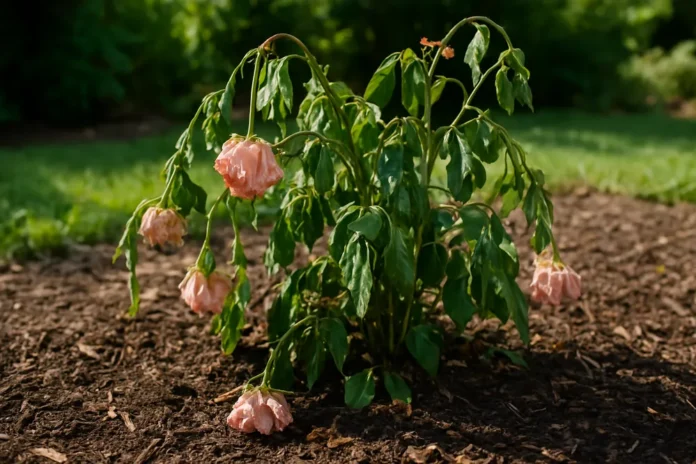
A drooping rose bush is usually caused by water stress, heat, transplant shock, root damage, or disease. In many cases, the plant cannot move enough moisture from the roots to the stems and leaves to stay upright.
A rose bush that suddenly looks limp can worry any gardener, especially when the leaves, buds, or stems were standing tall just days earlier. Drooping is not a disease by itself. It is a visible stress signal that tells you the plant is struggling to move water, support new growth, or recover from environmental pressure.
In most home gardens, drooping roses are linked to a few common issues: too little water, too much water, intense afternoon heat, root disturbance, or disease affecting the cane or crown. The good news is that the pattern of the droop often points you in the right direction. A whole bush that wilts after a hot day suggests something different from one cane collapsing while the rest of the plant looks fine.
If you look closely at the soil, stems, leaves, and timing of the problem, you can usually narrow down the cause quickly. Once you know what is stressing the plant, it becomes much easier to help your rose recover and prevent the same problem from coming back.
What Drooping Usually Means in Roses
Drooping happens when a rose cannot keep enough internal pressure in its tissues to hold leaves and stems upright. Gardeners often call this wilting, but true drooping can show up in different ways. Sometimes the entire plant leans and softens. Sometimes only the newest growth bends over. In other cases, a single cane droops because it has been damaged or infected.
The most common reason is a moisture imbalance. Either the roots are not taking up enough water, or the plant is losing water faster than it can replace it. Heat, dry wind, compacted soil, damaged roots, poor drainage, and diseases in the cane or crown can all produce that same basic symptom.
- A whole bush drooping often points to watering problems, root stress, or heat.
- Drooping only in the afternoon can be temporary heat stress, especially in hot climates.
- A single drooping stem often suggests physical damage, cane borer activity, or stem disease.
- Drooping with yellow leaves may indicate overwatering, root rot, or poor drainage.
- Drooping with crispy leaf edges usually suggests underwatering or hot, drying conditions.
Underwatering Is a Common Cause
Roses need deep, consistent moisture, especially when they are newly planted, growing in sandy soil, or blooming heavily. If the soil dries too far down, the roots cannot keep up with the plant's water needs. The leaves and stems lose firmness, and the bush begins to droop.
This is especially common in containers, raised beds, and during summer heat waves. A rose can look fine in the morning and wilt badly by late afternoon if the root zone is too dry. Recently planted roses are at even greater risk because their root systems have not spread enough to access moisture deeper in the soil.
Signs Your Rose Is Too Dry
- Dry soil several inches below the surface
- Leaves that feel thin or soft before they turn crisp
- Buds that bend or fail to open properly
- Leaf edges turning brown or papery
- Improvement after a deep watering
A light daily sprinkle is usually not enough. Roses do best when the root zone is watered thoroughly and then allowed to begin drying slightly before the next deep soak. Shallow watering encourages shallow roots, which makes drooping more likely during hot or windy weather.
Overwatering and Poor Drainage Can Look Similar
Many gardeners assume a drooping plant needs more water, but saturated soil can cause the same symptom. When the soil stays waterlogged, oxygen levels around the roots drop. The roots begin to weaken or rot, and the plant loses its ability to take up moisture even though water is present.
This often happens in heavy clay soil, low spots in the yard, decorative pots without good drainage, or beds that receive frequent irrigation. The rose may look limp, but the soil feels wet and dense. Leaves may also turn yellow, and lower foliage may drop earlier than normal.
Clues That Excess Water Is the Issue
- Soil stays soggy for days after watering or rain
- Yellowing leaves accompany the droop
- Stems feel weak even when the weather is mild
- The plant does not improve after more watering
- A sour or swampy smell comes from the root area
Overwatered roses need better drainage and a slower watering schedule, not more moisture. If roots have started to rot, recovery can take time even after conditions improve.
Heat Stress Can Make a Healthy Rose Wilt Temporarily
In many parts of the U.S., roses wilt during the hottest part of the day even when the soil is adequately moist. This happens because the plant is losing water through its leaves faster than the roots can replace it. Afternoon sun, reflected heat from pavement or walls, and dry wind make the effect stronger.
A rose that perks back up in the evening or by the next morning may simply be experiencing heat stress rather than a serious long-term problem. That said, repeated heat wilting can weaken the plant, reduce bloom quality, and increase the risk of sunscald or pest pressure.
When Heat Is Likely the Main Factor
- Drooping happens mostly in late afternoon
- The plant recovers overnight
- The soil is still slightly moist below the surface
- The rose is planted near a driveway, fence, or hot wall
- New growth and flower buds look stressed during extreme temperatures
Mulch, regular deep watering, and protection from the harshest late-day sun can reduce this kind of drooping. In very hot climates, even sun-loving roses benefit from some afternoon shade.
Transplant Shock and Root Disturbance Are Frequent Triggers
If your rose was planted recently, moved to a new spot, or had roots disturbed during digging, drooping may be part of transplant shock. The roots are not fully reestablished, so the top growth may demand more water than the reduced root system can supply.
This is common with bare-root roses, container roses that were root-bound before planting, and mature shrubs moved during warm weather. The plant may droop for days or weeks while it adjusts, especially if it begins pushing new leaves or flower buds before the roots are fully active.
What Transplant-related Drooping Looks Like
- Wilting begins soon after planting or moving
- The soil may be moist, but the plant still looks limp
- Leaf scorch appears after hot or windy days
- New growth stalls or softens
- The rose gradually improves as roots establish
Transplant shock is more likely when planting is done in late spring or summer instead of cooler seasons. Keeping the root zone evenly moist and reducing additional stress helps the rose settle in faster.
Pests and Stem Damage Can Cause Isolated Drooping
When only one stem or one side of the rose bush droops, look closely for physical damage or insect activity. A cane may have cracked in wind, bent under the weight of a flower, been nicked during pruning, or been affected by a stem-boring insect. Any break in the stem's internal tissue can stop water flow above that point.
Aphids by themselves do not usually make an entire bush droop, but very heavy infestations on tender tips can distort new growth and make it look weak. Cane borers are more serious because they enter pruning cuts or damaged stems and hollow out tissue, causing the stem above the injury to wilt or die back.
Check for These Pest and Damage Signs
- A bent, cracked, or blackened cane
- A hole in the stem after pruning
- Sudden wilting of a single flowering stem
- Clusters of aphids on soft new growth
- Chewed or scarred tissue near the drooping point
If the problem is limited to one cane, pruning back to healthy tissue is often the best response. Make cuts into clean, green wood and sanitize pruners between cuts if disease may be involved.
Diseases That Can Make Rose Bushes Droop
Several rose diseases can lead to wilting or drooping, particularly when they affect the stem base, crown, or roots. Root rot caused by consistently wet soil is one of the most common. Cankers can also kill sections of cane, causing the growth above them to sag or collapse.
In some regions, fungal and bacterial problems may move through wounded tissue or thrive during long stretches of wet weather. While black spot and powdery mildew mainly affect leaves, severe infections can weaken the whole shrub over time and contribute to stress-related drooping.
Disease Warning Signs to Watch For
- Black, brown, or sunken patches on canes
- Soft or rotted tissue near the crown
- Persistent wilting despite correct watering
- Leaf drop combined with cane dieback
- A general decline over several weeks
If disease is affecting the roots or crown, the plant may not recover fully unless the growing conditions change. Roses planted too deeply, mulched against the crown, or kept constantly wet are more vulnerable to these problems.
How to Tell Which Cause Is Most Likely
The fastest way to narrow the problem is to look at the pattern. A whole-plant droop usually points to root-zone stress. One drooping cane suggests damage or localized disease. Afternoon wilting that resolves by morning usually suggests heat stress. Drooping with yellow leaves and soggy soil often points to excess water.
Also consider timing. If the issue started right after planting, recent pruning, a rain-heavy period, or a heat wave, that event may be your clue. Roses rarely droop without a trigger. The environment, the soil, and the part of the plant affected usually tell the story.
Use This Quick Comparison
- Dry soil plus limp growth: likely underwatering
- Wet soil plus yellowing leaves: likely overwatering or root trouble
- Afternoon droop with overnight recovery: likely heat stress
- Recent planting plus wilt: likely transplant shock
- One cane wilted above a damaged spot: likely stem injury or cane disease
What Helps a Drooping Rose Recover
Recovery depends on the cause, but roses respond best when stress is reduced quickly and consistently. Avoid making several drastic changes at once. For example, do not flood a wilted rose every day if the soil is already wet, and do not fertilize a struggling plant heavily in hopes of forcing new growth.
The goal is to restore stable growing conditions so the roots and canes can function normally again. In many cases, a drooping rose improves within days if the problem is moisture-related. Root rot, crown disease, or severe stem damage may take much longer or may require pruning and site correction.
Practical Recovery Steps
- Water deeply if the soil is dry several inches down, rather than applying a shallow sprinkle.
- Pause watering if the soil is soggy and improve drainage around the root zone.
- Add a 2 to 3 inch layer of mulch to moderate soil temperature and moisture, keeping mulch away from the crown.
- Provide temporary afternoon shade for recently planted or heat-stressed roses during extreme weather.
- Prune out broken, blackened, or hollow canes back to healthy green tissue.
- Hold off on strong fertilizer until the plant is actively recovering and producing firm new growth.
How to Prevent Drooping in the Future
Prevention comes down to strong roots, even moisture, and a site that suits roses well. Most repeated drooping problems happen where the root zone is too dry, too wet, or stressed by heat and poor soil structure. Once those conditions improve, roses become much more resilient.
Choose a planting site with good drainage, full morning sun, and some protection from brutal reflected heat if you garden in a very hot region. Water deeply, mulch consistently, and avoid crowding roses where airflow is poor and disease pressure rises.
Prevention Habits That Work
- Water less often but more deeply to encourage deeper roots.
- Check soil moisture before watering instead of following a rigid schedule.
- Improve clay or compacted soil with organic matter before planting.
- Use containers with drainage holes and high-quality potting mix for potted roses.
- Prune cleanly and remove diseased canes promptly.
- Watch newly planted roses closely through their first hot season.
FAQ
Can a Rose Bush Recover After Severe Drooping?
Yes, many roses recover well if the cause is temporary stress such as underwatering, heat, or transplant shock. Recovery is less certain when drooping is caused by root rot, crown damage, or advanced cane disease.
Should I Water a Drooping Rose Right Away?
Only if the soil is actually dry below the surface. If the soil is wet or soggy, more water can make the problem worse.
Why Does My Rose Droop During the Day but Look Better at Night?
That pattern often points to heat stress. The plant loses water faster in the afternoon sun and recovers when temperatures drop overnight.
Why Is Only One Rose Stem Drooping?
A single drooping stem usually suggests a cracked cane, stem damage, cane borer activity, or a localized disease problem in that stem. The rest of the plant may stay healthy if the issue is isolated.
Can Too Much Fertilizer Make a Rose Droop?
Yes, excess fertilizer can burn roots and interfere with water uptake, which may lead to wilting or drooping. This is more common in container roses or when fast-release products are overapplied.
Do Potted Roses Droop More Easily than Roses in the Ground?
Yes, container roses dry out faster and can also suffer from poor drainage more quickly. Their root zones heat up faster too, which makes moisture stress more common.
Is Drooping Always a Sign of Disease?
No, most drooping in roses is related to water stress, heat, or root disturbance rather than disease. Disease becomes more likely when you also see cane discoloration, rot, or ongoing decline.
Need the right fix fast? Explore our rose care guides and top-rated watering tools, mulches, and disease treatments to help stressed roses bounce back sooner.
