

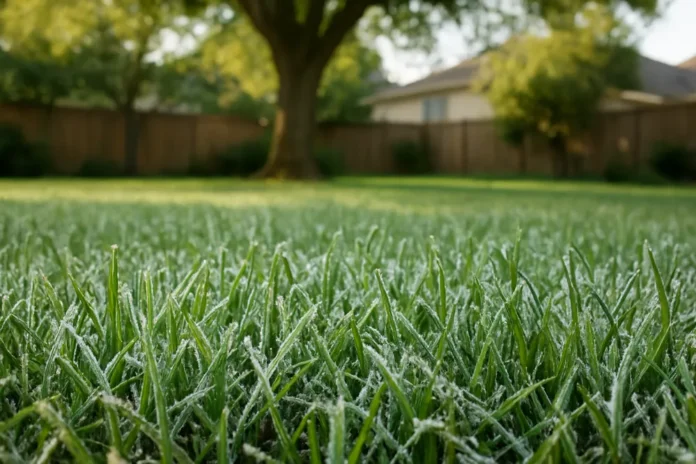
White powder on grass is most often powdery mildew, a fungal disease that grows on leaf blades in shady, humid, low-airflow conditions. It can also be residue from hard water, lawn products, or less commonly insect or mold activity.
If you have noticed white powder on your grass, the most common cause is a fungal disease called powdery mildew. It shows up as a dusty, chalky film on lawn blades and is especially common in shaded, damp areas where air does not move well.
Not every white coating is a disease, though. Fertilizer residue, hard water deposits, overspray from outdoor projects, and even certain insect or mold issues can leave a pale film that looks similar at first glance. The key is to look at where it appears, how it wipes off, and whether the grass underneath is still healthy or beginning to thin.
Once you know what is causing the white powder, the fix is usually straightforward. In many home lawns, improving sunlight, air circulation, watering habits, and mowing practices is enough to stop the problem and help the turf recover.
Most Likely Cause: Powdery Mildew
Powdery mildew is the leading reason homeowners see a white or grayish powder on lawn blades. This fungus grows on the surface of the grass rather than soaking the leaves with wet-looking rot. It often looks like someone dusted the lawn with flour or baby powder.
Unlike many lawn fungi, powdery mildew does not need standing water on the leaves to spread. It thrives when humidity is high but airflow is poor, which is why it is so common in heavily shaded lawns, along fences, under trees, beside dense shrubs, and in narrow side yards.
- The coating starts as small white patches on individual blades
- It may spread into larger dusty areas over a section of lawn
- The powder often rubs off on your fingers
- Affected grass may turn pale yellow, then thin out if conditions stay favorable for the fungus
- Shady turf species and lush, soft growth are more likely to show symptoms
How to Tell if It Is Really Powdery Mildew
What It Looks Like
Powdery mildew usually appears as a soft, dusty, white to light gray film on the upper surface of grass blades. Early on, it may only affect a few spots. As it spreads, the lawn can look dull, faded, or lightly frosted.
Where It Appears
The pattern matters. Powdery mildew is usually worst in places with limited direct sun and restricted airflow. If the white powder is concentrated under trees, near buildings, or in enclosed corners of the yard, fungus is much more likely than a chemical residue.
How the Grass Responds
Grass with mild powdery mildew may still be alive and rooted well, but the blades look weak and coated. Over time, the turf can lose vigor because the fungus blocks light and reduces photosynthesis. Severe cases can leave the lawn thin and uneven.
Simple Clues That Help
- The powder wipes off easily with your fingers or a glove
- It returns after a few days if the conditions do not change
- The area gets morning shade or all-day filtered light
- The grass has been watered often or fertilized heavily with nitrogen
- Nearby plants may also show a light powdery coating on leaves
Other Things That Can Look Like White Powder on Grass
Although powdery mildew is the most common explanation, a few non-disease problems can create a similar look. Distinguishing them saves time and keeps you from treating the lawn for the wrong issue.
Fertilizer or Product Residue
Granular fertilizer dust, lime, gypsum, and some powdered lawn products can leave a pale film on the grass after application. This is more likely if the lawn was not watered in after treatment or if a spreader left excess material in one area.
Hard Water or Irrigation Deposits
If your irrigation water has a high mineral content, repeated spray on fences, patio edges, and nearby grass can leave a chalky residue. This usually looks more crusty than fuzzy and tends to be concentrated where sprinkler heads overlap or leak.
Paint, Concrete, or Construction Dust
Outdoor projects can leave white overspray or dust on turf. Drywall dust, masonry residue, and paint particles may mimic fungal growth, but they often appear suddenly after nearby work and are not tied to shade or humidity.
Slime Molds
Slime molds sometimes form white, gray, yellow, or black coatings on grass after extended damp weather. They usually sit on the grass surface rather than infecting the plant. They can look odd, but they are usually harmless and temporary.
Insect-related Residue
Some sap-feeding insects on nearby ornamentals produce honeydew that supports sooty or mold-like growth, but this is much less common directly on lawn grass. If the white material is clustered near other affected plants, inspect the whole area rather than the lawn alone.
Why Powdery Mildew Develops in Lawns
Powdery mildew shows up when the lawn environment favors the fungus more than the grass. In many cases, the grass is not suddenly infected because of one mistake. It is a result of several stress factors building up over time.
- Too much shade: Grass that receives less than the recommended sun for its species stays weaker and slower to dry.
- Poor airflow: Fences, walls, dense shrubs, and low tree canopies trap humidity around the turf.
- Excess nitrogen: Heavy feeding can push lush, tender growth that is more susceptible to fungal coating.
- Frequent light watering: Damp surface conditions and high humidity around the blades encourage disease pressure.
- Overcrowded turf: Thick, matted growth can hold moisture and reduce air movement near the soil line.
- Susceptible grass species: Some cool-season grasses, especially in shaded landscapes, are more prone than others.
In the United States, powdery mildew is especially common in cool-season lawns such as Kentucky bluegrass and fine fescues growing in shady areas. Warm-season lawns can also experience fungal coatings, but site conditions often play a bigger role than grass type alone.
How to Fix White Powder on Grass
The best treatment depends on the cause. If the coating is fungal, focus on changing the conditions that allow it to persist. If it is residue, a simpler cleanup and irrigation adjustment may be enough.
If It Is Powdery Mildew
- Reduce shade where possible by selectively pruning tree limbs or thinning dense shrubs around the lawn.
- Improve airflow by opening up crowded landscape beds and avoiding barriers that trap still, humid air.
- Water deeply but less often, and do it early in the morning rather than late afternoon or evening.
- Avoid pushing fast, soft growth with high-nitrogen fertilizer during active disease periods.
- Mow at the recommended height for your grass type and avoid scalping, which adds stress.
- Bag clippings only if the lawn is heavily coated and cleanup is practical. Otherwise, focus more on environmental correction than clipping removal.
If It Is Residue From a Product or Hard Water
- Rinse the area with irrigation to wash off surface dust or product buildup
- Check spreader settings if fertilizer or lime was recently applied
- Inspect sprinkler heads for misting, clogging, or repeated overspray
- Correct leaks or poor coverage patterns that leave mineral deposits over time
Many lawns recover well once the coating source is removed and normal growth resumes. The key is not just making the white film disappear, but preventing the same conditions from returning week after week.
Should You Use a Fungicide?
A fungicide can help in severe or persistent cases of powdery mildew, but it is usually not the first or best long-term solution for home lawns. If the turf is staying too shaded and humid, the disease often comes back even after treatment.
For many home gardeners, cultural fixes such as more light, better airflow, and adjusted watering habits solve the problem more reliably than repeated spraying. Fungicides tend to make the most sense when the lawn is valuable, the outbreak is widespread, and site conditions cannot be improved enough.
- Use lawn-labeled fungicides only when the product specifically lists the disease and turf type
- Follow the label exactly for timing, coverage, protective gear, and reapplication
- Do not apply just because the lawn looks dusty if you have not ruled out residue or slime mold
- Expect better results when fungicides are paired with environmental improvements
How to Prevent White Powder From Coming Back
Prevention is mostly about making your lawn a less inviting place for fungal growth and a healthier place for grass. Small changes in routine care can make a big difference, especially in shady yards.
- Choose shade-tolerant turf or groundcover for low-light areas instead of forcing sun-loving grass to survive there
- Prune trees periodically to allow more filtered light and quicker drying
- Water in the morning so blades dry during the day
- Avoid overfertilizing, especially with quick-release nitrogen in spring or humid weather
- Keep mower blades sharp to reduce stress on the grass
- Thin or redesign crowded plantings that block airflow around the lawn
- Overseed thin areas with grass varieties better suited to the site
If one part of the yard gets powdery mildew every year, it may be a site design problem rather than a simple lawn-care problem. In that case, replacing grass with mulch, shade perennials, or a different groundcover can be a more practical and attractive long-term fix.
When the Lawn May Need Renovation
A lawn with chronic white powder, poor density, and ongoing shade stress may never perform well without bigger changes. If the same area stays thin, patchy, and disease-prone despite good maintenance, renovation can be smarter than repeated treatment.
Renovation may involve improving drainage, pruning for light, switching to a more shade-tolerant grass mix, or reducing the lawn footprint entirely. Home gardeners often get better results by matching the planting to the site instead of constantly trying to rescue turf that is in the wrong place.
- Consider overseeding with fine fescue in shady cool-season lawns
- Remove lower tree limbs only when it can be done without harming the tree
- Convert deeply shaded strips to mulch or ornamentals if grass repeatedly fails
- Rebuild compacted soil if poor vigor is adding to the disease problem
When to Get Expert Help
Call in a local extension office, lawn professional, or plant clinic if the white coating keeps returning after cultural changes, if the lawn is declining fast, or if you are unsure whether the issue is fungal, chemical, or environmental. A correct diagnosis matters because treatments for disease, residue, and irrigation problems are very different.
It is also worth getting help if the affected area is large, expensive to replace, or located in a highly visible part of the landscape. A local expert can identify the turf type, site limitations, and seasonal disease pressure in your region.
FAQ
Is White Powder on Grass Harmful?
It can be. If it is powdery mildew, the fungus can weaken the grass over time by reducing photosynthesis and overall vigor. Mild cases are often more cosmetic than deadly, but chronic outbreaks can thin the lawn.
Will Powdery Mildew Go Away on Its Own?
It may fade when weather changes or the lawn gets more sun and airflow, but it often returns if the site stays shady and humid. Lasting control usually depends on fixing those conditions.
Can I Mow Grass with White Powder on It?
Yes, but mow only when the lawn is dry and avoid stressing already weak turf. Clean the mower afterward, especially if the outbreak is heavy, and do not scalp the lawn.
Does Overwatering Cause White Powder on Grass?
Overwatering does not directly create powdery mildew, but frequent light irrigation can increase humidity around the blades and keep the lawn lush and vulnerable. Watering at the wrong time can make the problem more persistent.
What Grass Types Get Powdery Mildew Most Often?
Cool-season grasses in shaded lawns are most commonly affected, especially Kentucky bluegrass and fine fescues. Any grass growing in low light and poor airflow can develop similar issues.
Can Fertilizer Leave a White Film on Grass?
Yes. Fertilizer dust, lime, gypsum, and other lawn products can leave a white residue if they are not watered in or are overapplied. This kind of film usually appears right after treatment rather than gradually.
Should I Bag Grass Clippings if I Have Powdery Mildew?
You can if the coating is heavy, but it is usually not the most important step. Improving sunlight, airflow, and watering habits makes a bigger difference than clipping disposal alone.
Can I Replace Shady Grass with Something Else?
Yes. In areas where turf constantly struggles, mulch, shade-tolerant groundcovers, or ornamental plantings are often easier to maintain and look better long term.
Want the right fix faster? See our lawn disease treatment guide and top fungicide picks so you can choose a solution that actually matches your grass and growing conditions.
