

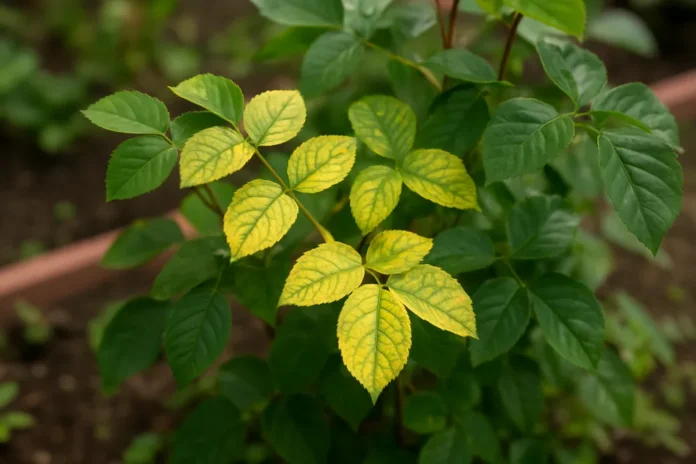
Chlorosis in roses is usually caused by iron becoming unavailable to the plant, even when it is present in the soil. High soil pH, poor drainage, root stress, compacted soil, and other nutrient imbalances commonly trigger it.
When rose leaves start turning pale yellow but the veins stay noticeably greener, you are likely looking at chlorosis. In roses, this symptom is most often tied to nutrient uptake problems rather than a simple lack of fertilizer.
Chlorosis happens when a rose cannot make enough chlorophyll, which is the pigment that gives leaves their green color and helps the plant photosynthesize. The underlying cause can be alkaline soil, compacted or soggy roots, damaged roots, poor drainage, or a shortage of available iron, manganese, or magnesium. In some cases, several stress factors are happening at once.
The good news is that chlorosis is usually manageable once you match the symptom pattern to the real cause. Looking at which leaves are yellowing, how the veins appear, and what the soil and watering conditions are like will usually point you in the right direction.
What Chlorosis Looks Like on Roses
Chlorosis is not just any yellow leaf. On roses, it often shows up as interveinal chlorosis, where the tissue between veins turns yellow while the veins remain green. Leaves may look washed out, lime green, or bright yellow depending on severity.
- Young leaves turning yellow first often suggests iron deficiency or iron unavailability.
- Older leaves yellowing first can point more toward magnesium deficiency or general nutrient stress.
- Leaf edges may scorch or turn brown if the problem becomes severe.
- Growth may slow, flower production may drop, and stems can appear weak or stunted.
- In long-running cases, leaves may become almost white before dropping.
Because several rose problems can cause yellow leaves, the vein pattern matters. Uniform yellowing can be caused by overwatering, nitrogen problems, or natural aging. Distinct green veins with yellow tissue between them is a stronger clue that chlorosis is involved.
Iron Unavailability Is the Most Common Cause
The most common reason for chlorosis in roses is not always a total lack of iron in the soil. More often, iron is present but the plant cannot absorb it. This is called iron unavailability, and it happens most often when soil conditions work against the roots.
Why Iron Matters
Iron helps roses produce chlorophyll and support healthy new growth. When iron is unavailable, the newest leaves usually become pale first because iron does not move easily from older leaves into new tissue.
Typical Iron Chlorosis Symptoms
- Newest leaves are yellow or pale green
- Veins stay darker green than the surrounding tissue
- Severe cases produce nearly white young leaves
- New growth may be small, weak, or distorted
If your rose is growing in high-pH soil, in a site with poor drainage, or near concrete where lime can affect the soil, iron chlorosis becomes much more likely.
High Soil pH Often Triggers Chlorosis
Roses prefer slightly acidic to neutral soil, generally around pH 6.0 to 6.8. When soil becomes too alkaline, iron and some other micronutrients become much less available to the roots. That means a rose can sit in iron-containing soil and still show chlorosis.
How Alkaline Conditions Develop
- Naturally alkaline native soil
- Frequent irrigation with hard water
- Soil near sidewalks, driveways, or foundations made with concrete
- Repeated use of lime or alkaline soil amendments
- Low organic matter in the root zone
High pH is especially common in parts of the western and southwestern United States, but it can show up anywhere. Container roses can also drift alkaline over time if watered with mineral-heavy tap water or grown in an old potting mix.
If chlorosis keeps returning after feeding, pH is one of the first things to suspect. A fertilizer application cannot fully solve a nutrient availability problem when the soil chemistry is blocking uptake.
Poor Drainage and Waterlogged Roots Can Cause Chlorosis
Rose roots need oxygen as much as they need moisture. When soil stays soggy, compacted, or poorly drained, the roots struggle to function and nutrient uptake drops sharply. Chlorosis can follow even if the soil contains enough nutrients.
Why Wet Soil Leads to Yellow Leaves
Saturated soil fills the air spaces roots need. Without oxygen, roots become stressed or begin to rot, and the plant can no longer absorb iron, nitrogen, magnesium, and other nutrients efficiently. The result often looks like deficiency, but the deeper problem is root stress.
- Soil stays wet for days after rain or watering
- Leaves yellow during a cool, rainy stretch
- Growth slows and stems seem weak
- Lower leaves may also drop
- The plant does not improve after fertilizing
Heavy clay, low planting areas, and pots without good drainage are common settings for this problem. In many gardens, chlorosis is partly a drainage issue and partly a nutrient availability issue at the same time.
Compacted Soil and Root Damage Interfere With Nutrient Uptake
Even when the soil is not constantly soggy, roots can still struggle if the ground is compacted or damaged. Roses rely on a healthy, spreading root system to pull in water and nutrients. When that system is reduced, chlorosis can appear quickly.
Common Sources of Root Stress
- Foot traffic over the root zone
- Planting in dense, packed clay
- Construction disturbance near established roses
- Root injury from digging or edging
- Root rot diseases
- Container-bound roses with circling roots
A stressed root system cannot support top growth well, so leaves often lose color first. If your rose has been recently transplanted, heavily pruned, or exposed to heat stress, temporary chlorosis may follow while the roots recover.
Nutrient Deficiencies Beyond Iron Can Also Be Involved
Although iron is the main nutrient associated with chlorosis, it is not the only one. Magnesium, manganese, nitrogen, and even sulfur deficiencies can create yellowing that overlaps with chlorosis symptoms. The pattern on the plant helps sort them out.
Magnesium Deficiency
Magnesium is mobile in the plant, so deficiency usually appears on older leaves first. You may see yellowing between veins while the center vein area stays greener. This can happen in sandy soils, heavily leached beds, or soils with excess potassium.
Manganese Deficiency
Manganese deficiency can resemble iron chlorosis, especially on younger leaves. It is also more common in alkaline soils. The leaf pattern may be a little more mottled and less sharply veined than classic iron chlorosis.
Nitrogen Deficiency
Nitrogen deficiency usually causes more even yellowing than interveinal chlorosis. Older leaves turn pale first, and the whole plant may look weak and undersized. If your rose has not been fed in a long time, or heavy rain has leached nutrients, nitrogen may be part of the picture.
Why Imbalances Matter
Too much of one nutrient can reduce uptake of another. For example, excess phosphorus can interfere with iron availability, and excess potassium can affect magnesium uptake. That is why routine high-dose fertilizing does not always prevent chlorosis and can sometimes make it worse.
Environmental Stress Can Make Chlorosis Worse
Roses under stress often show nutrient problems more clearly, even when the soil test is not extreme. Heat, drought, cold snaps, and transplant shock can all reduce root function and trigger temporary yellowing.
- Drought reduces nutrient movement into roots
- High heat can damage fine feeder roots
- Cold spring soil slows nutrient uptake
- Recent transplanting can cause a short-term chlorotic flush
- Salt buildup from fertilizers or softened water can injure roots
In these cases, chlorosis may improve once growing conditions stabilize. If the yellowing continues, the stress event may have exposed a deeper soil or root problem that still needs correction.
How to Tell Which Cause Is Most Likely
The fastest way to narrow down chlorosis in roses is to look at leaf age, vein pattern, site conditions, and watering history together. No single clue tells the whole story, but the combination is usually very useful.
Clues From the Leaves
- Young leaves yellow first with green veins: iron or manganese problem is likely
- Older leaves yellow first: think magnesium or nitrogen
- Even yellowing without distinct veins: watering or general nutrient shortage may be involved
- Brown edges with yellowing: salts, drought stress, or advanced deficiency may be contributing
Clues From the Site
- Near concrete or in desert soils: high pH is more likely
- Heavy clay or standing water: drainage stress is more likely
- Very sandy soil: nutrient leaching is more likely
- Newly planted rose: transplant stress or poor root establishment may be involved
If the cause is not obvious, a soil pH test and a basic soil test are often the most helpful next pieces of information. They can tell you whether you are dealing with a true nutrient shortage or a nutrient lockout problem.
How to Fix Chlorosis in Roses
The right fix depends on the cause. Chlorosis improves best when you correct both the symptom and the growing conditions that triggered it.
If High pH Is the Problem
- Apply chelated iron labeled for alkaline soils if iron chlorosis is present
- Use soil sulfur only when appropriate for your region and soil type
- Add compost to improve soil structure and nutrient buffering
- Avoid lime and avoid overusing high-phosphorus fertilizers
If Drainage Is the Problem
- Water less often but more deeply, allowing the upper soil to dry slightly between sessions
- Improve drainage with raised beds or by reworking the planting area
- Do not let containers sit in saucers full of water
- Check for clogged drainage holes in pots
If the Soil Is Nutrient Poor
- Feed with a balanced rose fertilizer according to label directions
- Use compost to steadily improve soil fertility
- Address magnesium deficiency only when the symptom pattern supports it
- Avoid repeated guesswork applications of multiple supplements
Foliar iron sprays can green leaves temporarily, but they do not solve long-term root zone problems. For lasting improvement, the rose has to be able to take nutrients up through healthy roots in suitable soil.
How to Prevent Chlorosis From Returning
Prevention comes down to keeping the root zone healthy and avoiding the conditions that block nutrient uptake. Roses that are planted in the right place and maintained consistently are much less likely to develop recurring chlorosis.
- Plant roses in well-drained soil with plenty of organic matter
- Test soil pH if chlorosis has happened before
- Water deeply but do not keep the soil constantly wet
- Mulch to moderate soil moisture and temperature
- Use fertilizers at recommended rates, not more
- Avoid compacting the soil over the root zone
- Repot container roses before they become severely root bound
In areas with persistently alkaline soil, choosing a maintenance routine that includes occasional chelated iron and regular organic matter additions can make a major difference.
When Chlorosis Signals a Bigger Problem
Sometimes chlorosis is the visible symptom of a larger issue with roots, soil, or plant health. If a rose keeps declining even after corrections, it may be dealing with chronic root damage, severe root rot, or site conditions that are simply not suitable.
- Repeated yellowing despite proper feeding
- Little or no new growth
- Stem dieback along with chlorotic leaves
- Persistent wilting in wet soil
- A rose that never established well after planting
When that happens, it is worth reassessing the location itself. A rose planted in chronically wet clay, extreme alkalinity, or a cramped container may continue to struggle until the site conditions change.
FAQ
Can Roses Recover From Chlorosis?
Yes, roses often recover well if the underlying cause is corrected early. New growth is the best sign of recovery, since badly yellowed older leaves may not turn fully green again.
Is Chlorosis in Roses Always Caused by Iron Deficiency?
No. Iron chlorosis is the most common form, but high soil pH, poor drainage, root damage, magnesium deficiency, manganese deficiency, and general nutrient stress can also cause similar yellowing.
Should I Add Iron to My Rose if the Leaves Are Yellow?
Only if the symptom pattern and soil conditions suggest iron chlorosis. If the real problem is soggy roots or alkaline soil, iron may help only briefly or not much at all unless the site issue is also fixed.
What Soil pH Is Best for Roses to Avoid Chlorosis?
Roses generally do best around pH 6.0 to 6.8. Once soil drifts more alkaline, iron and some micronutrients become harder for roots to absorb.
Can Overwatering Cause Chlorosis in Roses?
Yes. Overwatering and poor drainage can deprive roots of oxygen, reduce nutrient uptake, and lead to chlorosis-like yellowing even when nutrients are present in the soil.
Why Are Only the New Rose Leaves Yellow?
Yellow new leaves with greener veins usually point to iron chlorosis or a similar micronutrient uptake problem. This pattern is especially common in alkaline soil or plants with stressed roots.
Will Epsom Salt Fix Chlorosis in Roses?
Only if magnesium deficiency is actually the problem. Epsom salt will not reliably fix iron chlorosis and can add to the guesswork if used without a clear reason.
Need a fast fix for yellow rose leaves? Read our guide to the best iron supplements, rose fertilizers, and soil pH testers so you can choose the right treatment with confidence.
