

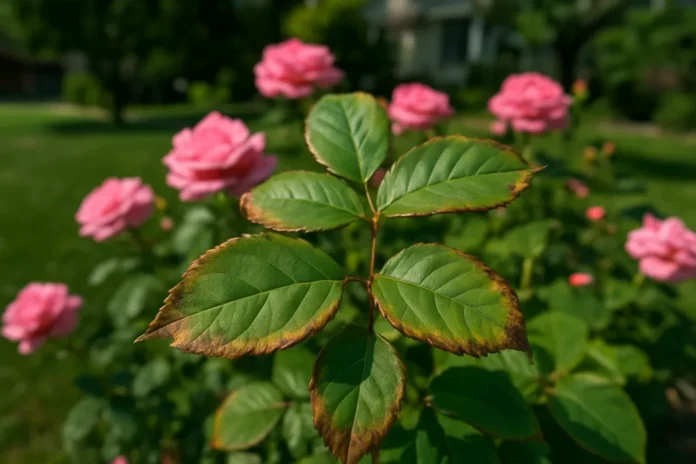
Rose leaf tips usually turn brown because the plant is under stress from inconsistent watering, excess fertilizer or salts, hot dry weather, or leaf disease. The browning happens when the outer leaf tissue dries out and dies first.
Rose leaves often show stress first at the edges, so leaf tips turning brown are a common warning sign that something in the plant's environment is off. In many home gardens, tip burn starts when roots cannot take up water evenly or when the leaves lose moisture faster than the plant can replace it.
The good news is that brown tips do not always mean your rose is dying. This symptom can come from simple issues like irregular watering, fertilizer burn, reflected heat, winter injury, or salt buildup, but it can also point to pests or disease when other symptoms appear at the same time.
If you look closely at the pattern of damage, the timing, and the rest of the plant, you can usually narrow down the cause. Once you know what triggered the browning, you can adjust care quickly and help new growth come in clean and healthy.
What Brown Leaf Tips Usually Mean On Roses
Brown tips are a form of leaf scorch. The tissue at the end of the leaf dries out, loses function, and dies. Because the tips and margins are the farthest points from the leaf's water supply, they tend to show damage before the rest of the leaf does.
On roses, this often starts as a light tan or yellowed edge that deepens to crispy brown. Sometimes the damage stays limited to the tips. In other cases, it spreads along the leaf margins, causing the entire leaflet to curl, dry, or drop.
- If the browning is dry and crispy, moisture stress, heat, wind, or fertilizer salts are common causes.
- If the tips brown while the rest of the leaf yellows, root stress, poor drainage, or nutrient imbalance may be involved.
- If the browning includes spots, halos, or blackened lesions, disease is more likely.
- If only the newest leaves are affected, look closely at fertilizer burn, chemical injury, or root problems.
- If older outer leaves are browning first, weather stress or inconsistent watering is often the main trigger.
The Most Common Causes Of Brown Rose Leaf Tips
Inconsistent Watering
Roses need steady moisture, especially during active growth and bloom. If the soil dries too much between waterings, leaf tips can burn because the plant cannot keep enough water moving to the outer edges of the leaves. This is especially common in containers, raised beds, sandy soil, and hot summer weather.
Underwatering does not always mean you water too rarely. Sometimes water runs off dry soil, misses the root zone, or evaporates before soaking in deeply. A rose can look watered on the surface while the roots remain dry below.
Overwatering And Poor Drainage
Too much water can cause brown tips too. When roots sit in soggy soil, they lose oxygen and begin to function poorly. Damaged roots cannot move water and nutrients efficiently, so the leaves may show scorch-like browning even though the soil is wet.
This is common in heavy clay, poorly drained planting holes, or containers without enough drainage holes. Overwatered roses may also have yellowing leaves, weak growth, or a generally dull, limp look.
Fertilizer Burn And Salt Buildup
Roses are hungry plants, but too much fertilizer can burn the fine roots and lead to brown leaf tips. Quick-release synthetic fertilizers, repeated liquid feeding, and overapplication of manure-based products can all leave excess salts in the soil. Those salts draw moisture away from roots and leaf tissue.
This problem is common in potted roses because salts build up faster in limited soil. White crust on the soil surface or rim of the pot is a strong clue.
Heat, Hot Wind, And Reflected Sun
Roses love sun, but intense afternoon heat can still scorch leaves, especially when the plant is already a bit dry. Sites near brick walls, patios, driveways, or south-facing fences often become much hotter than the rest of the yard. Dry wind can make the problem worse by pulling moisture from leaf tissue quickly.
Heat stress often shows up as browning on exposed outer leaves first. The rest of the plant may still bloom, but the foliage looks singed.
Water Quality And Salt Exposure
Hard water, softened water, or irrigation water with high dissolved salts can slowly injure rose roots and leaves. In coastal areas, salt spray can also burn leaf tips. This kind of injury often appears gradually and may affect many plants in the same area, not just roses.
Disease Problems
Several rose diseases can start with edge browning or lead to leaf tissue dying back from the tips. Black spot, Cercospora leaf spot, downy mildew, and cane diseases can all weaken the plant and cause irregular brown areas. Disease damage usually does not look like a neat, uniform tip burn. It tends to involve spotting, blotching, yellow halos, purplish areas, or rapid leaf drop.
Pests And Root Stress
Spider mites, aphids, thrips, and other sap-feeding pests can stress roses enough to cause browning at the tips or margins. Root stress from transplant shock, root damage, circling roots in pots, or nematodes can produce similar symptoms because the plant cannot support healthy foliage.
Chemical Injury
Herbicide drift, insecticidal soap sprayed in strong sun, horticultural oils used during hot weather, and even some homemade sprays can burn rose leaves. If the browning appeared soon after a spray application or after a nearby lawn weed treatment, chemical damage should be high on your list.
How To Tell Which Problem Your Rose Has
The pattern of damage gives useful clues. Start by asking whether the rose is dry, soggy, overfed, overheated, or showing signs of a spreadable disease. Looking at the whole plant matters more than looking at one damaged leaf.
- Dry soil and crispy tips: likely underwatering, heat, wind, or salt stress.
- Wet soil and yellowing leaves: likely overwatering, poor drainage, or root decline.
- Brown tips after feeding: likely fertilizer burn or salt accumulation.
- Spots, halos, or patchy lesions: likely disease rather than simple scorch.
- Fine webbing or stippled leaves: likely spider mites.
- Damage mostly on sun-facing side: likely heat or reflected light injury.
- Only new leaves affected after spraying: likely chemical burn.
Also check whether the problem is isolated to one rose or repeated across several plants. A single stressed rose may have a root-zone issue. Multiple roses showing the same symptom at the same time often point to weather, irrigation, or water quality.
What To Do For Brown Leaf Tips On Roses
Adjust Watering First
Give roses deep, thorough watering rather than frequent shallow sprinkles. In the ground, most established roses do best when the root zone is soaked and then allowed to dry slightly near the surface before the next watering. Containers dry faster and usually need more frequent checks.
As a general guide, water when the top 2 to 3 inches of soil feels dry, but always adjust for weather, soil type, and pot size. During heat waves, you may need to water more often. During rainy or cool periods, much less.
Flush Out Excess Salts
If you suspect fertilizer burn or poor water quality, flush the soil with plain water. In garden beds, water slowly and deeply several times over a day or two so excess salts move below the root zone. In containers, run water through the pot until it drains freely from the bottom.
Pause fertilizing until the rose resumes normal growth. When you restart, use a balanced rose fertilizer at the label rate, not more.
Improve Drainage If Soil Stays Soggy
If water sits around the roots, fix the drainage problem instead of watering less and hoping for the best. Compact clay may need organic matter added over time, a raised bed, or a better planting location. Container roses may need fresh potting mix and a pot with better drainage.
Reduce Heat Stress
Mulch around the base of the rose with 2 to 3 inches of organic mulch, keeping it a few inches away from the canes. Mulch cools the soil and helps it hold moisture. If reflected heat is severe, temporary afternoon shade during the hottest part of summer can help, especially for newly planted roses.
Remove Only Heavily Damaged Leaves
Do not strip the plant bare. Leaves still provide energy unless they are mostly dead or diseased. Remove leaves that are badly scorched, spotted, or dropping. If the problem is disease-related, clean up fallen leaves too so spores do not keep cycling back onto the plant.
Treat Pests Or Disease When Present
If you find mites, aphids, or disease symptoms, use a rose-safe treatment that matches the problem. Avoid broad spraying unless you have identified the cause, since unnecessary products can add more stress. Always follow label directions and avoid spraying in high heat.
Mistakes That Make Brown Tips Worse
A stressed rose often declines further when gardeners try too many fixes at once. Brown tips themselves are not the disease. They are a symptom. The fastest way to recovery is to correct the underlying stress and give the plant time to grow fresh foliage.
- Adding more fertilizer to a rose that already has salt burn
- Watering lightly every day instead of soaking the root zone deeply
- Leaving a container rose in a saucer full of water
- Pruning hard during heat stress when the plant needs leaf area for recovery
- Spraying oils, soaps, or foliar products during hot sunny hours
- Ignoring poor drainage because the surface soil looks dry
- Using softened water regularly on sensitive plants
How To Prevent Brown Tips From Returning
Prevention comes down to steady growing conditions. Roses handle heat and bloom heavily when their roots stay evenly moist, well aerated, and free from excess salts.
- Water deeply and on a regular schedule that matches weather and soil conditions.
- Use mulch to reduce evaporation and buffer soil temperature swings.
- Fertilize moderately during active growth instead of feeding too often.
- Leach containers periodically with plain water to prevent salt buildup.
- Plant roses where they get good sun but are not trapped against heat-reflecting surfaces.
- Space plants for airflow so leaves dry faster and disease pressure stays lower.
- Inspect foliage weekly for mites, spots, and other early stress signals.
- Choose disease-resistant rose varieties when possible.
If your rose regularly develops brown tips every summer, the site may simply be too hot or dry. In that case, improving irrigation, using mulch, and reducing reflected heat often make a bigger difference than any spray or fertilizer.
When Brown Tips Signal A Bigger Rose Problem
Occasional tip browning after a heat spell is usually manageable. Widespread browning paired with defoliation, blackened canes, mushy roots, or stunted new growth deserves closer attention. Those signs suggest that the stress has moved beyond simple cosmetic damage.
Take the situation more seriously if the rose keeps declining even after watering is corrected, if the soil smells sour, if canes are dying back, or if the plant shows heavy spotting and leaf drop. In those cases, root rot, chronic drainage problems, or a more significant disease issue may be involved.
Established roses can recover from mild tip burn surprisingly well once conditions improve. Watch the newest leaves. Clean, healthy new growth is usually the best sign that your fix is working, even if older damaged leaves never improve.
FAQ
Should I Cut Off Brown Tips on Rose Leaves?
You can remove badly damaged leaves, but do not trim every brown tip off every leaf. Slightly damaged leaves can still help the plant photosynthesize. Focus on fixing the cause so new growth comes in healthy.
Can Too Much Fertilizer Cause Brown Tips on Roses?
Yes. Excess fertilizer leaves salts in the soil that can burn roots and dry out leaf edges. This is especially common in containers or when roses are fed too often.
Do Roses Get Brown Tips From Underwatering?
Yes. Dry soil prevents the plant from moving enough water to the outer edges of the leaves, so the tips and margins often turn crisp and brown first.
Can Overwatering Make Rose Leaf Tips Brown Too?
Yes. Waterlogged roots cannot take up oxygen or water properly, which can lead to yellowing and brown tips even though the soil is wet.
Why Are Only the Leaves on One Side of My Rose Turning Brown?
Damage on one side often points to site-related stress such as reflected heat, strong wind, intense afternoon sun, or chemical drift from a nearby spray.
Is Brown Tip Damage on Roses a Disease?
Not always. Brown tips are often caused by water stress, heat, or fertilizer salts. Disease is more likely when you also see distinct spots, blotches, yellow halos, or rapid leaf drop.
Will Brown Rose Leaves Turn Green Again?
No. Brown tissue is dead and will not recover. The goal is to stop further damage and encourage healthy new leaves.
Can Tap Water Cause Brown Leaf Tips on Roses?
Sometimes. Hard water or water with high dissolved salts can contribute to tip burn over time, especially in pots where minerals build up faster.
Need help choosing the right rose fertilizer, fungicide, or watering setup? Read our recommended rose care products and treatment guides to fix stress fast and keep blooms coming.
