

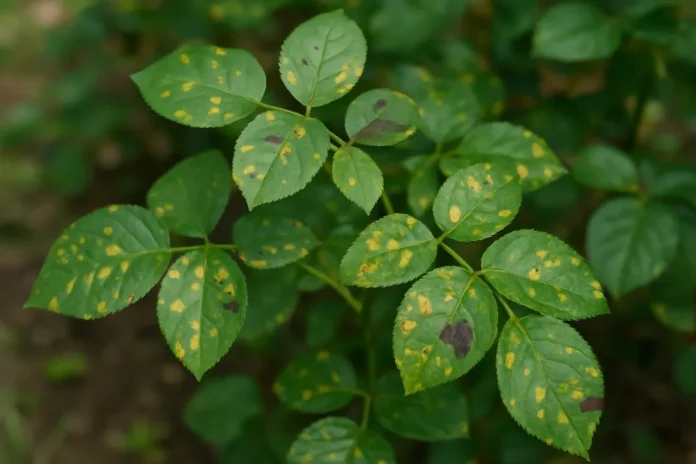
Yellow spots on rose leaves are most often caused by fungal disease, especially black spot in its early stages, or by pest damage, watering stress, and nutrient problems. The spotting happens when leaf tissue loses chlorophyll or is damaged by infection or feeding.
Seeing rose leaves develop yellow spots is a common warning sign that something is stressing your rose plant. Sometimes the cause is a fungal disease such as black spot or downy mildew. In other cases, insects, poor drainage, nutrient imbalance, or simple weather stress can leave foliage mottled, speckled, or patchy.
The good news is that yellow spotting is often easier to manage when you catch it early. The pattern of the spots, the condition of the rest of the leaf, and recent weather can usually narrow the cause quickly. Once you know what is behind the discoloration, you can treat the rose more effectively and help new growth come in clean and healthy.
Below, you will find the most likely reasons rose leaves get yellow spots, how to tell them apart, and what to do next to keep the problem from spreading through the plant or the rest of your rose bed.
Most Likely Causes Of Yellow Spots On Rose Leaves
Yellow spots are a symptom, not a diagnosis. On roses, the most common causes are fungal infection, pest feeding, moisture problems, and nutrient deficiencies. Start by looking closely at the color pattern, whether the spots stay yellow or darken, and whether the leaf eventually drops.
Black Spot In Its Early Stage
Black spot is one of the most common rose diseases in the U.S. Gardeners often notice small yellow areas first, especially around tiny dark specks. As the infection progresses, those spots turn black with feathery edges, and the surrounding leaf tissue turns yellow before dropping. Warm temperatures, wet foliage, and poor air circulation make black spot much worse.
Downy Mildew Or Other Fungal Leaf Diseases
Downy mildew can cause yellow, red, or purple blotches that may look angular because the leaf veins limit how the patches spread. In humid or cool wet periods, you might also see grayish growth on the undersides of leaves. Cercospora leaf spot and other fungal issues can create yellow halos around darker lesions, which can be confused with black spot early on.
Spider Mites And Other Sap-Sucking Pests
Tiny pests such as spider mites, leafhoppers, and some aphids can cause stippling, which looks like many tiny yellow dots across the leaf surface. This kind of spotting is usually finer and more evenly scattered than disease spots. Hot, dry weather often encourages mite outbreaks, especially on stressed roses near walls, driveways, or heat-reflecting surfaces.
Water Stress And Root Problems
Roses that are watered too little or too often can show yellowing leaves with pale spotting or blotching. Waterlogged soil deprives roots of oxygen, while drought stress limits nutrient uptake and damages leaf tissue. In both cases, the plant may also wilt, drop leaves, or produce weak new growth.
Nutrient Imbalances
A rose that lacks key nutrients such as nitrogen, magnesium, or iron may develop yellowing between veins, scattered pale areas, or weak foliage that is more vulnerable to disease. Nutrient problems usually affect multiple leaves in a more uniform pattern rather than making sharply defined circular spots, but they can overlap with other stresses.
- Early black spot often starts with yellowing around small dark lesions.
- Mite damage usually looks like very fine yellow speckling.
- Downy mildew can create angular yellow to purple patches.
- Water and root stress often cause blotchy yellowing plus wilting or leaf drop.
- Nutrient issues tend to create broader chlorosis rather than isolated spots.
How To Tell Which Problem You Have
The appearance of the leaves gives you the best clues. Instead of treating every yellow spot the same way, compare the size, shape, and spread of the damage across the plant.
Signs That Point To Black Spot
- Yellow areas surrounding black or very dark spots
- Round lesions with fringed or fuzzy-looking edges
- Lower leaves affected first
- Leaves turning yellow and dropping quickly
- Problems worsening after rainy or humid weather
Signs That Point To Pest Feeding
- Tiny yellow specks spread over much of the leaf surface
- Fine webbing, especially with spider mites
- A dusty or bronzed look on older leaves
- Visible movement of tiny insects on leaf undersides
- Damage strongest during hot, dry weather
Signs That Point To Water Or Root Stress
- Yellowing that appears after heavy rain or overwatering
- Leaves curling, drooping, or dropping
- Soil that stays soggy or smells sour
- Slow growth and reduced blooming
- Container roses drying out very quickly between waterings
Signs That Point To Nutrient Problems
- Paler leaves without distinct dark lesions
- Interveinal yellowing, where veins stay greener than the tissue around them
- Symptoms showing up on either older or newer leaves depending on the nutrient involved
- Weak stems and smaller blooms
- No obvious signs of insects or fungal growth
If you are unsure, look at both sides of several leaves and compare older growth with new growth. A disease often starts on lower or inner foliage where leaves stay damp longer, while pests may cluster on tender growth or on hot, dusty plants.
Disease Problems That Commonly Cause Yellow Spots
Fungal and fungal-like diseases are the top reason many roses show yellow spots. Good diagnosis matters because pruning, cleanup, and moisture management are just as important as any spray.
Black Spot
Black spot is caused by a fungus that splashes from infected leaves onto healthy ones. It thrives when leaves stay wet for several hours, especially in warm weather. The classic symptom is a black spot surrounded by yellow tissue, followed by leaf drop. Plants weakened by black spot bloom less and are more vulnerable to heat and winter injury.
Remove infected leaves from the plant and from the soil surface. Water at the base instead of overhead, and thin crowded canes to improve airflow. If black spot is severe or recurring, a home garden fungicide labeled for roses may help protect healthy new growth when used as directed.
Downy Mildew
Downy mildew can be fast-moving on roses, especially during cool, damp conditions. It often causes irregular yellow, red, or purplish patches that may look angular. Leaves can drop quickly, and shoots may also be affected. Unlike black spot, downy mildew can damage newer growth more aggressively under the right conditions.
This problem is encouraged by crowded growth and moisture trapped around foliage. Sanitation and spacing help, but severe outbreaks may require a product specifically labeled for downy mildew on ornamentals.
Cercospora And Other Leaf Spots
Cercospora leaf spot often creates small circular lesions with tan or gray centers and purple margins. The surrounding tissue may turn yellow. It is treated much like black spot, with a focus on removing diseased leaves, reducing splash, and improving airflow.
Pests That Create Yellow Speckles And Spots
Not all yellow spotting is a disease. Insects and mites pierce leaves and suck out cell contents, leaving pale dots, stippling, or tiny chlorotic patches.
Spider Mites
Spider mites are extremely small and easy to miss until damage is advanced. Leaves develop many pale yellow specks, then may turn bronze or dry out. You may notice fine webbing between leaves and stems. Mites multiply quickly in hot, dry weather and are a frequent issue on water-stressed roses.
A strong spray of water on leaf undersides can reduce small populations. Insecticidal soap or horticultural oil may help when used thoroughly and according to label directions. Avoid spraying during the hottest part of the day.
Leafhoppers
Rose leafhoppers cause pale stippling that can make leaves look dusted with yellow. These insects jump or fly when disturbed. Damage is often cosmetic at first, but repeated feeding weakens the plant.
Aphids And Thrips
Aphids more often distort new growth than create classic yellow spots, but heavy feeding can contribute to chlorosis. Thrips can scar petals and leaves, sometimes causing silvery or pale flecking. If yellow spotting appears mostly with distorted buds or flowers, inspect closely for these pests.
Environmental And Nutritional Causes
A healthy rose can still develop yellow spotting when growing conditions are off. This is especially common in containers, newly planted roses, or beds with poor drainage.
Overwatering And Poor Drainage
Roses like consistent moisture, but they do not like constantly saturated soil. Soggy roots cannot take up oxygen well, and stressed plants often respond with yellow blotching and leaf drop. If the planting hole acts like a bowl in clay soil, roots may stay wet long after rain.
Underwatering And Heat Stress
During summer, dry soil and reflected heat can cause leaves to fade, spot, crisp, or drop. Container roses are especially prone to this because potting mix dries faster than garden soil. Damage from drought may not appear as neat round spots, but the tissue can become patchy and yellow before browning.
Iron, Magnesium, Or Nitrogen Deficiency
Iron deficiency usually shows as yellowing on newer leaves while veins stay greener. Magnesium deficiency often starts on older leaves and can create yellowing between veins. Nitrogen deficiency tends to cause a broader, more even yellowing of older foliage. These patterns can look spotty from a distance, especially when some tissue stays greener than other areas.
Nutrient problems are more likely in very alkaline soils, exhausted container mix, or beds that have not been fed in a long time. Overfertilizing can also damage roots and make foliage yellow, so more fertilizer is not always the answer.
How To Treat Yellow Spots On Rose Leaves
Treatment depends on the cause, but a few steps help in almost every case. Focus first on limiting stress and preventing the problem from spreading.
- Remove badly infected or heavily spotted leaves from the plant and clean up fallen debris under the rose.
- Water deeply at the soil line instead of wetting the foliage. Morning watering is best.
- Thin crowded canes if needed so air can move freely through the plant.
- Inspect leaf undersides for mites, leafhoppers, or aphids before deciding on a treatment.
- Use a rose-safe fungicide, insecticidal soap, or horticultural oil only if the diagnosed problem calls for it and follow label directions exactly.
- Hold off on heavy fertilizing until the rose is actively growing and the main stressor is addressed.
- Monitor new growth. Old damaged leaves may not recover, but healthy new leaves tell you the plant is improving.
If only a few leaves are affected, simple sanitation and better watering practices may solve the issue. If the spotting is spreading quickly through the plant, especially during humid weather, disease is more likely and protective treatment may be worth using.
When Yellow Spots Mean A Bigger Rose Health Problem
Sometimes yellow spots are the first visible sign of a broader decline. Pay closer attention if the rose also has dieback, poor flowering, cane discoloration, or repeated defoliation.
- Repeated leaf drop can weaken the plant enough to reduce blooming.
- Chronic wet soil may lead to root rot, not just yellow leaves.
- Severe mite infestations can spread from one stressed plant to nearby ornamentals.
- Recurring black spot often signals that the site has poor airflow or that foliage is staying wet too long.
If a rose keeps declining despite treatment, consider whether it is poorly matched to the site. Some varieties are far more disease resistant than others, and planting a resistant rose can reduce future problems dramatically.
How To Prevent Yellow Spots From Coming Back
Prevention is often easier than cure with roses. A few cultural habits can greatly reduce future spotting and help roses outgrow minor stress faster.
- Plant roses in full sun where leaves dry quickly after rain.
- Space plants well so air circulates through and around them.
- Water at the base and avoid routine overhead irrigation.
- Mulch the soil to reduce disease splash and regulate moisture.
- Clean up fallen leaves, especially at the end of the season.
- Feed roses appropriately based on their growth stage and soil condition.
- Watch for mites and leafhoppers during hot, dry weather.
- Choose disease-resistant rose varieties when adding new plants.
Home gardeners often see the best results by combining sanitation, correct watering, and resistant varieties. Even if some spotting appears during difficult weather, a well-maintained rose usually keeps enough healthy foliage to continue blooming well.
FAQ
Can Yellow-spotted Rose Leaves Turn Green Again?
Usually no. Damaged leaf tissue rarely returns to normal. The goal is to stop the cause so new growth comes in healthy.
Should I Remove Yellow Leaves From My Rose?
Yes, if the leaves are heavily spotted, diseased, or already declining. Removing badly affected foliage can reduce spread and improve airflow, but do not strip the plant bare unless the damage is severe.
Are Yellow Spots on Rose Leaves Always Black Spot?
No. Black spot is very common, but yellow spotting can also come from spider mites, downy mildew, watering stress, root issues, or nutrient deficiencies.
What Does Mite Damage Look Like on Rose Leaves?
Mite damage usually appears as many tiny yellow or pale specks across the leaf rather than a few larger round spots. In heavier infestations, leaves may look bronzed and may have fine webbing underneath.
Can Overwatering Cause Yellow Spots on Roses?
Yes. Constantly wet soil stresses roots and can lead to blotchy yellowing, leaf drop, and greater disease pressure. Roses prefer even moisture, not soggy conditions.
Do I Need Fungicide for Yellow Spots on Rose Leaves?
Not always. If the issue is caused by pests, nutrition, or watering, fungicide will not help. It is most useful when you have confirmed or strongly suspect a fungal disease such as black spot.
Why Are Only the Lower Rose Leaves Getting Yellow Spots?
Lower leaves are often affected first because they stay shaded, humid, and wet longer than upper leaves. That pattern is especially common with black spot and other leaf diseases.
How Can I Keep Yellow Spots From Spreading to Other Roses?
Remove fallen leaves, avoid overhead watering, improve spacing, and monitor nearby plants early. If disease is the cause, reducing moisture on foliage and cleaning up infected debris makes a big difference.
Need the right fix fast? Explore our rose disease and pest treatment guides to choose the best fungicides, insect controls, and care tools for cleaner, healthier foliage.
