

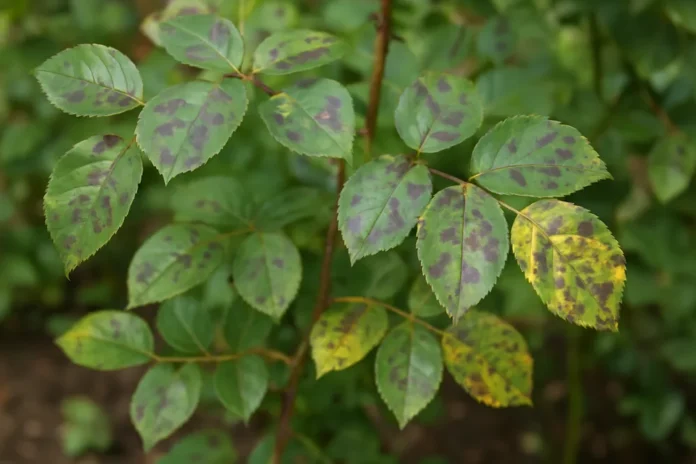
Purple spots on rose leaves are most often caused by fungal disease, cold stress, nutrient issues, or injury from weather or chemicals. The exact cause depends on whether the spots stay small and scattered, expand with yellowing, or appear after sudden stress.
Seeing rose leaves covered with purple spots can be alarming, especially when the rest of the plant seemed healthy just days earlier. In roses, purple or dark reddish-purple spotting is usually a sign that something is stressing the foliage, but that stress can come from several very different sources.
Sometimes the culprit is a fungal disease such as black spot in its early stages or Cercospora leaf spot, both of which can start as purplish marks before turning darker. In other cases, temperature swings, nutrient problems, spray injury, or simple aging of older leaves can produce similar discoloration. The good news is that the pattern, size, and spread of the spots usually offer strong clues.
If you can tell whether the spots are round or irregular, whether leaves are also yellowing or dropping, and whether the issue is isolated or widespread, you can usually narrow the problem quickly. Once you know the likely cause, it becomes much easier to protect new growth and get your rose back on track.
What Purple Spots on Rose Leaves Usually Mean
Purple spotting is not one single rose problem. It is a symptom that can show up when leaf tissue is damaged by pathogens, environmental stress, or nutritional imbalance. On roses, the most common causes are fungal leaf diseases, especially when weather is warm, humid, or rainy and leaves stay wet for long periods.
The color matters, but the overall look matters more. Tiny circular purple flecks can suggest early fungal infection. Larger blotches with yellow halos often point to a progressing leaf spot disease. Purpling along leaf edges or between veins may be more related to phosphorus uptake issues or cold-stressed tissue than to infection.
- Spots that increase after rainy weather usually suggest a fungal disease.
- Spots that appear suddenly after a cold snap may be stress-related.
- Spots paired with distorted leaves can indicate chemical injury or pest-related stress.
- Purple discoloration mostly on older leaves may sometimes reflect nutrient uptake problems or normal leaf aging.
Fungal Diseases Are the Most Common Cause
Black Spot Can Begin as Dark Purple Spotting
Black spot is one of the most common rose diseases in the U.S., and it does not always begin as jet-black circles. Early lesions can look purple, maroon, or deep reddish-brown before they enlarge and darken. As the disease advances, leaves often develop yellow areas around the spots and then drop prematurely.
If your rose has been through a stretch of overhead watering, humid mornings, or several rainy days, black spot should be high on your suspect list. The fungus spreads by splashing water and thrives when foliage stays damp.
Cercospora Leaf Spot Can Mimic Black Spot
Cercospora leaf spot is another common fungal issue on roses. The spots often start as small purple or reddish marks, later developing pale or tan centers. They tend to be more uniform and smaller than classic black spot lesions, but to many home gardeners they look very similar at first glance.
This disease also favors warm, moist conditions and poor air circulation. Lower leaves are often hit first, especially on dense shrubs or roses planted close together.
Anthracnose and Other Leaf Spots Are Possible
Anthracnose and several less common fungal leaf spot diseases can also create purple, brown, or black lesions on rose foliage. These are harder to distinguish without close inspection, but the practical response is similar: remove infected leaves, improve airflow, keep foliage dry, and protect new growth if the disease continues spreading.
Environmental Stress Can Also Create Purple Discoloration
Cold Nights and Spring Temperature Swings
Roses can show purpling after sudden cold weather, especially in spring when tender new growth is active. Cool soil can temporarily reduce phosphorus uptake even when phosphorus is present, which may lead to purplish tones in leaves. This kind of discoloration is often more diffuse than a true fungal spot, though some leaves may show irregular purple patches.
Heat, Drought, and Root Stress
Water stress can weaken leaf tissue and make discoloration more noticeable. Drought-stressed roses may develop blotchy purpling, scorched edges, or dull, off-color leaves. Root stress from compacted soil, poor drainage, or recent transplanting can cause similar symptoms because the plant is not taking up nutrients and water efficiently.
Sunscald and Wind Damage
After sudden exposure to strong sun or drying winds, rose leaves can develop darkened patches that look purple before turning brown. This is more common on tender growth that was previously shaded or protected, such as nursery plants newly moved into a brighter spot.
Nutrient Issues May Be Part of the Problem
A true nutrient deficiency is less common than disease on established landscape roses, but it can happen, especially in very alkaline soils, poorly amended beds, or containers where nutrients wash out quickly. Phosphorus deficiency is the issue most often linked with purpling, though roses may also struggle to use phosphorus when soil is cold or roots are stressed.
When nutrition is involved, the leaves may not show neat, round spots. Instead, they may have a washed-out appearance, purplish veining, reddened undersides, reduced vigor, and fewer blooms. Older leaves are often affected first because the plant moves mobile nutrients toward new growth.
- Cold spring soil can temporarily mimic phosphorus deficiency.
- High soil pH can limit nutrient availability even when fertilizer is present.
- Overwatering can damage roots and reduce nutrient uptake.
- Container roses run into nutrient imbalance faster than in-ground plants.
Chemical Injury and Spray Damage Are Often Overlooked
Purple spotting sometimes appears after roses are exposed to herbicide drift, strong foliar sprays, soap solutions, neem products applied in high heat, or fertilizer burn. The spots may be irregular rather than circular, and leaves can curl, twist, or develop scorched margins at the same time.
If the discoloration showed up shortly after treating nearby weeds, washing the plant with a spray product, or feeding more heavily than usual, injury is a real possibility. Damage often appears most strongly on exposed outer leaves or on the side of the plant facing the spray source.
Unlike a fungal disease, chemical injury usually does not spread in a steady pattern from leaf to leaf over time unless the plant was repeatedly exposed. New growth may emerge normally once the stress has passed.
How to Tell Which Cause Is Most Likely
Before treating, look closely at the leaves and the recent weather. Roses give you useful visual clues. You do not need a lab diagnosis to make a smart first decision.
- Small round purple spots that enlarge after wet weather suggest fungal leaf spot.
- Purple spots with yellowing and leaf drop strongly suggest black spot or Cercospora.
- Irregular purple patches after a cold snap suggest temperature stress.
- Purpling with weak growth and no clear circular lesions may point to nutrient uptake issues.
- Spots plus twisted or scorched leaves after spraying suggest chemical injury.
Also check where the problem started. Fungal diseases often begin on lower or inner leaves where humidity lingers. Environmental damage may affect the most exposed leaves first. Nutrient issues are usually more generalized rather than limited to a few splashed leaves.
What to Do Right Now
Remove Badly Affected Foliage
Pick off heavily spotted leaves and remove any that have already fallen around the base of the rose. Many fungal spores survive on infected debris and reinfect the plant during the next rain or watering cycle. Do not compost diseased rose leaves unless you are sure your compost pile runs hot enough to kill pathogens.
Keep Leaves as Dry as Possible
Water at the base of the plant instead of from overhead. Morning watering is best because it gives any accidental splash time to dry quickly. If your rose is crowded by nearby plants, lightly prune for airflow so the foliage dries faster after rain.
Pause and Review Recent Sprays or Feeding
If you recently used a weed killer, insecticidal soap, oil spray, or strong fertilizer, stop additional applications until you see how new growth responds. Plants recovering from minor chemical injury usually improve when the stressor is removed.
Support the Plant Without Overcorrecting
Keep soil evenly moist but not soggy, and avoid hitting the plant with multiple products at once. Gardeners sometimes make the problem worse by treating a stressed rose for fungus, insects, and deficiency all in the same week. A steadier approach is usually more effective.
When to Use a Fungicide
If spotting continues to spread, especially in humid or rainy weather, a fungicide may be worth using to protect clean new foliage. Fungicides work best as protectants or at the earliest stages of infection. They do not usually make existing spots disappear, but they can slow or stop the disease from moving onto fresh leaves.
For home roses, gardeners often use products labeled for black spot and other ornamental fungal diseases. Active ingredients vary, so always read the label and make sure roses are listed. Apply only as directed and avoid spraying during extreme heat unless the label specifically allows it.
- Use fungicides only when disease pressure is ongoing or symptoms are clearly spreading.
- Cover upper and lower leaf surfaces according to label directions.
- Repeat at the labeled interval during wet weather if needed.
- Rotate products when labels allow to reduce resistance pressure.
How to Prevent Purple Spots From Coming Back
Long-term prevention is mostly about reducing leaf wetness, improving plant vigor, and cutting down on disease carryover. Roses that dry quickly and grow steadily are less likely to develop recurring leaf spot problems.
- Plant roses where they get good sun and airflow.
- Space plants so foliage is not packed tightly together.
- Water the root zone, not the leaves.
- Clean up fallen leaves regularly, especially in summer and fall.
- Prune out dense interior growth to improve circulation.
- Feed appropriately for the season, but do not overfertilize.
- Choose disease-resistant rose varieties when planting new roses.
If you garden in a region with high humidity, black spot pressure can be intense every year no matter how careful you are. In that case, resistant cultivars and consistent sanitation make the biggest difference.
When Purple Spots Are Not a Serious Problem
Not every purple mark on a rose leaf is a crisis. Older leaves nearing the end of their life sometimes pick up red, bronze, or purple tones before dropping. Some rose varieties also naturally show reddish or purplish new growth due to anthocyanin pigments, especially in cool weather.
If the spots are few, the plant is otherwise vigorous, and new leaves look normal, watchful waiting may be enough. Trouble becomes more likely when the spotting spreads quickly, leaves yellow and fall, or the whole plant starts losing vigor.
When to Worry and when to Get Help
You should take the issue more seriously if your rose is defoliating, if spotting is moving rapidly onto new growth, or if canes and flower buds are also becoming discolored. Repeated severe leaf loss weakens roses, reduces flowering, and can make them more vulnerable to winter injury and pests.
If the symptoms do not match a typical fungal pattern, or if your treatments are not helping after a couple of weeks, your local cooperative extension office or a reputable garden center may be able to help you narrow the diagnosis. A clear photo of the whole plant plus close-ups of both leaf surfaces is often enough for a useful opinion.
FAQ
Can Black Spot on Roses Look Purple at First?
Yes. Early black spot lesions can appear dark purple, maroon, or reddish-brown before they enlarge and turn darker.
Will Purple Spots on Rose Leaves Go Away on Their Own?
Existing spots usually do not fade away, especially if they were caused by disease or tissue injury. The real sign of improvement is healthy new growth that emerges without new spotting.
Should I Remove Spotted Rose Leaves?
Yes, if the leaves are heavily affected or have already fallen. Removing infected foliage helps reduce fungal spread and keeps spores from splashing back onto the plant.
Can Overwatering Cause Purple Spots on Rose Leaves?
Indirectly, yes. Overwatering can stress roots, reduce nutrient uptake, and create humid conditions that encourage fungal leaf diseases.
Are Purple Spots on Rose Leaves Caused by Insects?
Usually not directly. Most purple spotting is related to disease, stress, or injury, though insect feeding can weaken the plant and make other problems more noticeable.
Do I Need a Fungicide Every Time I See Purple Spots?
No. If the spotting came from cold stress, spray injury, or a minor one-time issue, a fungicide will not help. It is most useful when a leaf spot disease is actively spreading.
Can Nutrient Deficiency Make Rose Leaves Turn Purple?
Yes, especially when phosphorus uptake is limited by cold soil, root stress, or unsuitable soil pH. Nutrient-related purpling usually looks less like neat circular spots.
What Is the Best Way to Prevent Leaf Spot Diseases on Roses?
Keep foliage dry, clean up fallen leaves, prune for airflow, avoid overhead watering, and grow disease-resistant varieties whenever possible.
Need a next-step fix? Read our guide to the best rose fungicides, pruning tools, and disease-resistant rose varieties so you can stop spotting faster and keep blooms coming.
