

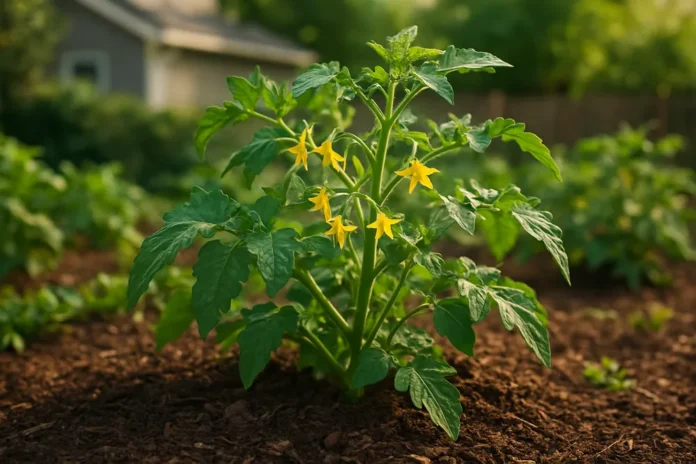
Tomato plants usually stop producing fruit because temperatures are too hot or too cool, sunlight is limited, or the plant is putting energy into leaves instead of fruit. Stress from watering swings, excess nitrogen, and poor pollination can also prevent fruit set.
A tomato plant that is not producing fruit can look healthy, grow fast, and even bloom well, yet still leave you wondering what went wrong. In most home gardens, the problem comes down to environmental stress, nutrition imbalances, or timing rather than a serious disease.
Tomatoes need the right mix of sunlight, moderate temperatures, steady moisture, and balanced feeding to move from flowers to fruit set. When one of those pieces is off, the plant often responds by dropping blossoms, delaying production, or growing lots of leaves with very little harvest.
The good news is that most fruiting problems are fixable once you know the cause. A few clues from the flowers, leaves, weather, and your recent care routine can usually point you in the right direction.
How Tomato Plants Go From Flowers to Fruit
Tomato plants produce fruit only after a flower is successfully pollinated and conditions are good enough for the plant to support developing tomatoes. A healthy-looking plant can still fail at this stage if the weather is extreme, the roots are stressed, or the plant is getting the wrong type of fertilizer.
In simple terms, the plant needs enough energy from sunlight, enough water to keep growth even, and temperatures that allow pollen to stay viable. If any of those factors break down, blossoms may dry up and fall off before small tomatoes form.
- Flowers must open and release viable pollen
- Pollen must reach the female part of the flower, often with help from wind or vibration
- Temperatures must stay in a range that supports fruit set
- The plant must have enough carbohydrates from sunlight to support developing fruit
- Roots need consistent moisture and balanced nutrients
Common Reasons Tomato Plants Do Not Produce Fruit
Temperatures Are Too Hot or Too Cool
Temperature is one of the biggest reasons tomato plants bloom but do not set fruit. Daytime temperatures above about 90 F and nighttime temperatures above 75 F can make pollen less viable. Cool weather can also delay fruiting, especially when nights stay below about 55 F. In both cases, flowers may appear normal but fall off without forming tomatoes.
This is especially common in midsummer heat waves and during unsettled spring weather. The plant may recover and start setting fruit again once temperatures return to a more favorable range.
The Plant Is Not Getting Enough Sun
Tomatoes are heavy sun lovers. Most varieties need at least 6 to 8 hours of direct sun, and more is usually better. In partial shade, plants often grow tall and leafy but produce fewer flowers and less fruit. Low light also weakens the plant's ability to support fruit after pollination.
A site that gets good spring sun can become too shady later as nearby trees leaf out or neighboring plants grow larger. This change often catches gardeners by surprise.
Too Much Nitrogen Is Pushing Leafy Growth
If your tomato plant is deep green, vigorous, and full of stems and leaves but has few flowers or fruit, excess nitrogen is a likely cause. Nitrogen fuels foliage growth. When it is overapplied, especially from lawn fertilizer, fresh manure, or high-nitrogen plant food, the plant keeps investing in leaves instead of reproduction.
This issue is common in rich garden beds that were heavily amended or in containers fed frequently with general-purpose fertilizers not designed for fruiting crops.
Water Stress Interrupts Flowering and Fruit Set
Tomatoes prefer consistently moist soil, not constant sogginess and not repeated dry spells. When the soil swings from very dry to very wet, plants become stressed and may drop blossoms. Water stress can also interfere with nutrient uptake, reduce pollen performance, and slow overall development.
Container tomatoes are especially vulnerable because potting mix dries faster than garden soil. Raised beds also warm and dry more quickly, which can increase stress during hot weather.
Poor Pollination Prevents Fruit Formation
Tomatoes are self-pollinating, but they still need flower movement from wind, vibration, or visiting insects to release pollen effectively. In very still air, enclosed patios, greenhouses, or humid weather, flowers may not pollinate well. Heavy rain can also wash pollen away or keep flowers from functioning normally.
If you see plenty of flowers but they dry and drop cleanly without swelling behind the bloom, incomplete pollination is a strong possibility.
The Variety May Simply Be Late
Some tomatoes take much longer to produce than others. Large beefsteak types and many heirlooms need more time from transplanting to harvest than cherry or determinate varieties. If the plant looks healthy and is flowering normally, lack of fruit may just mean it has not reached its full production stage yet.
A young transplant also needs time to establish roots before it starts pushing fruit. Plants set out too early in cool conditions often stall before they begin producing well.
Root Stress, Crowding, or Container Limits Are Slowing the Plant
Tomatoes growing in small containers, compacted soil, or crowded beds may have enough top growth to look healthy while their roots struggle below the surface. Restricted roots reduce the plant's ability to absorb water and nutrients consistently, which can delay flowering and fruit set.
Plants competing closely with other vegetables can also receive less air circulation and less light, both of which contribute to poor production.
Signs That Help You Pinpoint the Problem
The pattern your plant shows often tells you more than the lack of fruit itself. Look at the flowers, leaves, growth habit, and recent weather. These clues can narrow the cause quickly.
- Lots of leaves, few flowers: usually excess nitrogen or too little sun
- Flowers appear, then fall off: often heat stress, cold nights, or poor pollination
- Healthy flowers but no tiny tomatoes behind them: commonly pollination failure or temperature stress
- Stunted plant with dry soil: underwatering, root restriction, or inconsistent care
- Lush plant in a shady spot: inadequate direct sunlight
- Plant looks healthy but was just planted recently: normal establishment delay or late-maturing variety
If flowers are present, the plant is at least trying to reproduce. If there are no flowers at all, focus first on sunlight, fertility, and plant maturity. If there are many flowers but no fruit, focus more on temperatures, pollination, and moisture stress.
How to Get a Tomato Plant to Start Producing Fruit
Improve Sunlight Exposure
If your tomato is in a container, move it to the sunniest available location. In garden beds, prune back nearby plants if possible and avoid letting weeds or companion plants crowd the base. More direct light usually improves flowering and supports better fruit development.
Adjust Fertilizer if Foliage Is Excessive
Stop using high-nitrogen fertilizer if the plant is all leaves and little fruit. Switch to a fertilizer formulated for tomatoes or fruiting vegetables, with a more moderate nitrogen level and adequate phosphorus and potassium. Avoid repeated feeding until the plant shows a better balance between leafy growth and flowering.
Keep Soil Moisture Steady
Water deeply and consistently so the root zone stays evenly moist. Mulch helps regulate soil temperature and slows evaporation, which is especially useful during summer heat. Containers may need daily watering in hot weather, while in-ground plants usually need less frequent but deeper watering.
Support Pollination During Calm or Humid Weather
Gentle flower movement can help tomatoes self-pollinate. In protected spaces or greenhouses, a light shake of flowering stems during the warm part of the day can improve pollen release. Better airflow around plants also helps flowers dry and function more normally after rain or high humidity.
Reduce Heat Stress Where Possible
You cannot control outdoor weather, but you can help the plant cope. Keep watering consistent, mulch the soil, and avoid heavy pruning during extreme heat. In very hot regions, temporary afternoon shade cloth can reduce blossom drop and help the plant resume fruit set sooner.
Make Sure the Container Is Large Enough
Most full-size tomato plants need a substantial container to produce well. Small pots dry out too fast and limit root growth. If the plant is rootbound or living in a cramped container, moving it into a larger pot can improve vigor and fruiting potential.
Give Late Varieties Enough Time
If the plant is healthy and weather has been decent, patience may be the main fix. Large-fruited and indeterminate tomatoes often start slower than cherry types. Once conditions improve and the plant matures, fruit production can ramp up quickly.
When a Lack of Fruit Is Normal
Not every fruiting delay means something is wrong. Newly transplanted tomatoes often spend the first couple of weeks settling in and rebuilding roots. During that stage, they may not flower much at all.
It is also normal for tomatoes to pause fruit set during temperature extremes. Many plants stop setting new fruit during the hottest part of summer and begin again when nights cool down. Gardeners in the South often see a lull in midsummer, followed by another productive flush in late summer or early fall.
Variety matters too. Determinate tomatoes usually produce in a concentrated window, while indeterminate tomatoes keep flowering and fruiting over a longer season. If you expected a steady harvest from a plant bred for one big flush, the plant may simply be behaving as designed.
How to Prevent Poor Fruit Set in Future Seasons
The easiest way to avoid fruiting problems is to set tomatoes up well from the start. Choose a sunny site, plant at the right time for your region, and use balanced fertility instead of overfeeding. Prevention matters because flowers lost to stress do not become fruit later.
- Choose varieties suited to your climate and season length
- Wait until soil and night temperatures are warm enough before planting
- Give each plant enough space for sun and airflow
- Use mulch to keep moisture and soil temperature more even
- Feed lightly and avoid high-nitrogen products once plants are established
- Grow heat-tolerant varieties in very warm climates
- Use large containers with quality potting mix for potted tomatoes
If this problem happens every year, keep notes on weather patterns, fertilizer use, and variety performance. Those records often reveal whether your main issue is heat, shade, fertility, or timing.
FAQ
Why Does My Tomato Plant Have Flowers but No Fruit?
This usually points to poor pollination or temperature stress. Hot days, warm nights, cold snaps, high humidity, or still air can all cause flowers to drop before tomatoes form.
Can Too Much Fertilizer Stop Tomatoes From Producing Fruit?
Yes. Too much nitrogen encourages fast leafy growth and can delay or reduce flowering and fruit set. The plant looks lush, but harvest suffers.
Will Tomatoes Fruit in Partial Shade?
They may produce some fruit in partial shade, but yields are usually much lower. Most tomatoes need at least 6 to 8 hours of direct sun for strong flowering and reliable fruit set.
How Long Should I Wait Before Worrying About No Tomatoes?
That depends on the variety and when it was planted. Many tomatoes need several weeks after transplanting before they begin setting fruit, and larger varieties usually take longer than cherry tomatoes.
Do I Need Two Tomato Plants to Get Fruit?
No. Tomatoes are self-pollinating, so one healthy plant can produce fruit on its own. It still helps if flowers get some movement from wind, insects, or gentle vibration.
Can Extreme Heat Stop Tomatoes From Setting Fruit?
Yes. When daytime temperatures climb too high or nights stay very warm, pollen becomes less viable and blossoms may drop. Many plants resume fruiting when temperatures moderate.
Why Is My Potted Tomato Plant Not Producing Fruit?
Container tomatoes often struggle from small pots, drying out too quickly, nutrient imbalances, or limited sunlight. Root restriction and inconsistent moisture are especially common in containers.
Want bigger harvests and fewer blossom drop problems? Read our guide to the best tomato fertilizers, mulch, and supports so you can keep plants healthy and loaded with fruit.
