

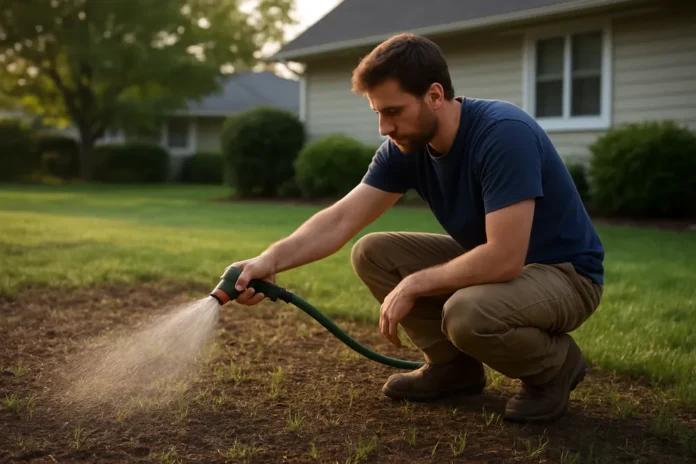
Grass seed usually does not germinate because the soil is too cold or dry, the seed is buried too deeply, or the seed never made good contact with the soil. Old seed, heavy rain, birds, and weed preventers can also stop sprouting.
When grass seed is not germinating, the cause is usually something simple but easy to miss. Most home lawn seed fails because the soil stays too cold, dries out between waterings, or the seed never settles firmly against the soil surface.
Timing and technique matter more than many gardeners expect. Even high-quality grass seed can sit for weeks without sprouting if it was spread at the wrong time of year, covered too deeply, washed away in a storm, or treated with a product that blocks seed growth.
The good news is that grass seed problems are often fixable without starting from scratch. Once you narrow down the most likely cause, you can adjust watering, improve seed-to-soil contact, and reseed at the right time for much better germination.
How Long Grass Seed Should Take to Germinate
Before assuming something went wrong, make sure enough time has passed. Different grass types sprout at different speeds, and temperature has a big effect on how quickly that happens.
- Perennial ryegrass often germinates in about 5 to 10 days.
- Tall fescue commonly takes 7 to 14 days.
- Kentucky bluegrass is slower and may take 14 to 30 days.
- Warm-season grasses like bermudagrass usually need consistently warmer soil and can take 7 to 21 days or more.
If you seeded cool-season grass in chilly spring soil or warm-season grass before summer heat arrived, the seed may still be viable but inactive. Lawn seed responds to soil temperature more than air temperature, so a few warm afternoons do not always mean conditions are ready.
The Most Common Reasons Grass Seed Does Not Sprout
Soil Temperatures Are Outside the Ideal Range
Grass seed needs the right soil temperature to wake up. Cool-season grasses generally germinate best when soil temperatures are roughly 50 to 65 degrees Fahrenheit, while warm-season grasses prefer much warmer soil, often 65 to 75 degrees or higher. Seed spread too early in spring or too late in fall can sit dormant instead of sprouting.
The Soil Surface Keeps Drying Out
Newly seeded lawns need steady moisture near the top inch of soil. If the surface dries out even for part of the day, the germination process can stop. Seed does not need soggy ground, but it does need consistently damp conditions until roots begin to form.
Seed Was Planted Too Deeply
Grass seed is small and should usually be left on the surface or covered very lightly. If it was raked in deeply or buried under thick topdressing, many seedlings will not have enough energy to push through. A light dusting of soil or compost is enough for most lawn seed.
Poor Soil-to-seed Contact
Scattering seed over fluffy soil, dead thatch, or existing lawn without pressing it in often leads to failure. Seeds need to touch the soil so they can absorb moisture. When they rest on loose debris instead, they dry out quickly and never start properly.
Old or Low-quality Seed
Grass seed does not stay fresh forever. Heat, humidity, and poor storage reduce viability over time. Cheap seed blends may also contain a lower percentage of live seed or include filler and unwanted annual grasses that perform poorly.
Heavy Rain or Runoff Moved the Seed
A strong storm can wash seed into low spots, gutters, and mulch beds. Even if the seed is still in the yard, it may now be clumped too densely in one area and missing from another. Seed shifted by runoff often fails because it ends up buried, exposed, or matted together.
Pre-emergent Weed Control Blocked Germination
Some lawn weed preventers are designed to stop seeds from sprouting. That includes grass seed. If a crabgrass preventer or weed-and-feed product was applied too close to seeding time, it may have prevented your new lawn from germinating.
Watering Mistakes That Stop Germination
Improper watering is one of the biggest reasons homeowners struggle with lawn seed. The goal is to keep the top layer of soil evenly moist, not flooded and not dusty dry.
- Too little water: the seed coat never softens enough to begin germination.
- Infrequent deep watering: the upper soil dries out long before the next cycle.
- Too much water: seeds can rot, shift, or lose oxygen in saturated soil.
- Hard spray from sprinklers: seed gets displaced or exposed.
For most newly seeded lawns, light watering once or several times a day works better than occasional soaking. The exact schedule depends on heat, sun, wind, and soil type, but the surface should stay lightly damp until most seed has sprouted. Once seedlings are established, you can gradually water less often and more deeply.
Site Conditions That Work Against New Grass
Too Much Shade
Many standard lawn blends struggle in deep shade under trees or between buildings. Even if the seed germinates, weak light can lead to thin, patchy growth. In shady areas, use a shade-tolerant mix and expect slower establishment.
Compacted Soil
Hard, compacted ground makes it difficult for roots to enter the soil after the seed sprouts. It can also cause water to run off instead of soaking in. If the area was heavily walked on, driven over, or built up with construction debris, compaction may be a major factor.
Excess Thatch or Debris
A thick layer of dead grass, leaves, or straw can hold seed above the soil where it dries out. Light mulch can help conserve moisture, but too much material creates a barrier between the seed and the soil surface.
Poor Soil Quality
Very sandy soil can dry out too fast, while dense clay can crust over and shed water. Soil that is extremely low in organic matter may also struggle to hold enough moisture for even germination. New construction sites are especially prone to these problems because topsoil is often thin or missing.
Seed Handling and Application Problems
Sometimes the issue is not the lawn site itself but how the seed was stored or spread. A few avoidable mistakes can leave you with little or no germination.
- Seed stored in a hot garage or shed may lose viability.
- A spreader set too low can leave bare patches from underseeding.
- A spreader set too high can pile seed too thickly, causing uneven moisture and later crowding.
- Seed tossed over existing grass without loosening the surface often never reaches the soil.
- Covering seed with too much straw can reduce light and limit soil contact.
Always check the seed label for the test date and mix composition. Fresh seed from a reputable supplier usually performs better than leftover bags that have sat for a year or more in humid conditions.
How to Tell Whether the Seed Is Still Viable
If your lawn looks stalled, you can do a simple germination check before reseeding everything. Place a small sample of seed between damp paper towels, keep it warm, and check it over the next several days to two weeks depending on the grass type. If only a tiny percentage sprouts, the seed itself may be the problem.
You can also inspect the seeded area closely. If seed is still visible and looks dry and unchanged after repeated watering, soil contact or temperature is probably the issue. If the seed has disappeared, birds, washout, or burial may be more likely.
What to Do if Your Grass Seed Is Not Germinating
Once you identify the likely cause, make corrections before putting down more seed. Reseeding into the same poor conditions usually leads to the same result.
- Wait long enough for the grass type you planted, especially if you used Kentucky bluegrass or seeded during cool weather.
- Keep the soil surface consistently moist with gentle watering instead of allowing it to dry between soakings.
- Lightly rake or loosen the top quarter to half inch of soil so seed can contact bare ground.
- Press seed into the soil with a roller or by walking lightly over small areas after spreading.
- Add only a very thin layer of compost, screened topsoil, or seed-starting mulch if cover is needed.
- Reseed bare spots after heavy rain if the original seed washed away.
- Delay seeding if a pre-emergent herbicide was recently applied and the label warns against overseeding.
- Use fresh, high-quality seed matched to your region, sun exposure, and season.
Best Timing for Reseeding a Lawn
Timing can make the difference between easy germination and repeated failure. In most of the U.S., cool-season lawns such as fescue, ryegrass, and Kentucky bluegrass do best when seeded in early fall. The soil is still warm, air temperatures are milder, and weeds are less aggressive than in spring.
Warm-season grasses like bermuda, zoysia, and centipede should usually be seeded in late spring to early summer when the soil has warmed up reliably. Planting too early leaves seed sitting in cool soil where it may rot, stall, or get eaten before it can germinate.
If you miss the ideal window, it is often better to wait for the next good season rather than force the issue during extreme heat or cold. Grass seed rarely succeeds when the weather is fighting it from the start.
When the Problem Is Birds, Erosion, or Traffic
Protection Can Matter as Much as Watering
Freshly seeded ground is vulnerable. Birds can eat a noticeable amount of exposed seed, especially in small bare patches. Kids, pets, and foot traffic can also crush the surface, shift the seed, or create compacted areas where sprouts fail.
- Use a light seed mulch or clean straw layer to reduce visibility and moisture loss.
- Place temporary markers or string around newly seeded spots to keep people and pets off.
- On slopes, consider erosion-control blankets designed for seeding.
- Water gently to avoid moving seed downhill or into piles.
These protective steps do not replace good soil prep, but they can preserve the seed you already paid for and greatly improve even germination.
How to Prevent Germination Problems Next Time
The easiest lawn seed problems to solve are the ones you avoid from the beginning. Good preparation usually matters more than extra fertilizer or fancy products.
- Seed during the best season for your grass type and region.
- Remove debris and loosen the top layer of soil before spreading seed.
- Use fresh seed with a recent test date.
- Apply seed at the recommended rate, not heavier just to be safe.
- Press the seed into the soil for reliable contact.
- Cover lightly only if needed.
- Keep the surface evenly moist until germination is well underway.
- Avoid weed preventers unless the label clearly says they are safe for seeding.
If your yard has recurring trouble spots, consider solving the root issue before reseeding. That may mean pruning for more sunlight, adding topsoil or compost, improving drainage, or aerating compacted ground.
FAQ
Will Grass Seed Germinate if I Just Throw It on the Ground?
Sometimes, but results are usually poor. Grass seed needs good contact with bare soil and steady moisture, so seed tossed onto hard ground, thatch, or existing grass often fails.
Can Grass Seed Dry Out After It Starts Germinating?
Yes. If the seed begins to sprout and then the soil dries out, the young embryo can die. That is why consistent surface moisture is so important during the first stage.
How Often Should I Water Newly Planted Grass Seed?
Water often enough to keep the top layer of soil lightly damp. In warm or windy weather, that may mean light watering once or more each day, while cooler conditions may require less.
Does Grass Seed Need to Be Covered with Soil?
It usually needs only very light cover, if any. Most grass seed germinates best when pressed into the soil surface and covered with just a thin layer of soil, compost, or mulch.
Can Old Grass Seed Still Germinate?
Some old seed can still sprout, but the germination rate drops with age and poor storage. Seed kept in hot or humid conditions loses viability much faster.
Will Heavy Rain Ruin Newly Spread Grass Seed?
It can. Heavy rain may wash seed away, bury it too deeply, or clump it in low spots. After storms, inspect the area for bare patches and reseed where needed.
Can I Seed After Applying Crabgrass Preventer?
Usually not right away. Many pre-emergent herbicides stop grass seed from sprouting too, so always read the label and wait the recommended interval before seeding.
Need better results fast? Read our lawn seeding guide and compare the best grass seed, starter fertilizer, and watering tools for thicker, more even germination.
