

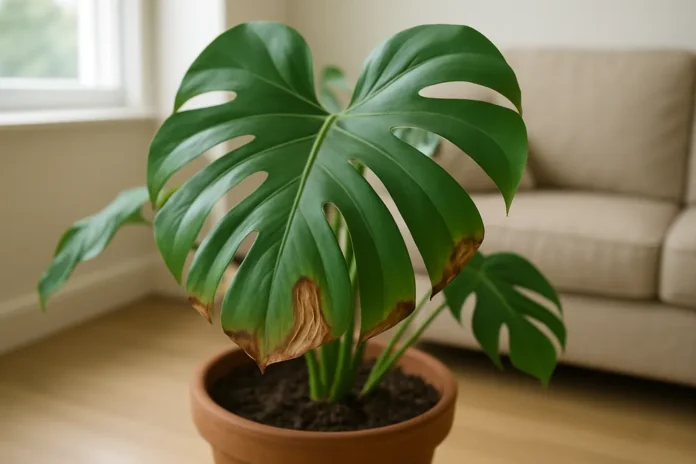
Monstera leaf tips usually turn brown because the plant is too dry, the air is too dry, or salts from fertilizer and tap water are building up in the soil. Brown tips can also happen when roots are stressed by overwatering, poor drainage, or temperature swings.
If your monstera has crispy edges, you are not alone. Leaf tips often turn brown when the plant is struggling to balance water uptake, humidity, and root health, and brown tips are one of the most common early warning signs.
The good news is that brown tips do not always mean your plant is in serious trouble. In many cases, the damage starts small and stays cosmetic if you correct the underlying issue early, especially when the rest of the leaf is still green and healthy.
Monsteras are forgiving houseplants, but they do have preferences. Irregular watering, dry indoor air, fertilizer salts, compacted soil, or stressed roots can all show up first at the tip of the leaf, where moisture loss is easiest to see.
What Brown Leaf Tips Usually Mean on a Monstera
A brown tip is dead leaf tissue. Once it turns brown, that part will not turn green again. The important question is not how to reverse the tip itself, but what caused the tissue to dry out or die in the first place.
On Monsteras, tip browning usually starts when the plant cannot move water evenly from the roots to the leaf margins. That can happen because the soil gets too dry, the roots are damaged, the air is very dry, or dissolved minerals and fertilizer salts are interfering with moisture uptake.
- A few brown tips on older leaves often point to mild environmental stress.
- Many leaves developing brown tips at once usually suggest a watering or root issue.
- Brown tips with yellowing leaves often mean overwatering, root stress, or nutrient imbalance.
- Brown tips with curling or drooping leaves more often suggest underwatering or low humidity.
Most Common Causes of Brown Monstera Leaf Tips
Underwatering and Uneven Moisture
The most common cause is letting the potting mix get too dry for too long. Monstera roots like moisture, but not soggy conditions. When the soil repeatedly dries far past the point your plant can tolerate, the leaf tips dry out first because they are farthest from the root system and most exposed to moisture loss.
Even if you do water regularly, inconsistent cycles can still cause trouble. A plant that swings from bone dry to soaking wet may show stress at the tips before it shows other symptoms.
Low Indoor Humidity
Monsteras are tropical plants, and although they adapt well to normal homes, very dry air can cause tip scorch. This is especially common in winter when heating systems lower indoor humidity. The damage often starts as a thin tan or brown edge and gradually expands.
Low humidity by itself may only cause slight browning, but it becomes worse when paired with dry soil, bright direct sun, or warm airflow from vents.
Salt Buildup From Fertilizer or Tap Water
Fertilizer salts and dissolved minerals can accumulate in container soil over time. This buildup makes it harder for roots to absorb water properly, even when the soil seems moist. The result can look like drought stress, with crispy brown tips and margins.
This issue is more likely if you fertilize often, never flush the pot thoroughly, or use hard tap water. You may also notice a white crust on the soil surface or around the inside rim of the pot.
Overwatering and Root Stress
Brown tips are not always caused by dryness. Roots that sit too long in wet, dense, poorly drained soil can begin to suffocate or rot. Once roots are damaged, they cannot supply the leaves with water efficiently, and the tips may brown even though the pot feels wet.
This is one reason brown tips can be confusing. Both underwatering and overwatering interfere with hydration, just in different ways.
Poor Water Quality
Some Monsteras react to heavily treated tap water, especially if it contains high levels of fluoride, chlorine, or dissolved salts. Sensitive plants may develop tip browning gradually over time, particularly when combined with fertilizer use.
Too Much Direct Sun or Heat
Monsteras prefer bright, indirect light. If the plant sits in strong afternoon sun, near a hot window, or close to a heater vent, the leaf tissue can dry and scorch. Tip browning from heat stress is often accompanied by pale patches, scorched spots, or a dry, papery texture.
Rootbound Conditions and Old Soil
A severely rootbound Monstera may dry out too quickly, leaving the roots unable to hold moisture between waterings. Old potting mix can also break down and compact, reducing airflow and making watering less reliable. Both situations can lead to chronic stress that first appears at the tips.
How to Tell Which Problem You Have
Because several issues can cause similar symptoms, context matters. Look at the soil, the pot, the room conditions, and the pattern of damage across the plant.
Signs the Plant Is Too Dry
- The potting mix pulls away from the sides of the pot.
- Leaves droop, curl slightly, or feel thinner than usual.
- Browning starts at the very tip and stays crisp and dry.
- The plant perks up noticeably after watering.
Signs of Low Humidity
- Only the tips or very edges are brown while the rest of the leaf stays green.
- The problem worsens in winter or in air-conditioned rooms.
- The soil moisture seems fairly normal, but tips still crisp up slowly.
- Plants near the Monstera that like humidity also show dry edges.
Signs of Salt Buildup
- A white or yellowish crust appears on the soil surface or pot rim.
- Tip browning shows up after frequent feeding.
- The plant looks stressed even though watering seems adequate.
- Older leaves may develop browning first, then newer leaves begin showing it too.
Signs of Overwatering or Root Problems
- The soil stays wet for many days after watering.
- Leaves yellow along with browning tips.
- Growth slows or stops during the growing season.
- The pot smells sour or musty.
- Roots are brown, mushy, or sparse when checked.
Signs of Sun or Heat Damage
- Damage is worse on leaves facing the window.
- Brown areas include patches or bleached spots, not just the tips.
- The plant sits in direct afternoon sun or close to a heat source.
- Leaves feel dry and papery rather than just crisp at the edge.
How to Fix Brown Leaf Tips on Monstera
Adjust Your Watering Routine
Water when the top 2 inches of potting mix feel dry, rather than on a rigid calendar. For many indoor Monsteras, that means watering more often in spring and summer and less often in winter. Water thoroughly until excess drains from the bottom, then discard any water sitting in the saucer.
If the mix has become extremely dry and is repelling water, soak the root ball more slowly so moisture reaches the center. One quick splash is rarely enough for a thirsty, rootbound plant.
Raise Humidity Moderately
Aim for indoor humidity around 40 to 60 percent if possible. A small humidifier nearby is usually more effective than misting. Grouping plants together can also help slightly. Keep the plant away from heating vents, radiators, and strong drafts that dry the leaves faster.
Flush Excess Salts From the Soil
If fertilizer or mineral buildup is likely, flush the pot by running room-temperature water through the soil for several minutes, allowing it to drain completely. This helps wash out excess salts. Afterward, ease up on feeding and do not fertilize a stressed plant until it resumes steady growth.
During active growth, most indoor Monsteras need only light to moderate feeding. Overfertilizing is more common than underfertilizing in houseplants.
Improve Drainage if the Roots Stay Wet
If the soil remains soggy for too long, repot into a chunky, well-draining aroid mix. A good blend often includes potting soil, orchid bark, perlite, and coco coir or peat. Use a pot with drainage holes. A decorative cachepot is fine, but the inner growing pot needs proper drainage.
Check the roots while repotting. Healthy roots are firm and pale. Trim away mushy, dark, foul-smelling roots with clean scissors before replanting.
Switch Water Sources if Needed
If your tap water is very hard or heavily treated, try filtered water, rainwater, or tap water left out overnight if chlorine is the main concern in your area. This is not necessary for every Monstera, but it can help sensitive plants with recurring tip burn.
Move the Plant to Better Light
Place the plant in bright, indirect light. A few feet back from a sunny south- or west-facing window often works better than direct exposure on the sill. If light is too intense, use a sheer curtain to soften it.
Should You Cut Off the Brown Tips?
You can trim brown tips for appearance, but only after the cause is under control. If the underlying stress continues, the new cut edge may brown again.
Use clean, sharp scissors and follow the natural shape of the leaf, leaving a very thin margin of brown tissue rather than cutting into healthy green tissue. That helps the wound look more natural and reduces the chance of creating a fresh damaged edge.
If a leaf is mostly damaged, yellowing, or no longer helping the plant, you can remove the entire leaf at the base of its petiole with sterilized pruners.
How to Prevent Brown Tips From Coming Back
Prevention comes down to consistent care. Monsteras do best when their roots stay evenly moist, their soil drains well, and the environment avoids extremes.
- Check soil moisture with your finger before watering instead of watering by the calendar alone.
- Use a pot with drainage holes and a loose, airy potting mix.
- Keep humidity moderate, especially during winter heating season.
- Fertilize lightly during active growth and flush the soil occasionally.
- Repot when the plant becomes heavily rootbound or the soil has broken down.
- Place the plant in bright, indirect light rather than harsh direct sun.
- Avoid cold drafts, heater vents, and sudden temperature swings.
When Brown Tips Are Not a Major Concern
A few small brown tips on an otherwise vigorous Monstera are usually cosmetic. Older leaves naturally collect minor wear over time, especially after dry spells, shipping stress, or seasonal changes indoors.
If the plant is still pushing healthy new growth, the stems are firm, and the leaves are mostly green, you likely do not have a serious emergency. Focus on improving consistency rather than making drastic changes all at once.
When to Worry More
Brown tips deserve closer attention when they appear quickly across many leaves, spread into large brown patches, or are paired with yellowing, wilting, mushy stems, or a bad smell from the pot. Those combinations suggest root damage, chronic overwatering, or more severe environmental stress.
A Monstera that stops growing in the warm season and keeps losing leaf quality should be checked for root issues, exhausted soil, or poor drainage. Catching that early often prevents widespread decline.
FAQ
Will Brown Monstera Leaf Tips Turn Green Again?
No. Brown tissue is dead and will not recover. You can leave it, trim it for appearance, or remove the whole leaf if the damage is severe.
How Often Should I Water a Monstera with Brown Tips?
Water when the top 2 inches of soil feel dry, not on a fixed schedule. Frequency depends on pot size, light, season, temperature, and how rootbound the plant is.
Can Low Humidity Alone Cause Brown Tips on Monstera?
Yes, especially in winter or in homes with forced-air heating. Low humidity often causes small crispy tips and edges, even when watering is mostly correct.
Is Tap Water Bad for Monsteras?
Not always, but some plants react to hard water or high mineral content over time. If tip browning keeps returning despite good care, filtered or rainwater may help.
Should I Mist My Monstera to Stop Brown Tips?
Misting offers only brief humidity and usually does not solve ongoing tip browning. A humidifier, better watering habits, and improved placement work better.
Can Overwatering and Underwatering Both Cause Brown Tips?
Yes. Underwatering dries the leaf tissue directly, while overwatering damages roots so they cannot supply water properly. Both can end with brown tips.
Do I Need to Repot My Monstera if the Tips Are Browning?
Only if the plant is rootbound, the soil stays soggy, or the mix has broken down and drains poorly. Many cases can be fixed with watering, humidity, or fertilizer adjustments first.
Want healthier leaves and faster growth? Read our guide to the best Monstera soil mixes, pots, and fertilizers so you can fix stress at the root and keep brown tips from coming back.
