

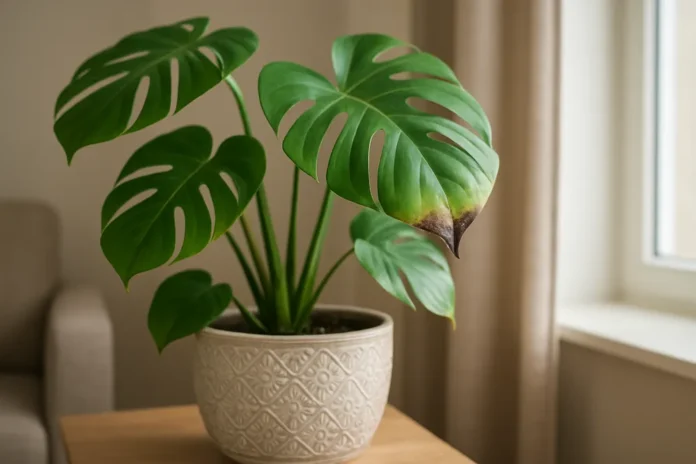
Monstera leaf tips usually turn black because the plant is under stress from watering problems, dry air, fertilizer salt buildup, root damage, or cold exposure. In some cases, black tips can also come from bacterial or fungal issues, especially when leaves stay wet.
Seeing Monstera leaves develop dark, crisp ends can be frustrating, especially when the rest of the plant still looks fairly healthy. Leaf tips that turn dark brown to black are often an early stress signal, and the cause is usually environmental rather than a major pest outbreak.
In many homes, black tips show up when watering habits, humidity, fertilizer levels, or root health fall out of balance. A Monstera can tolerate some inconsistency, but repeated stress often shows up first at the leaf margins and pointed ends.
The good news is that black tips are usually manageable once you identify the pattern. The damaged tissue will not turn green again, but you can stop the problem from spreading and help future leaves emerge healthy.
What Black Leaf Tips Usually Mean on a Monstera
Black tips are a symptom, not a diagnosis by themselves. On Monstera plants, the leaf tip is one of the first places to show stress because it is a thin, exposed part of the leaf where moisture balance changes quickly. When the plant cannot move water properly, loses too much moisture to dry air, or absorbs excess salts, those outer cells die first.
The color and texture can help narrow the cause. Dry, crispy black tips often point to low humidity, missed watering, or fertilizer salt burn. Soft, dark, mushy tips can suggest overwatering, root rot, or a bacterial problem. If the blackening starts at the very point and slowly creeps inward, environmental stress is more likely than a sudden disease outbreak.
- Crispy black edges often suggest dryness, salt buildup, or inconsistent watering.
- Soft black tissue often points to excess moisture, root damage, or rot.
- Blackening on older leaves first may reflect a chronic care issue.
- Blackening on new leaves can signal humidity stress, root problems, or water quality issues.
Watering Problems Are the Most Common Cause
Underwatering and Inconsistent Moisture
If the soil gets too dry for too long, the plant struggles to move enough moisture to the leaf tips. Those cells dry out first, then turn brown or black and become brittle. This often happens when a Monstera is watered on a rigid schedule instead of when the potting mix actually needs it.
Inconsistent watering can cause the same problem even if you eventually soak the pot. Repeated swings from bone dry soil to saturated soil stress the roots and make moisture delivery uneven. The result is often tip burn, curling, or patchy darkening on the leaf edges.
Overwatering and Oxygen-starved Roots
Too much water can also cause black tips, even though it seems like the opposite problem. When the potting mix stays wet too long, roots lose oxygen and begin to decline. Damaged roots cannot absorb water properly, so the foliage may show signs that resemble drought stress, including blackened tips.
Overwatered Monsteras often have other clues such as yellowing leaves, a musty pot smell, slowed growth, or limp stems. If black tips come with mushy tissue or several yellowing leaves at once, root stress from excessive moisture becomes much more likely.
- Water when the top 2 inches of potting mix feel dry, not just because the calendar says so.
- Use a pot with drainage so excess water can leave the root zone.
- Do not let the pot sit in a full saucer after watering.
- Adjust frequency with the season, since Monsteras use less water in winter.
Low Humidity and Dry Indoor Air Can Darken the Tips
Monstera plants are adaptable, but very dry indoor air can still damage leaf tips. This is especially common in heated homes during winter or in rooms with constant air conditioning. When the air is dry, the plant loses moisture through its leaves faster than the roots can replace it, and the tips may blacken or crisp.
Humidity-related black tips are often worst on newer leaves, leaves near vents, or plants placed close to sunny windows with hot afternoon exposure. The surrounding leaf may still look mostly green, while the very end becomes dark and papery.
- Keep Monsteras away from heating vents, radiators, and strong AC drafts.
- Aim for moderate indoor humidity, especially during winter.
- Group tropical plants together to create a slightly more humid microclimate.
- A humidifier is more effective than misting for long-term humidity support.
Fertilizer Burn and Salt Buildup Are Frequent Hidden Causes
If you fertilize regularly, black leaf tips may be caused by salt accumulation in the potting mix. Houseplant fertilizers leave mineral salts behind over time. If those salts build up around the roots, they interfere with water uptake and can literally burn the leaf tips.
This is especially common when a Monstera is fed too often, fertilized while stressed, or grown in the same soil for a long time without occasional flushing. Tap water with high dissolved minerals can add to the problem. You may notice a crusty white residue on the soil surface or around the pot rim.
How Salt Burn Typically Looks
Salt burn usually starts at the tips and margins rather than in the center of the leaf. The tissue may look dark brown to nearly black, dry, and sharply outlined. Unlike a spreading disease lesion, the damage is often symmetrical and tied to the leaf edge.
- Use a diluted fertilizer rather than a heavy dose.
- Feed less often during fall and winter when growth slows.
- Flush the potting mix occasionally with plain water to reduce salts.
- Repot tired, compacted soil if fertilizer buildup has become chronic.
Poor Root Health Can Show Up as Black Tips
Anything that damages the roots can lead to blackening at the leaf tips because water and nutrients stop moving efficiently. Root-bound plants, rotting roots, compacted soil, and recent transplant shock can all create this symptom.
A root-bound Monstera may dry out too fast and become difficult to rewet evenly. On the other hand, a plant in dense, soggy soil may keep wet feet and lose roots to rot. Both situations reduce root function, and both can produce dark tips despite opposite watering conditions.
Signs the Roots Are Involved
- Water runs straight through the pot without soaking in well.
- The plant wilts even though the soil is wet.
- The pot smells sour, swampy, or stale.
- Growth has stalled and new leaves are smaller than usual.
- Roots are circling tightly or pushing from drainage holes.
If the root system is compromised, correcting humidity or trimming the tips will not solve the real issue. Healthy roots are the foundation for healthy foliage.
Cold Drafts, Heat Stress, and Direct Sun Can Damage the Tips
Monsteras prefer warm, stable indoor conditions. If the plant sits near a cold window in winter, an exterior door, or a vent blowing hot or cold air, the leaf tips may darken from temperature stress. Chilled tissue can turn dark quickly, especially overnight.
Too much direct sun can also scorch the tips and edges, particularly if the plant was moved suddenly into stronger light. Sunburn often causes tan, brown, or blackened patches on the most exposed parts of the leaf. In bright rooms, the damage is usually worse on the window-facing side.
- Keep the plant out of contact with cold glass.
- Avoid spots with repeated temperature swings.
- Give Monsteras bright, indirect light rather than harsh midday sun.
- Acclimate the plant gradually if moving it to a brighter room.
Water Quality Can Contribute to Blackened Tips
Some Monsteras react to hard tap water or water treated with high levels of chlorine or fluoride. These minerals and chemicals can accumulate in the pot over time and stress the leaf tips, especially when combined with regular fertilizing.
Water quality problems usually develop slowly rather than overnight. If your plant care seems otherwise solid but tips keep darkening little by little, mineral sensitivity is worth considering. This is more likely in homes with very hard water and less frequent soil flushing.
- Rainwater, distilled water, or filtered water may help sensitive plants.
- If using tap water, occasional deep flushing can reduce accumulated minerals.
- Avoid small, frequent sips of water that leave salts concentrated in the root zone.
Pests and Diseases Are Possible but Less Common
Black tips are usually tied to care conditions, but pests and diseases can contribute. Sap-sucking pests like spider mites and thrips weaken leaves, causing tip dieback and edge damage over time. You may also see stippling, silvery scarring, or distorted new growth.
Bacterial and fungal leaf problems are more likely when leaves stay wet, air circulation is poor, and the plant is chronically overwatered. In these cases, black areas may look water-soaked, soft, or irregular rather than dry and crisp. Spots may spread inward from the edges or appear in several places at once.
When to Suspect a Disease Issue
- Black areas are soft, wet-looking, or rapidly expanding.
- Several leaves develop dark lesions at the same time.
- There is yellow haloing around the black tissue.
- The plant has been kept crowded, wet, and poorly ventilated.
If disease is involved, sanitation matters. Remove badly affected leaves with clean scissors and avoid splashing water on the foliage.
How to Tell Which Cause Is Most Likely
The fastest way to diagnose black tips is to look at the whole pattern instead of the damaged tip alone. Think about texture, location, recent care changes, and how the soil behaves between waterings.
- Dry, crispy black tips with curling often point to low humidity, underwatering, or salt buildup.
- Soft, dark tips with yellowing leaves suggest overwatering or root decline.
- Dark tips appearing after a cold snap or draft likely indicate temperature damage.
- Tip damage on a plant that was recently fed heavily may indicate fertilizer burn.
- Irregular black patches with wet-looking tissue are more consistent with disease.
Most home gardeners find that more than one factor is involved. For example, a root-bound Monstera growing in dry air and fed too often may show black tips from combined stress rather than a single mistake.
How to Fix Black Tips on Monstera Leaves
Correct the Growing Conditions First
Start by stabilizing care. Water deeply when the top layer of soil has dried, but do not keep the pot soggy. Move the plant away from vents and cold drafts, provide bright indirect light, and reduce fertilizer if you have been feeding often.
Improve the Root Environment
If the soil is dense, sour-smelling, or badly compacted, repot into a chunky, well-draining aroid mix. If roots are black, mushy, or foul-smelling, trim the damaged parts and repot into fresh mix. If the plant is tightly root-bound, move it up one pot size rather than jumping to a much larger container.
Trim Damaged Tips if You Want a Cleaner Look
Black tissue will not recover, so cosmetic pruning is fine once the cause is addressed. Use clean scissors and trim along the natural shape of the leaf, leaving a very thin margin of dark tissue so you do not cut into healthy green areas. If a leaf is mostly damaged, remove the entire leaf at the petiole.
Flush Salts when Needed
If fertilizer or hard water buildup seems likely, run plain water through the pot thoroughly to wash out excess salts. Let the pot drain completely. After that, resume feeding more lightly and only during active growth.
- Adjust watering based on soil dryness, not habit.
- Move the plant into stable warmth and bright indirect light.
- Increase humidity if the air is very dry.
- Reduce fertilizer strength and frequency.
- Inspect roots if symptoms continue or the soil stays wet too long.
- Trim cosmetic damage after the plant is back on track.
How to Prevent Black Tips From Coming Back
Prevention is mostly about consistency. Monsteras do best when moisture, airflow, light, and feeding remain fairly steady. Big swings in care are what tend to show up as tip damage.
- Use a chunky potting mix that drains well but still holds some moisture.
- Check the soil before watering instead of following a strict weekly routine.
- Keep humidity moderate, especially in winter.
- Fertilize lightly during spring and summer rather than heavily year-round.
- Flush or refresh the potting mix periodically if you use tap water.
- Rotate the plant occasionally so growth stays balanced in bright indoor light.
- Inspect leaves and roots early when you notice changes, since mild tip damage is easier to stop than severe decline.
FAQ
Should I Cut the Black Tips Off My Monstera Leaves?
Yes, you can trim black tips for appearance once you have corrected the underlying cause. Use clean scissors and avoid cutting into healthy green tissue.
Can Black Leaf Tips Turn Green Again?
No, damaged tip tissue will not recover. The goal is to stop the blackening from spreading and help new leaves grow normally.
Do Black Tips Mean My Monstera Has Root Rot?
Not always. Root rot is one possible cause, but black tips can also come from dry air, underwatering, fertilizer burn, cold drafts, or poor water quality.
Is Misting Enough to Stop Black Tips on a Monstera?
Usually not. Misting gives only brief humidity relief, while a humidifier, better placement, and steadier watering habits are more effective long term.
Can Tap Water Make Monstera Tips Turn Black?
Yes, especially if your tap water is very hard or high in dissolved minerals. Over time, mineral buildup can stress roots and contribute to tip burn.
Why Are Only the Newer Leaves Getting Black Tips?
Newer leaves are often more sensitive to low humidity, inconsistent watering, and root stress. They can also show fertilizer or water quality issues sooner than older leaves.
How Often Should I Water a Monstera to Prevent Black Tips?
There is no single schedule that fits every home. Water when the top 2 inches of the potting mix are dry, then water thoroughly and let excess drain away.
Want to fix Monstera problems faster? Read our guide to the best Monstera soils, fertilizers, and humidifiers so you can give your plant the exact support it needs.
