

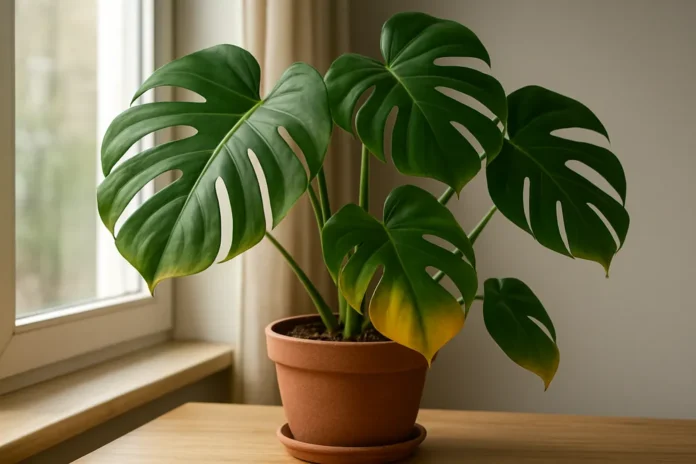
Monstera leaf tips usually turn yellow because of watering stress, dry air, excess fertilizer, or root problems. The discoloration starts at the tips because that tissue is often the first part of the leaf to show stress.
Seeing Monstera leaves lose their rich green color can be frustrating, especially when the change starts right at the leaf tips. In many homes, yellow tips are an early warning sign that the plant is under mild but ongoing stress rather than facing a single dramatic problem.
Most of the time, yellowing tips come from uneven watering, low humidity, fertilizer salt buildup, compacted soil, or roots that are not functioning well. Light levels, tap water quality, temperature swings, and natural leaf aging can also play a role. The key is to look at the pattern of yellowing and the plant's recent care routine so you can narrow down the cause.
The good news is that a monstera with yellow tips often recovers well once conditions improve. If you catch the issue early, new growth can return to normal and the damage usually stays limited to the affected leaf edges.
What Yellow Leaf Tips Usually Mean On Monstera
When only the tips of monstera leaves turn yellow, the problem is often related to moisture movement through the plant. The leaf tip is one of the farthest points from the roots, so it tends to show stress before the rest of the leaf does. That is why slight watering issues, dry indoor air, and salt accumulation often show up there first.
Yellow tips are different from yellow whole leaves, random yellow spots, or yellowing between veins. Whole-leaf yellowing often points to overwatering, root damage, or natural aging. Spotted yellowing may suggest pests or sun stress. Tip yellowing is more commonly tied to environmental or care imbalances that build gradually over time.
- Yellow tips with crispy brown edges usually suggest dryness, low humidity, or salt buildup.
- Soft yellow tips on leaves that feel limp can point to overwatering or root stress.
- Yellowing on several leaves at once often means a care routine issue rather than normal aging.
- Yellowing only on older leaves may be less urgent than yellowing on fresh new growth.
Watering Stress Is The Most Common Cause
Underwatering And Dry Soil
If the potting mix is drying out too much between waterings, the plant cannot move enough moisture to the ends of its leaves. The result is often yellow tips that later turn tan or brown. This is especially common in monsteras kept near heaters, in terra-cotta pots, or in a chunky mix that drains very quickly.
A thirsty monstera may also have curling leaves, drooping stems, slower growth, and soil that pulls away from the sides of the pot. If watering is inconsistent, the plant may cycle between too dry and too wet, which causes even more stress than a steady routine.
Overwatering And Oxygen-Starved Roots
Too much water can cause yellow tips too. When roots stay wet for long periods, they lose access to oxygen and begin to function poorly. Even though the soil is moist, stressed roots cannot absorb water and nutrients efficiently, so the leaves may still show signs that look similar to dryness.
Overwatered monsteras often show yellowing along with drooping, soft stems, heavy soil, fungus gnats, or a sour smell from the pot. If the issue continues, yellow tips can spread inward and entire leaves may start yellowing.
- Dry, compact, fast-draining soil points more toward underwatering.
- Wet, dense soil that stays damp for many days points more toward overwatering.
- A plant can show both problems if it is watered heavily, then allowed to become bone dry.
Low Humidity Often Shows Up At The Tips First
Monsteras are adaptable houseplants, but they still prefer moderate humidity. In many U.S. homes, winter air drops low enough to stress the leaf margins and tips. When the air is dry, leaves lose moisture faster than roots can replace it, especially on large leaves with lots of surface area.
Humidity-related yellowing is usually subtle at first. The very end of the leaf fades, then becomes pale yellow, and later may crisp up. The rest of the leaf can still look healthy. This pattern is common when a plant sits near forced-air heat, air conditioning vents, fireplaces, or drafty windows.
Low humidity alone does not always cause major damage, but when it combines with missed waterings or fertilizer buildup, the symptoms become much more obvious. That is why yellow tips often appear during seasonal changes even if your routine has not changed much.
Fertilizer Salts And Mineral Buildup Can Burn Leaf Tips
One of the most overlooked reasons for yellow monstera tips is a buildup of dissolved salts in the potting mix. These salts can come from fertilizer, softened water, or naturally mineral-heavy tap water. Over time, they collect around the roots and interfere with water uptake.
When salt levels rise, the leaf tips may turn yellow, then brown and crisp. You might also notice a white crust on the soil surface or around the drainage holes. This is especially common when fertilizer is applied too often, applied to very dry soil, or used at full strength year-round.
How This Differs From A Nutrient Deficiency
A true nutrient deficiency usually causes broader color changes, such as pale leaves, weak growth, or yellowing between veins. Tip burn from salt buildup is more localized. The plant may technically have fertilizer present, but the roots cannot use water properly because the root zone chemistry is out of balance.
- Tip yellowing after recent feeding often suggests excess fertilizer.
- White residue on soil or pot edges supports a salt buildup diagnosis.
- Plants in the same soil for a long time are more likely to accumulate minerals.
Root Problems Can Trigger Yellow Tips Even When Leaves Look Mostly Healthy
Healthy roots are essential for keeping monstera foliage evenly green. If roots are crowded, rotting, damaged, or growing in worn-out potting mix, the plant often starts showing mild symptoms before severe ones. Yellow leaf tips can be one of those early clues.
A rootbound monstera may dry out very fast and show recurring tip yellowing because water moves through the pot too quickly. On the other hand, roots sitting in compacted or degraded soil may remain too wet and begin to rot. Both conditions reduce the plant's ability to regulate moisture.
Signs The Root Zone Is Part Of The Problem
- Water runs straight through the pot with little absorption.
- The plant wilts quickly after watering or stays droopy despite moist soil.
- Roots circle tightly around the pot interior.
- The mix smells sour, swampy, or stale.
- Growth has slowed even during the active growing season.
If the roots are compromised, leaf tips may yellow because the plant cannot evenly supply water and dissolved nutrients to the farthest leaf tissue. That makes the tips vulnerable before the entire leaf declines.
Light, Temperature, And Placement Can Contribute
Monsteras like bright, indirect light. Too little light slows growth and reduces how efficiently the plant uses water, which can worsen tip yellowing caused by overwatering. Too much direct sun can dehydrate the leaf edges and create a faded yellow cast before browning develops.
Placement matters just as much as light intensity. Leaves exposed to hot afternoon sun through glass, cold drafts from winter windows, or dry airflow from vents may develop yellow tips even if the rest of the plant looks fine. Sudden changes are often more stressful than stable imperfect conditions.
- Harsh direct sun can bleach and dry leaf tips.
- Cold temperatures slow root activity and water uptake.
- Heating and AC vents increase evaporation and lower humidity around the plant.
- Low light can make wet soil linger too long and stress the roots.
Pests And Disease Are Less Common But Still Possible
Yellow tips are not the classic first sign of pests, but sap-feeding insects can contribute to them. Spider mites, thrips, mealybugs, and scale all damage plant tissue and interfere with moisture balance. In dry indoor air, spider mites are especially common and may cause a dull, stippled look before leaf tips discolor.
Root disease is a more likely disease-related cause than leaf disease when tip yellowing is involved. If root rot is developing, the plant may have yellow tips along with limp growth, blackened roots, mushy stem bases, or a consistently wet potting mix.
Clues That Point Toward Pests
- Fine webbing under leaves or where leaf stems meet the main stem
- Tiny moving specks on the undersides of leaves
- Sticky residue or cottony patches
- Silvery scarring, distorted new leaves, or black specks from thrips feeding
When Yellow Tips Are Just Normal Aging
Not every yellow tip signals a serious care issue. Older monstera leaves naturally wear down over time, especially if they have been on the plant for a long period or were lightly damaged in the past. A single lower leaf with a slowly yellowing tip is usually less concerning than multiple upper leaves changing at once.
Natural aging tends to happen gradually and affects older foliage first. The rest of the plant should still be producing healthy green leaves. If new leaves are emerging well and only an occasional old leaf tip yellows, the plant may simply be reallocating energy.
How To Tell Which Cause Fits Your Plant
The best diagnosis comes from looking at the yellow tips together with the soil, roots, and growing environment. Yellow tips are a symptom, not the cause by themselves. Pattern, timing, and recent care changes tell the real story.
Questions That Help Narrow It Down
- Did the problem start after changing your watering routine?
- Has the plant recently been fertilized more often or at a stronger rate?
- Is the indoor air much drier because of the season?
- Does the soil stay soggy for a long time or dry out extremely fast?
- Are the yellow tips soft and limp or crisp and dry?
- Is the issue limited to old leaves, or is it affecting new growth too?
- Has the plant been moved closer to a sunny window, vent, or draft?
In many cases, more than one factor is involved. For example, a plant in dry winter air that is also getting inconsistent watering may show stronger tip yellowing than a plant dealing with either issue alone. That overlap is common with houseplants.
What Helps A Monstera Recover
Recovery starts with stabilizing the root zone and growing conditions. Monsteras respond best to even moisture, bright indirect light, and a potting mix that drains well while still holding some moisture. Once the underlying stress is corrected, new leaves usually emerge healthy even though old damaged tips stay discolored.
If watering is the issue, aim for a consistent cycle instead of extremes. If humidity is low, improving the surrounding air can reduce ongoing tip stress. If fertilizer salts are building up, reducing feed frequency and refreshing the potting mix often helps. Plants with root rot or severely compacted soil may need repotting into a fresh airy mix.
Helpful Recovery Priorities
- Keep soil moisture more even and avoid long droughts followed by soaking.
- Place the plant in bright, indirect light rather than deep shade or harsh direct sun.
- Protect it from heater vents, AC blasts, and cold drafts.
- Use fertilizer moderately during active growth instead of heavy year-round feeding.
- Repot if the roots are crowded, rotting, or sitting in old compacted mix.
Damaged tips do not turn green again, so improvement is measured by whether the yellowing stops spreading and whether new growth looks normal. You can trim brown or dead tips for appearance, but leave healthy green tissue in place so the leaf can still photosynthesize.
How To Prevent Yellow Tips In The Future
Prevention comes down to consistency. Monsteras tolerate some variation, but repeated swings between wet and dry, low and high humidity, or dim and intense light put pressure on the leaf tips. A steady routine is much gentler on the plant than frequent correction after stress appears.
- Grow monstera in a chunky, well-aerated indoor potting mix.
- Use a pot with drainage so excess water can escape.
- Let the top portion of the mix dry slightly, but do not let the root ball stay bone dry for long.
- Feed lightly during spring and summer rather than heavily in every season.
- Flush or refresh the potting mix periodically if your water is mineral-heavy.
- Keep the plant away from strong direct afternoon sun and drying air vents.
- Inspect leaves regularly for early pest activity.
If your monstera has had yellow tips before, it does not mean the plant is doomed or difficult. It usually means one part of its environment needs better balance. Once you find that balance, the plant often becomes much easier to maintain.
FAQ
Should I Cut Off Yellow Monstera Leaf Tips?
You can trim off fully dead or brown tip tissue for appearance, but yellow or green parts still help the leaf make energy. Use clean scissors and follow the natural leaf shape.
Can Yellow Tips Turn Green Again?
No. Damaged tip tissue does not usually regain its original color. Improvement shows up when the yellowing stops spreading and new leaves emerge healthy.
Do Yellow Tips Always Mean I Am Overwatering?
No. Overwatering is one possibility, but underwatering, low humidity, fertilizer salts, and root crowding can cause similar symptoms. The condition of the soil and roots gives better clues.
Why Are Only the Newest Monstera Leaves Getting Yellow Tips?
Yellow tips on newer leaves can point to low humidity, inconsistent watering during leaf expansion, excess fertilizer, or pests affecting tender growth. New leaves are more sensitive than older hardened foliage.
Can Tap Water Cause Yellow Leaf Tips on Monstera?
Yes. In some homes, hard water or softened water can leave mineral salts in the soil over time. That buildup can stress roots and contribute to yellow or brown tips.
Is Misting Enough to Stop Yellow Tips?
Usually not by itself. Misting gives only brief moisture and does not fix watering problems, salt buildup, or root issues. It may help a little, but it is rarely the main solution.
How Long Does It Take a Monstera to Recover From Yellow Tips?
It depends on the cause and the season. Mild stress may stop progressing within a few weeks, while root problems or severe overwatering can take much longer. Look for healthy new growth as the best sign of recovery.
Need help choosing the right potting mix, fertilizer, or humidity tools for your monstera? Read our recommended monstera care and indoor plant product guides to fix yellow tips faster and keep new growth healthy.
