

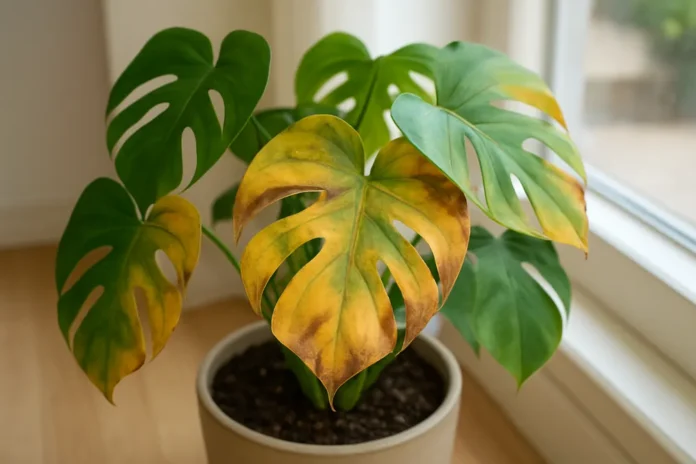
Monstera leaves usually become discolored because of watering stress, improper light, nutrient issues, pests, disease, or natural aging. The specific color change often points to the underlying problem.
Monstera plants are usually forgiving houseplants, so it can be alarming when leaves start changing color. Leaf discoloration can show up as yellowing, browning, black spots, pale patches, fading, or crispy edges, and each pattern tends to point to a different cause.
In many cases, the problem comes down to moisture, light, or root health. But pests, fertilizer buildup, cold drafts, low humidity, and simple old age can also change the look of your plant.
The good news is that discolored Monstera leaves often give clear clues. Once you match the color pattern with the likely cause, it becomes much easier to correct care and help the plant produce healthy new growth.
What Healthy Monstera Leaves Should Look Like
A healthy Monstera typically has rich green leaves with even color, good firmness, and no widespread spotting or crispy margins. Mature leaves may develop natural splits or holes, but those features are unrelated to discoloration.
Before assuming something is wrong, look at the whole plant. One old lower leaf turning yellow is often normal. Several leaves changing color at once, especially on newer growth, usually signals a care problem that needs attention.
- Older bottom leaves yellowing one at a time can be part of normal aging.
- New leaves emerging pale but deepening in color over time are usually normal.
- Patchy, fast-spreading, or repeated discoloration is more likely to indicate stress or disease.
What Different Monstera Leaf Colors Usually Mean
Yellow Leaves
Yellowing is one of the most common Monstera symptoms. It often points to overwatering, poor drainage, compacted soil, or roots staying wet too long. General yellowing can also come from nutrient deficiency or low light when growth slows and water use drops.
Brown Tips and Edges
Brown tips and crispy edges usually suggest underwatering, very dry air, irregular watering, or fertilizer salt buildup. If the edges are dry and papery, the issue is usually moisture stress rather than disease.
Brown or Black Patches
Dark soft patches can mean overwatering, root damage, cold injury, or leaf spot disease. If the tissue feels mushy instead of dry, suspect excess moisture or infection first.
Pale, Bleached, or Faded Areas
Washed-out or bleached leaves often come from too much direct sun. Monsteras prefer bright, indirect light. Strong afternoon sun can scorch exposed leaves and leave tan, white, or faded patches.
Spots, Stippling, or Silvery Streaks
Fine speckling, silvering, or irregular scarred patches often point to pests like spider mites or thrips. These insects feed on leaf tissue and distort color before the damage becomes obvious.
Watering Problems Are the Most Common Cause
Overwatering and Soggy Roots
Monsteras do not like constantly wet soil. When roots sit in excess moisture, they cannot take up oxygen properly, and leaves often respond by turning yellow, then developing brown or black areas. Overwatering does not always mean watering too often. It can also mean a pot that drains poorly, a heavy mix that stays wet too long, or a container that is too large for the root system.
- Multiple yellow leaves appearing at once
- Soil staying damp for many days after watering
- Musty smell from the potting mix
- Soft stems or dark mushy roots
Underwatering and Dry Root Stress
If the plant gets too dry, leaves may droop, curl, or develop crisp brown tips and edges. Repeated cycles of severe dryness can also cause yellowing, especially if the plant sheds older leaves to conserve moisture. A bone-dry root ball may even repel water at first, making the problem worse.
The goal is consistent moisture, not constant wetness. Let the top layer of potting mix dry before watering again, then water thoroughly until excess drains from the bottom.
Light Stress Can Wash Out or Scorch the Foliage
Monsteras grow best in bright, indirect light. When light is too weak, the plant may grow slowly, use water more slowly, and develop pale or yellowing leaves over time. When light is too intense, especially direct midday or afternoon sun through a window, leaves can bleach or scorch.
- Too little light often causes dull color, smaller leaves, and slow growth.
- Too much direct sun often causes tan, white, or crispy patches on exposed leaves.
- Sudden moves from a low-light corner to a bright sunny window can trigger rapid discoloration.
A spot near an east-facing window or a few feet back from a bright south- or west-facing window is often ideal. Sheer curtains can soften harsh light while still giving the plant enough brightness to grow well.
Root and Soil Issues Often Show Up in the Leaves
Poor Drainage
A Monstera planted in dense, peat-heavy soil or a container without proper drainage holes can develop persistent discoloration because the roots stay too wet. This can mimic nutrient deficiency since damaged roots struggle to absorb what the plant needs.
Root Bound Plants
When roots tightly circle the pot, water can run straight through or dry out too quickly, leading to stress and uneven moisture. You may see brown tips, yellowing, or drooping because the plant cannot access water evenly.
Root Rot
Root rot is a serious form of root damage caused by overly wet conditions and poor oxygen around the roots. Leaves may yellow broadly, then develop brown or black limp patches. If the plant declines even though the soil feels wet, root rot is a strong possibility.
A well-draining aroid mix usually works best for Monsteras. Many gardeners use a blend that includes potting soil plus orchid bark, perlite, coco chips, or similar chunky materials to improve airflow around the roots.
Nutrient Imbalances and Fertilizer Problems
Monsteras are not especially heavy feeders, but they can show discoloration if nutrients are either lacking or overly concentrated. A plant that has been in the same potting mix for a long time may start to look pale, especially during active growth in spring and summer.
Common Nutrient-related Clues
- Overall pale green color can suggest low fertility.
- Yellowing between veins may point to a micronutrient issue, though watering stress often causes similar symptoms.
- Brown leaf tips with white crust on the soil can indicate excess fertilizer salts.
Too much fertilizer can burn roots and cause brown edges or patchy discoloration. If you fertilize often, use strong doses, or rarely flush the pot with water, salt buildup may be contributing to the problem.
Pests and Disease Can Cause Spots, Speckles, and Patchy Color
Spider Mites
Spider mites are tiny pests that cause fine yellow speckling, dull leaves, and sometimes thin webbing. They are more common in dry indoor air and can spread quickly if ignored.
Thrips
Thrips scrape and suck leaf tissue, leaving silvery patches, streaks, or distorted new growth. Damage can look like faded scars or bronzed areas rather than simple yellowing.
Scale and Mealybugs
These pests feed on sap and can weaken the plant over time, causing yellowing, sticky residue, and poor vigor. Mealybugs often hide in leaf joints and along stems.
Leaf Spot Disease
Fungal or bacterial leaf spots often appear as dark lesions with yellow halos or wet-looking spots that enlarge over time. Consistently wet leaves, poor airflow, and overwatering can make these problems worse.
Environmental Stress Can Discolor Leaves Even when Care Seems Correct
Sometimes a Monstera discolors because conditions changed suddenly rather than because routine care is consistently poor. Tropical houseplants are sensitive to abrupt shifts in temperature, humidity, and placement.
- Cold drafts from doors, windows, or air conditioning can create dark or limp patches.
- Very low humidity can lead to brown tips and edges, especially in winter.
- Heat from vents or radiators can dry leaves and soil too quickly.
- Recent repotting or moving the plant can trigger temporary stress discoloration.
Monsteras generally prefer stable indoor temperatures and moderate humidity. They usually handle average household conditions well, but extremes can leave visible marks on foliage.
Natural Aging Is Sometimes the Whole Explanation
Not every discolored leaf means something is wrong. As a Monstera grows, it will occasionally retire older leaves, especially those lower on the plant. These leaves often turn yellow gradually and then brown as the plant redirects energy into newer growth.
If the rest of the plant looks healthy, growth is steady, and only an occasional older leaf changes color, normal aging is the most likely cause. This is especially true after a growth spurt or seasonal transition.
How to Fix Monstera Leaf Discoloration
The best fix depends on the pattern of discoloration, but a few corrections solve the majority of Monstera problems. Focus first on root moisture, light, and plant hygiene.
- Adjust watering so the soil is lightly dry near the top before you water again.
- Make sure the pot has drainage holes and the mix does not stay dense and soggy.
- Move the plant into bright, indirect light if it is in deep shade or harsh direct sun.
- Inspect both sides of the leaves and stems for pests such as mites, thrips, scale, or mealybugs.
- Reduce fertilizer if tips are browning and salts may be building up.
- Trim badly damaged leaves if they are mostly yellow, brown, or diseased.
- Repot if roots are rotting, tightly bound, or stuck in exhausted soil.
Damaged leaf tissue usually will not turn green again. Improvement shows up as healthier new leaves and a stop to further discoloration.
When Discoloration Is a Sign of a Bigger Problem
Some cases need quicker action because the plant may decline fast if the issue continues. Widespread yellowing with wet soil, black mushy tissue, a foul smell from the pot, or fast-spreading spotted lesions can indicate root rot or disease rather than a minor watering misstep.
Likewise, if new leaves are emerging badly distorted, silvered, or scarred, hidden pests may be feeding on tender growth. Early treatment matters because indoor pests can spread to nearby houseplants.
How to Prevent Future Discoloration
Prevention is mostly about consistency. Monsteras thrive when moisture, light, and temperature stay fairly stable.
- Use a chunky, well-draining potting mix.
- Water thoroughly, then wait until the top inch or two dries before watering again.
- Keep the plant in bright, indirect light.
- Rotate the pot occasionally for even growth and light exposure.
- Wipe leaves and inspect them regularly for pests.
- Fertilize lightly during active growth instead of using frequent heavy feedings.
- Keep the plant away from cold drafts and direct blasts of heat or AC.
When care stays steady, Monsteras usually recover well and produce fresh leaves with strong, even color.
FAQ
Should I Cut Off Discolored Monstera Leaves?
If a leaf is mostly yellow, brown, or badly damaged, you can remove it with clean pruners. If only a small area is affected, you can leave the leaf in place while you correct the underlying issue.
Can Yellow Monstera Leaves Turn Green Again?
Usually no. Once a leaf has turned fully yellow, that tissue does not recover. Watch new growth to judge whether your care changes are working.
Why Does My Monstera Have Brown Tips but the Rest of the Leaf Is Green?
Brown tips often come from dry soil, low humidity, inconsistent watering, or fertilizer salt buildup. It is a common moisture-stress symptom and does not always mean the whole plant is in serious trouble.
Do Monsteras Need Direct Sunlight to Keep Their Leaves Green?
No. Monsteras prefer bright, indirect light. Too much direct sun can bleach or scorch leaves, while too little light can make foliage dull or pale over time.
How Often Should I Water a Monstera with Discolored Leaves?
Watering should be based on how quickly the soil dries, not on a fixed calendar. In most homes, waiting until the top inch or two feels dry works better than watering on the same day every week.
Can Low Humidity Cause Monstera Leaf Discoloration?
Yes. Low humidity can contribute to brown tips and crispy edges, especially during winter or in rooms with forced air heat. It is usually more noticeable when paired with inconsistent watering.
Why Are Only My Monstera's Older Leaves Turning Yellow?
If only one older lower leaf yellows at a time and the rest of the plant looks healthy, natural aging is likely. A broader pattern of yellowing usually points to watering, root, or nutrient problems instead.
Need the right fix fast? Read our Monstera care and troubleshooting guides to choose the best soil, pest treatment, and watering setup for healthier new growth.
