

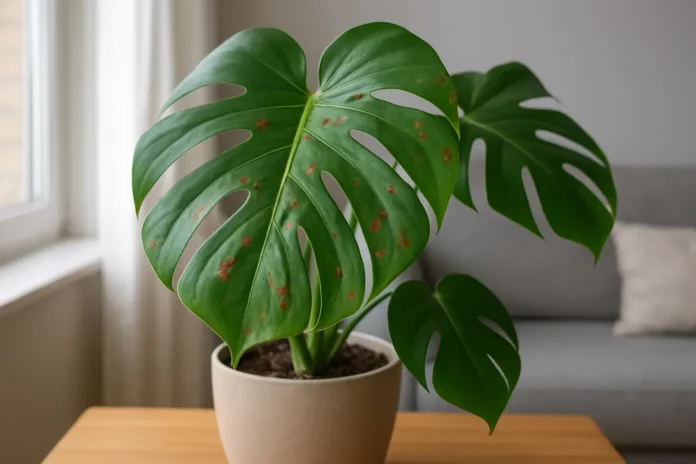
A Monstera can develop red spots from watering stress, physical leaf damage, pests, or fungal and bacterial leaf problems. The exact cause depends on whether the spots look dry, raised, water-soaked, scattered, or surrounded by yellowing tissue.
Seeing Monstera leaves develop red spots can be unsettling, especially if the plant otherwise looks healthy. In many cases, these spots are a sign that the leaf tissue has been stressed or injured rather than proof that the whole plant is failing.
Red or rust-colored spotting can show up for a few different reasons, including inconsistent watering, edema, sun stress, pest feeding, fungal disease, or simple bruising from handling. The color, size, and texture of the spots matter a lot, because dry speckles point to different problems than soft or water-soaked patches.
The good news is that most causes are manageable once you match the symptom to the right issue. If you look closely at where the spots appear, how fast they spread, and whether your Monstera has other symptoms like yellowing, curling, mushy stems, or pests, you can usually narrow it down quickly.
What Red Spots on Monstera Usually Mean
Red spots are not a single diagnosis. On a Monstera, they are usually areas where leaf cells have been damaged by moisture imbalance, pathogens, pests, intense light, or physical injury. The plant responds by forming discolored tissue that may look red, reddish-brown, rust-colored, or maroon.
A few small spots on an older leaf are often less serious than fast-spreading spotting on new growth. If the spots stay dry, limited, and cosmetic, the issue may be minor. If they enlarge, merge together, turn black, develop yellow halos, or appear alongside limp stems and wet soil, the problem is more urgent.
- Dry, rusty speckles often point to edema, mild sun stress, or older physical damage.
- Raised or rough spots can be linked to pest activity or scarred tissue.
- Water-soaked red or brown patches are more concerning for bacterial or fungal leaf spot.
- Spots with yellow halos often suggest a disease issue rather than simple bruising.
- Spots concentrated on one side may come from sun exposure, cold draft damage, or rubbing against a surface.
Common Causes of Red Spots on Monstera Leaves
Overwatering and Edema
One of the most common reasons for red or rust-colored spotting is watering imbalance. When roots take up water faster than the leaves can release it, pressure builds inside leaf cells. Some cells burst, leaving tiny corky or reddish-brown spots, a condition commonly called edema. This is more likely when the potting mix stays too wet, drainage is poor, or humidity is high while light is low.
Edema spots tend to be small, dry, and scab-like rather than soft. They usually do not wipe off and often appear after a watering pattern changes. The plant may otherwise look fairly normal, although yellowing or drooping can show up if root stress continues.
Underwatering and Dry Stress
A badly dried-out Monstera can also develop spotting, especially if leaf tissue repeatedly dehydrates and rehydrates. In this case, red-brown flecks may appear near edges or thinner parts of the leaf. You may also notice crispy margins, curling, drooping, or a plant that perks up dramatically after watering.
Underwatering alone is less likely to create neat, circular red spots than overwatering or disease, but it can make the plant vulnerable to secondary issues. Stressed leaves are more easily damaged by sun, pests, and opportunistic pathogens.
Fungal Leaf Spot
Fungal leaf spot often begins as small reddish, brown, or dark spots that slowly enlarge. Some develop tan centers with darker borders. If leaves stay wet for long periods or air circulation is poor, fungi spread more easily. Splashing water, overcrowded houseplants, and repeatedly wet foliage all increase the risk.
Unlike edema, fungal spots may expand over time, merge together, or show a more defined border. In severe cases, affected leaves yellow and drop. Fungal issues usually start on stressed plants, so watering and airflow often play a role even when a pathogen is involved.
Bacterial Leaf Spot
Bacterial problems can create red-brown or dark lesions that look wet, soft, or translucent at first. They may be surrounded by a yellow halo and can spread surprisingly fast in warm, humid conditions. If a spot seems greasy or water-soaked instead of dry and corky, bacterial leaf spot should be considered.
This cause is more serious because bacteria can move quickly through damaged leaf tissue. It is also more common when leaves are misted heavily, splashed often, or kept in stagnant air.
Pest Feeding Damage
Spider mites, thrips, scale, and other sap-feeding pests can leave behind stippling, rusty spots, or scarred patches that appear reddish from a distance. Thrips are especially known for causing silvery or bronzed scars with tiny dark specks of waste nearby. Spider mites often cause fine stippling and may leave faint webbing under leaves.
Pest damage usually comes with other clues, such as distorted new growth, fading leaf color, sticky residue, visible insects, or speckling concentrated along veins and undersides.
Sunburn and Heat Stress
Monsteras like bright indirect light, but harsh direct afternoon sun can scorch the leaves. Early sun damage may look red-bronze before turning tan or brown. This is especially common when a plant is moved suddenly from a dim room to a sunny window without an adjustment period.
Sunburn usually shows up on the side facing the window and often appears as larger blotches rather than tiny, evenly scattered spots. The tissue becomes dry and papery as it ages.
Cold Damage or Sudden Temperature Swings
Cold drafts from windows, air conditioners, and winter doors can injure tropical foliage. Damaged cells may first look reddish or water-soaked, then turn brown or black. If the spotting appeared after a cold night or after leaves touched a chilly windowpane, temperature stress is a likely culprit.
Physical Bruising and Handling Damage
Monstera leaves bruise more easily than many people expect. Bumping a leaf, folding it during repotting, rubbing it against a stake, or letting a pet scratch it can leave red or rust-colored marks. These spots do not spread and usually stay limited to the injured area.
Nutrient Imbalance and Root Stress
While nutrient issues more often cause yellowing than red spotting, root stress from compacted soil, salt buildup, or poor fertilizing habits can weaken the plant enough to show scattered discoloration. If the potting mix is old, crusty, or dries unevenly, the roots may be struggling, which makes other spot-causing problems more likely.
How to Tell Which Cause Is Most Likely
The appearance of the spots gives the strongest clue. Look closely at texture, placement, and speed of change. A magnifying glass and good natural light help a lot.
- If spots are tiny, dry, and corky, especially after frequent watering, edema is likely.
- If spots are soft, wet-looking, or ringed in yellow, suspect bacterial or fungal leaf spot.
- If the spotting is paired with silvery scarring, webbing, or tiny insects, pests are more likely.
- If the problem is mostly on the window-facing side, sunburn or heat stress fits better.
- If spots appeared after a cold draft or moving day, temperature shock or bruising may be the cause.
- If only older leaves are affected and the spots stay unchanged, the issue may be past stress rather than an active problem.
Check the Soil and Roots
If the pot feels heavy for days after watering, the mix may be staying too wet. If the soil pulls away from the pot and dries bone-hard, underwatering may be part of the problem. When spotting comes with yellow leaves, drooping, or a musty smell, gently inspect the roots. Healthy roots are firm and pale. Rotting roots are dark, mushy, or foul-smelling.
Inspect the Undersides of Leaves
Many pests hide underneath leaves or along the leaf midrib. Tap a leaf over white paper to look for tiny moving specks. Thrips, mites, and scale can all create reddish or rust-like leaf damage before a homeowner notices the insects themselves.
Consider Recent Changes
A new sunny window, a recent repot, missed waterings, a cold shipment, or a houseplant brought home from the store can all explain new spotting. Timing matters. If spots appeared soon after one change, that event may be the trigger.
What to Do About Red Spots on Monstera
Adjust Watering Habits
Water only when the top 2 inches of the potting mix feel dry in most indoor conditions. Then water thoroughly until excess drains out. Do not let the pot sit in a saucer full of water. This reduces the chance of edema, root stress, and disease spread.
If your Monstera dries out too fast, do not compensate with frequent shallow sips. Deep watering followed by an appropriate drying period is healthier than keeping the mix constantly damp.
Improve Drainage and Soil Structure
Monsteras prefer an airy mix that drains well but still holds some moisture. A chunky houseplant mix with bark, perlite, and peat or coco coir helps prevent soggy roots. If the current mix stays wet for too long, repotting into fresher, better-draining soil can stop recurring leaf spotting.
Increase Airflow Without Blasting the Plant
Good air circulation helps leaves dry faster and lowers disease pressure. Move the plant out of crowded corners, avoid pressing leaves against curtains or walls, and use gentle room airflow if the area is stagnant. Avoid placing the Monstera directly in strong heating or cooling vents.
Remove Badly Affected Leaves if Disease Is Spreading
If spots are actively enlarging, soft, or obviously diseased, prune the worst leaves with sterilized scissors. This improves airflow and removes a source of infection. Do not remove too much healthy foliage at once, especially on a smaller plant.
Treat Pests Promptly
If you find pests, isolate the plant. Wipe leaves down, especially undersides, and use insecticidal soap or horticultural oil labeled for indoor plants. Repeat treatments as directed, since eggs and hidden insects often survive the first round.
Reduce Direct Sun Exposure
Move a scorched Monstera a little farther from hot afternoon sun or filter the light with a sheer curtain. Bright indirect light is ideal. Leaves already damaged will not turn green again, but new growth should emerge clean if the lighting is corrected.
Avoid Wetting the Foliage Unnecessarily
Misting is not a reliable humidity solution and can encourage leaf spot problems if leaves stay damp. If you want higher humidity, use a humidifier or group plants together instead of repeatedly wetting the foliage.
Use Fungicides or Bactericides Cautiously
For persistent fungal leaf spot, a houseplant-safe fungicide may help after infected tissue is removed and care issues are corrected. Bacterial problems are harder to reverse, so sanitation, removing affected leaves, and keeping foliage dry matter most. Always follow the product label, especially indoors.
When Red Spots Are Serious
Not every spot is an emergency, but some patterns mean the plant needs fast attention. If the red spots are increasing week by week, spreading to multiple leaves, or accompanied by yellow halos, wilting, stem softness, or a sour soil smell, the issue is probably more than cosmetic.
- Spots that turn black, mushy, or water-soaked
- Rapid spread to new leaves and stems
- Leaf spotting paired with root rot symptoms
- Visible pests on multiple parts of the plant
- Large patches after sudden intense sun or cold exposure
- A Monstera that is both spotting and dropping leaves quickly
In those cases, waiting for the plant to recover on its own usually makes the problem worse. Fast action is especially important for bacterial leaf issues and root problems, because both can move beyond cosmetic damage.
Can Damaged Leaves Recover?
The red spots themselves usually do not disappear. Once leaf tissue is scarred, burned, or infected, that area stays damaged. What you are looking for is stability, meaning the spots stop spreading and new leaves emerge healthy.
If a leaf is mostly green and still photosynthesizing, you can leave it in place. If it is heavily spotted, yellowing, or dragging down the look of the plant, you can remove it. Focus more on the quality of new growth than on restoring old damage.
How to Prevent Red Spots From Coming Back
Prevention comes down to steady care. Monsteras are forgiving, but they respond best when light, moisture, and airflow stay consistent.
- Use a pot with drainage holes and an airy indoor plant mix.
- Water thoroughly, then wait until the top layer dries before watering again.
- Give the plant bright indirect light instead of harsh direct afternoon sun.
- Keep leaves clean and inspect them often for pests.
- Avoid crowding the plant where air stays still and leaves remain damp.
- Protect the plant from cold drafts, hot vents, and sudden temperature swings.
- Quarantine new houseplants before placing them near your Monstera.
- Flush the soil occasionally if fertilizer salts build up on the surface.
A healthy Monstera with stable roots and clean leaves is much less likely to develop unexplained spotting. Most recurring cases trace back to a care pattern that keeps stressing the plant in the same way.
FAQ
Are Red Spots on Monstera Always a Disease?
No. Red spots can come from edema, sun stress, bruising, or pest damage as well as fungal or bacterial issues. The texture and spread of the spots help separate harmless scarring from active disease.
Should I Cut Off Monstera Leaves with Red Spots?
Only remove leaves if the spots are spreading, the leaf is badly damaged, or you suspect disease. If the spots are small and stable, the leaf can still help the plant.
Can Overwatering Really Cause Red Spots?
Yes. Overwatering can lead to edema and root stress, both of which may show up as red, rust-colored, or brown spotting on leaves. It also raises the risk of fungal and bacterial problems.
Do Red Spots on Monstera Go Away on Their Own?
Existing spots usually stay on the leaf because that tissue is already damaged. What matters is whether the spotting stops spreading and whether new leaves come in healthy.
What Pests Cause Rusty or Red Spotting on Monstera?
Thrips, spider mites, and sometimes scale can create rusty, red, or bronzed damage. Check the undersides of leaves, new growth, and along the main veins for insects, webbing, or black specks.
Is Misting My Monstera Causing the Spots?
It can contribute if the leaves stay wet for long periods, especially in low airflow. Repeated moisture on foliage can encourage leaf spot diseases more than it helps humidity.
Can Too Much Sun Make Monstera Leaves Look Red?
Yes. Early sunburn can look reddish or bronzed before the tissue turns tan or brown. This usually happens on the side of the plant facing strong direct sun.
Need the right fix fast? Read our Monstera care and troubleshooting guides to compare watering tools, pest treatments, and potting mixes that help stop leaf spotting before it spreads.
