

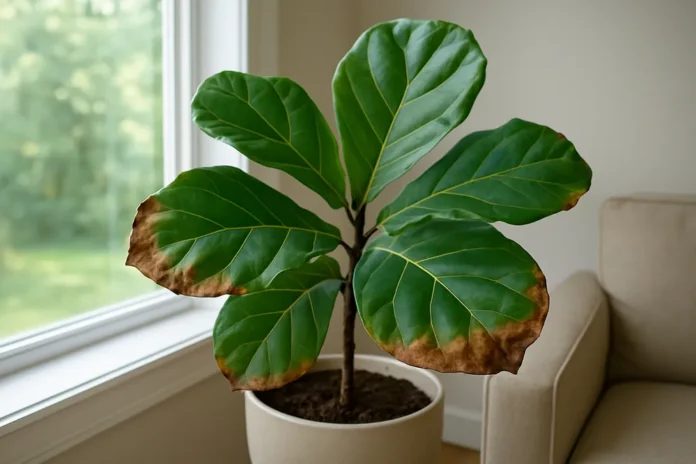
Fiddle leaf fig leaf tips usually turn brown because the plant is not taking up moisture evenly, often from dry air, inconsistent watering, or root stress. Brown tips can also come from fertilizer salt buildup, poor water quality, or damage from heat and sun.
If your fiddle leaf fig has leaf tips developing brown tips, the plant is usually reacting to uneven moisture rather than a disease spreading through the whole leaf. Tip browning often starts when the roots cannot supply water consistently enough to keep the outermost leaf tissue healthy.
That can happen because of underwatering, overwatering that damages roots, low humidity, fertilizer salts, or hot drafts from vents and windows. The good news is that brown tips are one of the more common fiddle leaf fig problems, and in many cases the plant can recover well once the underlying stress is corrected.
The key is to read the pattern instead of focusing only on the color change. Crisp, dry tips suggest one set of causes, while dark, soft, or expanding browning points to another, and that difference helps narrow down what your plant is dealing with.
What Brown Leaf Tips Usually Mean
On a fiddle leaf fig, the tip of the leaf is often the first place to show stress because it is farthest from the water supply moving up from the roots. When moisture delivery becomes inconsistent, the tender tissue at the tip dries out and turns tan to brown. This is why tip burn is so often linked to watering habits, humidity, and root health.
Brown tips are not always a sign that the whole plant is in immediate danger. If the rest of the leaf looks green and firm, the issue is often mild to moderate environmental stress. If the browning keeps spreading inward, multiple leaves are affected, or the leaves also droop, yellow, or develop black spots, then the plant may be under more serious stress.
- Crispy, light brown tips usually suggest dry conditions, underwatering, or salt buildup.
- Dark brown, soft tips can point to root stress from overwatering.
- Brown tips with curling edges often happen when the plant loses water faster than it can replace it.
- Brown tips on newer leaves may indicate low humidity, root trouble, or a recent environmental shock.
Inconsistent Watering Is the Most Common Cause
Why Irregular Watering Damages Leaf Tips
Fiddle leaf figs prefer soil that dries slightly between waterings but does not stay bone dry for long periods. When the soil swings from very dry to very wet, the roots cannot maintain a steady flow of moisture to the leaves. The tips dry out first, leaving a brown, papery edge.
Many indoor gardeners accidentally create this cycle by waiting too long, then soaking the pot heavily, then waiting again until the plant is stressed. Even if the plant eventually gets enough total water over time, those repeated ups and downs can still produce brown tips.
Signs Watering Inconsistency Is the Issue
- Tips are dry and brittle rather than mushy.
- Lower leaves may droop before they brown.
- The potting mix pulls away from the sides of the pot.
- Browning worsens after periods when you forgot to water.
- New growth looks smaller than older growth.
A consistent routine matters more than watering on a fixed calendar. In a bright room during summer, your plant may need water much faster than it will in winter. Pot size, light levels, and indoor temperatures all change how quickly the soil dries.
Low Humidity Can Dry Out the Tips
Fiddle leaf figs tolerate typical indoor conditions better than many tropical plants, but very dry air can still cause tip browning, especially in heated or air-conditioned homes. When humidity is low, the leaves lose moisture faster through transpiration. If the roots cannot keep up, the tips and edges dry first.
This tends to be worse in winter, when indoor heating lowers humidity sharply. Plants placed near forced-air vents, radiators, fireplaces, or drafty windows often show damage sooner than those kept in a stable room.
- Browning appears on leaf tips and margins at the same time.
- Leaf edges may curl slightly inward.
- Damage is often worse on the side facing a vent or sunny window.
- The soil may seem adequately moist, yet the tips still crisp.
Low humidity alone may not cause severe decline, but it often combines with watering inconsistency and turns a minor issue into a visible one. A plant that is only slightly stressed in humid conditions can show obvious browning in a dry room.
Overwatering and Root Stress Can Also Cause Brown Tips
Why Too Much Water Can Look Like Too Little
It seems counterintuitive, but roots sitting in waterlogged soil may not be able to absorb oxygen and function properly. Once roots begin to weaken, the plant struggles to move water to the leaves. The result can still be brown tips, even though the pot is wet.
This is common when a fiddle leaf fig sits in a decorative cachepot with standing water, grows in dense soil that drains poorly, or remains in a pot that is too large for the root ball. Persistently wet conditions encourage root damage and sometimes root rot.
Clues That Overwatering May Be Involved
- Brown tips are accompanied by yellowing leaves.
- Damaged areas feel darker or softer before drying.
- Leaves drop while the soil still feels damp.
- The potting mix smells sour or stays wet for many days.
- Growth slows even during the active growing season.
If overwatering continues, browning may move beyond the tips and into larger blotches. Catching root stress early gives the plant a much better chance of returning to normal growth.
Fertilizer Salts and Hard Water Can Burn Leaf Tips
Brown tips are often a form of leaf burn caused by a buildup of dissolved salts in the potting mix. These salts may come from fertilizer, softened water, or mineral-heavy tap water. Over time they accumulate around the roots and make it harder for the plant to take up moisture normally.
This problem is especially likely if you fertilize frequently, use more than the label recommends, or rarely flush the pot thoroughly. The plant may be getting enough water in theory, but salts around the roots can create a drought-like effect.
- Tips look dry and scorched soon after feeding.
- A white crust forms on the soil surface or pot rim.
- Older leaves develop browning first, but newer leaves may follow.
- The plant is in the same soil for a long time without repotting.
Municipal tap water can also contribute, depending on local mineral levels and water treatment. Fiddle leaf figs are not the fussiest houseplants, but some specimens show clearer tip burn when exposed to repeated mineral buildup.
Light, Heat, and Placement Problems
A fiddle leaf fig needs bright light, but intense direct sun, especially after a sudden move, can scorch the tips and edges. At the same time, weak light can make watering harder to manage because the soil stays wet longer and the plant uses less moisture. Both extremes can end up producing brown tips through different pathways.
Heat sources matter too. Hot, dry air from vents, radiators, sunny glass, and appliances can dehydrate leaf tissue quickly. If only the leaves closest to the heat source are browning, placement is a strong suspect.
- Sun scorch often appears on the brightest, most exposed leaves.
- Heat damage may be localized to one side of the plant.
- Low-light stress often comes with slow growth and persistently damp soil.
- Recent moves to a new room or window can trigger a temporary reaction.
Pot Size, Soil, and Root Bound Conditions
The container and soil mix strongly influence leaf tip health. A root-bound fiddle leaf fig dries out quickly and can show brown tips because the roots use available water faster than the soil can hold it. On the other hand, a pot that is much too large can stay wet too long and promote root stress.
Dense, compacted soil causes similar trouble. If water runs straight through without soaking in, the root ball may be too dry. If the mix stays heavy and soggy, roots may suffocate. In both cases, the leaves can respond with browning at the tips.
Container Clues to Watch For
- Roots circling the bottom or poking out of drainage holes
- Soil drying out extremely fast after watering
- Water beading off the surface instead of soaking in
- A pot with little or no drainage
- Compacted mix that has not been refreshed in years
How to Tell Which Cause Is Most Likely
The best diagnosis comes from combining leaf appearance with soil conditions and recent care history. Brown tips alone do not tell the full story, but the pattern usually narrows the cause quickly.
Most Likely Causes by Symptom Pattern
- Dry, crisp tips and edges with drooping often point to underwatering or dry air.
- Brown tips with yellow leaves and damp soil suggest overwatering or root damage.
- Scorched-looking tips after feeding often indicate fertilizer salt burn.
- Damage on one side near a vent or sunny window suggests heat, drafts, or sun stress.
- Chronic browning despite regular care can signal root crowding, compacted soil, or poor water quality.
Recent changes matter. If the problem appeared after repotting, moving the plant, starting fertilizer, turning on indoor heat, or going out of town, that timing often gives away the culprit.
How to Fix Brown Tips on a Fiddle Leaf Fig
Stabilize Moisture First
Aim for evenly moist but not soggy soil. Water thoroughly when the upper portion of the mix has dried, then let excess water drain completely. Avoid frequent shallow sips, which leave parts of the root ball dry and encourage uneven uptake.
Improve the Environment
Move the plant away from heating vents, strong drafts, and harsh midday sun if those are contributing factors. A room with bright, indirect light and more stable temperatures helps the leaves maintain moisture balance. If your home air is very dry, raising humidity modestly can reduce further tip damage.
Reduce Salt Buildup
If fertilizer or hard water is the issue, pause feeding for a while and flush the soil thoroughly with clean water to wash out excess salts. Resume fertilizer only during active growth and at a moderate rate. In areas with very hard water, filtered or rainwater may help prevent recurring tip burn.
Check the Roots and Potting Mix
If the soil stays wet too long, smells stale, or the plant declines despite careful watering, inspect for root stress. A fresh, chunky indoor potting mix and a pot with drainage can make a major difference. If roots are tightly packed, move up only one pot size to avoid creating a large wet zone around a small root system.
Trim Only for Appearance
Brown tissue will not turn green again. You can leave it alone or trim the dead tip with clean scissors, following the leaf's natural shape. Avoid removing too much healthy green tissue, since the plant still uses that leaf for photosynthesis.
How to Prevent Brown Tips From Coming Back
Prevention comes down to consistency. Fiddle leaf figs respond best when light, watering, temperature, and feeding stay fairly stable from week to week. Sudden swings are what most often push the plant into visible stress.
- Keep the plant in bright light so it can use water predictably.
- Water deeply and let the pot drain fully.
- Do not let the soil stay extremely dry for long stretches.
- Use fertilizer lightly during spring and summer rather than year-round heavy feeding.
- Refresh old potting mix before it becomes compacted and hydrophobic.
- Rotate the plant occasionally for even exposure, but avoid constant relocation.
- Protect it from vents, radiators, and cold window drafts.
Even in ideal conditions, a plant may keep a few imperfect leaves from earlier stress. What matters most is whether new growth emerges healthy and the browning stops spreading.
FAQ
Should I Cut the Brown Tips Off My Fiddle Leaf Fig?
You can trim them if you dislike the appearance, but it is cosmetic only. Use clean scissors and remove just the dead brown part without cutting deeply into healthy green tissue.
Can Brown Tips Turn Green Again?
No. Once leaf tissue turns brown, it stays damaged. The goal is to stop new browning and keep future leaves healthy.
How Often Should I Water a Fiddle Leaf Fig with Brown Tips?
There is no perfect fixed schedule because watering depends on light, season, pot size, and indoor temperature. Water when the upper part of the soil has dried, then soak thoroughly and let excess drain away.
Do Brown Tips Mean My Fiddle Leaf Fig Has Root Rot?
Not always. Brown tips can come from dryness, low humidity, or salt buildup, but if they appear with yellow leaves, soft spots, and constantly wet soil, root rot becomes more likely.
Is Misting Enough to Stop Brown Leaf Tips?
Usually not. Misting gives only brief humidity and does little to correct underlying watering or root problems. Stable moisture and better placement are usually more effective.
Can Tap Water Cause Brown Tips on Fiddle Leaf Figs?
Yes, in some homes. Hard water and mineral-heavy water can contribute to salt buildup over time, especially if the soil is never flushed and the plant is fertilized regularly.
Why Are Only the New Leaves Getting Brown Tips?
New leaves are tender and react quickly to low humidity, uneven watering, and root stress. If fresh growth is affected first, look closely at recent environmental changes and overall root health.
Need a healthier indoor tree fast? Read our guide to the best fiddle leaf fig soils, fertilizers, and watering tools so you can fix browning and keep new growth clean and glossy.
