

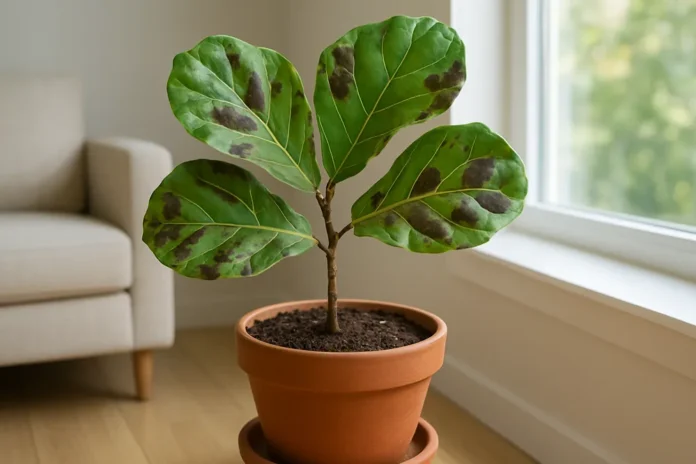
A fiddle leaf fig usually turns black because of overwatering, root rot, bacterial or fungal leaf problems, or cold damage. Black areas can also appear after severe underwatering, sun stress, or physical injury.
When a fiddle leaf fig starts turning black, it usually means the plant is under stress rather than simply aging. Black spots, dark patches, or entire leaves going black can all point to a few common problems, with overwatering and root damage at the top of the list.
The tricky part is that black leaves do not always look the same. Some start as soft, dark blotches near the center of the leaf, while others appear as crispy black edges, water-soaked spots, or blackening that begins after a sudden cold draft. The pattern tells you a lot about what is going wrong.
The good news is that many fiddle leaf fig problems can be stopped if you act early. Once you match the blackening pattern with the likely cause, you can adjust care, protect healthy roots, and help new growth come in clean and strong.
What Black Leaves on a Fiddle Leaf Fig Usually Mean
Black tissue on a fiddle leaf fig is a symptom, not the root problem itself. In most cases, blackening shows that leaf cells have died from excess moisture, disease, temperature shock, dehydration, or injury. The key is to notice whether the black areas are soft or dry, spreading or stable, and old or newly forming.
- Soft black or dark brown patches often suggest overwatering, edema, bacterial issues, or root rot.
- Dry black edges or tips more often point to underwatering, low humidity combined with drought stress, or fertilizer burn.
- Round black spots with yellow halos can indicate fungal or bacterial leaf spot.
- Sudden blackening after a chilly night or draft often means cold injury.
- Blackened areas only on sun-exposed leaves can happen after scorch, especially if the plant was moved into direct sun too quickly.
Because fiddle leaf figs are sensitive to inconsistent conditions, several causes can happen at once. A plant may be overwatered in poor-draining soil, then develop root rot, then show black spots that look like a disease problem. That is why the full growing setup matters just as much as the visible leaf damage.
Overwatering and Root Rot Are the Most Common Causes
Why Soggy Soil Turns Leaves Black
Fiddle leaf figs need evenly moist soil, but they do not tolerate roots that stay wet for long periods. When the potting mix dries too slowly, roots lose oxygen and begin to weaken. Damaged roots cannot take up water properly, even though the soil is wet, and leaves start developing dark brown to black blotches.
If the root damage continues, opportunistic fungi and bacteria can move in, leading to root rot. At that stage, leaves may blacken quickly, drop in large numbers, and feel soft rather than crisp. New growth can also emerge smaller than normal or fail entirely.
Signs Overwatering Is the Culprit
- Soil stays damp for a week or more after watering
- Leaves develop large dark spots near the middle or base
- Lower leaves yellow before turning brown or black
- Pot feels heavy all the time
- A sour or swampy smell comes from the pot
- Stems near the base feel soft or weak
How to Fix It
- Pause watering until the top few inches of soil dry out.
- Empty any saucer or cachepot so the roots never sit in standing water.
- Check that the container has drainage holes.
- If the soil is dense, compacted, or smells bad, unpot the plant and inspect the roots.
- Trim away black, mushy, or foul-smelling roots with clean pruners.
- Repot into a chunky, fast-draining indoor plant mix with bark, perlite, or pumice added.
- Water thoroughly after repotting, then let the soil partially dry before watering again.
Do not keep adding small splashes of water on a schedule. Fiddle leaf figs do better with a deep watering followed by a drying period than with frequent light watering that keeps the root zone constantly damp.
Underwatering Can Also Cause Blackened Edges and Patches
Although overwatering is more common, severe dryness can also make a fiddle leaf fig look blackened. When the plant goes too long between waterings, leaf edges and tips may dry out, turn brown, then darken to nearly black. This damage tends to feel crispy or papery rather than soft.
Underwatered plants often droop, curl, and shed older leaves first. The potting mix may pull away from the sides of the pot, making it hard for water to soak in evenly. In dry indoor air, this stress can worsen quickly, especially near heat vents or sunny windows.
- Dry, brittle blackening usually suggests drought stress more than rot.
- Leaf margins and tips are more commonly affected than the center of the leaf.
- The plant may perk up after watering, though damaged tissue will not turn green again.
To correct underwatering, soak the root ball thoroughly until water runs from the drainage holes. If the soil has become hydrophobic and water rushes straight through, bottom watering for 20 to 30 minutes can help rehydrate the mix. After that, water when the top 2 to 3 inches feel dry instead of waiting until the entire pot is bone dry.
Cold Damage Can Make Leaves Turn Dark Very Fast
Fiddle leaf figs are tropical plants and react badly to cold drafts, chilly window glass, air conditioning blasts, and sudden moves outdoors. Exposure to low temperatures can rupture leaf cells, creating dark brown to black areas that seem to appear overnight.
Cold injury often shows up after the plant touches a cold window, sits near an exterior door in winter, or spends time in temperatures below about 55 degrees Fahrenheit. The damaged areas can look water-soaked at first, then darken and collapse.
- Damage appears suddenly after a temperature drop
- Leaves closest to a window, vent, or door are worst
- Blackened tissue may be patchy and irregular
- New growth can stall after the event
Move the plant away from drafts and keep it in a stable room between roughly 60 and 85 degrees Fahrenheit. Avoid letting leaves touch cold glass. Once damaged by cold, affected tissue will not recover, but healthy new leaves should emerge if the roots and stem remain sound.
Leaf Spot Diseases May Be Behind Black Spots
Fungal and Bacterial Spotting
Fiddle leaf figs can develop leaf spot diseases when moisture lingers on foliage, air circulation is poor, or the plant is already stressed. These infections often start as small brown or black spots that enlarge over time. Some spots develop yellow halos, while others stay dark and sharply defined.
Bacterial leaf spot may look especially dark, almost inky, and can spread quickly in warm, wet conditions. Fungal spotting tends to be slower but still weakens the plant if many leaves become affected.
How Disease-related Spots Differ From Watering Damage
- Spots are often smaller and more distinct rather than broad dark blotches
- Yellow halos may form around the spots
- Damage may appear on multiple leaves at once, including newer leaves
- Wet foliage and overcrowded conditions usually make it worse
What to Do
- Remove heavily spotted leaves with sterilized pruners.
- Avoid misting the foliage.
- Water the soil directly rather than splashing leaves.
- Improve airflow around the plant.
- Disinfect cutting tools between cuts.
- If the problem keeps spreading, consider a houseplant-safe copper-based treatment or biofungicide labeled for ornamental plants.
Even with treatment, sanitation and environmental correction matter most. Fungicides and bactericides help slow spread, but they do not reverse old spots or solve a soggy root zone.
Sunburn, Fertilizer Burn, and Chemical Injury Are Possible
A fiddle leaf fig likes bright light, but a plant that has been growing in lower light can scorch if moved directly into hot afternoon sun. Sunburn usually creates bleached, tan, brown, or blackened patches on the side facing the window. The tissue often feels dry and thin.
Fertilizer burn can also darken leaf edges and tips, especially if too much plant food is applied to dry soil. Excess salts pull moisture away from roots and can cause a mix of browning, blackening, and crispy margins. Chemical sensitivity is sometimes triggered by leaf shine products or overly harsh cleaners used on the foliage.
- Sunburn usually affects exposed upper or outer leaves
- Fertilizer burn often shows as dark tips and margins
- Salt buildup may leave a white crust on the soil surface or pot rim
- Chemical injury appears soon after spraying or wiping leaves with products
Shift the plant into bright, indirect light or filtered morning sun while it recovers. Flush the soil thoroughly if you suspect fertilizer buildup, and only fertilize during active growth at a modest rate. Clean leaves with plain water or a soft damp cloth rather than commercial shine sprays.
Pests and Physical Damage Can Create Dark Areas Too
Pests are not the most common reason for black fiddle leaf fig leaves, but they can contribute. Sap-sucking insects like spider mites, thrips, scale, and mealybugs weaken foliage, cause stippling or scarring, and leave plants vulnerable to secondary issues. Heavy infestations may cause damaged areas to darken over time.
Some dark residue on leaves is not plant tissue turning black at all, but sooty mold growing on sticky honeydew left by scale or mealybugs. In that case, the black coating can often be rubbed off, unlike dead leaf tissue.
- Check leaf undersides and stems for insects, webbing, or cottony masses
- Look for sticky residue that suggests honeydew-producing pests
- Inspect for bruising if leaves were bent, scraped, or pressed during moving
Treat pests with insecticidal soap, neem, or horticultural oil labeled for indoor ornamentals, making sure to cover both leaf surfaces. Isolate the plant from others until the infestation is controlled. If the black mark came from a bruise or crease, it usually stays localized and does not spread.
How to Tell Which Cause Is Most Likely in Your Plant
Pattern recognition saves time and prevents overcorrecting in the wrong direction. Before you change your care routine, look at where the blackening started, what the soil feels like, and whether the problem is spreading.
- If the soil is wet and spots are soft, think overwatering or root issues.
- If the edges are crisp and the soil is bone dry, think underwatering or salt stress.
- If spots are round with halos, think leaf spot disease.
- If damage appeared right after a cold snap or draft, think temperature injury.
- If only exposed leaves are affected after a move to brighter sun, think scorch.
- If black coating wipes off, think sooty mold from pests rather than tissue death.
Also consider timing. A plant that blackened right after repotting, moving, fertilizing, or a weather shift often gives away the cause. Symptoms that slowly worsen over weeks usually point to root-zone or disease problems rather than a one-time event.
How to Help a Fiddle Leaf Fig Recover
Recovery depends on stopping the stress and protecting new growth. Blackened leaf tissue will not turn green again, so the goal is to stabilize the plant, prevent further damage, and encourage healthy leaves.
- Place the plant in bright, indirect light.
- Keep temperatures steady and avoid drafts.
- Water based on soil dryness rather than a fixed calendar.
- Use a pot with drainage and a loose, airy soil mix.
- Prune off severely damaged leaves if they are mostly black or collapsing.
- Hold off on heavy fertilizing until the plant resumes active growth.
- Monitor new leaves closely, since they show whether conditions have truly improved.
If the plant has lost many leaves but the trunk is still firm and roots are healthy, it can still bounce back. Fiddle leaf figs often recover slowly, so expect progress over weeks to months rather than days.
How to Prevent Black Leaves in the Future
Prevention comes down to consistency. Fiddle leaf figs dislike sudden swings in moisture, light, and temperature, so steady care is the best defense against black spotting and leaf drop.
- Water only when the upper part of the soil has dried appropriately
- Use a chunky indoor plant mix that drains well
- Never let the pot sit in collected water
- Keep the plant out of cold drafts and away from heater blasts
- Acclimate gradually to stronger sun
- Avoid wetting leaves late in the day
- Inspect regularly for pests and remove damaged foliage promptly
- Rotate the plant occasionally for balanced growth without making frequent major moves
One of the best habits is simply checking the root zone before watering. A moisture meter can help, but your finger, the weight of the pot, and how quickly the mix dries are often just as useful once you learn your plant's rhythm.
FAQ
Should I Cut Off Black Leaves From My Fiddle Leaf Fig?
If a leaf is mostly black, mushy, or badly spotted, remove it with clean pruners. If only a small area is damaged, you can leave the leaf in place until the plant has more healthy growth.
Can Black Leaves Turn Green Again?
No. Blackened leaf tissue is dead and will not recover. Focus on preventing new damage and encouraging healthy new leaves.
How Often Should I Water a Fiddle Leaf Fig to Prevent Black Spots?
Water when the top 2 to 3 inches of soil feel dry, not by a fixed weekly schedule. Frequency changes with pot size, light, season, and indoor temperature.
What Does Root Rot Smell Like in a Fiddle Leaf Fig?
Root rot often causes a sour, musty, or swampy smell from the potting mix. Healthy soil should smell earthy, not foul.
Are Black Spots From Overwatering Different From Fungal Spots?
Usually yes. Overwatering often causes larger, softer blotches, while fungal or bacterial spots are often smaller, more defined, and may have yellow halos.
Can a Cold Window Make Fiddle Leaf Fig Leaves Turn Black?
Yes. Leaves that touch cold glass or sit in a cold draft can develop dark, water-soaked patches that later turn black.
Should I Repot My Fiddle Leaf Fig if the Leaves Are Turning Black?
Repot only if the soil stays soggy, drains poorly, smells bad, or the roots are damaged. Repotting a plant that is simply dry or cold-stressed may add unnecessary stress.
Need the right fix fast? Read our guide to the best soils, pots, and root-rot treatments for fiddle leaf figs so you can stop black leaves and get healthy growth back sooner.
