

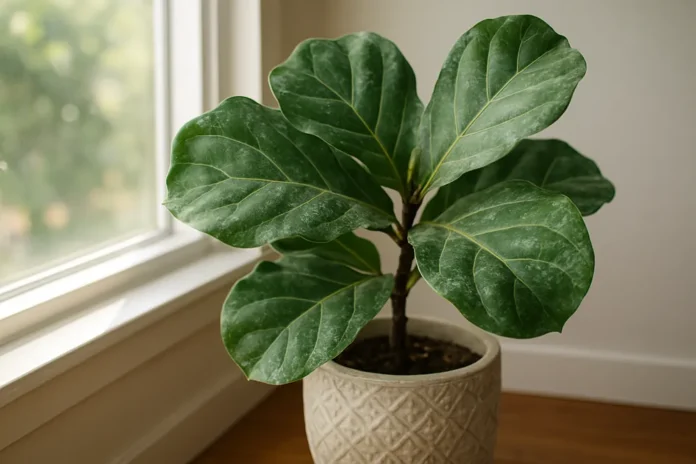
White stuff on fiddle leaf fig leaves is most often mineral residue from tap water, dried sap, dust, or a pest like mealybugs or scale. Less often, it can be a fungal issue such as powdery mildew.
Seeing white stuff on your fiddle leaf fig can be alarming, especially when it shows up across the leaves that usually give this plant its glossy, dramatic look. The good news is that white residue is not always a sign of a serious problem. In many cases, it is simply leftover minerals from water, household dust stuck to sap, or a harmless film that can be cleaned away.
That said, some white spots or fuzzy patches do point to pests or disease. Mealybugs, scale insects, and powdery mildew can all leave pale or chalky material on leaf surfaces. The key is noticing what the white material looks like, where it appears, and whether the plant is also showing other symptoms like sticky leaves, curling, yellowing, or slowed growth.
Once you know the likely cause, treatment is usually straightforward. Below, you will find the most common explanations, how to tell them apart, and what to do to get your fiddle leaf fig looking healthy again.
The Most Common Causes of White Stuff on Fiddle Leaf Fig Leaves
White material on fiddle leaf fig leaves usually falls into one of a few categories: residue, pests, or disease. The appearance gives you the best clue. A flat chalky film often points to mineral buildup. Cottony clumps suggest mealybugs. Tiny hard bumps may be scale. A powder-like coating can indicate powdery mildew.
- Mineral residue from tap water or humidifiers
- Dust mixed with dried sap or natural leaf secretions
- Mealybugs that look like bits of white cotton
- Scale insects with pale waxy coverings
- Powdery mildew that forms a soft white coating
- Hard water splash from misting or overhead watering
- Cleaning product residue left behind after leaf wiping
Before assuming the worst, gently wipe a small area with a damp soft cloth. If the white material comes off cleanly and the leaf underneath looks healthy, you are probably dealing with residue rather than an active infestation or disease.
How to Tell Whether It Is Harmless Residue or a Real Plant Problem
Signs of Harmless Residue
Harmless residue usually looks flat, dry, and evenly spread. It may appear as white dots, rings, streaks, or a thin chalky film. It often shows up after misting, after using tap water to wipe leaves, or when a humidifier sends mineral-rich water into the air.
- Wipes off easily with water
- Does not feel fuzzy or sticky
- Does not move
- Is not clustered at leaf joints or stem crevices
- Leaves stay firm and green
Signs of Pests or Disease
Pests and fungal problems usually create more than just a visible white mark. You may notice sticky honeydew, leaf distortion, yellowing, leaf drop, slowed growth, or a residue that returns quickly after cleaning. White material that looks cottony, fuzzy, raised, or patchy deserves a closer look.
- Cottony clumps around stems or leaf veins
- Tiny insects or shells attached to leaves
- Sticky surfaces beneath the white material
- Powder that spreads across multiple leaves
- Weak new growth or leaves that curl
Mineral Residue and Hard Water Buildup
This is one of the most common explanations for white stuff on indoor fiddle leaf figs. Tap water often contains calcium, magnesium, and other dissolved minerals. When water droplets dry on the leaf surface, they can leave behind white spots or a cloudy film.
Mineral residue is especially common if you mist your plant, wipe leaves with untreated tap water, or run a humidifier nearby. Ultrasonic humidifiers are known for sending fine mineral dust into the air, which later settles on leaves and furniture.
What It Looks Like
- White dots or rings where droplets dried
- A chalky haze on upper leaf surfaces
- Residue that appears on many leaves at once
- A similar white dust on nearby shelves or windowsills
How to Fix It
Wipe leaves with a soft microfiber cloth dampened with distilled water or filtered water. For stubborn mineral buildup, use a very diluted solution of water with a small splash of white vinegar, then follow with plain water so the leaf surface is not left acidic. Avoid harsh shine products that can clog leaf pores and attract more dust.
Dust, Dried Sap, and Natural Residue on Leaves
Fiddle leaf figs have large leaves that collect dust easily. Dust can combine with natural plant sap, guttation droplets, or residues from indoor air to create pale patches that look worse than they are. In dry homes, this buildup can become noticeable fast.
Sometimes minor leaf injury also causes a little sap to dry into a whitish mark. If a leaf was bent, bumped, or rubbed, the affected area may later look chalky or scuffed.
What It Looks Like
- Scattered pale smudges rather than fuzzy colonies
- Dull leaves that otherwise look healthy
- Residue near old scratch marks or bruised areas
- A film that disappears after a gentle cleaning
This kind of white stuff is mostly cosmetic. Regular leaf cleaning improves the plant's appearance and also helps it photosynthesize more efficiently indoors.
Mealybugs and Scale Insects
If the white stuff looks fluffy, cottony, or clustered around the midrib, leaf axils, or stems, pests are a strong possibility. Mealybugs are one of the most common indoor fiddle leaf fig pests. They hide in protected spots and cover themselves with white wax. Scale insects can also appear pale or leave a waxy white coating, though many scale species look tan or brown.
How Mealybugs Look
- Small white cotton-like masses
- Clusters where leaves meet stems
- Sticky honeydew on leaves or nearby surfaces
- Yellowing, stunted growth, or leaf drop over time
How Scale Can Show Up
- Small bumps attached firmly to stems or leaves
- Waxy or crusty white to tan coverings
- Sticky residue from honeydew
- Sooty mold developing on that sticky residue
What to Do
Isolate the plant from other houseplants. Remove visible pests with a cotton swab dipped in rubbing alcohol, then wipe leaves and stems carefully. Follow up with insecticidal soap or neem oil labeled for indoor plants, making sure to cover leaf undersides and stem joints. Repeat treatments as directed, since eggs and hidden insects can survive the first round.
Could It Be Powdery Mildew?
Powdery mildew is less common on indoor fiddle leaf figs than pest issues or mineral residue, but it can happen. This fungal disease creates a soft, powder-like white coating on leaves and sometimes stems. It tends to spread rather than staying in isolated spots.
Poor airflow, crowded plants, high humidity around leaves, and weak light can all make powdery mildew more likely. Unlike mineral residue, powdery mildew may return quickly after wiping and can slowly expand across the leaf surface.
Clues That Point to Powdery Mildew
- A soft white coating that looks like flour
- Patches that spread over days or weeks
- Leaves that may twist, yellow, or weaken
- More severe problems on crowded or poorly ventilated plants
Remove the worst affected leaves if the plant is not heavily stripped by doing so. Improve air circulation and avoid wetting the foliage. Use a houseplant-safe fungicidal treatment if the coating continues to spread.
Other Possible Causes Homeowners Overlook
A few less obvious issues can also leave white material on fiddle leaf fig leaves. These are not always the first suspects, but they are worth considering if the common causes do not fit.
- Humidifier dust: Ultrasonic units can coat leaves with fine white mineral powder.
- Cleaning residue: Soap, leaf shine, or diluted milk remedies can dry into streaks or spots.
- Paint or construction dust: Nearby home projects often leave a pale film on broad leaves.
- Fertilizer splash: Liquid fertilizer that touches foliage can dry into pale marks and sometimes burn tissue.
- Guttation minerals: Some plants exude droplets that dry into residue, though this is less dramatic on fiddle leaf figs than on certain tropicals.
When the source is environmental, you will often notice the same residue pattern on nearby furniture, windows, or other plants.
How to Diagnose the White Stuff Step by Step
A simple inspection usually tells you what you are dealing with. Work in bright natural light so you can see texture and placement clearly.
- Look at the shape of the white material. Flat spots usually mean residue, while fuzzy clumps often mean pests or mildew.
- Check where it appears. Buildup on upper leaf surfaces suggests water spots or dust. Clusters in stem joints suggest mealybugs.
- Touch it gently with a damp cloth. If it wipes away cleanly and does not reveal damage, it is likely residue.
- Inspect leaf undersides and stems. Many pests hide there first.
- Notice whether the leaf feels sticky. Honeydew points to sap-sucking insects like mealybugs or scale.
- Watch whether the white material comes back quickly after cleaning. Fast return can mean pests, mildew, or ongoing mineral deposition.
Best Treatment Based on the Cause
If It Is Mineral Residue or Dust
Clean leaves with distilled or filtered water and a soft cloth. Reduce misting, switch water sources, or move the plant away from an ultrasonic humidifier.
If It Is Mealybugs or Scale
Remove visible pests manually, isolate the plant, and apply insecticidal soap, horticultural oil, or neem oil according to label directions. Repeat as needed and inspect weekly until no new pests appear.
If It Is Powdery Mildew
Prune heavily affected foliage if practical, improve airflow, keep leaves dry, and use a labeled fungicidal product for houseplants. Avoid crowding the plant near others.
If It Is Cleaning or Fertilizer Residue
Rinse or wipe leaves with plain water and stop using the product on foliage. Apply fertilizer to the soil only, not the leaves, unless the product specifically allows foliar use.
How to Prevent White Residue From Coming Back
Prevention is mostly about cleaner watering habits, regular inspection, and a stable indoor environment. Fiddle leaf figs do best when their large leaves stay clean, dry, and well ventilated.
- Wipe leaves every few weeks with a damp microfiber cloth
- Use distilled, rain, or filtered water if your tap water is very hard
- Avoid heavy misting that leaves droplets on leaves
- Keep good airflow around the plant without blasting it with cold drafts
- Inspect stems and leaf joints often for early signs of mealybugs or scale
- Quarantine new houseplants before placing them nearby
- Clean humidifiers regularly and consider using low-mineral water in them
These simple habits prevent both cosmetic buildup and the more serious issues that can hide behind it.
When the White Stuff Means Your Plant Needs Immediate Attention
Some white residue is harmless, but certain warning signs mean the problem is becoming serious. If you see these at the same time, act quickly to protect both the fiddle leaf fig and nearby houseplants.
- The white material is spreading fast
- Leaves are sticky, yellowing, curling, or falling
- You can see insects, cottony masses, or shell-like bumps
- New growth is distorted or weak
- A wiped leaf develops new white patches within days
- Other houseplants nearby start showing similar symptoms
At that point, the issue is probably more than dust or water spots. Fast treatment gives you the best chance of stopping pests or fungal disease before the plant declines.
FAQ
Can I Just Wipe the White Stuff Off My Fiddle Leaf Fig Leaves?
Yes, if it is mineral residue, dust, or dried sap, it will usually wipe off with a soft damp cloth. If it comes back quickly or looks cottony or powdery, the cause may be pests or mildew.
Is White Stuff on Fiddle Leaf Fig Leaves Always a Pest Problem?
No. White marks are often caused by hard water residue, humidifier dust, or ordinary household dust. Pests are more likely when the material is clustered, sticky, or fuzzy.
Do Mealybugs Look Like White Fuzz on Fiddle Leaf Figs?
Yes. Mealybugs often look like tiny bits of white cotton, especially around stems, leaf veins, and where leaves join the stem. They may also leave sticky honeydew behind.
Can Powdery Mildew Grow on Indoor Fiddle Leaf Figs?
It can, although it is less common than residue or mealybugs. Powdery mildew looks like a soft white coating that spreads and is more likely in crowded, humid, low-airflow conditions.
Why Do My Fiddle Leaf Fig Leaves Get White Spots After I Mist Them?
Misting with mineral-rich tap water often leaves white spots as droplets dry. Using distilled or filtered water reduces this kind of residue.
Should I Use Leaf Shine to Make the Residue Go Away?
It is better to avoid leaf shine products. They can leave buildup of their own and may interfere with the natural leaf surface. Plain water and a soft cloth are safer.
Can a Humidifier Cause White Dust on My Fiddle Leaf Fig?
Yes. Ultrasonic humidifiers can release fine mineral dust into the air if filled with hard tap water. That dust often settles on broad leaves and nearby furniture.
Will White Residue Hurt My Fiddle Leaf Fig if I Ignore It?
Harmless residue usually will not cause major damage, but it can block light and make leaves look dull. Pest or fungal causes should not be ignored because they can weaken the plant over time.
Want the right fix fast? See our guide to the best houseplant pest treatments and leaf-cleaning products so you can restore your fiddle leaf fig with confidence.
