

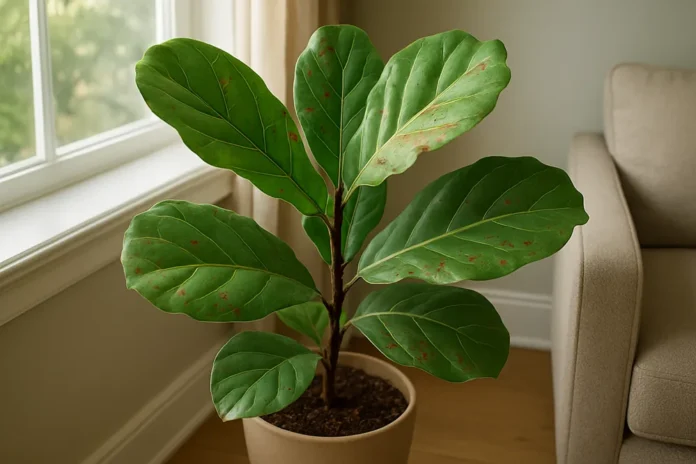
Red spots on a Fiddle Leaf Fig are most often caused by edema from inconsistent watering, especially on newer leaves. They can also come from leaf spot disease, physical injury, or stress that damages leaf tissue and shows up as red spots.
Seeing red spots on your fiddle leaf fig can be alarming, especially when the rest of the plant looks healthy. In many cases, those spots are not a sign that the plant is dying. They are a stress signal, and the exact cause depends on where the spots appear, how large they are, and whether the leaves are also dropping, yellowing, or developing brown edges.
The most common reason for red spotting on fiddle leaf figs is edema, which happens when the plant takes up water faster than the leaves can use it. Disease, root stress, and minor physical damage can also leave reddish or burgundy marks. Once you know what pattern you are looking at, it becomes much easier to decide whether you need to adjust watering, improve airflow, or treat a more serious problem.
What Red Spots Usually Mean On A Fiddle Leaf Fig
Red spots on fiddle leaf fig leaves are usually small areas of damaged tissue. The color can range from rusty red to burgundy or purplish brown. Sometimes the spots stay tiny and never spread. Other times they enlarge, darken, or merge into larger patches.
On this plant, red spots most often show up for one of four reasons: edema caused by moisture imbalance, fungal or bacterial leaf spot, bruising or mechanical damage, or stress related to roots and environment. The good news is that the first cause, edema, is very common and usually manageable with better watering consistency.
- Tiny red pinpricks on new leaves often suggest edema.
- Larger dark spots with yellow halos are more suggestive of leaf spot disease.
- Marks near torn, bent, or rubbed areas may be simple physical damage.
- Spots paired with drooping, yellowing, or root problems can point to deeper watering or drainage issues.
Edema Is The Most Common Cause
How Edema Happens
Edema happens when roots absorb water faster than the plant can move and release it through the leaves. The pressure causes some leaf cells to burst, and the damaged spots show up as red or reddish brown speckles. This is especially common on tender new leaves that are still expanding.
A fiddle leaf fig is more likely to develop edema when watering swings from very dry to very wet, when the potting mix stays soggy, or when low light slows the plant's growth and water use. Cool rooms, heavy soil, and poor drainage can all make the problem worse.
What Edema Looks Like
- Small red, maroon, or rusty dots, often on newer leaves
- Spots that are flat rather than fuzzy or raised
- Damage that does not usually spread from leaf to leaf like an infection
- Leaves that otherwise look fairly firm and healthy
Edema spots will not turn green again, but the plant can outgrow the issue. If new leaves emerge clean after you improve conditions, that is a strong sign edema was the cause.
Leaf Spot Disease Can Also Cause Red Or Dark Reddish Marks
When Disease Is More Likely
Fungal and bacterial leaf spot diseases are less common than edema indoors, but they do happen, especially when leaves stay wet, airflow is poor, and the potting mix remains constantly damp. A plant that is crowded against other foliage or kept in a dim bathroom or corner may be more vulnerable.
How Disease Spots Look Different
- Spots may be larger, darker, or more circular than edema speckles
- They can have a yellow halo around the edge
- The center may eventually turn brown, tan, or black
- Multiple leaves may develop similar spreading lesions over time
If the spots seem to grow, multiply quickly, or show up along with yellowing and leaf drop, disease becomes more likely. Severe infections can weaken the plant and may spread if conditions stay wet.
Watering Problems Often Sit Behind The Spots
Even when red spots are the visible symptom, the root zone is often where the real issue begins. Fiddle leaf figs do best when the soil dries somewhat between waterings but never stays bone dry for long periods. Repeated overwatering, chronic soggy soil, or sudden drenching after severe dryness can all stress the plant.
Overwatering and Poor Drainage
If the pot has no drainage hole, the saucer stays full, or the soil is dense and slow to dry, roots can struggle for oxygen. Early stress can show up as edema-like red spots. If the problem continues, the plant may also develop yellow leaves, soft stems, or a musty smell from the potting mix.
Underwatering Followed by Heavy Watering
A fiddle leaf fig that is allowed to dry too much may suddenly take up a lot of water when finally soaked. That swing can trigger edema on new growth. In other words, red spots are not always from too much water alone. They can come from inconsistent watering patterns.
- Watering on a fixed schedule without checking soil moisture can lead to problems
- A pot that is too large for the root ball dries slowly and raises risk
- Low winter light means the plant uses less water than it does in brighter months
- Compact, peat-heavy mixes can stay wet too long indoors
Environmental Stress And Physical Damage Are Sometimes To Blame
Not every red mark is a disease or watering issue. Fiddle leaf fig leaves can bruise from being bumped during moving, rubbed against walls or curtains, or pressed while unfurling. These marks may look reddish at first before turning brown.
Dry indoor air, sudden temperature swings, cold drafts from windows, and harsh direct sun after a move can also stress leaf tissue. While sunburn usually looks tan or pale brown rather than red, early damage can sometimes start as reddish discoloration.
- Spots confined to one side of the plant may suggest light or contact damage
- Marks along creases or edges may come from leaves rubbing while unfurling
- Damage appearing right after repotting or relocation may be stress-related
- Cold injury is more likely if leaves touch chilly glass in winter
How To Tell Which Cause You Are Dealing With
The pattern of the spots gives the best clue. Look closely at the newest leaves, older leaves, soil moisture, drainage, and the plant's location. A simple visual check often narrows the problem quickly.
Signs That Point to Edema
- Tiny red dots on new leaves
- No fuzzy growth or mushy tissue
- No obvious spreading from one leaf to many others
- History of irregular watering or a recent heavy watering
Signs That Point to Leaf Spot Disease
- Larger dark lesions with halos or defined borders
- Spots increasing in number and size
- Leaves staying wet from misting or overhead watering
- Poor airflow and constantly damp soil
Signs That Point to Root Stress
- Yellowing along with red spots
- Drooping despite wet soil
- A sour or swampy odor from the pot
- Slow growth and leaves dropping from lower branches
Signs That Point to Physical Damage
- Spots limited to torn or bent areas
- Damage on one leaf rather than many
- Marks that appeared right after handling the plant
- No new spotting once the plant is left undisturbed
How To Fix Red Spots On A Fiddle Leaf Fig
If the Cause Is Edema
Focus on consistency. Water thoroughly only when the top 1 to 2 inches of soil feel dry, then let excess water drain away completely. Place the plant in bright, indirect light so it can use water more efficiently, and avoid letting the pot sit in standing water.
- Use a pot with a drainage hole
- Switch to a chunky, well-aerated indoor tree mix if soil stays wet too long
- Avoid long droughts followed by heavy soaking
- Reduce watering frequency in winter or in lower light
If the Cause Is Leaf Spot Disease
Remove heavily affected leaves with clean pruners if the damage is spreading. Keep foliage dry, improve airflow around the plant, and water the soil rather than the leaves. If the problem continues and new leaves keep spotting, a houseplant-safe copper-based fungicide or bactericide may help, following label directions exactly.
Do not overapply treatments. Most disease problems indoors improve more from drier leaf surfaces, better airflow, and corrected watering than from repeated spraying alone.
If the Cause Is Root Stress or Early Rot
Let the soil dry to an appropriate level before watering again. If the mix stays wet for many days, consider repotting into fresh, faster-draining soil. Trim away any black, mushy roots during repotting and keep the plant out of direct harsh sun while it recovers.
If the Cause Is Physical or Environmental Damage
Move the plant away from cold drafts, heat vents, and repeated rubbing against nearby surfaces. Give it steady conditions and avoid frequent repositioning. New leaves should emerge normally once the stress is removed.
Should You Remove The Spotted Leaves?
If a leaf has only a few edema spots and is otherwise healthy, leave it in place. The plant still uses that leaf for photosynthesis. Cosmetic damage alone is not a reason to prune.
Remove leaves if they are badly infected, mostly yellow, heavily damaged, or actively declining. Always use clean, sharp pruners and avoid removing too many leaves at once, since fiddle leaf figs can react poorly to heavy pruning when already stressed.
- Keep lightly spotted but healthy leaves
- Remove leaves with spreading disease lesions
- Do not strip the plant bare to improve appearance
- Watch new growth more closely than old damage
How To Prevent Red Spots In The Future
Prevention comes down to stable conditions. Fiddle leaf figs like bright, indirect light, warm room temperatures, and a watering routine based on soil dryness rather than the calendar. Most spot problems become less frequent when the plant is kept in a fast-draining mix and is not moved around often.
- Water when the top layer of soil dries, not on a rigid weekly schedule
- Use a container with drainage and empty the saucer after watering
- Provide bright, filtered light near a sunny window
- Avoid misting leaves if spotting has been an issue
- Keep the plant away from cold glass, drafts, and HVAC blasts
- Inspect new leaves regularly so you catch pattern changes early
If your plant recently developed red spots but new growth is now clean, you are likely already moving in the right direction. Old spots usually remain, but future leaves are the best measure of whether conditions have improved.
FAQ
Are Red Spots on a Fiddle Leaf Fig Always a Sign of Overwatering?
No. Overwatering and soggy soil are common contributors, but red spots can also come from edema caused by inconsistent watering, leaf spot disease, bruising, or environmental stress.
Can Red Spots on Fiddle Leaf Fig Leaves Go Away?
Existing spots usually do not disappear because that leaf tissue is already damaged. What you want to see is healthy new growth without additional spotting.
Do I Need to Cut Off Leaves with Red Spots?
Only if the leaves are badly damaged or the spots are spreading from disease. Leaves with minor edema spotting can stay on the plant and still help it grow.
Should I Mist My Fiddle Leaf Fig if It Has Red Spots?
It is better not to mist a spotted plant, especially if disease is possible. Wet leaves and poor airflow can make fungal or bacterial spotting worse.
Can Low Light Cause Red Spots on a Fiddle Leaf Fig?
Low light does not usually cause red spots by itself, but it slows water use and can make edema and root stress more likely if watering stays the same.
What Kind of Soil Helps Prevent Red Spots?
A loose, well-draining indoor plant mix works best. Many gardeners use a chunky blend with potting soil, bark, and perlite to improve airflow around roots.
How Long Does It Take for a Fiddle Leaf Fig to Recover?
Recovery depends on the cause, but you often know within a few weeks whether conditions are improving. The clearest sign is clean new leaves and no spread of old spots.
Want to stop leaf problems before they spread? Read our guide to the best soils, pots, and watering tools for fiddle leaf figs so you can correct the root cause fast.
