

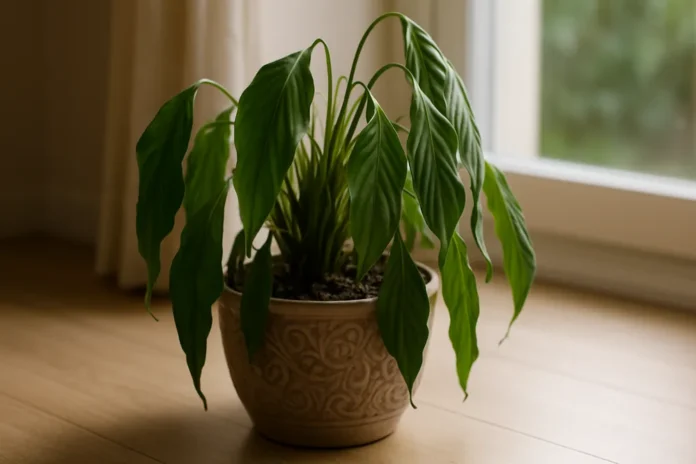
A peace lily usually wilts because it is too dry, too wet, root-bound, or stressed by heat, cold, or low humidity. Wilting happens when the plant cannot move enough water from the roots to the leaves.
Peace lily is famous for drooping dramatically, so wilting does not always mean your plant is dying. In many cases, wilting is simply your peace lily's fast, visible response to water stress or a sudden change in its environment.
The tricky part is that both dry soil and soggy soil can make a peace lily collapse in a similar way. Root problems, low humidity, temperature swings, harsh light, and even a crowded pot can also leave the leaves limp and hanging.
Once you know what your plant is reacting to, the cause is usually easy to narrow down. The leaf texture, the condition of the soil, and how quickly the plant perks up can tell you a lot about what is going wrong.
What Wilting Usually Means in a Peace Lily
Wilting is a loss of leaf firmness caused by low internal water pressure in the plant's cells. A healthy peace lily keeps its leaves upright by constantly moving moisture from the roots up through the stems and into the foliage. When that flow is interrupted, the leaves droop, curl, or flop over.
With peace lilies, wilting is often tied to watering, but not always in the way gardeners expect. Underwatering prevents the roots from supplying enough moisture. Overwatering can suffocate or rot roots, which has the same visible result because damaged roots cannot absorb water well.
- Sudden drooping with dry soil usually points to thirst.
- Persistent wilting with wet soil often suggests root stress or root rot.
- Wilting after a move, repotting, or a temperature change may be environmental shock.
- Leaves that droop but also yellow, brown, or feel mushy often indicate a deeper root or care issue.
Underwatering Is the Most Common Reason
Why Peace Lilies Wilt Fast when They Get Too Dry
Peace lilies have a reputation for collapsing when they need water. Their broad leaves lose turgor quickly, so a thirsty plant can look dramatic even when the problem is straightforward. If the soil feels dry several inches down and the pot feels noticeably lighter than usual, underwatering is a strong possibility.
A wilted peace lily from dryness often revives within hours after a thorough watering. That quick rebound is one of the easiest clues. However, repeated severe drying can lead to crispy brown tips, yellowing lower leaves, and stressed roots that take longer to recover over time.
- Leaves look limp, soft, and droopy rather than stiff.
- Soil has pulled away from the sides of the pot or feels hard and dry.
- The plant perks up noticeably after watering.
- Brown, crunchy edges may appear if drought stress has happened more than once.
What Causes Underwatering Even when You Water Regularly
Sometimes the issue is not the watering schedule itself but how the water moves through the pot. If the mix has become very dry and compacted, water may run down the sides and out the drainage holes without fully soaking the root ball. In that case, the top may look damp while the center of the soil stays dry.
A root-bound plant can also dry out unusually fast. When roots fill most of the pot, there is less soil available to hold moisture, so the plant wilts sooner between waterings.
Overwatering Can Look Almost the Same
Why Soggy Soil Causes Drooping
When potting mix stays wet for too long, air spaces in the soil fill with water. Peace lily roots need oxygen as much as moisture, and without enough oxygen they begin to weaken. Once roots are stressed, the plant cannot take up water efficiently, so the leaves droop even though the pot is wet.
This is why overwatered and underwatered peace lilies can both wilt. The difference is what the soil feels like and whether the plant rebounds after watering. If the pot is still damp several days after watering and the leaves remain limp, excess moisture is more likely than thirst.
- Soil feels wet or cool for an extended period.
- Leaves may turn yellow along with drooping.
- The base of stems can feel soft in advanced cases.
- There may be a musty smell from the potting mix.
Common Overwatering Mistakes
- Watering on a fixed calendar instead of checking soil moisture
- Using a decorative cachepot that traps extra water
- Growing the plant in a pot without drainage holes
- Keeping the plant in dense, slow-draining soil
- Watering small plants too heavily for the size of their root system
Root Rot Is a Serious Cause of Peace Lily Wilting
If a peace lily has been staying wet for too long, root rot may be the underlying problem. Root rot is not just a watering issue. It is actual root damage caused by prolonged saturation and often made worse by fungal pathogens in poorly aerated soil.
Rotten roots turn brown or black, feel mushy, and stop functioning. At that point, the plant may wilt continuously because too few healthy roots remain to support the leaves. This kind of wilt does not improve much after watering because the roots are already compromised.
Signs That Point to Root Rot
- Wilting persists even though the soil is moist
- Older leaves yellow and collapse
- A sour or swampy smell comes from the pot
- Stems near the base feel soft
- Roots appear dark, mushy, or stringy instead of firm and pale
Root rot can progress quickly in a low-light room or in winter when the plant uses less water. If your peace lily is wilting and the potting mix stays wet for many days, root health should move high on your list of possible causes.
A Root-bound Plant Can Wilt Even with Good Care
Peace lilies tolerate being slightly snug in their pots, but when the roots become tightly packed, the plant may start wilting more often. Crowded roots leave little room for fresh potting mix, so water runs through faster and the plant dries out sooner.
In a root-bound peace lily, the leaves may droop again shortly after watering. You may also notice roots circling inside the pot, roots emerging from drainage holes, or a root mass that holds the potting mix together like a solid plug.
- The plant needs water much more often than it used to.
- Water rushes through the pot without soaking in well.
- The root ball is dense and crowded when removed from the pot.
- Growth slows and new leaves may emerge smaller.
Heat, Cold, and Low Humidity Can Trigger Drooping
Peace lilies prefer stable indoor conditions. Exposure to heating vents, air conditioners, drafty windows, cold nights, or hot afternoon sun can all lead to wilting. In these situations, the plant loses moisture faster than it can replace it, or it temporarily shuts down normal water movement because of stress.
Low humidity can make the leaves look limp and tired, especially when paired with dry soil or warm indoor air. Humidity alone is not always the main reason for full collapse, but it can worsen wilting and contribute to brown tips and edges.
Environmental Stress Clues
- Wilting starts after the plant is moved to a new room or closer to a window.
- Leaf edges brown after exposure to hot, dry air.
- Leaves flop after a cold draft or winter transport.
- The soil moisture seems normal, but the plant still looks stressed.
Too Much Direct Sun Can Make Leaves Collapse
Peace lilies grow best in bright, indirect light. While they tolerate lower light better than many houseplants, they do not like strong direct sun, especially through a hot south- or west-facing window. Harsh light can overheat leaves and speed up water loss, causing wilting, bleaching, and scorched brown patches.
If your peace lily droops most during the brightest part of the day and improves later, light and heat stress may be involved. This pattern is especially common in summer or when a plant is moved outdoors without acclimation.
Transplant Shock and Recent Changes Can Cause Temporary Wilting
Repotting, dividing, shipping, or moving a peace lily from one environment to another can lead to short-term drooping. Disturbed roots are less efficient at taking up water until they settle in. Even a healthy plant may wilt for a few days after repotting, especially if some roots were broken in the process.
This type of wilting is usually temporary when the roots remain mostly healthy and the plant is kept in stable conditions. Problems are more likely when repotting is combined with oversized containers, heavy soil, or immediate overwatering.
Pests and Disease Are Less Common but Still Possible
Peace lily wilting is usually cultural rather than pest-related, but infestations can contribute to a weak, limp appearance. Spider mites, mealybugs, and scale insects feed on plant sap, which reduces vigor and can lead to curling, yellowing, and drooping over time.
Leaf spot diseases and crown problems can also stress the plant, especially when air circulation is poor and leaves stay wet. If you notice sticky residue, fine webbing, cottony patches, or unusual spotting along with wilting, look beyond watering alone.
- Spider mites leave fine webbing and stippled leaves.
- Mealybugs look like white cotton in leaf joints.
- Scale appears as small bumps on stems and leaves.
- Disease issues often come with spots, mushy tissue, or foul-smelling soil.
How to Tell Which Cause Is Most Likely
Because several problems can produce the same droopy look, the best way to diagnose peace lily wilting is to combine a few clues instead of relying on one symptom. Start with the soil condition, then look at leaf color, the speed of decline, and whether the plant improves after watering.
Quick Comparison Guide
- Dry soil + fast recovery after watering: underwatering is likely.
- Wet soil + ongoing droop: overwatering or root rot is more likely.
- Frequent wilting despite regular watering: root-bound conditions may be the issue.
- Wilting after a move or repot: environmental stress or transplant shock fits best.
- Scorched patches + bright sun exposure: direct light and heat stress are likely involved.
- Yellow leaves + soggy mix + odor: root damage is a strong possibility.
The more specific your observations, the easier it becomes to separate a harmless thirst episode from a more serious root problem.
How to Help a Wilting Peace Lily Recover
Recovery depends on matching the fix to the cause. Peace lilies bounce back well when the issue is caught early, but the wrong response can make things worse. For example, adding more water to an already soggy pot can push stressed roots into rot.
If the Plant Is Too Dry
- Water thoroughly until excess drains from the bottom.
- If the soil has become very dry and compacted, soak the pot briefly so the root ball rehydrates evenly.
- Let the pot drain fully and return the plant to bright, indirect light.
- Trim only leaves that stay badly damaged after the plant rehydrates.
If the Soil Is Too Wet
- Stop watering until the upper portion of the mix begins to dry.
- Empty any standing water from saucers or outer pots.
- Move the plant to a spot with bright, indirect light and good airflow.
- If the mix stays soggy or smells bad, inspect the roots and repot if needed.
If Roots Are Rotting or Crowded
- Remove the plant from the pot and inspect the roots.
- Trim off mushy, blackened roots with clean scissors.
- Repot into fresh, airy potting mix in a container with drainage holes.
- Choose a pot only slightly larger than the root mass unless you are dividing the plant.
If the Problem Is Environmental
- Keep the plant away from direct sun, heaters, air vents, and cold drafts.
- Aim for steady indoor temperatures and moderate humidity.
- Avoid moving the plant repeatedly while it recovers.
- Do not fertilize a stressed, wilting plant until you see new healthy growth.
How to Prevent Future Wilting
Peace lilies stay more upright and resilient when their care is consistent. The goal is not constant moisture at all times. It is a balance of even watering, good drainage, stable temperatures, and enough indirect light to support healthy root function.
- Water when the top inch or two of soil feels slightly dry rather than on a strict schedule.
- Use a pot with drainage holes and a loose indoor potting mix.
- Place the plant in bright, indirect light.
- Repot when roots become crowded or the plant dries out unusually fast.
- Keep it away from extreme heat, cold, and harsh direct sun.
- Reduce watering in lower light and during slower winter growth.
A peace lily that wilts once from thirst is common. A peace lily that wilts repeatedly is telling you its root environment or growing conditions need to change.
FAQ
Should I Water My Peace Lily Every Time It Droops?
Not automatically. Peace lilies do droop when thirsty, but they can also droop from overwatering or root rot. Check the soil first so you do not add water to an already wet pot.
Can a Peace Lily Recover After Severe Wilting?
Yes, if the roots are still healthy enough to take up water. A plant that dried out too much often recovers quickly, while one with root rot may need repotting and root trimming before it improves.
Why Is My Peace Lily Wilting Even Though the Soil Is Wet?
Wet soil paired with wilting often means the roots are stressed, oxygen-starved, or beginning to rot. When roots are damaged, the plant cannot absorb water properly even though moisture is present.
Does Low Light Make a Peace Lily Wilt?
Low light alone does not usually cause sudden wilting, but it can slow growth and keep soil wet longer. That can increase the risk of overwatering and root problems, which then lead to drooping.
Will Misting Help a Wilted Peace Lily?
Misting may provide a brief humidity boost, but it will not fix wilting caused by dry roots, soggy soil, or root rot. The main issue is usually in the root zone rather than on the leaf surface.
How Long Should It Take a Thirsty Peace Lily to Perk Up?
A mildly underwatered peace lily often starts improving within a few hours after a thorough watering. If there is little change by the next day, another cause such as overwatering, root damage, or temperature stress is more likely.
Can Direct Sun Make a Peace Lily Wilt Indoors?
Yes. Strong direct sun can heat the leaves, increase water loss, and cause drooping or scorch. Peace lilies do best in bright, indirect light instead.
Need the right fix fast? Read our peace lily care and troubleshooting guides to diagnose drooping, choose the best potting mix, and get your plant growing strongly again.
