

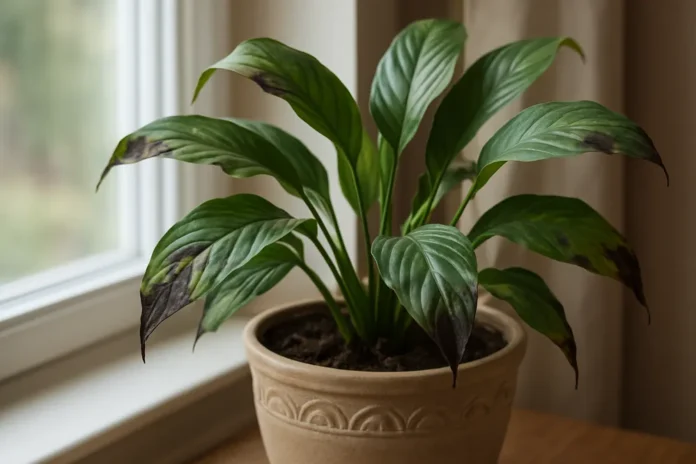
Peace lily leaves usually turn black because the plant is under stress from overwatering, cold exposure, harsh sun, root damage, or salt buildup in the soil. Blackening can also happen when older leaves naturally die back or when disease affects weakened tissue.
Seeing peace lily leaves turning black can be alarming, especially when your plant looked healthy just days earlier. A peace lily is usually quick to show stress, and black leaves are one of its clearest warning signs that something in its environment or care routine is off.
In most homes, blackened leaves come from watering problems, temperature stress, direct sun, fertilizer buildup, or root trouble. Sometimes the issue starts as brown tips or yellowing and then progresses until parts of the leaf become dark, mushy, dry, or fully black. The pattern on the leaf often tells you a lot about the cause.
The good news is that many peace lilies recover well once you correct the problem. If you can match the type of blackening to the likely cause, you can usually stop the damage and help new growth come in healthy again.
What Black Leaves Usually Mean on a Peace Lily
Black tissue on a peace lily is usually dead or dying plant material. Unlike mild drooping, which a thirsty peace lily can often bounce back from quickly, blackened leaf parts do not turn green again. The goal is to figure out what caused the damage so you can protect the rest of the plant and encourage healthy new leaves.
The appearance matters. If the leaves are soft, dark, and collapsing, overwatering or cold injury is often involved. If they are crispy and black along exposed areas, sun scorch or severe dryness may be more likely. If only tips and edges are darkening, mineral buildup, inconsistent watering, or low humidity are common triggers.
- Soft black patches often point to rot, cold shock, or disease.
- Crispy black edges are more often linked to dry conditions, salt buildup, or scorching.
- Older bottom leaves only may simply be aging out.
- Blackening with yellow leaves and soggy soil strongly suggests root stress from too much water.
Overwatering and Root Stress
Why Too Much Water Causes Black Leaves
Overwatering is one of the most common reasons peace lily leaves turn black. Peace lilies like evenly moist soil, but they do not like constantly wet roots. When potting mix stays soggy, air spaces in the soil fill with water, roots struggle to breathe, and root tissue can begin to die. Once the roots are damaged, the leaves often respond with yellowing, drooping, browning, and eventually blackening.
This problem is often not about watering too often alone. It can also come from a pot without drainage holes, a dense soil mix that stays wet too long, or a decorative outer pot that traps standing water around the root ball.
Signs Overwatering Is the Issue
- Leaves look limp even though the soil feels wet.
- Black areas are soft or mushy instead of dry and crisp.
- Lower leaves yellow before turning dark.
- The pot feels heavy for days after watering.
- You notice a sour or swampy smell from the soil.
How to Fix It
Let the top inch or two of soil dry before watering again. Empty saucers and cachepots after watering so roots never sit in pooled water. If the mix stays wet for a week or more, repot into a fresh, airy houseplant mix with good drainage. Trim off black, mushy leaves with clean scissors, and if you repot, remove any rotten roots that are brown, soft, or slimy.
Root Rot and Container Problems
If overwatering goes on long enough, it often turns into root rot. Root rot is more serious than simple soggy soil because pathogens can move into stressed roots and quickly reduce the plant's ability to take up water and nutrients. A peace lily with root rot may look wilted and thirsty even when the potting mix is wet.
Pot size also matters. A peace lily in a pot that is much too large holds more wet soil than the roots can use, which increases the chance of rot. On the other hand, an extremely rootbound plant may dry too fast and swing between stress cycles that also damage leaves.
- Use a container with drainage holes.
- Choose a pot only slightly larger than the root ball when repotting.
- Use a loose mix, such as potting soil blended with perlite or bark.
- Never leave the nursery pot standing in water inside a decorative planter.
Cold Damage and Temperature Shock
Peace lilies are tropical plants, so cold exposure can quickly blacken their leaves. This can happen if the plant sits near a drafty window in winter, close to an exterior door, under a strong air conditioner vent, or in a car during cold weather. Chilled tissue often turns dark within a short time after exposure.
Cold damage is especially likely if the leaf suddenly becomes black and water-soaked after one cold night or after transport from a store to your home. Even temperatures above freezing can injure a peace lily if they drop too low for too long.
- Keep peace lilies in temperatures roughly between 65 and 80 degrees Fahrenheit.
- Avoid placing them where temperatures regularly fall below 55 degrees Fahrenheit.
- Move them away from drafty windows, heaters, and AC vents.
- Protect them during winter transport with a sleeve or box.
Too Much Direct Sun
Peace lilies are often described as low-light plants, but the more useful description is that they prefer bright, indirect light. Harsh direct sun, especially hot afternoon sun, can scorch the leaves. Sun-damaged areas may first look pale, bleached, or brown and then dry into dark brown to black patches.
Sun scorch often appears on the side of the plant facing the window. The damage tends to be dry and papery rather than mushy. If you recently moved your peace lily from a low-light corner to a bright windowsill, sudden light shock may be the cause.
Better Light for Peace Lilies
Place the plant near an east-facing window or a few feet back from a bright south- or west-facing window with filtered light. If the room is dim, the peace lily may survive, but growth may slow and flowering may be reduced. The sweet spot is bright, gentle light without prolonged direct rays on the foliage.
Underwatering, Dry Air, and Uneven Moisture
Although overwatering gets most of the attention, severe dryness can also lead to blackened leaf tips or edges. Peace lilies are dramatic plants that wilt when they are too dry, and repeated cycles of drying out hard can damage leaf tissue over time. Very low indoor humidity can make the problem worse, especially during winter heating season.
When dryness is the issue, the blackened parts are usually crisp rather than soft. You may also see brown tips that spread, curling leaves, or drooping that improves soon after watering. A plant that repeatedly goes bone dry between waterings is likely to develop more cosmetic damage.
- Water when the top inch of soil feels dry, not on a rigid calendar.
- Water thoroughly until excess drains out, then empty the saucer.
- Keep the plant away from heat sources that dry the air.
- Moderate indoor humidity helps reduce tip burn, though it is rarely the only factor.
Fertilizer Burn and Salt Buildup
Peace lilies do not need heavy feeding. Too much fertilizer, or a buildup of salts from fertilizer and hard tap water, can burn roots and leaf margins. This often shows up as brown or black tips and edges, sometimes with a yellow halo. The soil surface may even develop a crusty white residue.
A plant can be watered correctly and still develop blackened leaf tips if salts are accumulating in the pot. This is more common when a plant has stayed in the same soil for a long time or receives frequent fertilizer applications.
How to Reduce Salt Stress
- Fertilize lightly during active growth, not every time you water.
- Flush the pot occasionally by running water through the soil for several minutes.
- Repot into fresh mix if the soil is old or heavily compacted.
- If your tap water is very hard or heavily treated, filtered or distilled water may help reduce leaf tip damage.
Water Quality Issues
Peace lilies can be sensitive to chemicals and minerals in tap water, especially fluoride, chlorine, and dissolved salts. While poor water quality alone does not always cause fully black leaves, it commonly contributes to darkened tips and edges, especially in already stressed plants.
If you have ruled out light, temperature, and root problems, water quality is worth considering. This is particularly true if damage is gradual, concentrated at the tips, and keeps returning even after you adjust watering frequency.
Natural Aging of Older Leaves
Not every black leaf means something is seriously wrong. Older leaves at the base of a peace lily naturally decline over time. They may first yellow, then brown, and eventually become dark and dry before they can be removed. If only one or two of the oldest leaves are affected while new growth looks healthy, normal aging is the likely explanation.
In that case, simply prune the old leaves at the base with clean shears. Watch the plant for a week or two. If the problem spreads to newer leaves, there is probably another underlying cause.
Disease and Pest-related Blackening
Fungal or bacterial issues can also cause black spots or larger black lesions on peace lily leaves, though this is less common than watering or environmental stress. Disease is more likely when foliage stays wet for long periods, air circulation is poor, or the plant has already been weakened by root problems.
Pests such as spider mites, aphids, or mealybugs do not usually make leaves turn black directly, but their feeding can weaken tissue and lead to discoloration. Honeydew from some pests can also support sooty mold, which looks like a black coating on the leaf surface rather than black tissue inside the leaf.
- Remove badly damaged leaves with sterilized scissors.
- Avoid misting if disease is suspected and improve airflow around the plant.
- Inspect leaf undersides and stems for pests.
- Treat pests promptly with insecticidal soap or another indoor-safe option labeled for houseplants.
How to Tell Which Cause Is Most Likely
The fastest way to diagnose a peace lily is to combine the leaf pattern with recent changes in care or environment. Think about what changed in the last one to three weeks. A move to a sunnier room, a cold draft, a missed watering, or a heavier fertilizer schedule often explains the timing.
- If leaves are soft, black, and collapsing, think overwatering, rot, or cold injury.
- If leaves are dry, crispy, and dark on exposed surfaces, think sun scorch or severe dryness.
- If tips and edges are blackening repeatedly, think salt buildup, inconsistent moisture, low humidity, or water quality.
- If only old bottom leaves are affected, think natural aging.
- If spots look distinct and spreading, especially with wet foliage, think disease.
How to Help Your Peace Lily Recover
Once leaf tissue turns black, it will not recover, so focus on stopping the cause and supporting healthy new growth. Start by removing badly damaged leaves or trimming off black sections if you prefer a tidier look. Use clean scissors and cut at an angle that follows the natural leaf shape.
Then correct the most likely stress factor. Adjust watering so the plant is never sitting in water but also not staying bone dry for long. Move it into bright, indirect light. Keep it warm and away from drafts. If the potting mix is old, soggy, compacted, or smells sour, repot into fresh, well-draining soil.
Be patient after making changes. Peace lilies often need a few weeks to stabilize, and recovery shows up in new leaves, not in the damaged ones. If fresh growth emerges green and upright, your corrections are working.
How to Prevent Black Leaves in the Future
- Water based on soil moisture, not a fixed schedule.
- Use a pot with drainage holes and a loose indoor potting mix.
- Give the plant bright, indirect light instead of intense direct sun.
- Keep temperatures stable and avoid cold drafts.
- Fertilize lightly and flush the soil occasionally.
- Trim old leaves and inspect the plant regularly for early signs of stress.
- Repot every couple of years or when the mix becomes compacted and tired.
Peace lilies are forgiving when their basic needs are met. Most black leaf issues can be avoided by keeping moisture steady, light gentle, and roots healthy. When conditions are right, they reward you with glossy green foliage and, often, regular blooms.
FAQ
Should I Cut Off Black Peace Lily Leaves?
Yes. Black leaf tissue will not turn green again, so pruning it off improves appearance and lets the plant direct energy toward healthy growth. Use clean scissors and remove the leaf at the base if most of it is damaged.
Can a Peace Lily Recover After Its Leaves Turn Black?
Yes, if the roots and crown are still healthy. The damaged leaves will not recover, but the plant can produce healthy new growth once the underlying problem is fixed.
Do Black Leaves Mean My Peace Lily Is Overwatered?
Often, but not always. Overwatering is a major cause, especially when leaves are soft and the soil stays wet, but black leaves can also come from cold shock, sun scorch, salt buildup, disease, or natural aging.
Why Are Only the Tips of My Peace Lily Leaves Turning Black?
Black tips are commonly linked to inconsistent watering, dry indoor air, fertilizer salts, or sensitive reactions to tap water. This pattern is less likely to be severe root rot unless other symptoms are present.
Can Direct Sunlight Make Peace Lily Leaves Turn Black?
Yes. Too much direct sun can scorch the leaves, especially in hot afternoon light. The damaged areas usually look dry and papery rather than mushy.
How Often Should I Water a Peace Lily to Prevent Black Leaves?
Water when the top inch of soil feels dry. The exact timing depends on light, temperature, pot size, and season, so checking the soil is more reliable than watering on the same day every week.
Is Tap Water Bad for Peace Lilies?
Some peace lilies react poorly to highly treated or mineral-heavy tap water. If you notice recurring black or brown tips despite otherwise good care, filtered or distilled water may help.
Want to keep your houseplants healthy year-round? Explore our guides to the best indoor plant soils, watering tools, and peace lily care fixes so you can solve problems faster and grow stronger foliage.
