

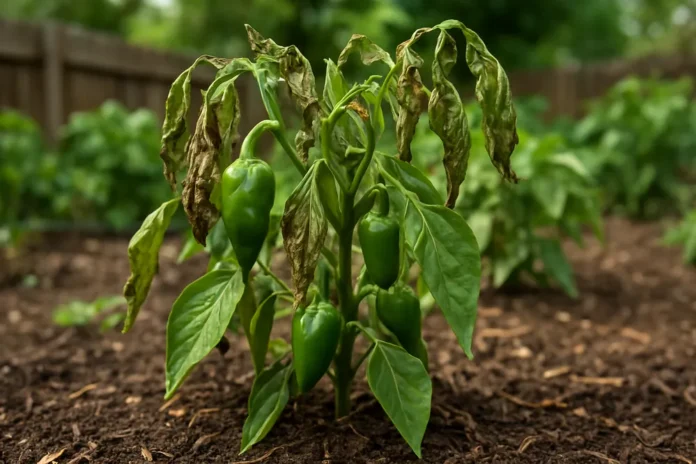
Pepper leaves usually shrivel because the plant is under stress from uneven watering, heat, pests, disease, or root damage. The exact cause often shows up in how fast the leaves curl, wrinkle, dry, or distort.
Shriveled pepper leaves can look alarming fast. One day your plants seem fine, and the next the foliage looks puckered, curled, limp, or papery. In my experience, pepper leaves shriveling is less a single problem than a stress signal. Peppers are productive plants, but they react quickly when moisture, temperature, roots, or pests fall out of balance.
The good news is that shriveling often leaves clues. Leaves that droop in afternoon heat behave differently from leaves twisted by aphids. Dry, crisp edges point in a different direction than soft, wrinkled new growth. If you slow down and look at the whole plant, including the soil, stem, and undersides of leaves, you can usually narrow the cause without guessing.
Below are the most common reasons pepper plants develop shriveled leaves, plus what I would look for first and how to get plants back on track.
What Shriveling Usually Means on Pepper Plants
Shriveling is a broad symptom. Gardeners often use it to describe leaves that curl inward, wrinkle, collapse, crinkle, dry up, or look smaller and tighter than normal. On peppers, that usually means the plant is struggling to move water properly, maintain cell pressure, or produce healthy new growth.
Start by noticing which leaves are affected first. Older lower leaves often show water or nutrient problems before newer ones. New top growth that emerges twisted, narrow, or misshapen often points more strongly to pests, herbicide drift, or disease. Also ask whether the problem appeared suddenly in one hot afternoon or slowly over a week or two.
- Sudden wilting and recovery by evening often suggests heat stress or dry soil.
- Constant limp or wrinkled leaves despite wet soil may suggest root damage or overwatering.
- Distorted, puckered, or sticky new leaves often suggest sap-sucking insects.
- Shriveled leaves with spotting, mosaic patterns, or severe deformation can point to viral disease.
- Crispy margins and curled leaves after weather swings often reflect environmental stress.
When I diagnose peppers, I compare the newest leaves to the oldest and then compare one plant to the next. If every plant in a bed shows the same midday shrivel, I think weather or watering first. If only one plant has twisted new growth, I start hunting for pests, roots, or drift damage.
Water Stress Is the Most Common Cause
Underwatering Can Make Leaves Wrinkle, Curl, and Dry
Peppers need consistent moisture, especially once they are flowering and setting fruit. If the soil gets too dry, leaves lose turgor pressure and start to sag, curl, or shrivel. Repeated dry spells can leave foliage thinner and more brittle, and flowers may drop before fruit forms.
This happens a lot in containers, raised beds, and sandy soil because they drain quickly. Black nursery pots and fabric grow bags heat up even faster, so roots can dry out long before the top inch of soil looks dusty.
- Leaves droop in daytime and may partly recover after watering
- Soil feels dry a couple of inches down
- Leaf edges may curl inward to conserve moisture
- Flowers or tiny peppers drop during hot weather
Overwatering Can Look Surprisingly Similar
Roots need oxygen as much as they need moisture. In soggy soil, pepper roots struggle to breathe and may start to rot. Once roots are damaged, the plant cannot move water well, so leaves can look limp, crinkled, or shrunken even though the soil is wet.
This is one of the easiest mistakes to make because stressed peppers often look thirsty. If you respond by watering again and again, the plant declines faster. Yellowing leaves, slow growth, and a heavy, damp soil surface are strong warning signs.
- Leaves stay limp even in the morning
- Soil remains wet for several days
- Lower leaves may yellow before shriveling
- Plants may stall instead of putting on vigorous new growth
I like to water peppers deeply and then let the top inch or two of soil dry slightly before watering again. Frequent shallow watering makes plants more fragile, while a steady deep soak encourages stronger root growth.
Heat, Sun, and Weather Swings Can Trigger Temporary Leaf Collapse
Peppers love warmth, but there is a difference between warm and punishing. During intense sun, dry wind, or sudden heat waves, leaves may curl, cup, or look shriveled because the plant is losing water faster than the roots can replace it. Afternoon wilt is especially common when daytime highs spike or when transplants are not fully established.
Sunscald and reflected heat from patios, fences, gravel, or walls can make this worse. The leaves may feel thin and dull rather than soft and juicy. In severe cases, the edges dry out and turn tan.
- Symptoms are worse in late afternoon than early morning
- Plants improve overnight
- Exposed plants suffer more than those with slight afternoon shade
- Mulch is missing, so roots heat and dry quickly
Cold nights can also distort pepper foliage. If temperatures dip too low after planting, leaves may pucker, stall, and look stressed for days. Peppers really resent cold, wet conditions, especially when soil has not warmed up yet.
Pests Often Cause Curled and Misshapen New Leaves
Aphids, Thrips, and Mites Are the Usual Suspects
Small sap-sucking insects damage pepper leaves by feeding on tender tissue. As the leaf expands, the injured parts grow unevenly, so the result is wrinkling, curling, twisting, or a shrunken look. This is especially noticeable on the newest leaves at the top of the plant.
Aphids often cluster on stems and leaf undersides and may leave sticky honeydew behind. Thrips are harder to spot but can cause silvering, distorted new growth, and scarred leaves. Spider mites prefer hot, dry conditions and may leave faint stippling or delicate webbing before leaves become bronzed and shriveled.
- Check the undersides of curled leaves with a hand lens if possible
- Look for sticky residue, black sooty mold, or pale stippling
- Inspect tender shoot tips where pests gather first
- Watch for ants, which often protect aphids
Broad Mites Can Be Especially Tricky
Broad mites are tiny and easy to miss, but the damage can be dramatic. New leaves may come out narrow, leathery, blistered, or severely puckered. Growth tips can look stunted and twisted, and blossoms may abort. Because the mites themselves are almost invisible without magnification, gardeners sometimes mistake the injury for disease or chemical damage.
If pepper leaves are shrinking mostly at the top while older leaves look fairly normal, I get suspicious of mites or thrips before anything else. Water stress usually affects the whole plant, but pest-distorted growth often shows up first where tissue is youngest and softest.
Disease Can Shrivel Leaves, Especially when Growth Looks Distorted
Viral Diseases Can Cause Crinkling and Deformation
Several viruses affect peppers, including cucumber mosaic virus, tobacco mosaic virus, and tomato spotted wilt virus. These can lead to leaves that are crinkled, puckered, small, twisted, or generally malformed. You may also see mottled light and dark green coloring, ring spots, or a general loss of vigor.
Viruses are often spread by insects such as aphids and thrips, or by contaminated hands and tools in some cases. Unlike watering problems, viral symptoms usually do not improve after irrigation or cooler weather. The plant often stays stunted and new growth continues to emerge abnormal.
Root and Wilt Diseases Can Leave Leaves Limp and Collapsed
Fungal and bacterial issues below the soil line can also create shriveled foliage because damaged roots cannot supply enough water. Phytophthora root rot, bacterial wilt, and other soilborne problems can cause rapid decline, wilting, and eventual leaf collapse. In these cases, the soil may not be especially dry, but the plant behaves as if it cannot drink.
- Persistent distortion in new growth can suggest virus
- Sudden collapse with moist soil can suggest root or vascular disease
- Dark stem lesions near the soil line may indicate rot
- Nearby plants in the same family may begin showing similar symptoms
Unfortunately, true viral disease is not something you can cure with a spray or fertilizer. If a pepper keeps producing badly distorted foliage and shows classic mosaic or ringed patterns, removal is often the cleanest way to protect the rest of the bed.
Root Damage, Transplant Shock, and Container Problems Are Easy to Overlook
Transplant shock usually shows up soon after planting out. Leaves may droop, curl, or look wrinkled while the plant adjusts. If roots were tightly circling inside a pot and not loosened at planting, the plant may continue to struggle even when watered properly.
Container peppers have their own set of challenges. Pots that are too small dry out quickly, heat up fast, and restrict roots. Pots without adequate drainage hold too much water. Both extremes can lead to the same shriveled look above ground.
- Symptoms began shortly after transplanting
- Plant sits loose in the soil or rocks in wind
- Roots are circling densely inside the container
- Pot is undersized for a mature pepper plant
- Drainage holes are blocked or missing
Herbicide Drift and Chemical Injury Can Mimic Disease
This kind of injury is common when broadleaf weed products are used on windy days, or when compost, mulch, hay, or manure carries herbicide residue. The damage often appears on the side of the plant facing the exposure, or on several different broadleaf plants in the same area at once.
- Symptoms show up suddenly after spraying nearby
- New growth is twisted rather than simply wilted
- Tomatoes, beans, grapes, or ornamentals nearby also look distorted
- No pests are visible and watering changes do not help much
How to Tell Which Cause Is Most Likely
- Feel the soil 2 to 3 inches deep. Dry suggests underwatering. Soggy suggests overwatering or poor drainage.
- Check the plant early in the morning and late afternoon. Recovery overnight points toward heat or moisture stress.
- Inspect new growth and leaf undersides. Distortion plus visible insects, stippling, or sticky residue points toward pests.
- Look for mosaic color patterns, ring spots, or ongoing deformity in every flush of new growth. That raises concern for viral disease.
- Think about recent events such as transplanting, spraying, severe heat, cold nights, or heavy rain.
Do not change five things at once. If you water differently, fertilize, spray, and prune on the same day, you lose the chance to see what actually worked. I prefer to correct the most likely stress first and judge success by the next set of leaves, not the damaged ones already there.
How to Help Pepper Plants Recover
If Watering Is the Issue
- Water deeply and evenly rather than lightly every day
- Add mulch to hold soil moisture and cool roots
- Improve drainage if soil stays soggy
- Use containers with enough volume and open drainage holes
If Heat Is the Issue
- Water in the morning so plants enter the day hydrated
- Mulch the root zone
- Use temporary shade cloth during extreme heat
- Avoid heavy pruning that exposes fruit and stems to harsh sun
If Pests Are the Issue
- Rinse aphids from plants with a firm stream of water
- Use insecticidal soap or horticultural oil when appropriate and according to label directions
- Repeat treatments as needed because new pests often hatch later
- Remove badly distorted growing tips only if the plant still has enough healthy foliage
If Disease or Drift Is the Issue
- Remove plants with strong viral symptoms to limit spread
- Sanitize tools and wash hands after handling suspect plants
- Control insect vectors like aphids and thrips
- Avoid spraying herbicides anywhere near peppers
How to Prevent Shriveled Pepper Leaves Next Season
- Plant after soil and night temperatures have warmed reliably
- Use mulch to reduce evaporation and soil temperature swings
- Space plants for airflow but not so widely that soil bakes
- Inspect new growth weekly for aphids, thrips, and mites
- Choose large containers and quality potting mix for potted peppers
- Avoid excess nitrogen, which can produce lush, pest-prone growth
- Rotate peppers and other nightshades when disease has been a problem
A steady routine beats dramatic rescue treatments. Most peppers rebound well when you catch the issue early and keep conditions even for the next few weeks.
FAQ
Will Shriveled Pepper Leaves Go Back to Normal?
Usually not. Damaged leaves often stay curled, wrinkled, or scarred. Look for healthy new growth as the real sign that the plant has recovered.
Can Too Much Fertilizer Make Pepper Leaves Shrivel?
Yes. Overfertilizing can burn roots, upset water uptake, and push tender growth that deforms easily under heat or pest pressure. High salt buildup in containers is a common culprit.
Why Are Only the Top Leaves on My Pepper Plant Shriveling?
When only the newest leaves are affected, pests like aphids, thrips, broad mites, or herbicide drift are more likely than simple drought. Those problems tend to damage soft new growth first.
Should I Remove Shriveled Leaves From a Pepper Plant?
Only remove leaves that are badly damaged, diseased, or mostly dead. If a leaf is still green, it can still help feed the plant while it recovers.
Can Peppers Recover From Overwatering?
Yes, if root damage is not too advanced. Let the soil dry slightly, improve drainage, and avoid watering on a fixed schedule if the plant does not need it.
Do Pepper Leaves Shrivel From Transplant Shock?
They can. Recently transplanted peppers often droop, curl, or wrinkle for several days, especially in cool weather or direct sun. Most improve once roots start growing into surrounding soil.
How Often Should I Water Peppers to Prevent Shriveling?
There is no single schedule that fits every garden. Water when the soil a couple of inches down is starting to dry, then soak thoroughly so roots grow deeper and more evenly.
Need the right fix fast? Read our pepper plant care and pest-control guides to compare treatments, choose the best products, and get your plants producing again.
