

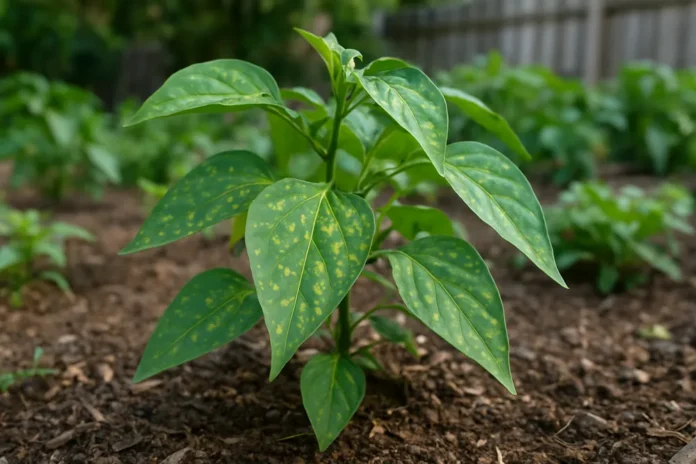
Pepper leaves usually get yellow spots from watering stress, nutrient imbalances, pest feeding, or leaf diseases. In some cases, sunscald, spray burn, or root stress can also cause spotted yellowing.
Seeing pepper leaves with yellow spots can be frustrating because several different problems can look similar at first. I have seen this show up on young transplants, mature fruiting plants, and even peppers that looked healthy just a few days earlier.
The good news is that yellow spotting is often easier to diagnose once you look at the pattern. Spots that start between veins, tiny pale speckles, blotches with brown centers, or yellowing that appears mostly on older leaves each point in a different direction. On pepper plants, the leaf pattern usually tells the story faster than the color alone.
Below, I will walk through the most common causes, how to tell them apart, and what usually helps home gardeners turn things around before the whole plant declines.
What Yellow Spots Usually Mean on Pepper Leaves
Yellow spots are a symptom, not a diagnosis. In peppers, that symptom usually comes from one of five broad categories: uneven watering, nutrient deficiency or lockout, sap-sucking pests, fungal or bacterial leaf diseases, or environmental injury such as intense sun, wind, or spray damage. The trick is to match the spot pattern with the rest of the plant's condition.
- If the spots are tiny and scattered like pinpricks or stippling, pests are high on the list.
- If yellowing appears mostly on older leaves first, nutrient issues or root stress are more likely.
- If spots have dark centers, halos, or expand after rainy weather, think disease.
- If the plant was recently moved outdoors or sprayed, sunscald or chemical injury may be responsible.
- If the whole plant also looks droopy or stalled, watering and root problems should be checked early.
When I diagnose peppers, I do not start with the worst-looking leaf. I compare several leaves from the top, middle, and bottom of the plant, because older leaves often reveal nutrient problems while newer leaves show pest or spray injury first.
Watering Problems and Root Stress
Inconsistent moisture is one of the most common reasons pepper leaves develop yellow blotches or patchy discoloration. Peppers like evenly moist soil, but they dislike soggy roots just as much as bone-dry conditions. When roots swing between wet and dry, the plant struggles to move nutrients properly, and leaves may show yellow spotting before they fully wilt.
How Underwatering Can Look
Underwatered peppers may develop dry-looking yellow patches, curling edges, and leaves that feel thin or papery. The spots can be irregular rather than perfectly round. You may also notice blossom drop, smaller fruit, or a plant that perks up quickly after watering.
How Overwatering Can Look
Overwatered peppers often show softer yellow mottling, generalized droop, and slow growth. Lower leaves may yellow first, and the soil may stay damp for too long. If roots begin to suffocate or rot, the yellow spotting can spread and leaves may eventually fall off.
- Water deeply rather than lightly and often.
- Let the top inch of soil dry slightly before watering again in containers.
- Improve drainage in heavy garden soil with compost and better bed shaping.
- Use mulch to reduce fast moisture swings during hot weather.
Nutrient Deficiencies and Nutrient Lockout
Peppers are fairly responsive to nutrient shortages, but yellow spots do not always mean the soil lacks fertilizer. Sometimes nutrients are present but roots cannot absorb them because the soil is staying too wet, the pH is off, or the root system is damaged. That is why feeding a struggling pepper does not always solve the problem.
Magnesium Deficiency
Magnesium deficiency often shows as yellowing between veins on older leaves while the veins stay greener. At first it can look like spotted yellow patches, especially if the discoloration is uneven. This is more common in container plants, plants growing fast in warm weather, or peppers fed heavily with fertilizers that do not supply enough secondary nutrients.
Nitrogen Deficiency
Nitrogen problems usually cause broader yellowing rather than distinct spots, but the early stage can look patchy on lower leaves. If the plant is pale overall and growth is weak, a mild nitrogen shortage may be involved.
Iron or Manganese Issues
Iron deficiencies usually show up on newer growth first, with yellowing between green veins. Manganese deficiency can look similar but often appears as finer mottling or speckling. These problems are more likely when soil pH is too high, especially in containers watered with hard water over time.
If you suspect a nutrient issue, judge progress by the new growth, not by old spotted leaves. Damaged pepper leaves rarely turn fully green again, even after you fix the underlying problem.
- Use a balanced fertilizer made for vegetables if the plant has not been fed regularly.
- Avoid piling on fertilizer when soil is already saturated or roots are struggling.
- Check container peppers for salt buildup if you fertilize often.
- Aim for a soil pH near the slightly acidic range peppers prefer.
Pests That Cause Yellow Stippling and Spots
Small sucking insects are a very common reason pepper leaves develop yellow flecks. These pests feed by piercing leaf tissue and removing plant juices, leaving behind pale stippling that can merge into larger yellow patches. This kind of damage is especially common during hot, dry weather or on crowded plants with poor airflow.
Spider Mites
Spider mites are one of the first things I suspect when pepper leaves have many tiny yellow dots. The upper leaf surface may look dusty, bronzed, or speckled, while the undersides can show very fine webbing. Damage often starts on stressed plants and spreads quickly during heat.
Aphids
Aphids usually cause distorted new growth, sticky residue, and patchy yellowing rather than neat round spots. They cluster on stems, buds, and leaf undersides. Heavy infestations can weaken peppers enough that leaves begin yellowing unevenly.
Thrips and Whiteflies
Thrips leave silvery or yellow streaking and fine speckling, while whiteflies often cause fading, yellow mottling, and weak growth. If you shake the plant and tiny white insects flutter up, whiteflies are likely involved.
- Check the undersides of leaves with a hand lens if possible.
- Rinse plants with a firm stream of water to knock down light infestations.
- Use insecticidal soap or horticultural oil according to label directions.
- Treat early, because pest damage compounds fast on peppers during warm weather.
Leaf Diseases That Start as Yellow Spots
Several pepper diseases begin with yellow spotting before turning brown, tan, or necrotic. Disease spots tend to become more defined over time. They may have darker centers, circular outlines, or yellow halos. Wet foliage, splashing soil, warm humidity, and poor airflow all increase the odds.
Bacterial Leaf Spot
Bacterial leaf spot is a frequent culprit on peppers. Early lesions may look water-soaked or pale, then become brown with yellow halos. Spots can appear angular because leaf veins limit their spread. In wet weather, leaves may yellow, tear, and drop off, leaving fruit exposed to sun injury.
Fungal Leaf Spots
Fungal problems such as Cercospora or Alternaria can create yellow spots that later develop tan or brown centers. Some spots stay small and numerous, while others enlarge and merge. If the spotting starts low on the plant and works upward after rain or overhead watering, fungal disease becomes more likely.
Viral Issues
Viruses can also cause yellow mottling, rings, and mosaic-like spotting, often paired with leaf distortion or stunted growth. Viral symptoms are usually more irregular than a typical nutrient problem, and they do not improve after feeding or watering corrections.
Disease spots usually keep changing shape and color over several days. When I see a leaf with a clear yellow halo around a dark center, especially after rainy weather, I move disease much higher on my suspect list than nutrition.
- Remove badly infected leaves if the plant is still vigorous enough to recover.
- Water at the soil line instead of wetting foliage.
- Space plants for better airflow and prune lightly if needed.
- Avoid handling wet plants, which can spread bacterial problems.
- Clean up fallen leaves and old plant debris around the base.
Sunscald, Spray Burn, and Weather Damage
Not every yellow spot comes from pests or disease. Peppers can develop yellow or bleached patches after sudden exposure to strong sun, especially if seedlings were not hardened off properly. Wind stress and abrupt temperature swings can also leave foliage looking blotchy and stressed.
Sun and Heat Injury
Sunscald on leaves often appears as pale yellow to whitish patches on the most exposed surfaces. The tissue may later turn papery or brown. This is especially common after moving indoor-started peppers outdoors too quickly or after pruning that suddenly exposes shaded leaves.
Chemical and Foliar Spray Injury
Fertilizer splashes, insecticidal soap used in hot sun, neem oil applied during heat, or herbicide drift can all cause yellow spotting or blotchy burn marks. Damage often appears fairly suddenly and may be strongest on the side of the plant that faced the spray or sun exposure.
- Harden off transplants gradually before full sun exposure.
- Apply foliar sprays early or late in the day, not in midday heat.
- Keep herbicide drift well away from vegetable beds.
- Do not overapply liquid fertilizers or home remedies to leaf surfaces.
How to Tell Which Cause Is Most Likely
If your pepper leaves have yellow spots and you are not sure where to start, narrow it down by looking at four clues: where the damage starts, what the spots look like, whether insects are present, and what changed recently in the plant's environment.
- Look at older versus newer leaves. Older leaves point more toward water stress or nutrient issues, while newer leaves often reveal pests, iron-related chlorosis, or spray injury.
- Inspect leaf undersides. Fine webbing, tiny moving dots, aphid clusters, or whiteflies quickly shift the diagnosis toward pest damage.
- Check the weather and watering history. Recent rain, overhead watering, or long periods of damp leaves increase the chance of disease.
- Think about recent changes. Transplanting, fertilizing, spraying, heat waves, or sudden sun exposure often explain damage that appears all at once.
- Watch whether spots spread. Stable spots after a weather event suggest injury, while expanding spots usually suggest active disease or ongoing stress.
What to Do Next for Spotted Pepper Leaves
Once you have a likely cause, focus on steady care instead of trying five fixes at once. Peppers recover best when stress is reduced and the actual source of the problem is addressed cleanly.
- Stabilize watering so the root zone stays evenly moist but not saturated.
- Remove the most damaged leaves only if the plant still has enough healthy foliage to keep growing.
- Treat pests promptly if you see active feeding.
- Improve airflow and keep leaves dry when disease is suspected.
- Feed lightly with a balanced vegetable fertilizer only if the plant appears undernourished.
- Monitor fresh growth over the next one to two weeks for improvement.
If a plant is badly stunted, heavily diseased, or showing viral-looking distortion across most of the canopy, replacement may be more practical than rescue. That is especially true late in the season when a weak pepper is unlikely to rebound well.
How to Prevent Yellow Spots From Coming Back
Prevention is mostly about keeping peppers growing steadily. Healthy, unstressed plants are much less likely to show severe spotting from minor nutrient swings, pest pressure, or environmental stress.
- Plant peppers in well-drained soil and full sun after proper hardening off.
- Mulch around plants to hold even moisture and reduce soil splash.
- Water at the base instead of overhead whenever possible.
- Space plants generously so leaves dry faster after rain.
- Inspect leaf undersides regularly for mites, aphids, and whiteflies.
- Use clean tools and remove fallen diseased foliage.
- Avoid overfertilizing, especially in containers where salts build up quickly.
In my garden, the biggest difference usually comes from consistency. When peppers get steady moisture, decent airflow, and regular inspection before a problem explodes, yellow spotting is much easier to manage and far less likely to spread.
FAQ
Will Yellow Spots on Pepper Leaves Go Away on Their Own?
Existing spots usually do not disappear. What you want to see is healthy new growth after the underlying problem is corrected.
Should I Remove Pepper Leaves with Yellow Spots?
Remove leaves only if they are heavily damaged, diseased, or covered with pests. If damage is mild, leave enough healthy foliage for the plant to keep photosynthesizing.
Can Overwatering Really Cause Spotted Yellow Leaves on Peppers?
Yes. Waterlogged roots struggle to take up oxygen and nutrients, which can lead to patchy yellowing, droop, and eventual leaf loss.
Do Yellow Spots Mean My Pepper Plant Has a Disease?
Not always. Disease is one possibility, but pests, nutrient issues, sunscald, spray injury, and root stress can all produce yellow spotting.
What Pest Causes Tiny Yellow Specks on Pepper Leaves?
Spider mites are a very common cause of fine yellow stippling on peppers. Thrips and whiteflies can cause similar speckling or mottling.
Can I Use Epsom Salt for Yellow Pepper Leaves?
Only if magnesium deficiency is actually the issue. Epsom salt is not a cure-all, and using it without a real need can throw off nutrient balance.
Why Are Only the Lower Pepper Leaves Getting Yellow Spots?
Lower-leaf spotting often points to older-leaf nutrient deficiency, overwatering stress, or a leaf disease that began near the soil surface and splashed upward.
Need the right fix fast? Read our pepper plant care and treatment guides to compare the best fertilizers, pest controls, and disease prevention products for healthier harvests.
