

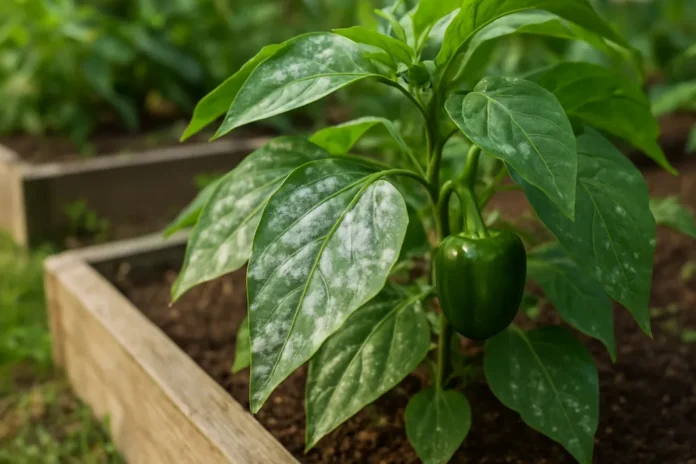
White powder on a pepper plant is most often powdery mildew, a common fungal disease that coats leaves, stems, and sometimes fruit. It can also be mineral residue, dried spray, or insect-related waxy material, but powdery mildew is the usual culprit.
If you walk out to your garden and notice a dusty white coating on your pepper leaves, the most likely cause is powdery mildew on pepper plants. It often starts as small pale spots that look like flour or baby powder, then spreads into larger patches across the leaf surface.
The tricky part is that not every white substance on a pepper plant is a disease. I have seen gardeners mistake dried foliar spray, hard-water residue, mealybugs, and even sunscald damage for fungus. The right fix depends on what that white material actually is, because mildew treatment will not help if the problem is insect-related or just leftover spray residue.
The good news is that this is usually manageable, especially if you catch it early. Once you know how to tell true white powder on pepper leaves from other look-alikes, it gets much easier to protect the plant and keep new growth healthy.
What the White Powder Usually Is
In most cases, the white powder is powdery mildew. This fungal disease creates a soft, dusty, white to gray coating on leaves and sometimes on stems. On peppers, it often appears first on older leaves or on foliage in dense, humid parts of the plant where air movement is poor.
Unlike some leaf diseases that need standing water to infect tissue, powdery mildew can spread even when the foliage looks dry. Warm days, cool nights, crowding, overhead watering, and fluctuating humidity all make it more likely. A pepper plant can look fine one week and suddenly show obvious white patches the next.
- It looks like someone dusted the leaf with flour or talc.
- It often starts in small round or irregular spots, then expands.
- The coating may appear on the upper leaf surface first, but it can move to the undersides too.
- Affected leaves may yellow, curl, dry out, or drop if the infection gets worse.
- Fruit is not always coated right away, but severe infections can weaken the whole plant and reduce yield.
When I am diagnosing powdery mildew, I look at several leaves from different parts of the plant instead of just one. If the white coating repeats in a similar dusty pattern across multiple leaves, especially older inner leaves, I treat it as mildew until proven otherwise.
White Substances That Can Look Similar
Before you assume fungus, take a closer look. A few other things can leave white material on pepper plants, and they do not all require the same response.
Mineral or Hard-water Residue
If you spray leaves with hard water, liquid fertilizer, calcium products, or homemade garden treatments, they can dry into a chalky film. This residue usually looks more spotty or crusty than fuzzy, and it often follows droplet patterns. It tends to sit on the surface without spreading from leaf to leaf like a disease.
Dried Pesticide or Foliar Spray
Neem, insecticidal soap, baking soda mixes, and other foliar sprays can leave pale streaks or powdery marks after drying. If the white coating showed up right after treatment and is mostly on exposed top surfaces, residue is a strong possibility.
Mealybugs or Other Waxy Pests
Mealybugs look like tiny white cottony clumps, usually clustered along stems, leaf nodes, or the undersides of leaves. They do not form an even dusting over the whole leaf the way powdery mildew does. You may also notice sticky honeydew or ants nearby.
Whiteflies and Cast Skins
Whiteflies themselves are tiny winged insects that flutter up when the plant is disturbed. Their shed skins and residue can make leaves look pale or dusty, but a close inspection usually reveals insects on the undersides.
Natural Leaf Fuzz or Varietal Traits
Some plants naturally have a soft coating or slightly fuzzy growth, but peppers generally do not develop a sudden flour-like layer as a normal feature. If the white appearance is new and worsening, it is worth taking seriously.
How to Tell if It Is Powdery Mildew
A quick visual check can usually separate powdery mildew from residue or pests. The key is whether the white material behaves like a living infection or just sits there like a deposit.
- Powdery mildew spreads over time. Residue usually does not.
- Mildew often appears in patches on multiple leaves. Spray residue often mirrors where droplets landed.
- Mildew can cause yellowing, curling, or leaf drop. Inert residue usually does not damage the leaf by itself.
- Mealybugs look like distinct cottony insects, not a smooth dusting.
- If you gently wipe a leaf, some mildew may rub off, but the leaf often still shows discolored tissue underneath.
If the coating keeps appearing on new leaves even after rain or rinsing, mildew becomes the top suspect. If it disappears after a careful wash and does not return, residue is more likely.
If you are unsure, do not throw multiple treatments at the plant at once. I prefer to remove the worst affected leaves, rinse one small section if residue seems possible, and watch new growth for a few days before changing anything else.
Why Pepper Plants Get Powdery Mildew
Powdery mildew is encouraged by environment and plant stress more than by one single mistake. In my experience, peppers that are crowded, lush, and shaded in the middle of summer are the ones that most often develop it.
- Poor air circulation between plants
- Crowded foliage that traps humidity
- Warm days and cool, damp nights
- Overhead watering that keeps the canopy humid
- Too much nitrogen, which pushes soft leafy growth
- Plant stress from irregular watering or weak light
- Spores lingering from nearby infected plants
Greenhouse peppers and container peppers on crowded patios can be especially prone because the air stays still around the leaves. Even outdoor plants can get mildew when they are tucked into a corner with lots of surrounding vegetation and not much breeze.
How to Treat White Powder on Pepper Plants
If it is powdery mildew, the goal is to slow the spread, protect healthy foliage, and improve conditions so the plant can outgrow the problem. You do not always need to discard the plant, especially if only a portion of the leaves are affected.
Remove Badly Infected Leaves
Prune off leaves that are heavily coated, yellowing, or collapsing. This reduces the amount of fungal material on the plant and opens the canopy for better air movement. Use clean pruners and do not compost badly diseased foliage unless your compost pile gets hot enough to fully break it down.
Improve Spacing and Airflow
Thin nearby growth if the pepper is boxed in. If the plant is in a container, move it where it gets stronger light and better circulation. Sometimes the cultural fix matters as much as the spray.
Use a Labeled Fungicidal Treatment
Home gardeners often use sulfur, potassium bicarbonate, horticultural oil, neem-based products, or biological fungicides labeled for powdery mildew control. Always follow the product label for peppers, application timing, temperature limits, and harvest intervals. Many leaf burn problems come from spraying the wrong product in hot sun or combining materials that should not be mixed.
Avoid Homemade Mixes Unless You Know the Risks
Baking soda remedies are popular online, but they are easy to overdo and can damage foliage if mixed too strong or applied repeatedly. If you prefer a home remedy, test it on a small area first and wait a couple of days before treating the whole plant.
Water the Soil, Not the Leaves
Keep moisture consistent at the root zone and avoid soaking foliage late in the day. While powdery mildew does not need leaf wetness the same way some diseases do, dense damp foliage still creates a more favorable environment for spread.
- Remove the worst leaves first.
- Increase airflow and light around the plant.
- Apply a product labeled for powdery mildew on edible crops if needed.
- Repeat only as directed on the label.
- Judge success by cleaner new growth, not by expecting old damaged leaves to look perfect again.
I watch the new leaves more than the old ones after treatment. Damaged leaves rarely become pretty again, so the real sign of progress is that fresh growth stays green and powder-free.
Can You Still Eat Peppers From the Plant
Usually, yes. If the fruit itself is sound and not rotting, peppers from a plant with powdery mildew are generally still usable. Wash them well before eating. The bigger concern is plant vigor and reduced production, not usually fruit safety from the mildew itself.
If you applied a fungicide or other spray, follow the product label for the pre-harvest interval. That waiting period matters more than the presence of mildew on leaves. If fruit is deformed, sunscalded, soft, or otherwise compromised, discard it.
How to Prevent It From Coming Back
Prevention is mostly about keeping pepper foliage dry, open, and unstressed. Once a plant has had mildew, it is more vulnerable if the same conditions continue.
- Space pepper plants generously so air can move through them.
- Stake or cage plants if needed to keep foliage upright and open.
- Water early in the day and direct water at the soil.
- Avoid overfeeding with high-nitrogen fertilizer.
- Remove lower or crowded leaves if the canopy gets too dense.
- Clean up infected plant debris at the end of the season.
- Rotate peppers and other susceptible plants when possible.
- Check plants weekly so you catch small patches before they spread.
Container peppers benefit from occasional repositioning too. A pot that looked fine in spring can end up trapped in a still, shaded pocket by midsummer once surrounding plants fill in.
When the Problem Is Not Mildew After All
If treatments for powdery mildew are not helping, step back and reassess. White residue that stays limited to sprayed surfaces may be mineral buildup. White tufts clustered at leaf joints suggest mealybugs. Tiny white insects flying up from the plant point to whiteflies.
I also pay attention to whether the leaf tissue underneath is healthy. A harmless residue may wipe away and reveal a normal green leaf. Powdery mildew often leaves behind yellowing, dull patches, or slight distortion even after some of the surface coating is rubbed off.
If you still cannot tell what you are seeing, a local extension office or master gardener program can often help identify the problem from a clear photo. That can save you from wasting time and stressing the plant with unnecessary sprays.
FAQ
Will Powdery Mildew Kill My Pepper Plant?
Mild infections usually will not kill a pepper plant, but severe or prolonged infections can weaken it enough to reduce growth and yield. Young or already stressed plants are more vulnerable than healthy established ones.
Can Rain Wash the White Powder Off My Pepper Plant?
Rain may remove some surface material, but it usually does not solve powdery mildew because the infection remains on the plant and can keep spreading. Residue from sprays or minerals is more likely to wash off completely.
Should I Remove All Leaves with White Powder?
Remove the worst affected leaves, especially if they are heavily coated or yellowing, but do not strip the plant bare. Peppers still need enough healthy foliage to support fruit and recover.
Is Powdery Mildew Caused by Overwatering?
Not directly, but watering habits can contribute. Overhead watering, overly dense growth, and conditions that keep the canopy humid make powdery mildew more likely to develop and spread.
Can Powdery Mildew Spread to Other Plants Nearby?
Yes. Spores can move on air currents and infect nearby susceptible plants, especially in crowded beds or patios with limited airflow.
Are Homemade Baking Soda Sprays Safe for Pepper Plants?
They can be used carefully, but they are not automatically safer than labeled products. Strong mixtures or repeated use can burn leaves, so test first and avoid spraying during hot bright conditions.
What Does Mealybug Damage Look Like Compared to Mildew?
Mealybugs appear as small white cottony clumps, often at stems and leaf nodes, and they may leave sticky honeydew. Powdery mildew looks more like an even dusty coating spread across the leaf surface.
Need a treatment that actually works on edible plants? Read our guide to the best fungicides and organic sprays for powdery mildew so you can choose the right product fast.
