

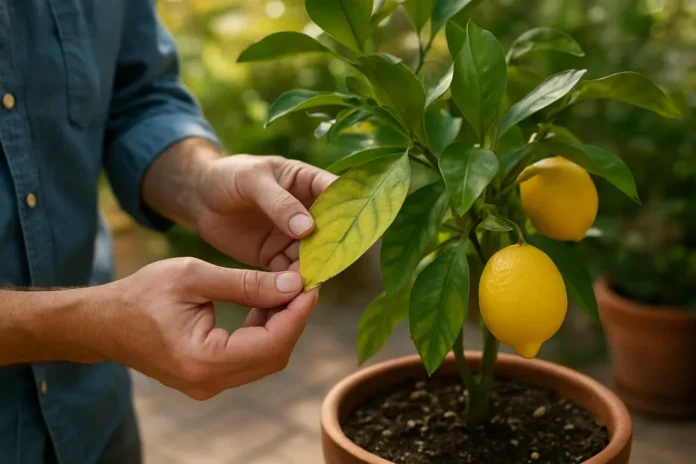
Lemon tree leaves usually turn yellow because of watering stress, nutrient deficiencies, poor drainage, pest pressure, or cold-related stress. The exact cause often depends on whether older or newer leaves yellow first and whether the veins stay green.
Seeing lemon tree leaves turning yellow can be frustrating, especially when the tree was deep green just a few weeks earlier. In my experience, yellowing leaves are rarely random. Lemon trees react quickly when something is off, and the color change is often the plant's early warning system.
The good news is that yellow leaves do not always mean the tree is dying. Sometimes the cause is as simple as watering too often, letting the pot sit soggy, or missing a regular feeding schedule. Other times, the pattern matters more than the color itself. A few older leaves yellowing is very different from bright yellow new growth with green veins. Once you match the symptom pattern to the likely cause, the fix becomes much clearer.
This guide walks through the most common reasons lemon tree leaves lose their color, how to tell one problem from another, and what usually helps a home gardener get the tree growing green again.
What Yellow Leaves Usually Mean on a Lemon Tree
Yellowing leaves on lemon trees are most often a sign of stress rather than a single disease. Citrus are heavy feeders, sensitive to cold, and very particular about root conditions. When roots stay too wet, dry out too often, or cannot access enough nutrients, the leaves respond quickly.
The first thing I look at is which leaves are yellowing. If older, lower leaves turn pale first, I suspect a mobile nutrient issue like nitrogen or a general watering problem. If brand-new leaves come in yellow while the veins stay greener, iron deficiency is high on the list. If leaves yellow and then drop after a sudden weather change or move indoors, environmental stress may be the main trigger.
- Older leaves yellowing first often points to nitrogen deficiency or inconsistent watering.
- New leaves yellowing first often suggests iron deficiency or high soil pH.
- Leaves yellowing evenly all over the tree can indicate overwatering, root stress, or underfeeding.
- Yellow leaves with speckling, sticky residue, or distortion may involve pests.
- Yellowing after a cold snap, repotting, or moving the tree indoors is often stress-related.
When I diagnose citrus, I pay more attention to the pattern than the first yellow leaf. A lemon tree with a few aging leaves is normal, but a tree pushing weak yellow new growth is telling you the root zone or feeding program is off.
Overwatering and Poor Drainage Are Common Culprits
If I had to pick the most common reason home gardeners see yellow lemon leaves, it would be overwatering or slow drainage. Lemon trees like consistent moisture, but they do not like to sit in waterlogged soil. When roots stay wet too long, they cannot take up oxygen properly, and the leaves begin to yellow, droop, and sometimes fall.
This is especially common in container trees. A decorative pot without a drainage hole, a saucer left full of water, or a dense potting mix can keep roots soggy for days. The top inch may look dry while the lower root ball is still saturated. Outdoor trees can run into the same issue in heavy clay soil or low spots that collect water after rain.
Signs the Tree Is Staying Too Wet
- Leaves turn pale yellow across much of the canopy
- Leaves may feel limp or soft before dropping
- Soil stays damp for several days after watering
- The pot feels very heavy long after a soak
- There may be a sour or swampy smell near the root zone
If overwatering is the issue, the fix is not to water on a rigid calendar. Water based on how quickly the root zone actually dries. For potted lemons, let the top couple of inches dry before watering again, then water thoroughly until excess drains out. For in-ground trees, water deeply but less often so the roots can breathe between soakings.
I like to lift the pot slightly before and after watering to learn the weight difference. That simple habit is more reliable than watering by the day of the week, especially in spring and fall when citrus use water unevenly.
Underwatering Can Cause Yellowing Too
Not every yellow lemon tree is overwatered. Drought stress can produce yellow leaves as well, especially if the tree repeatedly gets bone dry and then soaked again. Lemon trees dislike that swing. The roots may shut down temporarily, and older leaves often yellow and drop to reduce stress.
Container lemons are especially vulnerable in hot weather because their root balls dry faster than in-ground trees. Wind, reflected heat from patios, and small pots all speed up moisture loss. In the ground, sandy soil can let water pass too quickly unless irrigations are deep enough.
Clues the Tree May Be Too Dry
- Leaves look yellowish and slightly crisp at the edges
- Some leaves curl inward or feel dry rather than limp
- The potting mix pulls away from the sides of the pot
- Flower buds or small fruit drop suddenly during hot weather
- The tree perks up temporarily after a deep watering
The goal is steady moisture, not constant moisture. Water deeply enough to moisten the whole root ball, then allow the upper layer to dry slightly before watering again. A mulch layer around in-ground trees can help moderate swings, but keep mulch a few inches away from the trunk.
Nutrient Deficiencies Often Show Up in Specific Patterns
Lemon trees are hungry plants. If they are not fed regularly during active growth, yellow leaves are common. Citrus deficiencies usually show up in recognizable ways, and the age of the affected leaves gives you a strong clue.
Nitrogen Deficiency
Nitrogen deficiency usually causes older leaves to fade from green to light yellow more evenly across the leaf. The whole tree may look washed out or sparse. Growth slows, and new leaves may emerge smaller than normal. This is one of the most common issues in potted lemons that have used up the fertilizer in their mix.
Iron Deficiency
Iron deficiency often shows up on the newest leaves first. The leaf tissue turns yellow while the veins stay greener, creating a clear contrast. Citrus can have iron in the soil and still struggle to use it if the soil pH is too high or the roots are stressed by poor drainage.
Magnesium Deficiency
Magnesium problems tend to appear on older leaves, often with yellowing between veins while a green area remains near the base or along parts of the leaf. It is common in citrus grown in containers for long periods without a complete citrus fertilizer.
What to Do About Feeding
Use a fertilizer made for citrus or fruiting plants, and follow the label rather than guessing. These blends usually include nitrogen plus key micronutrients like iron, manganese, and zinc. During the main growing season, regular feeding helps maintain leaf color and supports flowering and fruiting. If the tree is in a pot, nutrients wash out faster, so consistent feeding matters even more.
I am cautious about calling every yellow citrus leaf a fertilizer problem. If the roots are staying soggy, adding more fertilizer rarely solves the issue and can make root stress worse. I try to correct moisture and drainage first when the soil feels off.
High Soil pH Can Block Nutrients Even when Fertilizer Is Present
Lemon trees prefer slightly acidic soil. When the pH drifts too high, especially in alkaline regions or when watered repeatedly with hard water, the roots can struggle to absorb iron and other micronutrients. The result can look like a nutrient deficiency even though nutrients are technically present.
This issue is common in parts of the western and southwestern U.S., where native soils and tap water often run alkaline. In containers, repeated watering can slowly shift the root zone chemistry over time. If new leaves are yellow with greener veins and regular feeding has not helped, pH is worth considering.
- High pH often affects new growth first
- Iron chlorosis is a common result
- Container trees can develop pH problems faster than in-ground trees
- Hard water can contribute to gradual nutrient lockout
A soil or potting mix test is the best way to confirm this. If pH is high, gardeners usually improve matters by using a citrus fertilizer formulated for micronutrient availability, avoiding excess lime, and in some cases applying iron in a form suited to alkaline conditions. Long term, the goal is to make the root zone more favorable, not just to green up the leaves for a week.
Pests Can Trigger Yellow Leaves, Especially Indoors or in Protected Spots
Several citrus pests feed by sucking sap from the leaves, which can cause yellow speckling, blotchy fading, or general decline. This is especially common on lemon trees that spend part of the year indoors, in greenhouses, or on sheltered patios where air circulation is lower.
Common Pest Suspects
- Spider mites, which often cause fine stippling and may leave faint webbing
- Scale insects, which look like small bumps on stems or leaf undersides
- Aphids, which cluster on tender new growth and excrete sticky honeydew
- Whiteflies, which flutter up when the plant is disturbed
Pest-related yellowing rarely looks perfectly uniform. Leaves may appear mottled, speckled, curled, or sticky. If you suspect insects, check the undersides of leaves, stem joints, and tender flushes of growth. A simple rinse, insecticidal soap, or horticultural oil often works well for light infestations, but the product and timing need to match the pest.
Avoid spraying in intense heat or direct midday sun, especially on a stressed citrus tree. If the tree is already dehydrated, harsh treatment can add more stress instead of helping.
Cold Weather, Low Light, and Sudden Changes Can Shock Lemon Trees
Lemon trees are more cold-sensitive than many other fruit trees. A chilly night, cold draft, or sudden move from outdoors to indoors can trigger leaf yellowing and drop. This is very common in fall when gardeners bring potted citrus inside for winter or in spring when a tree is set outdoors too quickly into stronger sun and wind.
Indoor lemons also struggle with low light. When light levels drop, the tree may not support all of its leaves efficiently, and some yellowing follows. Add dry indoor air or heater vents, and the tree may respond by shedding older foliage.
Environmental Stress Signs
- Yellowing begins soon after a move or weather shift
- Leaf drop accompanies the yellowing
- There is no obvious pest damage or nutrient pattern
- The tree sits near cold windows, vents, or drafty doors
- Indoor growth becomes weak, stretched, or sparse
Gradual transitions help. If moving a lemon tree indoors, do it before nights turn cold and give the tree the brightest location available. If moving it back outdoors, harden it off over several days so leaves do not scorch or stress all at once.
Root Crowding and Container Problems Can Quietly Cause Yellow Leaves
A lemon tree can also turn yellow simply because the root system has outgrown its pot. When roots circle densely, they dry out faster, hold less fresh potting mix, and have fewer nutrients available. Sometimes the tree becomes hard to water properly because water runs down the sides or through root channels without fully soaking in.
Old potting mix can become compacted or break down over time, creating the opposite problem too much water retention. In both cases, the leaves may yellow because roots are no longer functioning smoothly.
- Roots circle heavily around the pot edge or bottom
- The tree dries out unusually fast after watering
- Water beads up or runs through too quickly
- Growth slows even during warm, bright weather
- The tree has been in the same pot for several years
If root crowding is the issue, repot into a slightly larger container with fresh, well-draining citrus-friendly mix. Do not jump to an oversized pot, because too much extra soil can stay wet too long. A modest size increase usually gives better results.
How to Narrow Down the Real Cause
When several factors overlap, diagnosis gets easier if you work through the basics in order. Lemon trees often suffer from more than one issue at once, such as low light plus overwatering or high pH plus missed feeding.
- Check soil moisture several inches down, not just the surface.
- Look at whether old or new leaves are yellowing first.
- Inspect leaf undersides and stems for pests or sticky residue.
- Consider recent changes like weather swings, moving the plant, or repotting.
- Review your feeding routine and whether the tree gets a complete citrus fertilizer.
- Think about drainage, pot size, and how long the tree has been in the same soil.
Once you identify the most likely cause, make one or two major corrections rather than five at once. That way you can tell what is actually helping. In many cases, the old yellow leaves will not turn green again, so judge progress by healthier new growth over the next few weeks.
I usually tell gardeners to watch the next flush of leaves, not the damaged ones already on the tree. Citrus recovery shows up in clean new growth first, and that keeps you from overcorrecting when the old leaves stay yellow.
FAQ
Will Yellow Lemon Tree Leaves Turn Green Again?
Sometimes mildly stressed leaves regain some color, but many yellow leaves stay pale or eventually drop. The better sign of recovery is healthy new green growth after the underlying problem is corrected.
How Often Should I Water a Potted Lemon Tree?
There is no single schedule that fits every home, season, or pot size. Water when the upper couple of inches of mix have dried, then soak thoroughly and let excess water drain away completely.
Can Too Much Fertilizer Make Lemon Leaves Yellow?
Yes. Excess fertilizer can burn roots and interfere with normal water uptake, which may lead to yellowing, browning edges, or leaf drop. Always follow label rates and avoid feeding a severely dry or waterlogged tree.
Why Are the Veins Green but the Rest of the Leaf Is Yellow?
That pattern often points to chlorosis, commonly caused by iron deficiency or iron lockout from high soil pH. It is especially noticeable on newer leaves.
Do Lemon Trees Naturally Drop Some Yellow Leaves?
Yes. An occasional older leaf yellowing and falling is normal, especially as the tree replaces aging foliage. Concern rises when many leaves yellow at once or new growth is affected.
Should I Remove Yellow Leaves From My Lemon Tree?
If the leaves are mostly yellow and detach easily, you can remove them for tidiness. If they are only partly yellow, it is usually better to leave them until the tree sheds them naturally, since they may still contribute some energy.
Can Indoor Conditions Make My Lemon Tree Leaves Yellow?
Absolutely. Low light, dry air, drafts, and changes in temperature often stress indoor citrus. These conditions can lead to yellowing and leaf drop even when watering seems correct.
Want greener citrus and better fruit set? Read our citrus fertilizer and care guide to choose the right feeding plan, potting mix, and treatments for a struggling lemon tree.
