

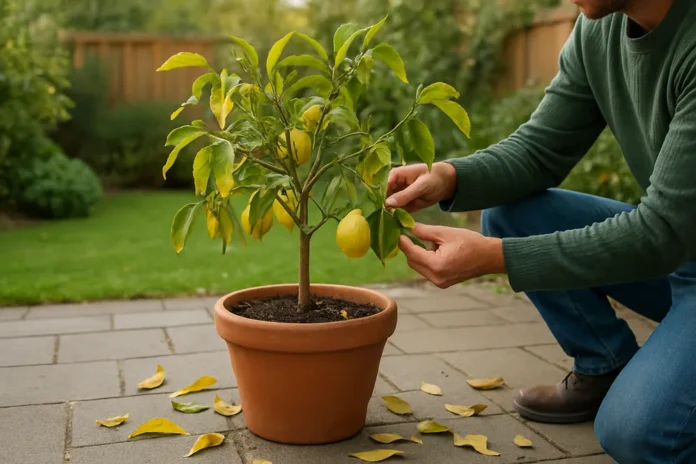
Lemon trees usually shed leaves because of watering stress, sudden temperature changes, low light, transplant shock, or pest pressure. Leaf drop is often the tree’s response to stress rather than a permanent decline.
A lemon tree shedding leaves can look alarming fast, especially when the pot or ground beneath it starts filling up with green or yellow leaves. The good news is that leaf drop does not always mean your tree is dying. In many cases, lemons react dramatically to stress, then recover well once the main problem is corrected.
I have found that citrus is less forgiving of sudden change than many other fruit plants home gardeners grow. A lemon tree may drop leaves after a move indoors, a cold night, inconsistent watering, root stress, or a pest outbreak that went unnoticed for a week or two. The pattern of leaf drop usually tells you a lot, whether the leaves are yellowing first, falling while still green, or dropping mostly from inner branches.
If you can match the symptom pattern to the cause, you can usually stop the decline and encourage healthy new growth. The key is to fix the underlying stress without overcorrecting and creating a second problem.
What Normal Leaf Drop Looks Like
Not every fallen leaf is a crisis. Lemon trees regularly replace older leaves over time, especially interior leaves that get less light. A few yellowing leaves here and there, followed by steady new growth, is usually part of the normal cycle.
What is not normal is rapid thinning, bare branch tips, clusters of green leaves falling at once, or leaf drop paired with wilting, sticky residue, webbing, black soot, or soggy soil. When the loss is sudden or heavy, the tree is almost always reacting to stress.
- Normal leaf drop is usually light, gradual, and limited to older leaves.
- Stress-related leaf drop often happens quickly and may involve yellow, curled, or still-green leaves.
- If flower buds, tiny fruit, and leaves are all dropping together, the tree is under significant strain.
Watering Stress Is the Most Common Cause
Overwatering and Poor Drainage
If I had to guess one cause first for a potted lemon dropping leaves, I would start with excess moisture around the roots. Lemon trees want consistent moisture, but they do not want to sit in dense, airless, soggy soil. When roots stay wet too long, they lose oxygen, begin to decline, and the canopy responds with yellow leaves and leaf drop.
Overwatered lemon trees often show leaves that yellow before falling. The soil may stay wet several days after watering, and the pot may feel unusually heavy. In severe cases, you may notice a sour smell from the soil or dark, weakened roots if the tree is removed from the container.
Underwatering and Drought Stress
Too little water can cause leaf drop too, and sometimes the symptoms look confusingly similar. Dry root balls make leaves curl, crisp at the edges, or fall while still partly green. Fruit may shrivel, and branch tips may begin to dry back if the drought is prolonged.
A lemon tree in a warm, bright spot can go from fine to stressed surprisingly quickly, especially in a small black nursery pot. Outdoor container trees in summer may need water far more often than gardeners expect, while indoor trees often need less frequent but deeper watering.
When I am diagnosing citrus, I pay close attention to the weight of the container and how the soil behaves two or three days after watering. A tree that stays wet too long usually declines more steadily, while a tree that repeatedly dries out tends to swing between droop and recovery before it starts shedding heavily.
- Check that the pot has open drainage holes and is not sitting in trapped water.
- Water thoroughly, then let the top inch or two of soil dry before watering again.
- Avoid tiny sips of water that moisten only the surface while leaving deeper roots dry.
- If the soil is compacted or stays soggy, repot into a fast-draining citrus mix.
Sudden Temperature Changes Can Trigger Leaf Drop
Lemon trees dislike abrupt shifts in temperature, especially from warm to cold. A chilly night outdoors, a drafty doorway, a blast from a heating vent, or moving the tree from a humid patio to a dry heated room can all trigger leaf drop. Citrus often reacts after the event rather than during it, so the leaves may start falling several days later.
Cold stress can cause leaves to curl, look dull, or fall while still green. Heat stress indoors can do the same when warm dry air combines with low humidity and reduced winter light. Trees kept near fireplaces, radiators, or frequently opened exterior doors often decline even if the rest of the room feels acceptable.
- Protect lemon trees from temperatures below their comfort range, especially sudden cold snaps.
- Keep indoor trees away from heating vents, fireplaces, and cold drafts.
- If moving a tree indoors or outdoors seasonally, make the transition gradually over several days.
Low Light Is a Major Indoor Problem
Many lemon trees look healthy outside and then begin dropping leaves a few weeks after coming indoors. This is extremely common. The tree is adjusting to much lower light, even if the room seems bright to you. Citrus needs strong direct light to support a dense canopy, and when that energy supply drops, the tree sheds leaves to reduce demand.
Low-light leaf drop often affects the interior and lower canopy first. New growth may appear weak, stretched, pale, or sparse. If the tree is also overwatered indoors, the combination becomes much harder on the roots and leaves.
Place indoor lemon trees in the brightest window you have, ideally one with several hours of direct sun. Supplemental grow lights are often helpful in winter, especially in northern climates or in homes where bright south-facing windows are limited.
If your lemon always declines after the fall move indoors, do not wait for severe leaf drop before adjusting conditions. I like to give citrus its brightest spot from day one and rotate the pot only lightly so the tree is not constantly reorienting to new light.
Transplant Shock and Environmental Change Can Cause a Sudden Shed
Lemon trees can be dramatic after any major change in routine. Repotting, bringing a tree home from the nursery, moving it from one side of the yard to another, or shifting it indoors for winter can all trigger temporary leaf drop. The tree is reallocating energy while roots and leaves adapt to a new environment.
This kind of leaf drop often shows up within a week or two of the change. Leaves may fall green, especially if the roots were disturbed. If the tree otherwise looks structurally sound and the stems remain green and flexible, recovery is likely once conditions stabilize.
- Avoid repotting unless the tree truly needs it.
- Keep watering consistent after a move or transplant.
- Do not fertilize heavily right after repotting or relocation.
- Give the tree time to adjust before making more changes.
Pests Often Hide Until Leaf Drop Begins
Spider Mites
Spider mites are one of the most common reasons indoor citrus starts dropping leaves. They thrive in warm, dry conditions and feed on leaf tissue, causing stippling, fading color, and eventual leaf loss. Fine webbing may appear on leaf undersides or between stems when the infestation is heavier.
Scale, Aphids, and Mealybugs
Scale insects, aphids, and mealybugs suck sap from leaves and stems. This weakens the tree and can lead to yellowing, curled leaves, sticky honeydew, and black sooty mold. Scale can be especially easy to miss because it often looks like harmless bumps on stems.
Inspect both sides of leaves, the stems near leaf joints, and the undersides of branches. Many gardeners notice leaf drop before they realize a pest population has been building for weeks.
On indoor lemons, I check for pests before I reach for fertilizer. A stressed citrus tree with mites or scale often gets blamed on watering alone, but the giveaway is that the leaves look tired and speckled even when the soil moisture seems reasonable.
- Rinse foliage thoroughly to knock down light pest populations.
- Wipe or prune heavily infested areas when practical.
- Use insecticidal soap or horticultural oil labeled for citrus and follow directions carefully.
- Repeat treatments as needed because one spray rarely solves an established infestation.
Nutrient Problems Can Weaken the Canopy
Nutrient deficiency is not always the first reason a lemon tree drops leaves, but it can contribute to thinning, yellowing, and poor recovery from other stress. Nitrogen deficiency often causes older leaves to yellow more uniformly. Iron deficiency tends to show as yellow leaves with greener veins, especially on newer growth.
That said, many nutrient problems are not caused by a lack of fertilizer alone. Cold roots, soggy soil, high soil pH, and damaged roots can all reduce nutrient uptake. In those cases, feeding more heavily does not solve the issue and may make it worse.
Use a citrus-specific fertilizer during active growth according to label directions. Avoid overfeeding a stressed tree, especially if it is indoors and not growing strongly. The goal is to support recovery, not force weak growth.
Root Problems and Container Issues Deserve a Close Look
A lemon tree that keeps shedding leaves despite decent watering habits may have a root-zone problem. Containers that are too large stay wet too long. Containers that are too small dry out too fast and leave the tree root-bound. Old potting mix can break down into a dense mass that holds water unevenly and limits oxygen around the roots.
Root rot can follow prolonged saturation and usually shows up as ongoing yellowing, weak growth, and leaf drop that does not improve with routine watering changes. If you unpot the tree and find mushy, dark roots instead of firm pale roots, the root system has been under stress for a while.
- Choose a pot only slightly larger than the root ball when repotting.
- Use a coarse, fast-draining citrus or cactus-citrus blend rather than heavy garden soil.
- Do not bury the trunk deeper than it was before.
- Refresh old potting mix if drainage and root health have clearly declined.
Fruit Load and Flowering Stress Can Also Lead to Leaf Loss
Lemon trees sometimes try to hold more flowers or fruit than their current root system and light levels can support. When that happens, the tree may shed some leaves, blossoms, or small fruit to rebalance itself. This is more common in young container trees or trees already dealing with low light, inconsistent moisture, or recent transplant stress.
If your tree is small and heavily loaded with blossoms or developing lemons, some thinning may help reduce stress. Mature, healthy trees can carry more fruit, but younger trees often perform better when they are not pushed too hard.
How to Tell Which Cause Is Most Likely
Leaf drop diagnosis gets easier when you combine the leaf pattern with recent changes in care. Try to avoid treating every possible cause at once. Lemon trees recover best when you identify the biggest stress and fix that first.
- Yellow leaves and constantly wet soil often point to overwatering or poor drainage.
- Crisp edges, droop, and a dry root ball suggest underwatering.
- Green leaf drop after moving the plant often suggests shock, temperature change, or low light.
- Speckling, webbing, sticky residue, or bumps on stems strongly suggest pests.
- Pale weak growth with general thinning may involve low light or nutrient imbalance.
Also look at whether the stems are still alive. Green flexible stems and viable buds usually mean the tree can rebound, even after significant defoliation. Brittle twigs and dieback across branch tips suggest the stress has gone on longer and recovery will take more time.
What to Do Right Now to Help Your Lemon Tree Recover
Start by stabilizing the environment. Give the tree bright light, even temperatures, and a consistent watering routine. If the soil is waterlogged, fix drainage before adding fertilizer. If the soil is bone dry, rehydrate thoroughly and resume a more even schedule.
Remove only clearly dead leaves or twigs. Avoid heavy pruning while the tree is stressed, since the remaining leaves are still helping it recover. Hold off on aggressive feeding unless the tree is actively growing and the root system appears healthy.
- Move the tree into the brightest suitable location you have.
- Check soil moisture several inches down before watering again.
- Inspect closely for mites, scale, aphids, and mealybugs.
- Improve drainage or repot only if the current soil is clearly unsuitable.
- Wait for healthy new growth as the best sign that conditions have improved.
Recovery is usually measured by new leaves, not by the old damaged ones improving. Once the stress is corrected, a lemon tree may sit quietly for a few weeks before pushing fresh growth.
When Leaf Drop Means the Problem Is Serious
A severely stressed lemon tree can still recover, but a few signs call for faster action. Watch for blackened stems after cold damage, persistent soggy soil with a sour smell, widespread twig dieback, or a trunk that is soft or discolored near the base. These point to deeper root or tissue damage rather than a simple temporary stress response.
If nearly all leaves are gone but the wood is still green under the bark, the tree may survive with steady care and patience. If branches are dry and brown all the way through, or the trunk base is rotting, the odds are much lower.
FAQ
Will My Lemon Tree Grow Its Leaves Back?
Usually yes, if the branches and roots are still alive and the main stress is corrected. Healthy new growth is the best sign of recovery, and it may take a few weeks to appear.
Why Is My Lemon Tree Dropping Green Leaves Instead of Yellow Ones?
Green leaf drop often points to sudden stress such as temperature shock, a move indoors, transplant shock, or abrupt watering changes. Citrus can shed still-functional leaves quickly when conditions change faster than it can adapt.
How Often Should I Water a Lemon Tree That Is Losing Leaves?
There is no fixed schedule that fits every tree. Water when the upper soil has started to dry but before the root ball becomes completely dry, and always adjust for pot size, season, temperature, and light.
Should I Fertilize My Lemon Tree if It Is Dropping Leaves?
Only if the tree is actively growing and you are confident the roots are healthy. A stressed tree in soggy soil or low light usually needs better conditions first, not more fertilizer.
Can Bringing My Lemon Tree Indoors for Winter Make It Lose Leaves?
Yes, that is very common. Lower light, drier air, and temperature swings indoors often trigger leaf drop, especially during the first few weeks after the move.
Do Spider Mites Make Lemon Trees Lose Leaves?
Yes. Spider mites can cause stippled, dull-looking leaves that dry out and fall, especially on indoor citrus kept in warm dry air.
Should I Remove All the Yellow Leaves From My Lemon Tree?
Remove leaves that are fully dead or come off easily, but do not strip the tree aggressively. Even stressed leaves can still help the plant while it recovers.
Want to save a struggling citrus tree faster? Read our guide to the best citrus fertilizers, potting mixes, and pest treatments so you can choose the right fix with confidence.
