

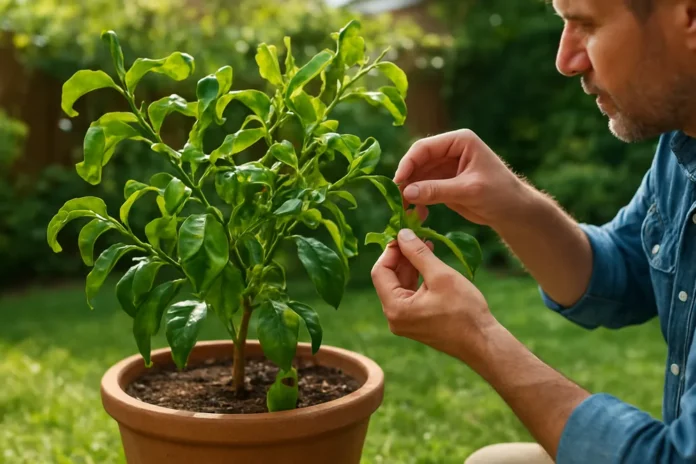
Lemon tree leaves usually curl because of water stress, pest feeding, temperature extremes, or root and nutrient problems. The exact cause often shows up in the way the leaves curl and whether you also see yellowing, spots, or sticky residue.
Curled leaves on a lemon tree are one of those symptoms that can look alarming fast, especially when the tree was healthy a week earlier. In my experience, lemon tree leaves curling is usually the plant's way of reacting to stress rather than a disease all by itself. The trick is figuring out which kind of stress is behind it.
Sometimes the problem is as simple as inconsistent watering during hot weather. Other times it is a clue that sap-sucking insects, poor drainage, cold snaps, or nutrient trouble are interfering with normal growth. On lemon tree foliage, the shape of the curl, the age of the affected leaves, and the presence of yellowing, spots, webbing, or sticky residue can narrow things down quickly.
If you look at the whole tree instead of just one leaf, the pattern usually becomes clearer. A few curled leaves on tender new growth suggest something different than widespread cupping across the entire canopy.
What Leaf Curling Usually Means on a Lemon Tree
Leaf curl is a stress response. When a lemon tree cannot move water properly, loses moisture too quickly, or has damage to tender tissue, the leaves may roll inward, cup upward, twist, or pucker. That curling helps reduce water loss, but it also tells you the tree is not growing under ideal conditions.
Before assuming the worst, look for these clues: whether the newest leaves or oldest leaves are affected first, whether the leaf edges are dry or still soft, whether the leaves are curling evenly or becoming distorted, and whether there are insects, honeydew, webbing, or mines inside the leaf tissue. Those details are more useful than the curl alone.
When I diagnose citrus leaf curl, I look at new growth first. If the newest leaves are twisted or puckered, I suspect pests or a micronutrient issue sooner than watering. If older leaves are folding during a hot spell, water stress jumps higher on my list.
Water Stress Is the Most Common Cause
Underwatering
A lemon tree that gets too dry often curls its leaves inward to conserve moisture. You may also notice limp foliage, dry leaf edges, flower drop, or small fruit dropping early. This is especially common in containers, during heat waves, and in fast-draining sandy soil.
Container lemons can go from fine to stressed surprisingly fast because the root zone heats up and dries more quickly than in-ground soil. If the potting mix has pulled away from the sides of the pot, water may run straight through without rewetting the root ball evenly.
Overwatering and Poor Drainage
Too much water can also curl leaves. When roots sit in soggy soil, they cannot take up oxygen well, and the foliage reacts almost as if the tree were dry. Leaves may curl, look dull, turn yellow, or eventually drop. In severe cases, branches begin to die back and the soil smells sour.
- Underwatered trees often have dry soil, brittle edges, and drooping that improves after a proper soak.
- Overwatered trees often have constantly wet soil, generalized yellowing, and leaves that stay curled even though the soil is moist.
- Trees in heavy clay or pots without enough drainage are especially vulnerable to root stress from excess water.
If watering is the cause, the fix is consistency. Lemon trees like deep watering followed by some drying at the surface, not constant drought and flood cycles.
Pests Often Curl Young Lemon Leaves
Aphids
Aphids gather on soft new growth and suck sap from expanding leaves. That feeding causes leaves to curl, pucker, or twist as they develop. You may also see sticky honeydew, ants moving up and down the stems, or black sooty mold growing on that sticky residue.
Citrus Leaf Miner
Leaf miner is a very common reason tender lemon leaves look curled and distorted. The larvae tunnel between the leaf surfaces, creating silvery, winding trails. As the leaf expands, the damaged tissue pulls unevenly, making the leaf curl and crumple.
Spider Mites, Whiteflies, and Scale
Spider mites are more likely in hot, dry conditions and can cause leaf curl along with stippling or a dusty, faded look. Whiteflies and scale also remove sap and weaken the tree, though they more often cause yellowing and sticky buildup before obvious curling becomes severe.
- Sticky leaves or nearby ants suggest aphids, whiteflies, or scale.
- Fine webbing and pale stippling suggest spider mites.
- Winding, silvery trails in tender leaves strongly suggest citrus leaf miner.
- Distortion limited to fresh flushes of growth often points to pest damage rather than root trouble.
If pests are involved, focus on protecting the next flush of growth instead of expecting damaged leaves to flatten out. Once a citrus leaf has expanded in a distorted shape, it usually stays that way.
Heat, Cold, Wind, and Sudden Weather Changes Can Trigger Curling
Lemon trees prefer steady warmth, bright sun, and some shelter from harsh conditions. When temperatures swing quickly, leaves may curl as a short-term defense. Heat and dry wind increase moisture loss, while cold snaps can injure tender tissue and leave leaves curled, cupped, or stiff.
This is especially common with patio lemons that move between indoors and outdoors. A tree that has been living in lower indoor light can react badly when placed suddenly into strong afternoon sun or drying wind. Likewise, a tree left outside during a chilly night may show curling within a day or two.
- Heat stress often causes upward cupping or inward rolling during the hottest part of the day.
- Cold injury may be followed by curling, dull color, and later leaf drop.
- Dry wind can scorch margins and make the tree look thirsty even when the soil is not bone dry.
- Sudden environmental shifts are harder on container lemons than established in-ground trees.
If weather caused the problem, the key is reducing additional stress while the tree adjusts. New leaves produced under better conditions should look normal.
Nutrient Problems Can Distort or Curl Foliage
Lemon trees are fairly heavy feeders, and nutrient shortages can show up in the leaves. Nitrogen deficiency usually causes pale older leaves more than pronounced curling, but shortages of magnesium, zinc, manganese, or iron can affect growth quality and lead to smaller, misshapen, or curled new leaves.
This is more common in containers where nutrients wash out quickly, in alkaline soils where micronutrients become less available, and in trees with compromised roots. Nutrient problems often come with color changes, such as yellowing between veins, rather than curl alone.
Clues That Point Toward Feeding Issues
- New leaves are small, pale, and slightly distorted.
- Older leaves yellow first, especially with general nitrogen shortage.
- Leaf veins stay greener than the tissue between them.
- The tree is growing slowly and not putting out vigorous flushes.
A balanced citrus fertilizer used at the right time often helps if nutrition is the problem, but it will not solve leaf curl caused by waterlogged roots or insect feeding. That is why it is worth diagnosing before feeding heavily.
Root Stress and Pot Problems Are Easy to Miss
Sometimes curled leaves start below the soil line. Lemon trees in containers can become root-bound, develop compacted potting mix, or suffer from salt buildup from fertilizer and hard water. Any of these can interfere with water uptake and leave the top growth curled or stressed.
In-ground trees can have similar issues if soil is heavily compacted or if the planting hole acts like a basin that holds water around the roots. Root rot may also be involved when the tree stays too wet for long periods.
- Water rushes through the pot but the root ball still feels dry in places.
- White crust forms on the soil surface or pot rim from salts.
- Roots circle tightly around the inside of the container.
- The tree wilts or curls despite regular watering.
- Growth stalls even during the active season.
I have seen many potted lemons blamed for nutrient deficiency when the real problem was an exhausted potting mix that had turned dense and hydrophobic. If water beads off the surface or runs straight down the sides, the roots may not be getting an even drink.
How to Tell Which Cause Is Most Likely
Start with the pattern. Is the curling limited to tender new leaves, or is the whole tree involved? Do the leaves look soft and green, dry and crispy, yellow and limp, or twisted and scarred? Those distinctions narrow the list quickly.
- Check soil moisture 2 to 4 inches down or deeper in containers, not just the top surface.
- Inspect the undersides of leaves and growing tips for aphids, mites, whiteflies, and scale.
- Look for leaf miner trails in fresh leaves.
- Review recent weather, especially heat spikes, wind, cold nights, or sudden moves from indoors to outdoors.
- Consider when the tree was last fertilized and whether the potting mix or soil drains well.
If you see both curling and sticky residue, pests rise to the top of the suspect list. If the soil has stayed wet for days and the leaves are yellowing, root stress is more likely. If the leaves curl mainly by afternoon and relax a bit overnight, heat and moisture imbalance are often involved.
What to Do for a Lemon Tree with Curled Leaves
Correct Watering First
If the soil is dry, water deeply so the full root zone is moistened. Then let the upper layer begin to dry before watering again. If the soil is constantly wet, cut back on watering and improve drainage if possible.
Treat Pests Early
A strong spray of water can knock off aphids. Horticultural oil or insecticidal soap can help with soft-bodied pests when used carefully according to label directions. Citrus leaf miner usually causes cosmetic damage on home trees, but protecting tender flushes can reduce distortion.
Reduce Environmental Stress
Give container trees a little afternoon protection during extreme heat, and acclimate them gradually when moving them outdoors. Protect them from cold snaps and harsh wind. Stable conditions help the next round of leaves come in stronger.
Feed Appropriately, Not Aggressively
If the tree has not been fertilized in a while and growth is pale or weak, use a citrus-specific fertilizer during active growth. Avoid overfertilizing a stressed tree, especially if roots may be damaged. Too much fertilizer can worsen salt stress and leaf burn.
Repot or Refresh the Root Zone when Needed
For root-bound container lemons, move up only slightly in pot size and use a well-draining citrus-friendly mix. If salts have built up, flushing the pot thoroughly can help. If the mix has become compacted and old, replacing it may solve problems that watering and fertilizer cannot.
When Curled Leaves Are Not a Major Problem
Not every curled leaf means the tree is in serious trouble. A few distorted leaves after a hot week, a minor aphid visit, or a fresh flush touched by leaf miner may not affect the overall health of an established lemon tree very much.
Pay more attention if curling is spreading, the tree is dropping many leaves, branches are dying back, fruit is aborting, or the plant looks stalled for weeks. In those cases, the issue is likely persistent rather than temporary.
When to Get Extra Help
Consider local extension guidance or a certified arborist if leaf curl comes with branch dieback, severe yellowing, trunk damage, oozing, or major decline that does not improve after basic care adjustments. Citrus can also show region-specific problems that are easier to identify with local expertise.
For most home gardeners, though, the cause comes down to a manageable handful of issues: watering inconsistency, pest pressure, harsh weather, or root-zone stress. Once that underlying problem is corrected, healthy new growth is the best sign that the tree is recovering.
FAQ
Will Curled Lemon Leaves Uncurl After I Fix the Problem?
Sometimes mildly stressed leaves relax a little, but badly distorted citrus leaves usually stay that way. The better sign of recovery is healthy new growth.
Can Too Much Sun Make Lemon Leaves Curl?
Yes, especially when a container tree is moved suddenly into intense sun or hot wind. The leaves may cup or roll to reduce moisture loss.
Should I Remove Curled Leaves From My Lemon Tree?
Only remove leaves that are badly damaged, dead, or heavily infested. Slightly curled leaves can still photosynthesize and support the tree.
How Do I Know if Curling Is From Underwatering or Overwatering?
Check the root zone, not just the surface. Dry soil, crispy edges, and rapid perk-up after watering suggest underwatering, while constantly wet soil, yellowing, and lingering curl suggest overwatering or poor drainage.
Do Aphids Cause Lemon Leaves to Curl?
Yes. Aphids feeding on soft new growth commonly cause puckered, curled, or twisted leaves and often leave behind sticky honeydew.
Can Citrus Leaf Miner Kill a Lemon Tree?
Leaf miner usually does not kill an established lemon tree, but it can make new leaves look curled and scarred. Young trees may be slowed if repeated flushes are heavily damaged.
Is Epsom Salt the Right Fix for Curled Lemon Leaves?
Not automatically. Epsom salt supplies magnesium, which only helps if magnesium deficiency is actually the issue, and many curled-leaf problems are caused by water stress or pests instead.
Want the right fix faster? Read our citrus care and treatment guides to compare the best fertilizers, pest sprays, and potting mixes for stressed lemon trees.
