

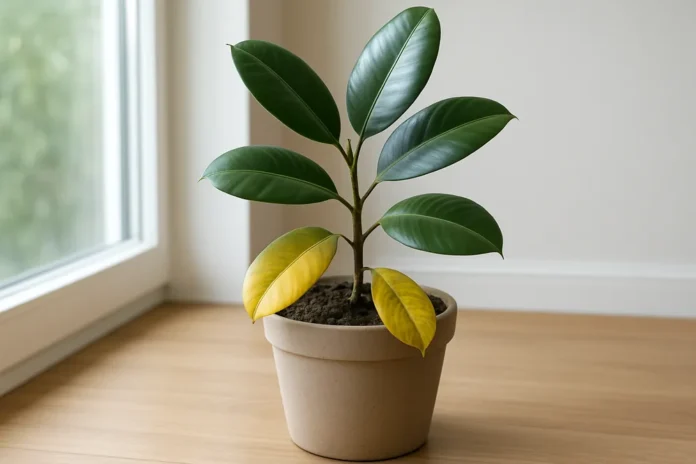
Rubber plant leaves usually turn yellow because of overwatering, inconsistent moisture, low light, sudden environmental stress, pests, or natural aging. The most common cause is roots staying too wet for too long.
A rubber plant with yellow leaves can look alarming fast, especially when a plant that was glossy and deep green starts dropping color leaf by leaf. In my experience, rubber plants are not especially fragile, but they do react clearly when their roots, light, or environment are off balance.
The good news is that yellowing does not always mean your plant is in serious trouble. Sometimes it is just an older bottom leaf finishing its life cycle. Other times, the plant is telling you something more important, like soggy soil, dim light, a cold draft, or a pest issue that has been easy to miss.
When I troubleshoot yellow rubber plant leaves, I pay close attention to the pattern. Is the yellowing happening on lower leaves only, across the whole plant, or in spotted patches? That visual clue usually narrows the cause much faster than guessing.
What Normal Yellowing Looks Like
Not every yellow leaf is a problem. Rubber plants naturally shed older leaves from time to time, especially the lowest ones near the base of the stem. If one older leaf turns yellow slowly while the rest of the plant looks firm, upright, and healthy, that is usually normal aging rather than a care mistake.
- Only one or two of the oldest lower leaves are affected
- The rest of the foliage stays glossy and green
- New growth continues to appear normally
- The leaf yellows gradually instead of collapsing suddenly
If yellowing is spreading to multiple leaves at once, moving upward through the plant, or coming with drooping, spots, mushy stems, or leaf drop, assume it is a care or environmental issue instead.
Overwatering Is the Most Common Cause
If I had to bet on one reason a rubber plant is turning yellow, I would start with overwatering. These plants like evenly moist soil during active growth, but they do not want to sit in a pot that stays wet for days on end. When roots remain waterlogged, they struggle to take up oxygen, and the leaves often respond by turning pale yellow before dropping.
Signs the Soil Is Staying Too Wet
- Several leaves yellowing at once, especially lower and middle leaves
- Drooping even though the soil feels wet
- Soil that smells sour or stays damp deep in the pot
- Brown soft spots near the base of leaves or stem
- A heavy pot that never seems to dry out
When I suspect overwatering, I do not just look at the soil surface. A rubber plant can look dry on top while the root zone is still saturated below, especially in a large decorative pot or dense peat-heavy mix.
Overwatering is not always about how often you pour water. It can also come from poor drainage, a pot that is too large, compacted soil, or low light that slows water use. A plant in dim conditions needs far less frequent watering than one growing near a bright window.
What to Do
Let the upper portion of the potting mix dry before watering again. Make sure the pot has drainage holes, and empty any saucer or cachepot so roots are not standing in runoff. If the soil is dense and slow to dry, repot into a chunkier indoor plant mix with ingredients like bark, perlite, or pumice to improve airflow around the roots.
Underwatering and Inconsistent Moisture Can Also Yellow Leaves
While overwatering gets most of the attention, underwatering can also make a rubber plant turn yellow. This usually happens when the soil dries too far and too often, or when watering is irregular enough that the plant swings between very dry and very wet conditions. Rubber plants prefer consistency more than extremes.
- Leaves feel thinner, limp, or slightly crispy
- Yellowing may start with browning around edges or tips
- Soil pulls away from the sides of the pot
- The plant may drop leaves after a very dry spell
A badly dried-out root ball can become hydrophobic, meaning water runs around it instead of soaking in. In that case, you may think you watered thoroughly, but the roots still did not absorb much moisture. If the soil has become hard and shrunken, water slowly and deeply until the whole root ball is rehydrated.
I like to judge watering by pot weight as much as by touch. After a thorough watering, lift the pot and notice how heavy it feels. Once it becomes noticeably lighter and the top few inches are dry, it is usually closer to the right time to water again.
Low Light Makes Stress Worse
Rubber plants tolerate moderate light, but they do best in bright indirect light. In a room that is too dim, growth slows, water use drops, and the plant often starts yellowing or shedding leaves because it cannot support all of its foliage efficiently. Low light also makes overwatering much more likely because the soil stays wet longer.
If your plant is several feet from a window, tucked in a dark corner, or getting only weak winter light, that may be part of the problem. Variegated rubber plants are especially quick to lose color quality when light is too low.
- Move it closer to a bright window with filtered light
- Rotate the plant occasionally for more even growth
- Avoid sudden full midday sun if it has been in low light for a long time
- Adjust watering after moving it, since brighter light increases drying speed
Sudden Changes in Temperature or Placement Can Trigger Yellowing
Rubber plants like stable conditions. A cold draft from a window, a blast from an air conditioner, dry heat from a vent, or a sudden move from one room to another can stress the plant enough to yellow and drop leaves. This is especially common after bringing a plant home, moving it seasonally, or repotting and relocating it at the same time.
Look for stress if the yellowing started soon after a change in environment. The leaves may yellow quickly rather than slowly, and the plant can sulk for a few weeks while it adjusts.
- Keep temperatures generally between 60 and 80 degrees Fahrenheit
- Protect the plant from cold window glass in winter
- Keep it away from heating and cooling vents
- Make changes gradually when possible
Pests Can Cause Patchy Yellowing
Spider mites, scale, mealybugs, and thrips can all weaken a rubber plant and cause yellowing. Instead of a whole-leaf yellowing pattern from watering trouble, pest damage often looks mottled, speckled, stippled, or uneven. Leaves may also lose shine, curl slightly, or develop tiny scars.
Common Pest Clues
- Fine webbing under leaves or near stems, often from spider mites
- Sticky residue or sooty mold, which can point to scale or mealybugs
- Tiny moving insects or pale feeding marks on the undersides of leaves
- Yellow spots that do not match a simple watering pattern
I always check the undersides of leaves before changing my watering routine. More than once, what looked like a watering problem turned out to be mites feeding quietly near the midrib and leaf veins.
If pests are present, isolate the plant from others. Wipe leaves, rinse the plant if practical, and treat with insecticidal soap or horticultural oil according to the product label. Repeat treatments are usually necessary because one spray rarely catches every life stage.
Nutrient Problems and Soil Exhaustion
A rubber plant that has been in the same potting mix for a long time may eventually show nutrient-related yellowing. This is more likely if the plant is actively growing in spring and summer and has not been fertilized in a year or more. Nitrogen deficiency can make leaves look generally pale, while other nutrient imbalances may create more patterned chlorosis.
That said, fertilizer is not the first fix I reach for. Yellow leaves from wet roots, low light, or pests will not improve just because you feed the plant. In fact, fertilizing a stressed plant too heavily can make things worse.
- Use a balanced houseplant fertilizer during active growth
- Apply at a modest rate rather than full strength every time
- Do not fertilize a badly wilted or root-damaged plant
- Refresh tired potting mix if the plant has been pot-bound for years
Root Problems, Poor Drainage, and Pot Size Issues
Sometimes the real issue is not simply how often you water, but what the roots are dealing with inside the container. A pot that is too large holds excess moisture around a relatively small root ball. A pot with no drainage traps water. Old compacted mix can suffocate roots even if you water carefully.
If yellowing keeps spreading and the soil stays wet too long, inspect the root system. Healthy rubber plant roots are firm and light-colored. Rotting roots tend to be brown, soft, or stringy and may have a sour smell.
When Repotting Helps
- The mix stays soggy for a week or longer
- Drainage holes are blocked or absent
- Roots are circling tightly and the plant dries out too fast
- The potting mix has broken down into a dense, airless mass
Choose a pot only slightly larger than the current root ball, not dramatically bigger. Fresh, airy potting mix often corrects both wet-root and dry-root problems because it improves water movement and oxygen levels.
Leaf Yellowing After Repotting or Moving
Rubber plants can protest after repotting, pruning, or being moved to a new location. A little transplant stress is normal, especially if roots were disturbed or light conditions changed at the same time. One or two yellowing leaves after a major change do not automatically mean something is going wrong.
What matters is whether the plant stabilizes. If yellowing slows and new leaves stay healthy, it is likely just temporary stress. If the plant keeps declining for several weeks, revisit watering, drainage, and light because one of those factors may still be off.
How to Tell Which Cause Is Most Likely
Rubber plant yellowing is easiest to solve when you match the symptom pattern to the most likely cause. Instead of trying every fix at once, look at what the plant is actually showing you.
- Lower leaves yellowing slowly, one at a time: often normal aging
- Many leaves yellowing with wet soil and drooping: usually overwatering or root stress
- Yellowing with dry soil, curled edges, or crispness: likely underwatering or inconsistent moisture
- Pale growth and leaf loss in a dim room: low light is probably contributing
- Patchy or speckled yellowing with visible residue or webbing: check for pests
- Yellowing soon after a move or temperature swing: environmental stress is likely
The biggest mistake I see is stacking fixes too quickly. People move the plant, repot it, fertilize it, and change the watering schedule all in the same weekend. That makes it hard to tell what actually helped and can add even more stress.
What Healthy Recovery Looks Like
Once you correct the main problem, the yellow leaves usually will not turn green again. Recovery shows up in the next stage of growth, not in damaged tissue. The goal is to stop the spread, improve leaf firmness, and see healthy new leaves emerge.
- No new yellow leaves appearing after care is corrected
- The plant holds onto remaining green leaves
- New growth looks glossy and evenly colored
- Soil moisture becomes easier to manage between waterings
Remove fully yellow leaves if they come off easily, but do not strip the plant aggressively. Even partly green leaves are still helping the plant recover.
FAQ
Should I Cut Off Yellow Rubber Plant Leaves?
Yes, if a leaf is fully yellow or mostly yellow, you can remove it with clean pruners. If it still has a good amount of green, I usually leave it in place until the plant has recovered because it can still contribute some energy.
Can Yellow Rubber Plant Leaves Turn Green Again?
Usually no. Once a leaf has turned fully yellow, it typically will not regain its original green color. Focus on preventing additional yellowing and watching for healthy new growth.
How Often Should I Water a Rubber Plant?
There is no fixed schedule that works in every home. Water when the top part of the potting mix has dried out, then water thoroughly and let excess drain away. Light, pot size, season, and soil type all affect timing.
Do Rubber Plants Need Direct Sun?
They usually prefer bright indirect light or gentle morning sun rather than harsh afternoon direct sun. Too little light can contribute to yellowing, while sudden intense sun can scorch leaves.
Why Are Only the Bottom Leaves on My Rubber Plant Turning Yellow?
If only the oldest lower leaves are yellowing occasionally, that is often normal aging. If several bottom leaves yellow at once and the soil stays wet, overwatering is a more likely cause.
Can a Pot Without Drainage Cause Yellow Leaves?
Absolutely. Without drainage holes, extra water collects around the roots and can lead to chronic soggy soil, root stress, and yellowing leaves. Rubber plants do much better in containers that drain freely.
Is Yellowing After Repotting Normal?
A small amount can be normal after repotting, especially if roots were disturbed. The plant should settle down after a short adjustment period. If yellowing continues or spreads, check for overwatering, root damage, or a sudden change in light.
Need help picking the right potting mix, fertilizer, or pest treatment for your rubber plant? Read our recommended indoor plant care products guide and choose fixes that actually match the problem.
