

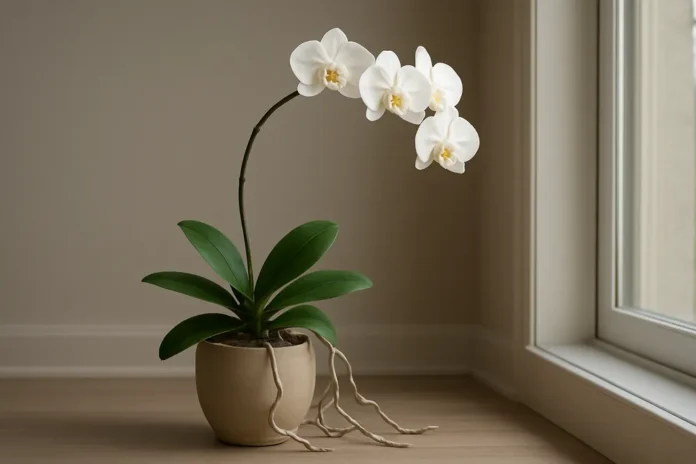
A leggy orchid is most often getting too little light, so it stretches and spaces growth farther apart. In some orchids, a lanky look can also come from normal aging or the plant’s natural growth habit.
When gardeners call an orchid "leggy," they usually mean the plant looks stretched, sparse, top-heavy, or awkwardly spaced instead of compact and balanced. With orchids, that can be a little tricky, because not every long stem is a problem. Some orchids naturally grow with taller canes, longer flower spikes, or a bare lower stem as they age.
In my experience, a leggy orchid is most often a light issue, but I do not jump to that conclusion until I look at the whole plant. The orchid type, leaf spacing, root health, and age all matter. A healthy orchid can still look lanky if it has outgrown its pot, missed ideal light for a season, or simply matured into a less compact shape.
The good news is that legginess is usually manageable. Once you figure out whether you are seeing low-light stretch, normal older growth, or weak growth caused by care problems, you can help the plant grow stronger and look much better over the next few months.
What Leggy Looks Like on an Orchid
Legginess in orchids does not always look the same. In a moth orchid, or Phalaenopsis, it may show up as a long bare stem with leaves only at the top, wider spacing between leaves, or a plant that leans heavily toward a window. In cane-type orchids like dendrobiums, it can mean thin, elongated canes with lots of bare space and fewer substantial leaves.
Some gardeners confuse a flower spike with leggy growth. A flower spike is normal and seasonal. Leggy vegetative growth is different. It affects the structure of the plant itself, not just the bloom stem. If your orchid seems stretched all year, looks unbalanced after blooming, or produces weaker new growth than older growth, you are likely dealing with true legginess.
- Leaves are smaller or farther apart than older leaves
- The plant leans hard toward the light source
- New canes or stems are thinner and weaker than previous growth
- Lower parts of the plant look bare while the top looks sparse rather than full
- The orchid struggles to support itself upright in the pot
Low Light Is the Most Common Reason
If I had to pick one cause first, it would be insufficient light. Orchids grown too far from a bright window or kept in dim rooms often stretch toward available light. The plant is trying to increase its chances of photosynthesis, so new growth becomes longer, thinner, and less compact.
This is especially common with orchids that are treated like low-light houseplants. Many orchids tolerate lower light for a while, but tolerance is not the same as thriving. A Phalaenopsis may stay alive on a side table across the room, yet over time it can become floppy, sparse, and slow to bloom.
When I am diagnosing orchid legginess, I compare the newest growth to the oldest healthy growth rather than judging the whole plant at once. If the newer leaves or canes are consistently longer, thinner, and more light-seeking, I treat that as a strong sign the plant has been underlit for a while.
Signs That Light Is Too Low
- Leaves are very dark green instead of medium green
- The orchid leans strongly toward one direction
- Flowering becomes infrequent or stops entirely
- New growth looks soft and elongated
- Growth slows during warm months when it should be active
For most common household orchids, bright indirect light is the target. An east window is often ideal. A south or west window can work too if the light is filtered so leaves do not scorch. In many homes, simply moving the plant closer to the window makes a noticeable difference.
Sometimes the Orchid Is Following Its Natural Growth Habit
Not every tall or awkward orchid is unhealthy. Different orchids grow in different ways, and some are naturally less compact than others. A mature Phalaenopsis can develop a longer stem with older lower leaves dropping off over time. Cane orchids can look upright and slender by nature. Vining orchids and some species types may never have the tidy, symmetrical look people expect from grocery-store hybrids.
This is why orchid identification matters. If you do not know your orchid type, compare it to photos of mature specimens rather than young nursery plants. A plant can look leggy simply because it is older, larger, and no longer in the showroom stage.
Growth Habits That Are Often Normal
- Older Phalaenopsis with a visible stem and fewer lower leaves
- Dendrobiums with tall canes and leaf loss on older canes
- Oncidium types that spread outward and look less symmetrical
- Mature orchids that have produced offshoots or keikis and now appear uneven
Normal growth habit usually comes with otherwise healthy signs. Leaves should still be firm, roots should look active and healthy, and blooms should appear on schedule for that orchid. If the plant is vigorous but not compact, you may not need to fix anything at all.
Aging Can Make Orchids Look Lanky
Orchids do not hold every leaf forever. As they grow, older leaves naturally yellow and drop, especially on the lower part of the plant. Over several years, this can leave a visible stem or a more top-heavy look. Gardeners often interpret that as decline when it may simply be maturity.
Aging becomes more noticeable when the orchid has gone several seasons without repotting or has grown in one direction toward the light. The structure slowly shifts, and the plant no longer looks centered in its container. It may still be healthy, but it looks less full than it did when younger.
With Phalaenopsis especially, a longer bare stem can often be managed at the next repotting by setting the plant slightly deeper if the stem is healthy and roots allow for it. The goal is not to bury the crown, but to give the plant better support and a neater appearance.
Weak Roots and Poor Potting Conditions Can Contribute
An orchid with weak or damaged roots often cannot support strong top growth. That does not create legginess in exactly the same way low light does, but it can make new growth smaller, weaker, and less balanced. The plant may lean, wobble, or produce stretched leaves because it is generally struggling.
This often happens when the potting mix has broken down, roots have rotted from overwatering, or the plant has been left in a dense medium for too long. Orchids need both moisture and air around their roots. Once the medium stays soggy and stale, the roots decline and the whole plant loses vigor.
Root and Potting Warning Signs
- Roots look brown, mushy, hollow, or papery
- Bark mix smells sour or stays wet for many days
- The orchid rocks loosely in the pot
- Leaves are limp even though the pot is wet
- New roots are scarce during active growth
If an orchid looks leggy and unstable, I check the roots before changing anything else. Better light helps, but a plant with failing roots rarely responds well until the root system is corrected and repotted into fresh, airy mix.
Watering and Fertilizer Issues That Lead to Weak Growth
Care imbalances can make an orchid look stretched or underbuilt even when light is decent. Inconsistent watering, long dry spells followed by soaking, or chronically soggy conditions can all reduce growth quality. Instead of making sturdy leaves and roots, the plant puts out weaker, less resilient growth.
Fertilizer can also play a role. Too little feeding over a long period may lead to undersized growth, while too much fertilizer can damage roots and create stress. I see this most often when orchids are either never fed at all or are heavily fertilized in decorative cachepots where salts accumulate.
Care Patterns That Can Make Growth Look Weak
- Watering on a fixed calendar without checking the mix first
- Letting roots sit in standing water inside outer pots
- Using full-strength fertilizer too often
- Never flushing the pot with plain water to remove salts
- Ignoring seasonal changes in how quickly the mix dries
This kind of stress does not always produce classic legginess, but it often shows up as a plant that looks sparse, tired, or unable to build compact new growth. Think of it as reduced plant quality rather than simple stretching.
How to Tell Whether Your Orchid Is Truly Unhealthy
The biggest question is whether your orchid is just awkward-looking or actually declining. A healthy orchid with a long stem or tall canes is not an emergency. An unhealthy orchid will usually show multiple symptoms together, not just a leggy shape.
Look at the leaves first. Healthy leaves should be reasonably firm, even if the plant is older. Then check the roots, because roots tell the real story with orchids. Finally, consider flowering. If the orchid has skipped bloom cycles, produced smaller blooms, or stopped growing roots, something in its care needs attention.
- Mostly healthy: firm leaves, active roots, stable growth, seasonal blooming, only mild stem elongation
- Needs correction: floppy or wrinkled leaves, poor roots, leaning growth, weak new leaves, little or no blooming
- Urgent stress: mushy crown, rotting smell, black roots, rapid leaf loss, or severe dehydration
I worry less about the shape of an orchid than the trend. If each new growth cycle looks weaker than the one before, the plant is telling you its conditions are falling short even if it still looks green from across the room.
What to Do if Your Orchid Is Leggy
You usually cannot make old stretched growth shorten again, but you can improve future growth. The fix is to help the next leaves, roots, or canes grow stronger. That means adjusting the environment and care rather than trying to force the plant back into its old shape.
Give It Better Light
Move the orchid to brighter indirect light. Start gradually if it has been in a dim spot for a long time. Leaves should not go from deep shade to hot midday sun in one step. For many home growers, the best improvement comes from placing the orchid close to an east window or a lightly filtered south window.
Repot if the Mix Is Old or the Roots Are Failing
If the bark has broken down or the roots are unhealthy, repot into a fresh orchid mix. Trim away clearly dead roots, keep healthy firm roots, and choose a pot with good drainage. Fresh medium gives the plant air and helps rebuild a stronger root system.
Adjust Watering to the Orchid and the Season
Water thoroughly, then let the mix approach dryness before watering again. The exact timing depends on pot size, room conditions, and orchid type. Orchids dislike both bone-dry neglect and constant wetness.
Feed Lightly but Consistently
Use a balanced orchid fertilizer at a diluted rate during active growth, and flush with plain water from time to time. This supports new roots and leaves without overloading the plant.
Support or Reposition Mature Plants
A mature orchid that has become top-heavy may need staking, a heavier pot, or better positioning in the container at repotting time. This does not cure legginess, but it keeps the plant stable and improves its overall appearance.
Can You Prune a Leggy Orchid Back
Pruning is not usually the main answer for a leggy orchid. Unlike many houseplants, orchids do not respond well to random cutting of leaves or stems just to force bushiness. If you cut healthy vegetative growth, you can weaken the plant rather than improve its shape.
There are a few exceptions. Dead flower spikes can be removed after they brown. Old dried canes on some orchid types can be cleaned up. A very long-stemmed Phalaenopsis may be repositioned during repotting, and in advanced cases experienced growers sometimes top and reroot a plant, but that is not the first move for most home gardeners.
In most cases, the better plan is patience. Focus on better light, healthier roots, and steady care so the next growth comes in stronger and more compact.
How Long It Takes to Look Better
Orchids improve slowly. Once you correct the problem, the plant will not suddenly become compact next week. You are waiting for new leaves, new roots, and possibly a new growth cycle to show the results. Depending on the orchid type and season, that may take several months.
The key is to judge progress by new growth, not by the old stretched parts. If the newest leaf is broader, firmer, and better positioned than the last one, you are moving in the right direction. If the roots become more active and the plant holds itself better in the pot, the recovery is underway even before the overall shape changes.
How to Prevent Legginess in the Future
Prevention comes down to matching the orchid to the right location and not letting basic care drift too far off course. Most orchids look their best when light, roots, and moisture are all working together. Once one of those slips, the plant may stay alive for a long time while slowly losing form.
- Keep orchids in bright indirect light suited to their type
- Rotate the pot occasionally so growth stays more balanced
- Repot before the medium fully breaks down, usually every year or two for bark mixes
- Water based on dryness and root condition, not only by the calendar
- Feed lightly during active growth and flush salts regularly
- Learn your orchid's natural mature shape so normal aging does not catch you off guard
A compact orchid is not always the healthiest orchid, but strong, balanced new growth is a good sign you are giving it what it needs.
FAQ
Can a Leggy Orchid Become Full Again?
It can look fuller over time, but the old stretched growth usually stays as it is. Improvement shows up in new leaves, roots, and canes that grow stronger and more compact under better conditions.
Does a Leggy Orchid Always Mean It Needs More Light?
No. Low light is the most common cause, but some orchids naturally grow taller or develop bare lower stems with age. Root problems and weak overall care can also make the plant look sparse.
Should I Cut the Long Stem Off My Orchid?
Usually no, especially if it is healthy vegetative growth. Orchids do not branch out like many foliage houseplants after being cut, so random pruning often weakens the plant instead of improving its shape.
Why Is My Phalaenopsis Orchid Tall with Leaves Only at the Top?
That is often a combination of age and low light. Older Phalaenopsis naturally lose lower leaves over time, and if light has been a little too dim, the stem may also elongate more than usual.
Will Grow Lights Help a Leggy Orchid?
Yes, if the problem is low light. A properly positioned grow light can help future growth come in sturdier, especially in darker rooms or during short winter days.
Can Overwatering Make an Orchid Look Leggy?
Indirectly, yes. Overwatering damages roots, and damaged roots lead to weak, poor-quality growth that can make the plant look floppy, sparse, and unbalanced.
Is It Normal for Older Orchid Canes to Lose Leaves?
For many cane-type orchids, yes. Older canes often shed leaves as they age, even while they still store energy for the plant, so a slightly bare look is not always a sign of trouble.
Want to get your orchid back on track faster? Read our orchid care and repotting guides to choose the best light setup, potting mix, and tools for stronger new growth.
