

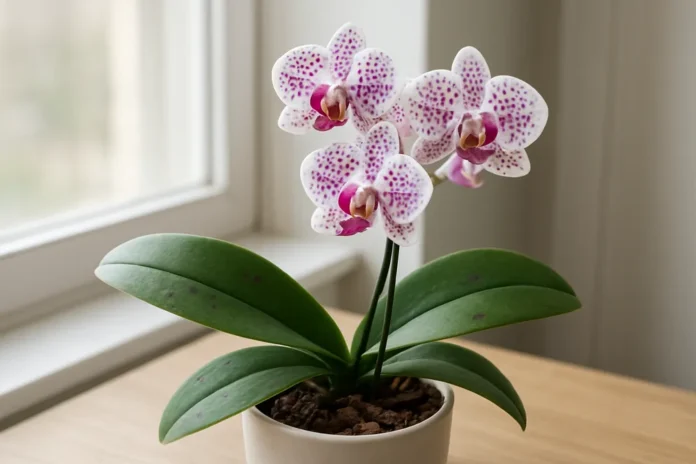
Purple spots on an orchid are often caused by light stress, cold stress, or natural pigment changes in the leaves. They can also point to pest damage or a fungal or bacterial problem when the spots spread, darken, or turn soft.
Purple spotting on an orchid can be confusing because it is not always a sign of something serious. In many cases, orchid purple spots come from stress pigments that build up when the plant gets brighter light, cooler temperatures, or other environmental changes. In other cases, the spots are a warning that pests or disease are involved.
When I troubleshoot orchids, I look at more than color alone. The size of the spots, whether they are dry or mushy, whether they stay only on older leaves, and whether the plant recently moved to a brighter window all tell a very different story. A healthy orchid with a few firm purple flecks needs a different response than one with spreading dark lesions.
The good news is that orchids usually give you several clues before the problem gets severe. If you can match the spotting pattern to the right cause, you can often stop the issue early and keep your plant growing well.
What Purple Spots Usually Mean on Orchids
Purple spotting is often related to anthocyanin, a natural plant pigment. Orchids sometimes produce more of it when they are exposed to brighter light, cool nights, or mild stress. In that situation, the tissue usually stays firm and the plant otherwise looks healthy.
That said, purple spotting is not always harmless. If the spots are sunken, wet-looking, sharply expanding, or surrounded by yellow halos, disease becomes more likely. If the leaves also look stippled, silvery, or scarred, pest feeding may be the trigger instead.
- Harmless or mild causes usually create dry, stable, firm spots
- Stress from light or cold often appears after a change in location or season
- Disease-related spots tend to enlarge, darken, or become soft
- Pest-related spotting often comes with texture changes, tiny insects, webbing, or black specks
When I am unsure, I watch the newest growth first. Old damaged leaves may never look perfect again, but if new leaves emerge clean and firm, the plant is usually past the real problem.
Light Stress Is One of the Most Common Causes
Bright Light Can Trigger Purple Pigment
Many orchids, especially Phalaenopsis and some Oncidium types, react to stronger light by producing purple or reddish pigments. This is the plant's way of protecting itself. A little pigment does not automatically mean the orchid is in danger.
This often happens after moving an orchid from a dim room to a bright windowsill, sunroom, or greenhouse shelf. The spots may appear on the side facing the window, or the leaf may develop a general purple flush with scattered darker patches.
How to Tell Light Stress From Sunburn
Light stress usually shows as purple, red, or bronzed coloration while the leaf stays firm. Sunburn is more damaging. It tends to produce bleached yellow, white, tan, or black patches, often in broad irregular areas where direct sun hit the leaf.
- Light stress: purple tint or speckling, firm tissue, plant still growing normally
- Sunburn: pale or scorched patches, crisp or collapsed areas, damage often appears suddenly after hot direct sun
- Window-side pattern: damage is stronger on the side facing the brightest exposure
- Recent move: spotting starts shortly after changing the orchid's location
If you think light is the cause, do not move the orchid from bright to deep shade all at once. I prefer stepping it back gradually so it keeps enough light to bloom without adding more stress.
Cold Temperatures Can Leave Purple Spotting Behind
Cool conditions can also push orchids to produce purple pigment, especially if nights drop lower than the plant prefers. For warm-growing orchids like many grocery-store Phalaenopsis, a cold draft from a winter window, air conditioner, or exterior door can be enough to trigger spotting.
Cold stress often comes with other signs too. Leaves may feel slightly limp, buds may blast and fall off, and growth may stall. In more severe cases, cold injury creates translucent, water-soaked tissue that later turns dark.
- Purple patches appear after a cold snap or draft
- The affected leaves may face a window or vent
- Bud drop or slowed growth may happen at the same time
- Severe cold damage turns soft, dark, or glassy rather than simply purple
Fungal and Bacterial Leaf Spots Need Faster Attention
What Disease Spots Look Like
If the purple spots are actually lesions from a fungal or bacterial issue, they usually do more than sit quietly on the leaf. They enlarge over time, may become black or brown in the center, and can look sunken or wet. Some develop a yellow margin around the dark area.
Bacterial problems are especially concerning when spots feel soft or mushy. Fungal leaf spots are more often dry or slightly sunken, though they can still spread. Poor airflow, water sitting on leaves, overcrowding, and cool damp conditions all make these problems more likely.
Conditions That Encourage Infection
- Water left on leaves or in the crown overnight
- Low air movement around closely packed plants
- Cool, damp rooms with little drying between waterings
- Leaves damaged by sun, cold, or handling, which gives pathogens an opening
When to Suspect Disease Instead of Harmless Pigment
- Spots increase in size over days or weeks
- Centers turn black, brown, or tan
- Tissue feels soft, wet, or collapses
- Multiple leaves develop similar lesions even without a light change
- The orchid sits in a humid space with poor airflow
A stable purple fleck is very different from an active lesion. If I can mark the edge of a suspicious spot and see it widening a few days later, I treat that as a true disease warning rather than cosmetic stress color.
Pests Can Create Purple, Dark, or Stippled Spots
Several orchid pests damage leaf tissue in ways that can look purple at first. Spider mites, thrips, and scale are the usual suspects. Their feeding can cause tiny pinprick spots, silvering, bronzing, scarring, or dark speckling that later deepens in color.
Thrips often leave streaked or scarred patches and may also distort flowers. Spider mites are notorious for fine stippling and a dull, dusty look on leaves, especially in dry indoor air. Scale insects tend to cluster along leaf midribs and undersides, where they suck sap and weaken the plant.
- Spider mites: tiny pale stippling, bronzing, occasional fine webbing
- Thrips: silvery scars, black droppings, damaged buds or flowers
- Scale: raised bumps on leaves or stems, sticky residue, gradual decline
- General pest clue: damage appears with texture change, not just color change
If you suspect pests, inspect both leaf surfaces, the crown, and flower spikes in bright light. A magnifying glass helps. Orchids with chronic low-level pest feeding may not look dramatic at first, but the spotting tends to increase as the plant weakens.
Water, Fertilizer, and Root Stress Can Contribute
Purple spotting is not the classic symptom of watering trouble, but root stress can still be part of the picture. When roots stay soggy, dry out too hard, or struggle in old broken-down media, the plant cannot regulate nutrients and moisture well. That overall stress can intensify pigment changes or make the orchid more vulnerable to disease.
Excess fertilizer salts may also leave leaf tips or margins looking discolored, and stressed roots can lead to mottled leaves that are easier to misread. If the potting mix smells sour, stays wet for too long, or has collapsed into fine particles, the roots may be the hidden issue behind the leaf symptoms.
- Soggy roots reduce vigor and raise disease risk
- Very dry roots can lead to overall stress and color shifts
- Salt buildup from heavy feeding may worsen leaf discoloration
- Old orchid bark or moss often causes moisture problems over time
How to Figure Out Which Cause Fits Your Orchid
The best diagnosis comes from combining the spot pattern with recent changes in care. A healthy orchid moved into brighter light is far more likely to have pigment stress than a plant sitting wet in a stagnant corner with enlarging dark lesions.
- Think back to any recent changes in light, temperature, watering, or location.
- Check whether the spots are dry and stable or wet and expanding.
- Look for a one-sided pattern that points to window light or cold drafts.
- Inspect undersides of leaves for pests, webbing, sticky residue, or raised bumps.
- Examine the roots and potting mix if the orchid also looks weak, limp, or stalled.
If the plant is otherwise vigorous, the roots are healthy, and the spots have not spread, the cause is often mild environmental stress. If the orchid looks unwell overall and the spotting is active, disease or pests move higher on the list.
What to Do for Each Likely Cause
If Light Stress Is the Cause
Shift the orchid to bright indirect light or filter strong afternoon sun with a sheer curtain. Keep conditions steady for a few weeks and watch the newest leaves. Existing purple pigment may remain, but fresh growth should emerge without worsening spotting.
If Cold Stress Is the Cause
Move the orchid away from cold glass, drafts, and HVAC blasts. Try to keep night temperatures in the comfortable range for your orchid type. For most common Phalaenopsis, that means avoiding sudden chills and keeping temperatures generally warm and stable.
If Disease Is the Cause
Isolate the orchid from other plants, improve airflow, and keep water off the leaves and crown. Remove badly affected tissue only if the damage is clearly advancing and you can cut back to clean tissue with a sterilized tool. Avoid misting, avoid splashing water between plants, and let the foliage dry quickly after watering.
If Pests Are the Cause
Separate the plant, clean the leaves carefully, and use a treatment labeled for the pest you actually found. Recheck the plant weekly because many orchid pests are easy to miss the first time. One treatment is rarely enough if eggs or hidden insects remain.
If Root or Media Stress Is Involved
Inspect the roots and repot if the mix is decomposed, compacted, or holding too much moisture. Healthy orchid roots should be firm, not mushy or hollow. After repotting, water thoroughly but let the medium approach the proper dryness level before watering again.
How to Prevent Purple Spotting From Getting Worse
Prevention is mostly about consistency. Orchids handle gradual change much better than abrupt change. Sudden direct sun, temperature swings, stale humid air, and chronically wet leaves create many of the spot-related problems growers run into indoors.
- Acclimate orchids slowly to brighter light
- Keep them away from cold drafts and hot air vents
- Water early enough that leaves dry by evening
- Use a chunky, fresh orchid mix and repot before it breaks down badly
- Provide gentle airflow, especially in humid rooms
- Inspect leaves regularly so small problems do not become major ones
I have found that orchids recover best when you change the obvious stressor and then give the plant time. Constantly shifting light, watering, and fertilizer all at once makes it harder to tell whether the problem is improving.
When Purple Spots Are an Emergency
A few purple flecks on a firm leaf are usually not urgent. The time to act quickly is when the spots are spreading rapidly, turning black, leaking moisture, reaching the crown, or appearing on multiple plants. Crown involvement is especially serious in monopodial orchids like Phalaenopsis because the growth point sits at the top center of the plant.
If an orchid is collapsing, losing leaves from the crown, or developing foul-smelling wet rot, treat it as a serious health problem rather than a cosmetic issue. Fast isolation and cleaner growing conditions matter much more than waiting to see what happens.
FAQ
Are Purple Spots on Orchid Leaves Always Bad?
No. Purple spots can be a harmless response to brighter light or mild cool stress if the leaf stays firm and the spotting does not spread. They become more concerning when the tissue turns soft, black, or larger over time.
Can Too Much Sun Cause Purple Spots on Orchids?
Yes. Brighter light can trigger purple pigment as a stress response, especially if the orchid was moved too quickly into a sunnier location. Severe sun exposure usually goes beyond purple and causes pale, scorched, or blackened patches.
Do Orchid Purple Spots Go Away?
Existing spots often stay on the affected leaf even after the cause is corrected. The better sign of recovery is clean new growth and no additional spreading or darkening.
Can Fungal Spots Start Out Purple?
Yes. Some fungal or bacterial leaf spots may begin as dark purple or reddish lesions before turning brown or black. Watch for enlargement, soft tissue, halos, or a wet appearance.
Should I Cut Off Leaves with Purple Spots?
Not always. If the spots are stable and the leaf is still functioning, removing it can create unnecessary stress. Remove tissue only when the damage is clearly advancing, rotting, or severely affecting the plant.
Can Cold Weather Cause Purple Marks on a Phalaenopsis Orchid?
Yes. Phalaenopsis orchids are sensitive to cold drafts and chilly windows, and cool stress can trigger purple spotting or general leaf discoloration. More severe cold damage becomes dark, soft, or translucent.
How Can I Tell if Pests Are Causing the Spots?
Look for other clues besides color, such as stippling, silver streaks, tiny black specks, webbing, sticky residue, or raised insects on the leaves and stems. Pest damage usually changes the leaf surface as well as its color.
Is It Safe to Mist an Orchid with Purple Spots?
It is usually better to avoid misting when leaf spots are present, especially if disease is possible. Extra moisture on leaves can encourage bacterial and fungal issues and makes diagnosis harder.
Need help deciding whether your orchid has light stress, rot, or pests? Read our orchid care and treatment guides to choose the right fix before the damage spreads.
