

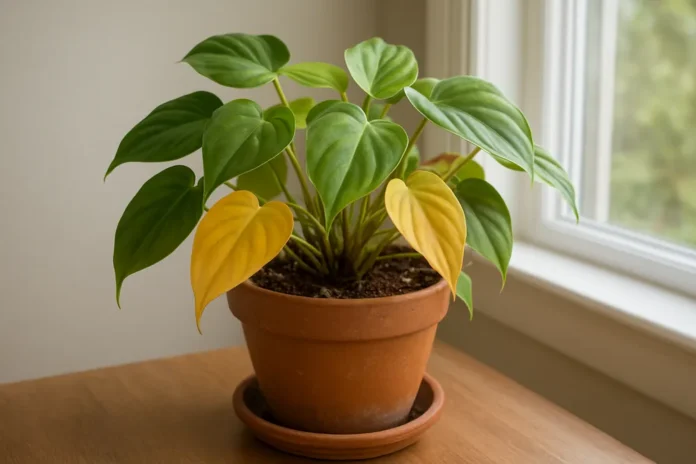
Philodendron leaves usually turn yellow from overwatering, inconsistent moisture, low light, nutrient imbalance, or simple leaf aging. Temperature stress, pests, and root crowding can also trigger yellowing.
A yellow leaf on a philodendron is not always a disaster, but it is a sign worth paying attention to. In my experience, philodendron leaves turning yellow usually points to a care issue that has been building for a while rather than a sudden one-day problem.
The tricky part is that several causes can look similar at first. A plant that is staying too wet, a plant that is not getting enough light, and a plant dropping an old leaf can all show yellowing, but the pattern on the plant tells a different story. If you look at which leaves are affected, how fast the color change happened, and what the soil feels like, the answer usually gets much clearer.
The good news is that philodendrons are forgiving. Once you match the yellowing pattern to the real cause, most plants bounce back well and start pushing healthy green growth again.
What Yellow Leaves Are Telling You
Yellowing is a general stress signal, not a diagnosis by itself. The most helpful clues are where the yellow leaves appear, whether they are soft or crisp, and whether the soil stays wet or dries too fast. A single lower leaf turning yellow every so often is often normal. Several leaves yellowing at once usually means something in the environment or watering routine needs to change.
- Lower, oldest leaves yellowing one at a time often means normal aging.
- Several leaves turning pale yellow with droopy stems often suggests overwatering or weak roots.
- Yellow leaves with dry brown edges often point to underwatering, dry air, or salt buildup.
- Yellowing paired with stretched stems and smaller new leaves often means the plant needs brighter light.
- Yellow speckling or patchy fading can be caused by pests such as spider mites or thrips.
When I am diagnosing a philodendron, I pay more attention to the newest growth than the damaged leaf itself. If new leaves are coming in normal size and green, the problem is often minor or already passing. If new leaves are pale, small, or distorted, I start looking harder at roots, light, and feeding.
Overwatering Is the Most Common Cause
If I had to pick the most common reason for yellow philodendron leaves, it would be overwatering or soil that stays wet too long. Philodendrons like evenly moist soil, but they do not want to sit in a soggy pot. When roots cannot get enough oxygen, they begin to struggle, and the leaves often respond by turning yellow and limp.
Signs Your Philodendron Is Staying Too Wet
- Multiple leaves yellowing in a short time
- Leaves that feel soft rather than crispy
- Drooping even though the soil is still damp
- A potting mix that stays wet for a week or longer
- A sour or musty smell from the soil
- Blackened, mushy, or sparse roots when you inspect the root ball
Overwatering does not always mean watering too often on the calendar. It can also mean using a heavy mix, keeping the plant in a dim spot where soil dries slowly, or growing it in a pot without enough drainage. Any of those conditions can leave roots waterlogged.
How to Fix Overwatering
- Let the top 1 to 2 inches of soil dry before watering again.
- Empty saucers or cache pots so the plant does not sit in runoff.
- Move the plant to bright, indirect light so the soil can dry at a healthier rate.
- If the mix is dense or sour-smelling, repot into a chunkier blend with potting mix, bark, and perlite.
- Trim any mushy roots during repotting and keep aftercare gentle until new growth resumes.
If a philodendron has both yellow leaves and a droopy posture, I do not automatically water it. I touch the soil first, then lift the pot. A heavy pot with drooping leaves usually tells me the roots are struggling, not thirsty.
Underwatering and Inconsistent Moisture Can Do It Too
Philodendrons also yellow when they stay too dry for too long or swing between bone dry and soaked. This kind of stress often shows up as yellowing with brown tips, curling, or leaves that feel papery rather than soft. The plant may look tired and flattened, and the soil may pull away from the sides of the pot.
A very dry root ball can become hydrophobic, which means water runs around it instead of soaking in. In that case, you may think you watered thoroughly, but the roots are still dry inside the pot.
What to Do if Dryness Is the Issue
- Water deeply until excess drains from the bottom.
- If the mix has become very dry, bottom-water or soak the pot briefly to rehydrate the root ball.
- Set a watering rhythm based on soil dryness, not a fixed day of the week.
- Increase humidity slightly if the air is very dry, especially in winter heating season.
- Prune off fully yellow leaves, since they will not turn green again.
Consistent moisture does not mean constant moisture. Aim for a cycle where the upper layer of soil dries a bit, then rewater thoroughly. That pattern keeps roots healthy without starving or drowning them.
Light Problems Often Show Up as Pale Yellow Leaves
Philodendrons tolerate lower light better than many houseplants, but they do not thrive in dark corners forever. In low light, the plant uses water more slowly, growth weakens, and older leaves may fade yellow as the plant tries to balance itself. New growth may also come in smaller, farther apart, or slower than usual.
Low Light Symptoms
- Gradual yellowing rather than sudden collapse
- Long, stretched stems with wide gaps between leaves
- Smaller new leaves
- Soil that stays damp much longer than it used to
- A plant leaning hard toward the nearest window
The fix is usually simple: move the plant to brighter indirect light. An east window, a few feet back from a south or west window, or a bright room with filtered sun often works well. Most philodendrons want good ambient brightness, not harsh midday sun on the leaves.
Can Too Much Sun Cause Yellow Leaves?
Yes. Direct sun, especially hot afternoon sun, can bleach leaves to a yellowish cast and then scorch them brown. Sun stress usually looks patchy and appears on the side facing the window. If the plant was moved suddenly into stronger light, the damage can show fast.
Nutrient Problems and Salt Buildup
A hungry philodendron can turn yellow, especially if it has been in the same soil for a long time or is growing actively in spring and summer without feeding. Nitrogen shortage often causes an overall pale look, especially on older leaves first. However, too much fertilizer can also create yellowing by burning roots and causing salt stress.
When Lack of Nutrients Is Likely
- The plant has not been repotted or fertilized in a year or more
- Growth is slow during the active season
- Older leaves fade evenly rather than spotting or scorching
- Roots look healthy, but the plant still appears pale
Use a balanced houseplant fertilizer at a mild rate during active growth, usually every 4 to 6 weeks in spring and summer. If you prefer, you can feed even more lightly with each watering. What matters most is consistency and not overdoing it.
When Excess Fertilizer May Be the Problem
If leaf tips are browning, the soil surface has a crusty residue, or yellowing appeared after a feeding push, salt buildup may be irritating the roots. Flush the pot thoroughly with plain water or repot into fresh mix if the issue is severe. This is especially common when plants live in the same mix for a long time and are fertilized regularly.
I see many gardeners blame fertilizer too early, but true nutrient deficiency on a philodendron usually develops slowly. Fast yellowing makes me think about roots, moisture, or temperature first. Slow fading on an otherwise stable plant pushes feeding higher on my list.
Root Problems, Pot Size, and Compacted Soil
Sometimes the real issue is below the surface. A philodendron that is rootbound, planted in compacted mix, or struggling with root rot may show the same yellowing as a watering problem because it is a watering problem at the root level. The plant either cannot absorb moisture properly or cannot breathe properly.
Clues the Roots Need Attention
- Water rushes straight through the pot
- The plant dries out unusually fast despite healthy room conditions
- Roots are circling tightly around the inside of the pot
- Soil has collapsed into a dense, airless mass
- Yellowing continues even after you correct light and watering habits
A healthy repot can solve several yellow-leaf causes at once. Use a container only one size larger if the plant is rootbound. For many philodendrons, I like a mix that is airy enough to breathe but still holds some moisture, such as indoor potting mix with orchid bark and perlite.
After repotting, expect the plant to pause briefly. That is normal. Judge success by the quality of new growth over the next several weeks, not by whether old yellow leaves suddenly recover.
Temperature Stress, Drafts, and Seasonal Changes
Philodendrons prefer warm, stable indoor conditions. Cold drafts from windows, blasts from air conditioning vents, and sudden temperature drops can all trigger yellowing. In winter, plants also grow more slowly, which means the same watering routine that worked in summer may now keep the soil too wet.
- Keep philodendrons away from cold glass in winter.
- Avoid placing them directly under heating or cooling vents.
- Adjust watering downward when light levels drop seasonally.
- Watch for stress after bringing plants home from a store or shipping box.
If the yellowing began right after a cold snap, a move, or a drafty period, environmental shock may be the cause. Remove damaged leaves only after the plant has settled and you can see which tissue is truly spent.
Pests and Disease Can Mimic Basic Care Issues
Spider mites, thrips, mealybugs, and scale can all weaken philodendrons enough to cause yellowing. Pest damage often looks uneven. You may see stippling, silvery scarring, sticky residue, webbing, or distorted new leaves. Fungal or bacterial issues are less common indoors but can happen if foliage stays wet and airflow is poor.
What to Inspect
- Undersides of leaves
- Where the leaf joins the stem
- New unfurling leaves
- Any sticky spots, webs, or tiny moving insects
- Dark lesions or mushy areas that look different from plain yellowing
If you find pests, isolate the plant and treat it with insecticidal soap, neem, or another houseplant-safe option appropriate for the pest. Repeat treatments as directed, since one spray rarely solves the whole problem. If disease is suspected, improve air circulation, remove badly affected tissue, and avoid wetting the leaves.
Sometimes Yellow Leaves Are Completely Normal
Not every yellow leaf means your plant is unhappy. Philodendrons regularly shed older leaves as they grow, especially lower leaves that no longer get much light. If the plant is otherwise growing well and only one older leaf turns yellow at a time, this is usually normal aging.
This kind of yellowing tends to be gradual and limited. The leaf yellows, softens, and eventually comes away easily. You can clip it off once it is mostly yellow, but there is no need to rush if the rest of the plant looks strong.
How to Narrow Down the Real Cause Fast
If you are not sure what is going on, work through the simplest clues first instead of trying every fix at once. That prevents extra stress and makes it easier to see what actually helped.
- Count how many leaves are yellowing and whether they are old or new.
- Feel the soil 1 to 2 inches down and note whether it is wet, evenly moist, or dry.
- Check how much natural light the plant really gets during the day.
- Inspect leaves and stems closely for pest signs.
- Think back to recent changes such as repotting, moving, temperature swings, or fertilizer use.
- If needed, slide the root ball out briefly to inspect root health.
Change one variable at a time whenever possible. If you move the plant, change the soil, start fertilizer, and alter watering all in the same week, it becomes much harder to tell what solved the problem or what made it worse.
How to Prevent Yellow Leaves Going Forward
Most recurring yellowing on philodendrons can be prevented with a few steady habits. These plants like predictability more than perfection.
- Use a pot with drainage holes.
- Grow in bright, indirect light whenever possible.
- Water thoroughly, then wait until the top layer of soil dries slightly.
- Use a loose, well-aerated potting mix.
- Feed lightly during active growth.
- Inspect for pests regularly, especially on new leaves.
- Adjust care with the seasons instead of following the exact same routine year-round.
Once a yellow leaf appears, that leaf will not turn green again. Your goal is to stop the spread and support healthy new growth. When the next few leaves emerge green and firm, you will know the plant is back on track.
FAQ
Should I Cut Off Yellow Philodendron Leaves?
Yes, if the leaf is mostly yellow or fully spent. It will not turn green again, and removing it helps the plant look cleaner. If a leaf is only partly yellow, you can leave it until the plant finishes using it.
Can Yellow Philodendron Leaves Turn Green Again?
No. Once a leaf has turned yellow, that tissue will not recover to solid green. Focus on correcting the cause so new growth comes in healthy.
How Often Should I Water a Philodendron to Prevent Yellow Leaves?
There is no single schedule that fits every home. Water when the top 1 to 2 inches of soil feel dry, then water thoroughly. Brighter light, warmer rooms, and smaller pots dry faster than dim, cool spaces.
Why Is Only One Lower Philodendron Leaf Turning Yellow?
That is often normal aging, especially if it is an older leaf near the base and the rest of the plant looks healthy. Philodendrons naturally shed older foliage over time.
Do Philodendrons Get Yellow Leaves in Winter More Often?
Yes, they can. Winter brings lower light, cooler temperatures, and slower growth, which means soil stays wet longer and watering mistakes show up more easily.
Can Low Humidity Cause Yellow Philodendron Leaves?
Low humidity alone more often causes brown tips and crisp edges than broad yellowing. But dry air can add stress, especially when paired with underwatering or heat from vents.
Is Tap Water Making My Philodendron Leaves Yellow?
Usually not by itself, but hard water and mineral buildup can contribute over time. If you see crust on the soil or pot rim, flush the soil occasionally or use filtered water if your tap water is very hard.
How Long Does It Take a Philodendron to Recover After Yellow Leaves Appear?
It depends on the cause, but many plants show improvement within a few weeks once conditions are corrected. Recovery is best measured by healthy new leaves, not by the old yellow ones.
Want the right fix faster? Explore our philodendron care guides and houseplant treatment picks to choose the best soil, fertilizer, and pest control for stronger new growth.
