

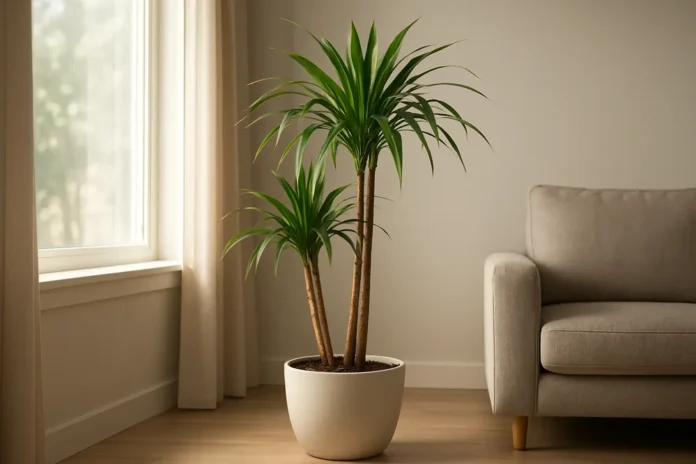
A dracaena usually gets leggy because it is not getting enough light, so it stretches and drops lower leaves over time. Age, uneven light exposure, and delayed pruning can also leave it tall, bare, and sparse.
A leggy dracaena is one of the most common indoor plant complaints I hear from home gardeners. The plant is still alive, often still growing, but instead of looking full and balanced, it develops long canes, wide gaps between leaves, and a top-heavy shape that looks thin or stretched.
The good news is that legginess in dracaena is usually not a mystery disease. In most cases, it comes down to light, normal aging, and the way the plant has been maintained over time. Once you understand what your plant is responding to, it becomes much easier to decide whether it needs a brighter spot, a trim, or simply more realistic expectations for its growth habit.
Some dracaenas naturally become cane-like as they mature, so the goal is not always to make them look dense from soil line to top. The goal is to tell the difference between normal stem development and a plant that is stretching more than it should.
What Legginess Looks Like on Dracaena
On dracaena, legginess usually shows up as long stretches of bare stem with leaves clustered mostly at the top. The plant may lean toward a window, look sparse on one side, or have smaller crowns than you expect for its height. Lower leaves often drop off gradually, which adds to the bare, stick-like appearance.
This can happen on popular types like Dracaena marginata, corn plant dracaena, and lemon lime varieties. Some forms naturally hold foliage higher on the cane than others, so not every bare stem is a problem. The key is whether the spacing is increasing, the top growth is getting weaker, or the plant looks like it is reaching rather than growing sturdily.
- Long stems with leaves only near the tip
- A plant that leans strongly toward the nearest window
- Large spaces between leaf clusters or new growth points
- Frequent lower leaf drop that leaves canes exposed
- Thin stems that struggle to support the top
Low Light Is the Most Common Cause
If I had to pick the single biggest reason dracaena gets leggy indoors, it would be insufficient light. These plants tolerate lower light better than many houseplants, but tolerance is not the same as thriving. In dim corners or several feet back from a window, dracaena often stretches slowly over time. The leaves stay farther apart, the crown thins out, and the plant loses that full, upright look.
In low light, the plant is trying to maximize its chances of capturing more energy. That can mean slower growth overall, but the growth it does produce often looks elongated and weak. You may also notice the plant holds onto fewer lower leaves, because it cannot support as much foliage in reduced light.
When I am diagnosing a leggy dracaena, I look at the room before I look at the pot. A plant can sit in a spot that seems bright to us and still be effectively in low light if it is far from the window or shaded by blinds, porches, or trees.
Signs the Light Level Is Too Low
- Growth leans in one direction
- New leaves are smaller than older leaves
- The plant grows taller without getting fuller
- Lower leaves yellow and drop faster than expected
- Variegated varieties start looking duller or more green
Dracaena generally does best in bright, indirect light. Some can manage medium light, but once light gets too weak, the plant often sacrifices fullness first. That is why a dracaena may survive for years in a dim room while still looking increasingly sparse.
Natural Aging Can Make Dracaena Look Bare
Not all legginess is a sign you did something wrong. Dracaena is a cane plant, and many varieties naturally shed older lower leaves as they mature. Over time, this creates the familiar trunk-like stem with leafy tufts at the top. A mature dracaena often looks more architectural than bushy.
This is especially true if your plant has been growing for several years without pruning. Each cycle of new top growth and lower leaf drop makes the stem more exposed. If the crown still looks healthy, the color is good, and the plant is not stretching dramatically toward light, what you are seeing may be age more than stress.
When Aging Is Normal Rather than a Problem
- The cane is sturdy rather than soft or weak
- New top growth is still healthy and well colored
- Leaf drop happens slowly, mostly from the bottom
- The plant is not suddenly leaning or reaching
- The bare stem developed gradually over months or years
If this describes your plant, you may not need to fix a problem so much as reshape it. Pruning can make an older dracaena look fuller again, even if the underlying cause is simply maturity.
Uneven Light Exposure Causes Lopsided, Stretched Growth
Dracaena often grows toward the strongest light source, which is why plants near a window can become bent or sparse on one side. This is not always true low light. Sometimes the plant has enough light to grow, but it is only getting it from one direction. That leads to unbalanced growth and a leggy silhouette.
If one side faces the room and the other side faces the window for months, the window side usually develops more vigorously. The room-facing side may lose leaves or fail to branch, which makes the plant look thinner than it actually is.
- One side is leafy while the other is bare
- The stem curves toward the glass
- The plant needs frequent staking to stay upright
- New leaves emerge angled strongly in one direction
I rotate dracaena a quarter turn every week or two when it sits near a strong window. Small, regular turns work better than occasional big rotations because the plant never gets the chance to commit fully to one direction.
Delayed Pruning Leaves Dracaena Tall and Sparse
A lot of houseplant owners hesitate to prune dracaena because the canes look permanent and cutting them feels drastic. But when a dracaena goes unpruned for a long time, it often becomes taller and barer than most people want. The plant keeps extending its canes, while the lower portions become more exposed as old leaves age out.
Pruning does not just shorten the plant. It also encourages new shoots below the cut, which can create a fuller, more branched shape. In many cases, a leggy dracaena is not unhealthy at all. It is simply overdue for a structural trim.
How Pruning Changes the Look of the Plant
- Reduces excessive height
- Encourages branching below the cut
- Helps balance a leaning or top-heavy cane
- Makes the plant look denser over time
- Gives you cuttings you can root and replant
The result is not instant fullness. Dracaena responds gradually, but pruning is often the cleanest long-term solution when the stems have become too tall or bare.
Stress Can Make a Sparse Plant Look Leggier
Legginess is mostly about growth habit, but stress can make it worse by causing extra leaf drop. If your dracaena is losing more leaves than usual, bare stems become more obvious. The most common stress factors are watering problems, temperature swings, low humidity, and root issues.
Overwatering is especially common. Dracaena roots do not like to stay soggy, and stressed roots often lead to yellowing, leaf drop, and weaker top growth. Underwatering can also contribute, especially if the plant repeatedly dries out hard enough to shed lower leaves.
Problems That Can Increase Leaf Loss
- Soil that stays wet for too long
- A pot without good drainage
- Long dry spells followed by heavy watering
- Cold drafts or heating vent exposure
- Root crowding in an old pot
- Fluoride or salt buildup from water or fertilizer
These issues do not always cause classic stretching, but they do strip the plant of lower foliage and make the canes look increasingly bare. If your dracaena is both leggy and dropping leaves faster than normal, look beyond light alone.
How to Tell Which Cause Fits Your Plant
The pattern on the plant usually tells the story. A dracaena in low light tends to look stretched overall, with small top growth, long spaces between leaves, and a lean toward the nearest light source. An older plant with natural cane development may have bare stems, but the top growth still looks strong and proportionate.
If the plant looks thin because leaves have been dropping, think about stress. Yellowing before leaf drop often suggests watering or root problems. Crispy brown edges may point to inconsistent moisture, low humidity, or water quality issues. If the plant is tall but the crown is healthy, pruning may be the missing piece.
I compare old growth to new growth before making changes. If the newest leaves are shorter, paler, and farther apart than the older ones, I suspect current conditions are too weak. If the new growth still looks good and only the lower stem is bare, the issue is often age and form rather than active decline.
A Simple Way to Sort It Out
- Stretched and leaning means light is likely too weak or too one-sided
- Bare lower canes with healthy crowns often mean natural aging
- Rapid leaf drop suggests watering, root, or environmental stress
- Tall canes with healthy tops may simply need pruning to branch
How to Fix a Leggy Dracaena
Once you know why the plant looks leggy, the fix gets much easier. If light is the issue, move the plant closer to a bright window with indirect light. East windows are often great, and bright north exposure can work well in many homes. A few feet from a south or west window can also be useful if the plant is not getting scorched.
If the plant has become too tall and sparse, prune the cane above a node. New shoots usually develop below the cut, and the removed top can often be rooted. If the potting mix stays wet too long or the roots are packed tight, repotting into a well-draining mix can help the plant hold foliage better and produce steadier growth.
Best Corrective Steps
- Move the plant into brighter indirect light
- Rotate it regularly for more even growth
- Prune long canes to encourage branching
- Water only when the upper portion of soil has dried appropriately
- Repot if roots are crowded or soil stays soggy
- Use a balanced fertilizer lightly during active growth if the plant has been in the same soil for a long time
Do not expect old bare stems to fill back in with leaves. On dracaena, new fullness usually comes from new shoots and improved top growth, not from leaves reappearing along older naked canes.
What Not to Expect After You Make Changes
One of the biggest frustrations with leggy houseplants is that improvement is gradual. Better light can stop the problem from getting worse and help future growth look stronger, but it will not reverse all the old stem exposure. Dracaena is not a plant that usually re-foliates old canes from bottom to top.
That is why people sometimes improve care and still feel disappointed. The plant may actually be healthier, but the old architecture remains. In practice, the most realistic combination is better conditions plus selective pruning. That gives the plant a chance to produce fresher, fuller growth in a shape that looks intentional.
Patience matters here. Judge progress by the quality of new leaves, the strength of new shoots, and whether leaf drop slows down. Those are better signs than waiting for old bare sections to somehow turn green again.
How to Keep Dracaena From Getting Leggy Again
Prevention is mostly about giving the plant enough light and managing its shape before it gets extreme. Dracaena responds well to steady care. A plant that sits in suitable light, gets rotated, and is pruned every so often usually keeps a much better silhouette than one left untouched in a dim corner.
Helpful Habits for Fuller Growth
- Place it where it gets bright, indirect light most of the day
- Rotate the pot regularly
- Prune tall canes before they become awkwardly bare
- Avoid chronic overwatering
- Refresh old potting mix when drainage declines
- Watch new growth for early signs of stretching
I also like to reassess placement seasonally. A spot that works in summer may be much dimmer in winter, especially in northern homes. Many dracaenas start getting sparse so gradually that you do not notice until the plant already looks dramatically different.
FAQ
Can a Leggy Dracaena Become Full Again?
Yes, but usually through new growth rather than old stems filling back in. Better light and pruning can encourage fuller top growth and new shoots, while older bare canes typically stay bare.
Should I Cut Back My Dracaena if It Is Too Tall?
Yes, if the plant is healthy and you want a fuller shape. Cutting back a cane above a node often encourages branching below the cut, which helps reduce the tall, sparse look.
Will More Fertilizer Fix a Leggy Dracaena?
Usually not. Legginess is far more often caused by low light or lack of pruning than by lack of fertilizer. Too much fertilizer can actually stress dracaena and worsen leaf problems.
Is It Normal for Dracaena to Lose Lower Leaves?
Yes, some lower leaf loss is normal as dracaena matures. It becomes a concern when leaf drop speeds up, new growth weakens, or the plant is also showing signs of light or watering stress.
How Much Light Does Dracaena Need to Avoid Legginess?
Dracaena usually stays fuller in bright, indirect light. Many varieties tolerate medium light, but persistently dim conditions often lead to stretching, leaning, and sparse growth.
Can I Root the Top of a Pruned Dracaena?
Yes, many dracaena tops root well from cane or tip cuttings. This is a good way to reuse healthy material after pruning a leggy plant.
Why Is My Dracaena Leggy on Only One Side?
That usually happens when light comes strongly from one direction. The plant grows toward the brighter side, while the shaded side becomes thinner and may lose leaves over time.
Want to bring your dracaena back to a fuller, healthier shape? Read our guide to the best grow lights and indoor plant pruning tools so you can fix stretching faster and with better results.
