

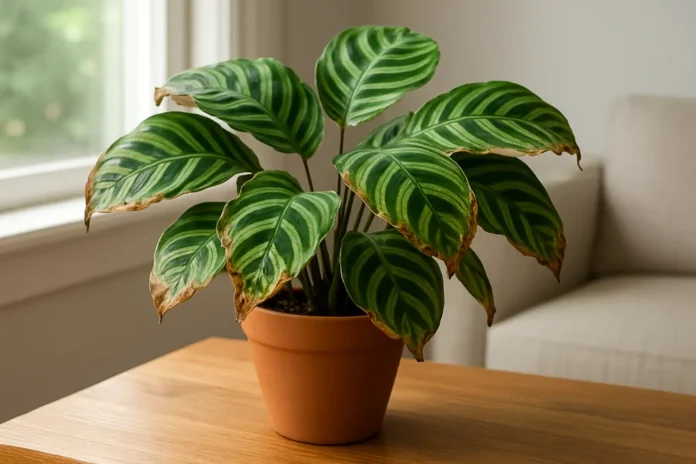
Calathea leaves usually turn brown from dry air, inconsistent watering, poor water quality, too much fertilizer, or direct sun. Browning can also happen when roots stay too wet or become damaged.
Few houseplants make people second-guess themselves faster than a Calathea with brown leaves. One week it looks lush and patterned, and the next week the tips are crisp, the edges are curling, or random patches are turning dry and tan. The frustrating part is that browning is not one single problem. It is a stress signal that can point to moisture issues, humidity, light, water quality, or root health.
In my experience, Calatheas are not impossible plants, but they are very honest plants. They show stress early, and they show it on their leaves. If you learn to read the pattern of the browning, you can usually narrow down the cause pretty quickly. Brown tips often suggest dry air or mineral buildup, while larger blotches or widespread decline may point to watering mistakes or root problems.
The key is to avoid treating every brown leaf the same way. A Calathea that is too dry needs a different fix than one sitting in soggy soil. Once you match the symptom pattern to the cause, recovery is usually straightforward, even if the damaged leaf tissue will not turn green again.
What the Browning Pattern Can Tell You
Before changing anything, look closely at how the damage appears. Calathea leaves can brown in several distinct ways, and each pattern gives you clues. Crispy tips are often linked to low humidity, salt buildup, or inconsistent watering. Brown edges can come from dry air, underwatering, or too much direct light. Large soft brown patches may suggest overwatering, cold damage, or root stress. Small tan or dark spots can point to water sitting on leaves, fungal issues, or physical injury.
- Brown leaf tips with otherwise healthy leaves often suggest dry air or water quality issues.
- Brown edges plus curling usually point toward moisture stress, especially when soil gets too dry between waterings.
- Large brown blotches in the middle of leaves can happen after direct sun exposure or cold drafts.
- Widespread browning with yellowing often signals root trouble from staying too wet.
- Only older lower leaves browning occasionally can be normal leaf aging, especially if new growth looks healthy.
When I diagnose a Calathea, I do not start with the ugliest leaf. I compare the newest leaf, a middle-aged leaf, and an older leaf. If the newest growth is already damaged, the current conditions are still off. If only the oldest leaves are affected, the problem may be lighter or already improving.
Low Humidity Is One of the Most Common Causes
Calatheas come from humid tropical environments, so dry indoor air is a very common reason for browning. This is especially true in winter when heating systems lower humidity fast. The first sign is often crisp brown tips or thin brown margins around the edges. The center of the leaf may still look green and attractive, but the outline starts to dry out.
If your Calathea sits near a heater vent, radiator, fireplace, or drafty window, the air around it may be far drier than the rest of the room. Even homes that feel comfortable to us can be too dry for a Calathea. Many of these plants look best when humidity stays above average for a typical houseplant setup.
- Leaf tips turn crisp before the rest of the leaf declines.
- Edges dry out evenly around multiple leaves.
- Browning gets worse in winter or in air-conditioned rooms.
- The potting mix may still be fine, but the leaf margins continue to dry.
To help, move the plant away from forced air, group it with other plants, or use a humidifier nearby. Pebble trays add a little moisture but usually do not change room humidity enough to solve a serious problem on their own. If your Calathea repeatedly browns despite decent watering, I would strongly suspect low humidity.
Inconsistent Watering Often Shows Up as Brown Edges and Curling
Calatheas dislike extremes. If the soil goes bone dry, leaf edges can turn brown and the leaves may curl inward. If the soil stays wet too long, the roots struggle and the foliage can also brown. That is why people sometimes feel confused. Both underwatering and overwatering can create brown leaves, but the texture and timing are a little different.
Signs of Underwatering
- Leaves curl, feel papery, or droop between waterings.
- Browning starts at the tips and edges.
- The pot feels very light and soil pulls away from the sides.
- The plant perks up noticeably after watering.
Signs of Overwatering
- Leaves yellow before browning or develop soft brown areas.
- Soil stays damp for many days and the pot feels heavy.
- Stems may feel weak at the base.
- The plant looks limp even though the soil is wet.
The goal is lightly moist, not constantly soggy and not allowed to fully dry out. Water when the top inch or so of soil begins to dry, then water thoroughly until excess drains from the pot. Empty the saucer so the roots are not sitting in standing water.
If you are unsure whether you are overwatering or underwatering, do not guess based on a calendar. Lift the pot before and after watering for a week or two. Learning the difference between a light pot and a heavy pot is one of the quickest ways to get Calathea watering right.
Tap Water and Mineral Buildup Can Burn the Leaf Tips
Calatheas are famous for reacting badly to poor water quality. In many homes, tap water contains chlorine, fluoride, and dissolved minerals that slowly build up in the soil. Sensitive plants often show that stress as brown tips or margins, even when watering frequency seems correct.
This issue is especially likely if you have hard water, see white crust on the soil or pot rim, or notice browning that keeps returning on new leaves. The plant may not look wilted or root-bound. It simply keeps producing leaves with dry tips.
- Brown tips appear despite good humidity and otherwise healthy growth.
- A white mineral crust forms on soil, nursery pot, or drainage tray.
- The problem builds gradually over time rather than overnight.
- New leaves emerge but still develop edge burn.
If you suspect water quality, switch to distilled water, rainwater, or filtered water that is low in minerals. Flushing the soil thoroughly can also help remove excess salts. Water until plenty drains from the bottom, then let the pot drain completely.
Too Much Fertilizer Can Cause Brown Leaf Margins
Calatheas do not need heavy feeding. When fertilizer is applied too often or too strongly, salts accumulate in the potting mix and scorch the roots. That root stress shows up on the foliage as brown tips, brown edges, or general decline. This looks a lot like the mineral problem from hard tap water, and the two often happen together.
If you recently started feeding more often, used a strong liquid fertilizer, or added fertilizer spikes, excess nutrients may be the cause. A stressed plant in low light also uses nutrients slowly, so fertilizer can build up faster than expected.
- Browning starts after a feeding change.
- Soil develops a crusty surface or visible salt residue.
- Leaf edges dry while the plant is not obviously thirsty.
- Growth may slow rather than improve after fertilizing.
Use a balanced houseplant fertilizer at reduced strength during active growth, and feed sparingly. If the plant is already stressed, skip fertilizer until it is growing steadily again. More fertilizer rarely fixes a struggling Calathea.
Direct Sun and Heat Can Scorch the Leaves
Calatheas prefer bright, indirect light. Strong afternoon sun can bleach or scorch their leaves, leaving brown, tan, or faded patches. Unlike the neat tip burn caused by humidity or minerals, sun damage often looks blotchy and irregular. The affected areas may appear on the side facing the window.
Heat can worsen the effect. A plant pressed against hot glass, sitting in a south or west window, or exposed to intense summer sun can develop damage quickly. Sometimes the browning appears after just one especially bright day.
- Brown patches appear broad and dry rather than just on the tips.
- Leaves facing the window are more affected than sheltered leaves.
- Color may fade to pale green or yellow before turning brown.
- Damage appears after moving the plant to a brighter spot.
Move the plant a few feet back from the window or filter the light with a sheer curtain. Bright indirect light is ideal. A Calathea can tolerate gentle morning sun in some homes, but harsh midday or afternoon light is usually too much.
Root Problems and Poor Drainage Can Trigger Widespread Browning
If your Calathea has many brown leaves at once, especially with yellowing, wilting, or a sour-smelling pot, the roots deserve a close look. A pot without proper drainage, compacted soil, or repeated overwatering can deprive roots of oxygen. Once roots begin to rot, the leaves can no longer support healthy growth.
Root rot often starts quietly. The plant may look thirsty, so it gets watered again, which makes the problem worse. Eventually leaves brown more rapidly, the plant loses vigor, and new growth comes out smaller or damaged.
- Soil stays wet for a long time after watering.
- The inner nursery pot or decorative cachepot traps excess water.
- Roots smell sour, look black, or feel mushy instead of firm.
- Leaves yellow and brown together across the plant.
A Calathea with root rot can mimic drought because damaged roots cannot take up water normally. If a wilted plant is sitting in wet soil, I treat it as a root problem first, not a thirst problem.
If you find root rot, trim away mushy roots with clean scissors and repot into fresh, airy mix in a pot with drainage holes. Keep the plant lightly moist afterward, not saturated. Recovery takes time, and the old damaged leaves may continue to decline while new growth improves.
Cold Drafts, Sudden Changes, and Everyday Stressors
Calatheas can also brown from environmental shocks that gardeners sometimes overlook. Cold drafts from doors or windows, a sudden move to a different room, recently repotting, pest pressure, or rough handling can all leave marks on the leaves. These plants prefer stable conditions, and they respond quickly when those conditions swing.
Cold injury often shows up as darkened patches or water-soaked-looking brown tissue, especially after the plant brushes a cold windowpane. Newly purchased plants may also brown while adjusting from greenhouse humidity to average home air. That does not always mean you are doing something wrong. It may simply be transition stress.
- Brown patches appear after a cold night or draft exposure.
- Damage is worse on leaves touching glass or near exterior doors.
- Browning starts soon after repotting or moving the plant.
- Spider mites or other pests may add stippling, dullness, and stress-related browning.
How to Fix a Calathea With Brown Leaves
Once you identify the likely cause, correct only what needs correcting. Calatheas do not like being overmanaged. If you change watering, humidity, light, fertilizer, and soil all at once, you may not know what actually helped. Start with the most likely stress based on the pattern you see.
- Move the plant out of direct sun and away from heating or cooling vents.
- Check the soil moisture with your finger before watering. Water when the top inch begins to dry, not on a fixed schedule.
- Use distilled, rain, or low-mineral filtered water if tap water is questionable.
- Raise humidity with a humidifier or by grouping plants nearby.
- Pause fertilizer if the plant is stressed, and flush the soil if salts may have built up.
- Inspect the pot for drainage problems and check roots if the soil stays wet too long.
You can trim away brown tips with clean scissors if the look bothers you, but only remove dead tissue. Leave a thin margin of brown rather than cutting into healthy green leaf tissue. Fully brown or mostly damaged leaves can be removed at the base.
Keep in mind that damaged sections will not turn green again. The real sign of success is healthier new growth. If the newest leaves emerge without browning or with much milder damage, your adjustment is working.
When Browning Is Not a Major Problem
Not every brown leaf means your Calathea is in serious trouble. Older leaves naturally age and decline. A few dry tips can also be normal in homes that are less humid than a greenhouse. If the plant is still producing healthy new leaves, holding good color, and standing upright, a little cosmetic browning may simply be part of growing a moisture-loving tropical plant indoors.
I usually worry more about a pattern than a single leaf. If browning spreads quickly, affects new growth, or is paired with yellowing, wilting, odor, or mushy stems, then it is time to investigate more deeply. If it is just a minor tip here and there, a few small care adjustments may be enough.
FAQ
Should I Cut the Brown Parts Off My Calathea Leaves?
Yes, you can trim brown tips and edges for appearance, but use clean scissors and cut only the dead tissue. Leave a narrow brown margin instead of cutting into green tissue, which can create a fresh wound.
Will Brown Calathea Leaves Turn Green Again?
No. Brown tissue is dead and will not recover. Focus on improving care so the next leaves grow in healthier.
How Often Should I Water a Calathea to Prevent Brown Leaves?
There is no perfect schedule because temperature, light, pot size, and season all change the timing. Water when the top inch of soil starts to dry, then water thoroughly and let excess drain away.
Is Misting Enough to Stop Brown Tips on Calathea?
Usually not. Misting gives only brief humidity and often does not make a lasting difference. A humidifier, better plant placement, and steadier watering are more reliable solutions.
Can Tap Water Really Make Calathea Leaves Brown?
Yes, it can. Many Calatheas react to fluoride, chlorine, and dissolved minerals in tap water, especially when those compounds build up in the soil over time.
Why Does My Calathea Have Brown Edges Even Though I Water It?
Brown edges can still happen if the plant dries too much between waterings, if humidity is low, or if mineral salts have built up in the soil. Watering regularly does not always mean the root zone or surrounding air is ideal.
Can Too Much Light Cause Brown Leaves on Calathea?
Yes. Direct sun can scorch Calathea leaves and create tan or brown patches, especially on leaves facing a bright window. They do best in bright, indirect light.
Need the right setup for fussy tropical houseplants? Check our guide to the best humidifiers, potting mixes, and watering tools for healthier Calatheas with fewer brown leaves.
