

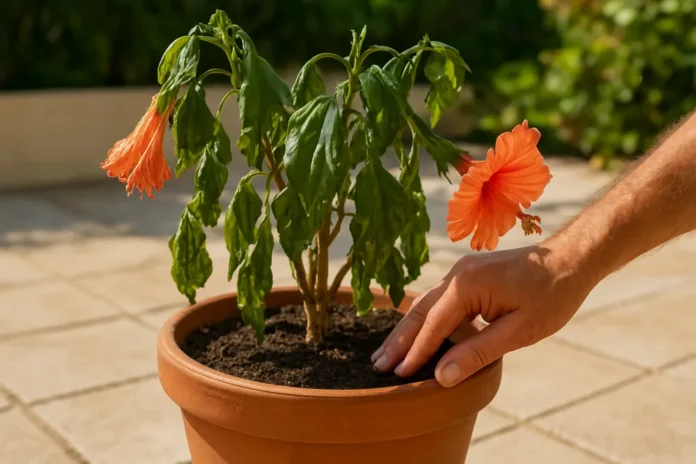
Hibiscus leaves usually wilt because the plant is too dry, too wet, overheated, or struggling with damaged roots. Pests, transplant shock, and sudden weather changes can also make the leaves droop.
A hibiscus can look dramatic when it wilts. One day the plant is full of glossy leaves and big blooms, and the next it looks tired, limp, and stressed. In my experience, hibiscus leaves wilting is most often tied to moisture problems, but not always in the way gardeners assume.
Both underwatering and overwatering can make a hibiscus collapse. So can extreme afternoon heat, a root-bound pot, recent transplanting, pest pressure, or root disease. The key is to look at the whole pattern, not just the droopy leaves. A plant that perks up at night tells a different story than one that stays limp for days.
If your hibiscus is wilting, the good news is that it often recovers well once the real cause is corrected. The tricky part is avoiding the common mistake of adding more water to every wilted plant, because sometimes that is exactly what makes the problem worse.
What Wilted Hibiscus Leaves Are Telling You
Wilting means the leaves are losing the pressure that keeps them firm and upright. That loss of pressure happens when the roots cannot supply enough water to the top growth, or when the plant is losing moisture faster than it can replace it. The result is soft, drooping leaves, and sometimes hanging buds or flowers too.
On hibiscus, wilting can show up a few different ways. The whole plant may droop. Only the upper leaves may sag. Leaves might wilt during the hottest part of the day and recover in the evening, or they may stay limp around the clock. That timing matters because temporary daytime droop often points to heat stress, while constant wilt is more likely tied to roots, watering, or disease.
- Leaves droop but still look green and flexible
- Leaves feel soft, thin, or limp instead of crisp
- Flowers and buds may hang down or drop early
- Lower leaves may yellow if the problem has been going on for a while
- Stems may remain firm even while leaves wilt, especially early on
When I diagnose a wilted hibiscus, I do not start with the worst-looking leaf. I compare several leaves and check whether the entire plant is affected evenly or whether one side, one branch, or only the container surface is involved. That pattern often tells me more than the droop itself.
Underwatering Is One of the Most Common Causes
Hibiscus likes consistent moisture, especially when it is actively growing or blooming. In hot weather, large-leaved tropical hibiscus can use water surprisingly fast. If the soil dries too far, the leaves lose turgor and the plant wilts quickly. Container plants are especially vulnerable because pots heat up and dry out much faster than garden soil.
A thirsty hibiscus usually has dry soil several inches down, and the pot may feel noticeably light when lifted. Leaves droop but often perk back up within hours after a thorough watering. You may also notice flower buds dropping before they open, dry leaf edges, or a general dull look to the foliage.
Signs That Dry Soil Is the Problem
- The soil feels dry below the surface, not just on top
- The plant wilts fastest in afternoon heat
- Leaves improve after deep watering
- The pot pulls slightly away from the sides if the mix has become very dry
- The plant is in full sun, wind, or a small container
If this is the cause, water deeply until the root zone is evenly moistened. For potted hibiscus, water until excess drains from the bottom, then let the top inch or so begin to dry before watering again. Avoid giving tiny daily sips, because that encourages shallow roots and leaves the lower root ball dry.
Overwatering Can Look Almost Exactly the Same
This is the part that confuses many gardeners. A hibiscus with soggy roots often wilts just like a dry one. When the soil stays wet too long, roots are deprived of oxygen and begin to weaken. Damaged roots cannot move water properly, so the leaves droop even though there is moisture in the pot or bed.
Overwatered hibiscus often has soil that feels wet or cool for days, yellowing lower leaves, slow growth, and a heavier pot. In severe cases, leaves wilt and yellow at the same time. The plant may also start dropping leaves even though the grower has been watering faithfully.
Clues That Too Much Water Is Stressing the Roots
- Soil stays wet long after watering
- The container has poor drainage or a saucer full of standing water
- Leaves are limp and some are turning yellow
- The plant does not recover quickly after watering
- There is a sour or swampy smell in the potting mix
If you are unsure whether your hibiscus is too dry or too wet, do not guess from the leaves alone. Push a finger into the root zone or use a moisture meter, because watering a waterlogged hibiscus usually makes the wilt worse within a day or two.
To correct overwatering, let the soil dry to an appropriate level before watering again, and make sure the plant is in a fast-draining mix or soil. Empty saucers after watering, and never leave the pot standing in water. In garden beds, improve drainage with organic matter if the area stays saturated after rain.
Root Rot and Damaged Roots Can Keep a Hibiscus Wilted
If the plant remains wilted even when the soil seems moist, root damage becomes more likely. Root rot fungi take advantage of wet, airless conditions and attack stressed roots. Once enough roots are lost, the plant cannot support the top growth, and leaves wilt continuously.
A healthy hibiscus root system is light-colored and firm. Rotten roots are dark, mushy, or stringy and may have an unpleasant smell. In containers, severe root rot often comes with a potting mix that stays wet for too long or has broken down into a dense, compact mass.
When to Suspect Root Problems
- The plant stays wilted both day and night
- Watering does not improve leaf firmness
- Leaves may yellow and drop in large numbers
- Growth stalls even in warm weather
- Roots look brown or black instead of cream-colored
For potted hibiscus, gently slide the plant out and inspect the root ball if you suspect rot. Trim away badly rotted roots with clean pruners, repot into fresh, well-draining mix, and reduce watering until the plant shows signs of recovery. In-ground plants are harder to treat, so the main fix is improving drainage and avoiding further overwatering.
Heat Stress and Intense Sun Can Trigger Temporary Wilting
Hibiscus loves warmth, but even this tropical-looking plant can droop in extreme afternoon heat. When temperatures are high, especially with strong sun, dry wind, or reflected heat from patios and walls, the leaves can lose water faster than the roots can replace it. The result is a plant that wilts during peak heat and then rebounds later.
This kind of wilt is usually temporary if the roots are healthy and the soil has adequate moisture. It is much more common in container plants, newly planted hibiscus, or plants that have not acclimated to full sun.
How Heat-related Wilt Behaves
- Leaves droop mainly in late afternoon
- The plant looks better by evening or morning
- Soil may still be moderately moist
- Blooms may fade faster in very hot weather
- Plants near pavement or brick walls often show it first
If your hibiscus is only wilting in intense heat, focus on reducing stress rather than drowning it. Water deeply in the morning, use mulch around in-ground plants to moderate soil temperature, and consider light afternoon shade in very hot regions. For potted plants, moving the container away from reflected heat can make a big difference.
Transplant Shock and Root-bound Pots Can Cause Drooping Leaves
A hibiscus often wilts after being repotted, planted in the ground, or moved from a shaded spot into stronger sun. Disturbing the roots interrupts water uptake for a while, and the leaves respond immediately. This is especially common when a plant is transplanted during hot weather or while in full bloom.
Root-bound plants can also wilt even if you water regularly. When roots circle tightly around the pot, there is less soil available to hold moisture, and water may run down the pot edge without soaking the root ball evenly. The plant dries out faster and may wilt repeatedly.
Common Signs of Transplant or Root-bound Stress
- Wilting starts soon after repotting or planting
- The root ball is dense with circling roots
- Water runs through quickly but the inner root ball stays dry
- Leaves may drop after a location change
- The plant struggles more in heat than it did before moving
I often see gardeners repot a root-bound hibiscus into a much larger container and then keep it soaking wet. That combination can backfire. A modest size increase with airy potting mix is usually safer because the roots can colonize the new soil without sitting in a cold, wet mass.
Give a recently transplanted hibiscus steady moisture, some protection from harsh afternoon sun, and time to reestablish. If it is root-bound, move it into a slightly larger pot and loosen circling roots gently before replanting.
Pests and Disease Can Weaken the Plant Enough to Make It Wilt
Although watering issues are more common, pests and disease can absolutely contribute to wilting. Sap-sucking insects such as aphids, whiteflies, spider mites, and scale stress the plant by removing fluids and weakening tender growth. A heavy infestation can leave leaves droopy, distorted, or sticky with honeydew.
Some diseases can also interfere with the plant's vascular system or root function. If wilting is paired with spotting, blackened stems, mold, or sudden branch dieback, the problem may be more than simple watering stress.
Pest and Disease Clues to Look For
- Tiny insects clustered on buds or leaf undersides
- Fine webbing from spider mites
- Sticky leaves or black sooty mold
- Distorted new growth along with wilt
- Dark stem lesions or rapidly collapsing branches
Treat the underlying problem based on what you find. A strong spray of water can knock down aphids, while insecticidal soap or horticultural oil can help with soft-bodied pests. If you suspect a serious fungal or bacterial issue, prune affected parts with clean tools and improve airflow while keeping water off the foliage when possible.
How to Tell Which Wilt Problem Your Hibiscus Actually Has
Because several problems cause the same limp-leaf look, the best diagnosis comes from combining leaf symptoms, soil moisture, timing, and recent changes. You are trying to answer a few simple questions: Is the soil dry or wet? Does the plant recover overnight? Was it recently moved? Are roots healthy? Are pests present?
A Simple Way to Narrow It Down
- Check the soil 2 to 4 inches deep or inspect the root ball in a pot.
- Notice whether the wilt happens only in afternoon heat or all day long.
- Look for yellowing leaves, mushy roots, or a sour smell that suggests overwatering.
- Look for dry, shrinking soil or a very light pot that suggests underwatering.
- Check for recent transplanting, a tight root mass, or visible pests on leaf undersides.
If the wilt is intermittent and tied to hot weather, the roots may be basically healthy and the plant simply needs better moisture management or less heat load. If the wilt is constant and the soil is wet, focus on root stress first. If the wilt is constant and the soil is dry, dehydration is still the leading suspect.
How to Help a Wilted Hibiscus Recover
Recovery starts with correcting the actual cause, not just reacting to the wilt. Once the plant is stressed, it may take several days or even a couple of weeks for new growth to look normal again. Existing badly damaged leaves may never fully firm up, so judge progress by improvement in the overall plant and by healthy new leaves.
Best Recovery Steps for Most Hibiscus Plants
- Water deeply if the root zone is truly dry
- Hold off on watering if the soil is already wet
- Improve drainage in pots and beds
- Give temporary afternoon shade during extreme heat
- Repot root-bound plants into fresh, fast-draining mix
- Inspect for pests and treat only if you find an actual infestation
- Avoid heavy fertilizer until the plant is actively recovering
Do not pile on multiple treatments at once unless the problem is obvious. For example, a wilted, overwatered hibiscus does not need extra fertilizer, and a dry hibiscus with healthy roots does not need fungicide. Keeping care simple usually leads to faster recovery.
How to Prevent Future Wilting
Most hibiscus wilting can be prevented with steadier watering habits and better root conditions. These plants do best when the soil stays evenly moist but not soggy, and when the roots have both water and air. Containers need special attention because they swing from too dry to too wet faster than in-ground plants.
- Use containers with drainage holes and a loose, high-quality potting mix
- Water thoroughly, then wait until the top layer begins to dry before watering again
- Mulch in-ground hibiscus to reduce moisture swings
- Protect plants from reflected heat and drying wind
- Repot before the plant becomes severely root-bound
- Inspect regularly for pests so small infestations do not become plant-wide stress
The biggest preventive habit is consistency. Hibiscus dislikes wild swings between bone dry and waterlogged. Once you learn how quickly your plant uses water in your climate and growing setup, wilting becomes much less common.
FAQ
Should I Water My Hibiscus Immediately when I See Wilted Leaves?
Not always. Wilting can come from dry soil or waterlogged roots, so check the moisture level first. If the soil is wet, adding more water can make the problem worse.
Can Hibiscus Recover After Severe Wilting?
Yes, many hibiscus plants recover well if the cause is corrected quickly. Recovery is more likely when stems are still green and roots are not extensively rotted.
Why Does My Hibiscus Wilt During the Day but Look Better at Night?
That pattern usually points to heat stress or temporary moisture demand exceeding water uptake. It is common in hot afternoons, especially for container plants in full sun.
Can Overwatering Make Hibiscus Leaves Droop?
Yes. Overwatering reduces oxygen around the roots and can lead to root damage, which prevents the plant from moving water properly even though the soil is wet.
Do Potted Hibiscus Wilt More Easily than Hibiscus in the Ground?
Yes, because containers dry out and heat up faster than garden soil. Potted plants can also stay too wet if the mix is dense or the pot drains poorly.
Will Fertilizer Fix a Wilted Hibiscus?
Usually not. Wilt is most often caused by watering, root, heat, or pest issues rather than a lack of fertilizer, and feeding a stressed plant can sometimes add more strain.
Can Transplant Shock Make Hibiscus Leaves Wilt and Fall Off?
Yes. After repotting or planting, roots may temporarily struggle to supply enough water, causing droop and some leaf drop until the plant reestablishes.
Need the right fix fast? Read our hibiscus care and treatment guides to choose the best watering tools, potting mix, pest controls, and recovery products for a stressed plant.
